Nafpaktos Textile Industry (ATH:NAYP) Is Looking To Continue Growing Its Returns On Capital

Nafpaktos Textile Industry (ATH:NAYP) Is Looking To Continue Growing Its Returns On Capital

There are a few key developments to seem for if we want to determine the subsequent multi-bagger. Ideally, a enterprise will show two tendencies firstly a developing return on funds utilized (ROCE) and secondly, an growing total of cash used. Generally this implies that a company has profitable initiatives that it can keep on to reinvest in, which is a trait of a compounding equipment. With that in thoughts, we’ve noticed some promising traits at Nafpaktos Textile Sector (ATH:NAYP) so let us glance a bit further.

Return On Money Employed (ROCE): What Is It?

If you haven’t labored with ROCE in advance of, it actions the ‘return’ (pre-tax revenue) a firm generates from money utilized in its organization. To calculate this metric for Nafpaktos Textile Marketplace, this is the formula:

Return on Cash Used = Earnings Before Fascination and Tax (EBIT) ÷ (Overall Assets – Present Liabilities)

.14 = €2.3m ÷ (€21m – €3.9m) (Primarily based on the trailing twelve months to June 2022).

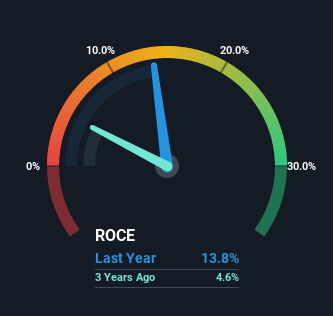
As a result, Nafpaktos Textile Sector has an ROCE of 14{1668a97e7bfe6d80c144078b89af180f360665b4ea188e6054b2f93f7302966b}. Which is a rather common return and it’s in line with the business ordinary of 14{1668a97e7bfe6d80c144078b89af180f360665b4ea188e6054b2f93f7302966b}.

Perspective our most recent evaluation for Nafpaktos Textile Field

roce
ATSE:NAYP Return on Money Used February 22nd 2023

Historical overall performance is a good spot to start when investigating a inventory so earlier mentioned you can see the gauge for Nafpaktos Textile Industry’s ROCE versus it is prior returns. If you want to delve into the historic earnings, revenue and cash flow of Nafpaktos Textile Sector, check out these totally free graphs here.

What Can We Tell From Nafpaktos Textile Industry’s ROCE Development?

Traders would be delighted with what is actually going on at Nafpaktos Textile Sector. Over the very last 5 yrs, returns on cash utilized have risen substantially to 14{1668a97e7bfe6d80c144078b89af180f360665b4ea188e6054b2f93f7302966b}. Essentially the business enterprise is earning extra for each dollar of funds invested and in addition to that, 75{1668a97e7bfe6d80c144078b89af180f360665b4ea188e6054b2f93f7302966b} much more cash is currently being used now too. So we are quite a lot inspired by what we’re viewing at Nafpaktos Textile Field thanks to its means to profitably reinvest funds.

In Summary…

All in all, it truly is terrific to see that Nafpaktos Textile Industry is reaping the rewards from prior investments and is expanding its funds foundation. And with the inventory obtaining done extremely effectively over the previous 5 decades, these designs are remaining accounted for by investors. So given the inventory has demonstrated it has promising trends, it is really truly worth investigating the enterprise additional to see if these trends are possible to persist.

Nafpaktos Textile Market does appear with some pitfalls although, we uncovered 3 warning signs in our investment investigation, and 1 of individuals does not sit much too nicely with us…

For individuals who like to spend in stable corporations, verify out this free of charge listing of corporations with stable equilibrium sheets and superior returns on fairness.

Valuation is intricate, but we are assisting make it basic.

Discover out no matter whether Nafpaktos Textile Marketplace is most likely in excess of or undervalued by examining out our extensive examination, which incorporates honest benefit estimates, pitfalls and warnings, dividends, insider transactions and financial well being.

See the Free of charge Investigation

This short article by Merely Wall St is normal in character. We present commentary centered on historic data and analyst forecasts only using an impartial methodology and our posts are not meant to be financial advice. It does not represent a recommendation to buy or market any inventory, and does not acquire account of your objectives, or your economic scenario. We intention to convey you lengthy-phrase focused assessment driven by fundamental facts. Note that our examination may possibly not factor in the most current value-delicate enterprise bulletins or qualitative material. Simply just Wall St has no place in any stocks talked about.

Threading a textile story – The Hindu BusinessLine

Threading a textile story – The Hindu BusinessLine

The story of textiles in India weaves a historical past of independence and tradition and is a key pillar of livelihood in the place.&#13

Viscose, a guy-produced fibre witnessing world desire progress, is a new addition to India’s textile story. It is a biodegradable fibre and an different to silk and cotton. Viscose is ‘poor people’s silk’ due to the fact it is more affordable but with similar qualities.&#13

It is not just the ‘poor’ buyers but also the weavers of the fabric, who have identified a new supply of livelihood with the output of viscose. Because of to a rise in the rate of natural fibres these types of as cotton, quite a few weavers shifted to manufacturing viscose or blended viscose fabric. Indian textile sector is continue to cotton dominated, which has constraints in offer. Cotton acreage can not be elevated as foodstuff is a priority. Consequently, viscose blended cotton is being commonly adopted as a feasible choice.&#13

Viscose has given new hopes to the Indian weavers. Viscose fibre usage is witnessing a constant increase, where the sector grew from 542 KT (Thousand tons) in 2021 to 744 KT in 2022, a robust 37 for each cent expansion. This was only achievable as Indian textile benefit chain could obtain Viscose fibre at internationally aggressive charges. Over-all, viscose retains 16.5 per cent of the man-produced fibre current market in India. Other than being a more affordable option, flexibility in structure and software also contributes to its demand.&#13

Even so, apart from aiding weavers, it is also important to make sure safeguards which are not protecting but conducive in character.One issue plaguing the viscose worth chain is the limited raw substance offer of Viscose Staple Fibre (VSF).&#13

India has a constrained variety of players concerned in production VSF, with one main company contributing to in excess of 90 for every cent of the source. As a consequence, numerous weavers count on imported fibre. It gives new options to these weavers so that they can endure in the sector and be aggressive.&#13

Anti-dumping duty

An forthcoming advancement that can be detrimental to the weavers of viscose is the anti-dumping responsibility imposition on VSF imports. The imposition of this responsibility will make the procurement of the fibre significantly more demanding and all the more pricey for the weavers. Anti-dumping obligation on VSF was to start with introduced in 2010 and ongoing till 2021. It was eliminated only following the whole industry continuously appealed after struggling for more than 11 decades. Former Textiles Minister Smriti Irani, herself had supported the elimination of duties.&#13

Re-introduction of anti-dumping obligation will now effects many weaving hubs in Tamil Nadu, Maharashtra and Gujarat. This is an issue affecting creation capacities and the lives of 4.5 crore persons used in the textile business. With Tamil Nadu by yourself accounting for 75 per cent of India’s man-built cellulose yarn output, this obligation can substantially hamper the State’s growth and endanger the livelihood of the 31 lakh rural textile workers in the State.&#13

The responsibility will also effects the entire benefit chain of the cloth, as the procurement of the fibre, which is the heart of the benefit chain, will be strike.&#13

Viscose is also the material of future. It is extensively made use of in approaching subsectors in the textile field, this sort of as specialized textiles and healthcare textiles. Most importantly, viscose is a sustainable preference thanks to its biodegradable attributes.&#13

Therefore, the solution to India’s developing current market for viscose is not an anti-dumping responsibility. In its place, we have to have emancipatory actions which assure that weavers can procure required uncooked products with equivalent amounts of accessibility. This can only be ensured if there is no cost level of competition in the industry. We need to have to develop a level-playing industry in the sector so that pricing stays equivalent irrespective of in which a weaver purchases their fibre from.&#13

Viscose is the new thread to India’s textile tale and has presently become a key source of livelihood. It is significant time that the country’s textile price chain is supplied the a lot-required impetus.&#13

The author is previous Rajya Sabha MP from AP

Textile industry sustainability remains too fragmented

Textile industry sustainability remains too fragmented

Textile industry sustainability remains too fragmented

This is absolutely nothing new, of course. But just how considerably have we appear, and just how substantially development is the market building suitable now?

Regretably, I really don’t have the precise respond to to possibly of these questions, but we can undoubtedly see there is an hard work there by world wide manner manufacturers to lessen their affect. Much more commonly we’re viewing the launch of partnerships to offer with textile waste – an more and more troubling difficulty the industry is determined to tackle. Last 7 days, H&M joined forces with squander administration company Ramondis to accumulate, type and provide used and unwanted clothes and textiles.

We’re also observing a rise in the number of reuse and ‘pre-loved’ solutions by major fashion brands. There’s also financial investment in the improvement of alternative fibres, and textiles manufactured from recycled and sustainable developed products.

Lenzing and Södra are executing just this with Portuguese fabric producer Riopele, whilst a team of scientists at Rensselaer Polytechnic Institute in New York have been not too long ago awarded a US$745,000 grant to explore sustainable alternatives to the artificial textiles utilized in quick trend.

But although the onus is unquestionably on all those manufacturing garments to guarantee they are executing so in a sustainable way, governments also have a part to play in ensuring the suitable insurance policies and frameworks are in area to support firms realize their plans.

A session on an Extended Producer Duty (EPR) plan for clothes and textiles was anticipated from the United kingdom Government’s Section for Ecosystem, Foods and Rural Affairs by the conclude of 2022. This has not happened, and past week the Environmental Audit Committee was informed there is not likely to be one particular in the close to foreseeable future.

The delays are keeping up development in tackling the rising problem of textile waste. Only very last 12 months the Committee warned that in the absence of effective policies to offer with textile waste, over 300,000 tonnes of textiles have been being thrown into residence black bins every 12 months and despatched to landfill or incinerators.

This is a challenge that demands to be tackled head on and with all gamers on the same webpage. It necessitates all people to place their money no matter if their mouths are if any serious affect is to be designed.

Lenzing, Södra reach milestone for vogue circularity

H&M, Remondis staff on textile squander management initiative

US scientists take a look at rapid trend textile possibilities

Uk Governing administration delays introduction of EPR scheme for textiles

In other news…

Relentless pursuit of greater: What is actually disrupting the trend sector?  

How vogue models can own the resale activity, and change a financial gain

January British isles retail gross sales up on larger price ranges but gloomy moments loom

Provide chain challenges to effect US cotton market development in 2023

Barriers to renewable energy transition for Pakistan’s textile industry

Barriers to renewable energy transition for Pakistan’s textile industry

By Shahid Sattar and Noreen Akhtar

The power sector is the major GHG producer in Pakistan. It is believed that the power demand in the nation will reach 108 – 126 million tons of oil equivalent (TOE) by 2030. With the rising unsustainable administration of power demand from customers, Pakistan’s ongoing reliance on imported fossil fuels and out-of-date coal engineering has affected the country’s strength protection and its compliance with the global requirements on electricity efficiency and decarbonization. Nonetheless, the government’s recent tilt to improving the country’s capacity for renewable power (RE) use presents a major legislative and coverage advancement.

The up-to-date National Local climate Modify Coverage, 2021 places a major emphasis on acquiring local weather change mitigation targets by way of energy effectiveness and cutting down carbon emissions. It aims to find technological breakthroughs to harness the country’s possible for renewable electricity and declares that 60{1668a97e7bfe6d80c144078b89af180f360665b4ea188e6054b2f93f7302966b} of all strength generated in the nation by 2030 will be cleanse as a result of renewable methods and Pakistan will no longer pursue imported coal power vegetation. Even further, Pakistan’s updated Nationally Determined Contributions (NDCs), 2021 support government’s power-associated coverage interventions and have identified integration of renewable electricity resources in all significant sectors a higher-priority region. The up to date Renewable Power Plan 2019 focuses a lot more on inexperienced power and aims to decrease GHG emissions utilizing Kyoto Protocol.

Go through additional: The Snake Bites The moment Once more – Vitality

Knowing the issue improved

Pakistan has tremendous opportunity to fulfill its increasing electricity need from renewables together with photo voltaic, wind, hydro, geothermal and biomass, as these resources are considerably obtainable in the country. Solar, for instance, is the most interesting alternate electricity remedy which has been given appreciable consideration a short while ago. Pakistan’s southwest area gets the highest irradiation. “The once-a-year global horizontal irradiance in the Himalayas and Karakorum is 2300 kWh/m2, which is the best of any other region on Earth”. Wind energy sources have the opportunity to crank out 43,000 MW of electrical power.

Also, the Worldwide Renewable Strength Company (IRENA) estimates that Pakistan’s hydropower sector has a potential of 60GW and it stays the lowest priced resource of electrical power in the nation. Biomass is believed to crank out 50,000 Gwh/ year in the region. Lastly, geothermal electrical power methods are present in all the provinces, which can be made use of for ability generation, heating and cooling of buildings and offer of very hot drinking water.

If Pakistan delivers into perform this untapped potential in all the main sectors by employing exemplary policy reforms in spirit and increasing RE, a substantial decoupling of expansion from conventional electricity means this sort of as fossil fuels can add to the present efforts on local weather resilience. RE expansion will make electrical energy cheaper, and increase vitality stability and Pakistan can help save up to $5 billion more than the upcoming 20 many years, as per Globe Bank’s report.

Pakistan’s textile industry is a single major sector that can benefit massively from the out there RE sources in the place whilst supplying eco-pleasant energy.

RE and Textile sector

The textile industry’s producing processes are power intensive. 10{1668a97e7bfe6d80c144078b89af180f360665b4ea188e6054b2f93f7302966b} of world wide GHG emissions are accounted for by clothes and footwear creation. Uncooked substance manufacturing, harvesting, dyeing, and dumping of used textiles, are all main ways included in textile producing and their discarding emit GHGs into the atmosphere. For Pakistan’s textile field, transitioning to RE solutions is not only expense and useful resource powerful but also boosts the sector’s in general compliance with the global requirements on strength effectiveness and industrial decarbonization, these kinds of as those imposed by the European Green Deal. The government’s help, the escalating renewable power industry and technological improvement are amongst the already existing opportunities for the business to expand its company by way of renewables.

The federal government of Pakistan has supported RE progress and encourages non-public sector involvement in assignments related to carbon emissions reduction. The textile market can come to be a leader in this if it prudently options the correct financial allocations to set up independent sustainable electrification. Also, RE systems are becoming fairly inexpensive options for powering the sector that can increase the price tag-effectiveness of the production procedures.

Read more: EU’s textile waste and made use of clothing in Pakistan

The industry’s present-day development on offsetting emissions implies that it has proven a promising determination to reaching web zero by adopting a eco-friendly supply chain philosophy. The Internet Zero Pakistan initiative, for instance, is Pakistan’s greatest internet zero coalition and is the only 2nd place-broad program, underneath World wide Race to Zero, just after Japan. It is a collaborative exertion between non-govt businesses, leading textile businesses, public establishments and sector authorities.

The textile organizations, in this coalition, commit to set science-centered internet zero targets, measure and disclose their GHG emissions, decarbonize their benefit chains and advocate for weather motion. Maintaining in check out the extrinsic strain and internal requirements for energy performance, the initiative need to facilitate carbonization by raising the renewable energy blend and incorporating electrical power-conserving systems.

Main textile businesses are supporting local weather motion by way of cleanse electrical power initiatives like solarisation projects and technological know-how installation these as waste warmth restoration boilers and converting boilers to biomass-dependent fuels. Intercontinental certifications in energy conservation this sort of as LEED are acquired and water stewardship via sustainable bleaching approaches, zero wastewater discharge and recycling is accomplished. A overall performance comparison of a single of the corporations ‘Sarena Textile Industries’ is given in figure 1.

The assessment of the existing circumstance of industrial electricity effectiveness reveals that the share of alternate vitality sources this sort of as renewable electricity and biomass in the sector is constrained. Technology this sort of as motors and boilers are inefficient and impressive concepts to save vitality are exercised inadequately. So, the significant decarbonization and energy conservation pathway for the industry is to changeover to renewable power systems including solar PV, concentrated photo voltaic thermal collectors and wind turbines. Circular financial system possibilities such as recovery, recycling and re-use need to be compounded by rethinking approach enhancement options and progressive technologies by using the correct money allocations and study breakthroughs.

blank

The marketplace can obtain Renewable Vitality Certification (REC) on adoption of the RE technology. RECs are issued when a single megawatt-hour (MWh) of energy is created and shipped to the electric power grid from a renewable electricity resource. Pakistan has been accepted for Worldwide-REC (I-REC) for electric power issuance. The I-REC for electrical energy issuers in Pakistan is the Pakistan Natural environment Have confidence in (PET). RECs are tradable units and can be sold by exchanges or bilateral trades and can be a major source of added earnings era.

Legislative difficulties and the way ahead

The field is at present enduring a variety of boundaries obstructing its changeover to RE sources, that need an quick response from the authorities.

The limit of the existing net-metering scheme for solar ability units of the business is 1MW, which requirements to be prolonged to 5MW –“especially when the demand of the large-scale production industry is involving 1.5 to 5MW. This enhance has the likely to increase 5000MW of solar strength at no upfront investment from the GoP to the power combine of the state. Also, this will permit the EOUs to turn out to be aggressive in the international sector (with reduce electrical power expenditures) and enhance the share of renewables in the whole energy blend as committed in the current NDCs 2021.”

Study much more: Inclusive and eco-friendly pathways essential for Pakistan’s industrial development

Even more, the authorities has planned to launch solarisation tasks of around 14000MW which will not only “reduce the import bill of high priced fuel but also help deliver minimal-expense and atmosphere-helpful electricity.” These solar programs will be delivered at lessened price ranges and will be supplied tax incentives. On the other hand, in purchase to aid the sector to greatly enhance its electricity performance in a sustainable and impartial method, it really should be permitted to set up its individual solar ability structures with the extension of a net-metering scheme for solar from 1MW to 5MW.

The wheeling situation implies that Pakistan desires to move in the direction of cost-free industry designs with various consumers and sellers to revive the electrical power sector but also, to make it transparent. The wheeling regulations will have to integrate wheeling of renewable electricity and the linked wheeling value have to be minimized for any industrial off-web site set up of renewable power infrastructure.

These legislative burdens coupled with the withdrawal of regionally aggressive electrical power tariffs are pushing the marketplace into a zone of financial dismay the place it is running at much less ability utilization thanks to doing the job cash concerns, shedding competitiveness in the intercontinental sector and uncooked content troubles. This will cause prolonged-long lasting hurt to the industry’s existing compliance and sustainability attempts and adoption of RE know-how, as the current emphasis has shifted towards an additional working day of survival by mitigating the impacts of the withdrawal of power tariffs.

In summary, the Governing administration of Pakistan ought to tackle the present limitations of the internet-metering scheme for solar, and wheeling costs and go on offering regionally competitive electricity tariffs for the business to regain sustainability development and transition to RE. This will support the business in making use of the country’s current RE opportunity to the most, decrease reliance on fossil fuels and enhance competitiveness in the world-wide export current market. Otherwise, the government’s recent NCCP and NDCs that put intense focus on RE will be limited to paper without implementation in spirit.


Mr. Shahid Sattar, now Government Director & Secretary Typical of All Pakistan Textile Mills Association (APTMA), has beforehand served as a Member Preparing Commission of Pakistan and an advisor to the Ministry of Finance, Ministry of Petroleum, and Ministry of Water & Electrical power.

Noreen Akhtar is a study analyst at APTMA. 

The views expressed by the writers do not always characterize World-wide Village Space’s editorial policy.


Global apparel giants explore electrification in textile industry

Global apparel giants explore electrification in textile industry
5 associates of the Outdoor Sector Association (OIA) Weather Action Corps, such as Burton, New Balance, Patagonia, REI Co-op, and Gore’s Fabrics Division, have produced a joint-commissioned study centered on the feasibility of electrifying the textile and clothing marketplace. The study observed that shifting to industrial warmth pumps can lead to major energy reductions, diminished CO2 emissions, and reduced charges as opposed to regular units.

The examine, entitled ‘Electrification of Heating in the Textile Industry: A Techno-Economic Assessment for China, Japan, and Taiwan,’ highlights the opportunity power financial savings, CO2 emissions reductions, and charges of implementing electrification technologies pathways in the market.

The conclusions of the analyze give various crucial recommendations for the textile industry and policymakers to scale up electrification and accelerate carbon emissions reductions, Outdoor Sector Affiliation mentioned in a push launch.

5 users of the OIA Climate Action Corps, including Burton, New Balance, Patagonia, REI Co-op, and Gore’s Fabrics Division, have launched a joint-commissioned study focused on the feasibility of electrifying the textile and clothing marketplace. The study uncovered that shifting to industrial heat pumps can direct to sizeable electricity reductions.

The examine was sponsored by Patagonia, with OIA facilitating the collaboration between the 5 companies and the industrial decarbonisation consulting agency International Efficiency Intelligence. The goal of the investigate was to lower emissions in the clothing industry’s source chain by shifting from carbon-intense thermal heating processes driven by fossil fuels to far more effective, cleanse electrified procedures that use very low- or zero-carbon electric power. The research concentrated on the textile market, with a unique emphasis on tier 2 factories in China, Japan, and Taiwan, but its recommendations are applicable to other geographies as properly.

The collaborators have also hosted stakeholder engagement actions to inform stakeholders of the study conclusions and persuade them to undertake clean up warmth procedures that will lower greenhouse gasoline emissions in the textile and apparel sector. The study’s outcomes have been published on World wide Performance Intelligence’s (GEI) web-site. This collaborative effort and hard work is a important stage toward mitigating the influence of the weather disaster and cutting down carbon emissions in the textile and apparel industry.

“One of the biggest issues in lowering greenhouse fuel emissions in our clothing and textile source chains is thermal energy—steam and warm h2o for heating procedures in factories. Can we use a little something other than coal, organic gasoline, or other fossil fuels? Our review demonstrates how there is an prospect to decarbonise thermal heating procedures in attire and textile factories in a way that minimizes emissions, electrical power, and charge around time,” mentioned Sarah Rykal, senior manager of OIA’s Local weather Action Corps.

&#13

Fibre2Manner Information Desk (DP)

&#13

New Study Explores Potential Energy Savings for Textile Industry

New Study Explores Potential Energy Savings for Textile Industry
&#13

A new examine from the Out of doors Sector Association’s Local weather Action Corps outlines possibilities in which clothing and textile companies can preserve funds and lower source chain emissions by switching to electrical warmth.

&#13

The study was commissioned by Patagonia, Burton, New Stability, REI Co-op and Gore’s Material Division, and is the most recent in a sequence of measures the outside industry is having to mitigate the affect of the local climate crisis, according to the OIA.

&#13

New Study Explores Potential Energy Savings for Textile Industry

&#13

Patagonia is 1 of many out of doors brand names that commissioned a review on how to minimize carbon emissions in the attire industry’s supply chain.

&#13

The key conclusions of the review present that shifting to industrial heat pumps can guide to substantial electrical power reductions, minimized carbon emissions and decrease charges as opposed to standard heating systems.

&#13

“One of the major troubles in lessening greenhouse gas emissions in our clothing and textile offer chains is thermal strength – steam and warm water for heating processes in factories,” explained Sarah Rykal, senior supervisor of the Weather Action Corps. “Can we use one thing other than coal, organic gasoline or other fossil fuels? Our examine demonstrates how there is an opportunity to decarbonize thermal heating processes in attire and textile factories in a way that minimizes emissions, strength and cost in excess of time.”

&#13

She added that the OIA will be sharing its conclusions with manufacturing facility companions in China, Japan and Taiwan to support maximize sustainability endeavours.

&#13

“These final results effect the entire fashion marketplace, not just the outside field,” Rykal explained.

&#13

Burton, New Balance, Patagonia, REI, Gore and the OIA labored with the industrial decarbonization consulting company World wide Efficiency Intelligence to conduct the review. The objective was to obtain perception into minimizing emissions in the clothing industry’s supply chain by shifting from carbon-intensive thermal heating procedures at present run by fossil fuels to additional economical, thoroughly clean electrified procedures exactly where very low- or zero-carbon electrical power is applied. The research focused on the textile sector with a unique aim on tier 2 factories – amenities exactly where resources are manufactured and completed ahead of heading into completed products – in China, Japan and Taiwan, while it would utilize to other geographies as very well.

&#13

“Electrification of method heating will play a critical job in the deep decarbonization of the textile marketplace and attire provide chain when tied to renewable electric power. Nonetheless, it seems like not lots of professionals and engineers in the textile and apparel businesses are aware of this substantial chance. There is absolutely a want for extra get the job done in this location,” reported Ali Hasanbeigi, analysis director at International Efficiency Intelligence and lead researcher for this review.

&#13

Kim Drenner, head of provide chain environmental impression at Patagonia, explained the new investigate provides “tangible, charge-powerful methods for suppliers and brand names to conclusion their reliance on fossil fuels.”

&#13

A person caveat the report acknowledges though is that electric powered heating on its individual is not enough to lower emissions except if the electrical energy grid is modernized and decarbonized. “Investing in the electrical energy grid and rising the share of renewable electricity in the electrical power sector energy combine will support to speed up industrial electrification and add to a reduction in CO2 emissions,” the report states.

&#13

Primarily based in Boulder, CO, the OIA is a trade association for the out of doors sector. Other methods its Climate Motion Corps have taken not long ago include the formation of the Drinkware CoLab, where by 4 important drinkware models – all of which are presented in the promotional products business – are checking out means to cut down the environmental affect of manufacturing.

&#13

Promo for the World is your desired destination for the most recent news, greatest tendencies and very best strategies to aid develop a extra sustainable and socially-accountable market.

&#13

&#13
&#13
&#13
&#13
&#13
&#13