


Choosing TDLAS, NDIR and UV-DOAS for Industrial Gas Duties

Choosing TDLAS, NDIR and UV-DOAS for Industrial Gas Duties

TDLAS gas analyzers, NDIR infrared analyzers, and UV-DOAS analyzers are often compared as if one technology must be the general winner for industrial gas duties. TDLAS selection depends on installation conditions as well as the target gas. That is the wrong starting point. Each technology family is associated with different optical behavior, target-gas questions, installation arrangements, and practical constraints. Selection becomes more reliable when it starts with the duty the plant must perform, then tests each candidate method against the gas matrix and the measurement path.

Describe the industrial gas duty before naming a technology

An industrial gas duty should state more than the primary gas. The duty statement should identify the process location, the reason for measuring, the conditions likely to vary, nearby constituents that may matter, the expected use of the result, and the people who will maintain the system. This description creates a common basis for comparing TDLAS, NDIR, and UV-DOAS without turning the project into a contest of acronyms.

For example, a duty can be focused on combustion adjustment, process protection, emissions-related observation, leak investigation, or a gas-quality decision. These applications may use similar vocabulary but differ in where the observation occurs and how much context the receiving team needs. The selection discussion should be specific enough that an engineer can say what would make a proposed method unsuitable.

Review TDLAS Gas Analyzers with the Gas Matrix

The NIST Chemistry WebBook makes reference spectral information available for many substances. That resource can help a team move beyond generic statements about optical gas analysis and ask more precise questions about target gases and potential neighboring constituents. Treat it as a research starting point, not a site-performance guarantee. The actual industrial gas duty still depends on process conditions, optical path, sample preparation, and the validation method used by the project.

Use the gas matrix to identify what must be detected, what could influence interpretation, and which changes in composition or conditions should be anticipated. If the matrix is incomplete, record that uncertainty instead of allowing a technology choice to imply certainty. Preliminary method selection can continue while the team collects the information needed for a final application review.

Compare NDIR Infrared Analyzers with Installation Conditions

GESHINE presents TDLAS laser analyzers, NDIR infrared analyzers, UV-DOAS analyzers, in-situ analyzers, and fixed extractive systems as different parts of a gas-analysis portfolio. This is a useful reminder that the method family and the installation arrangement should be considered together. Proposed in-situ measurements raise questions about the process path and mounting. An extractive arrangement raises questions about sample transport, conditioning, utilities, and service access.

TDLAS may be a candidate where the selected target gas and tunable laser approach fit the duty. NDIR may be a candidate where infrared-active gases and the expected measurement environment fit the design. UV-DOAS may be a candidate where ultraviolet absorption behavior and the component mix are relevant. These comparisons are deliberately conditional. Final selection requires the vendor and plant team to verify the suitability of the proposed arrangement for the actual gas duty.

Put UV-DOAS Analyzers and In-Situ Analyzers into the Limitation Review

Every proposed method should have an explicit limitation note. The limitation may concern optical interference, changing process conditions, fouling, sample handling, installation access, maintenance burden, data interface, or the need for an independent validation approach. Limitation notes are not arguments against a technology. Instead, each note makes the project’s assumptions reviewable before the equipment is committed.

Do not use a comparison article to infer regulatory approval, certification, or a guaranteed result. Those conclusions depend on the applicable jurisdiction, the complete system, and the evidence collected under the relevant program. Technologies can be technically plausible for a duty without being the proven answer for every facility with the same gas name.

Use a selection worksheet that invites challenge

Questions for comparing TDLAS, NDIR, and UV-DOAS in an industrial duty

Selection question What the team should document Why the question matters
What is the target gas duty? The process decision and intended user of the result. This prevents a generic method comparison.
What else is in the gas matrix? Expected constituents and changing conditions. The brief prompts an interference and applicability review.
Where will the observation occur? The in-situ or extractive arrangement and access limits. It connects method choice to installation reality.
How will suitability be checked? The planned commissioning and review evidence. It turns a preference into a testable decision.

Connect the selection to commissioning and support

Method selection is not complete until the team can describe how the installed system will be checked and maintained. Define the information expected at startup, how results and diagnostic states will be passed to the receiving system, and how personnel will distinguish process behavior from a measurement-path issue. These details are especially important where a monitoring result may influence operations or a reported environmental indicator.

Teams can review the GESHINE gas-analysis portfolio to frame conversations about TDLAS gas analyzers, NDIR infrared analyzers, UV-DOAS analyzers, and in-situ or extractive arrangements. The final recommendation must remain anchored to the gas matrix, site conditions, installation constraints, safety review, and applicable validation requirements.

Ask what will change after installation

Industrial gas duties are rarely fixed for the life of a system. A process can be debottlenecked, raw materials can change, operating practices can shift, or a downstream user can request a different form of evidence. Add these foreseeable changes to the selection record. A method that fits the current duty may still be a poor choice if the expected changes cannot be accommodated or reviewed without rebuilding the installation.

Maintenance also changes the practical answer. Consider whether the team can access the sensing arrangement, inspect the sample route if used, understand diagnostics, and obtain the information needed to distinguish a process event from a measurement concern. A method selection that ignores these routines may look elegant in a comparison table but become costly or untrusted in day-to-day operation.

Use a challenge review before release

Before procurement, assign someone outside the immediate selection group to challenge the method recommendation. Give that reviewer the gas matrix, proposed installation, key assumptions, limitation notes, data-use plan, and commissioning evidence expected. The task is not to overturn the decision by default. It is to identify untested assumptions early, when the project can still respond without converting a field problem into a contract dispute.

Not every uncertainty can be removed. A useful challenge review ends with a concise decision record: method families considered, reasons for the selected approach, facts still to be verified, and conditions that would require a reassessment, so the technology name remains connected to the industrial gas duty it was selected to serve.

Choose the method that makes its assumptions visible

The best method-selection decision is not the one that uses the most persuasive technology name. It is the one that clearly states the gas duty, records the relevant uncertainties, fits the proposed installation arrangement, and defines how suitability will be demonstrated. That approach gives industrial teams a practical route to compare TDLAS, NDIR, and UV-DOAS without promising that any one method is universal.

Industrial Stormwater Storage Must Be Designed for Maintenance From Day One

Industrial Stormwater Storage Must Be Designed for Maintenance From Day One

An industrial facility can bury a geocellular tank beneath a yard and regain valuable operating space. Success is visible on the surface: vehicles move, materials are stored, and production continues. The stormwater storage asset underneath is easy to forget until sediment consumes volume, an outlet obstructs, polluted runoff reaches the wrong place, or an access point cannot be used without stopping operations.

Maintenance is therefore a design input, not a manual written after construction. An attenuation tank, silt trap, controlled outlet, inspection access, and StormTank module form an operating chain. If one component cannot be observed or serviced, the system may lose performance while the surface still appears normal.

For an industrial facility manager, the practical goal is not a tank that disappears. It is an underground asset whose risks, access routes, inspection tasks, records, and responsible people remain visible throughout its life. That goal should shape the catchment review, pretreatment, tank layout, traffic plan, and handover package before excavation begins.

Screen the industrial catchment before choosing storage

Industrial runoff is not one uniform water stream. Roofs, loading areas, general hardstanding, process zones, vehicle routes, and areas with spill risk can produce different sediment and pollutant conditions. The drainage designer should map those sources and decide what can enter the stormwater storage system, what needs separation or treatment, and what must follow another controlled route.

Storm Manage’s infrastructure and industrial guidance explains that a geocellular tank can operate as infiltration storage with a geotextile wrap or as lined attenuation with a geomembrane and flow control. It also states that crates provide water storage rather than water-quality treatment, placing silt traps and inspection access upstream. That boundary is essential for stormmanage.com projects serving complex industrial catchments.

Default to explicit pretreatment ownership. Project records should identify the component that captures sediment or other relevant contaminants, its design basis, who supplies it, where waste will be removed, and how maintenance crews reach it without sending material into the tank. Where the catchment risk is uncertain, pause the connection decision and obtain the appropriate environmental and drainage review.

An infiltration route deserves particular care because water leaves through the surrounding ground. Soil acceptance alone does not resolve pollution risk. The design must consider the nature of runoff, groundwater, contaminated land, and applicable permissions. A lined attenuation tank may control discharge quantity, but it still needs suitable upstream treatment and a safe receiving route.

Put access beside every maintenance task

An access chamber is useful only when it reaches a component that needs work. Draw the inlet treatment, distribution points, tank zones, controlled outlet, overflow, and inspection access together. Then ask what a maintenance team must see, measure, clear, remove, or replace at each location.

Operational constraints belong on the same drawing. Can a vacuum or flushing vehicle reach the access point? Will stored materials block the route? Does opening a cover interrupt a critical vehicle lane? Is the cover appropriate for the surface and traffic? Does the task create confined-space or other safety requirements that demand specialist control? The future operating team should answer these questions while relocation is still possible.

Philadelphia Water’s subsurface detention guidance links maintenance with removal of sediment and debris from pretreatment and storage areas, prevention of outlet-control clogging, inspection of structures, cleaning of catch basins, and continuing records. It also notes that professional equipment and confined-space requirements may apply. These are design consequences, not merely operating notes.

Stormmanage.com can provide a modular layout and compatible inspection components, but the project team must decide where access is needed and how it will be used. The module grid should follow that maintenance logic rather than forcing access into whichever cell happens to be convenient.

Protect the controlled outlet from silent failure

An attenuation tank only controls peak release when the outlet behaves as designed. Sediment, debris, damage, unauthorized adjustment, or an inaccessible control can change that behaviour. The system also needs a documented response when normal discharge is unavailable or inflow exceeds the selected basis.

Locate the controlled outlet where it can be inspected safely. Show isolation, bypass, overflow, and downstream connections as required by the approved design. Define the observable signs of trouble: unusual retained water, slow drawdown, debris, upstream surcharge, downstream erosion, or a damaged chamber. The maintenance plan should connect each sign to an inspection or escalation action.

Records protect continuity when personnel change. Every visit should identify the asset, date, conditions, observations, work performed, removed material, photographs, outstanding defects, and next action. A simple consistent record is more valuable than a detailed manual nobody can connect to the correct chamber.

Build an industrial maintenance access map

A maintenance access map turns the buried system into an understandable asset. It should be concise enough for facilities staff to use and detailed enough for specialists to locate critical components.

Industrial maintenance access map

Asset point What the team needs to do Design information to preserve
Catchment and inlet Observe runoff sources and remove obvious debris Drainage area, use, isolation, and flow route
Pretreatment Inspect accumulated material and arrange safe removal Component type, access, waste route, and service trigger
Storage block Observe condition and signs of lost capacity or damage StormTank module layout, envelope, levels, and zones
Outlet and overflow Check controls, blockage, damage, and downstream response Accepted settings, route, access, and escalation owner

The map should show safe approach routes and the surface conditions expected around each access point. It should also name the owner of each task. “Maintenance contractor” is too vague if no contract, budget, or callout process exists.

Handover a maintainable asset rather than a buried product

Before backfill, inspect the geocellular tank, connections, wrap or lining, access, and outlet interfaces according to the project plan. Capture the as-built location and any approved changes. After the surface is complete, verify that covers remain identifiable, accessible, correctly rated, and clear of permanent obstructions.

The Storm Manage project route begins with hydraulic purpose, ground and pollutant screening, module envelope, outlet, inspection, and owner responsibility before model-specific drawings and supply documentation are requested. An Storm Manage industrial system team discussion is most useful when those operating inputs accompany the desired storage volume.

The supplier can help configure the StormTank module and provide relevant product information. It cannot determine the facility’s pollutant risk, write the operator’s safety system, or fund future maintenance. Keeping these boundaries explicit produces a better procurement package and a more reliable asset.

Industrial land is valuable because it supports work. Buried storage preserves that value only when the drainage system can be inspected and maintained without guesswork. Design the access, treatment, outlet, records, and responsibilities from day one; then the underground tank remains part of the facility instead of becoming a forgotten liability beneath it.

The Capsule Line Engineering Handoff: A Practical Way to Carry Open Conditions Between Teams

The Capsule Line Engineering Handoff: A Practical Way to Carry Open Conditions Between Teams

Industrial projects rarely lose clarity in one dramatic moment. More often, a short instruction travels from one group to another without the condition that gave it meaning. Someone says a capsule line is “for production,” another hears that the format has been settled, and a third assumes the packing receiver knows what will arrive. By the time the gap is noticed, people are discussing different versions of the same work.

The Engineering Handoff Card is a plain record for preventing that drift. Each card names an interface condition, an unresolved constraint, a source or observation, and the reviewer who should receive the next question. It does not size equipment or accept a line. Its value is in carrying uncertainty forward instead of hiding it in a verbal update.

Define the handoff before naming the equipment

Machine names can be useful shorthand, yet shorthand often erases the decision boundary. Start with the handoff itself. What is being handed over: a format reference, a product description, an early layout thought, a utilities question, or a pack-release question? The sender should state its status in words that cannot be mistaken for final approval. “Working reference” and “requires review” are more helpful than a confident but empty label.

That opening creates a shared starting point for engineering, operations, purchasing, and packing colleagues. Each group can see what it received and what it did not receive. Nobody needs to infer a hidden confirmation from an attractive drawing or an incomplete conversation.

Record the capsule family as an interface condition

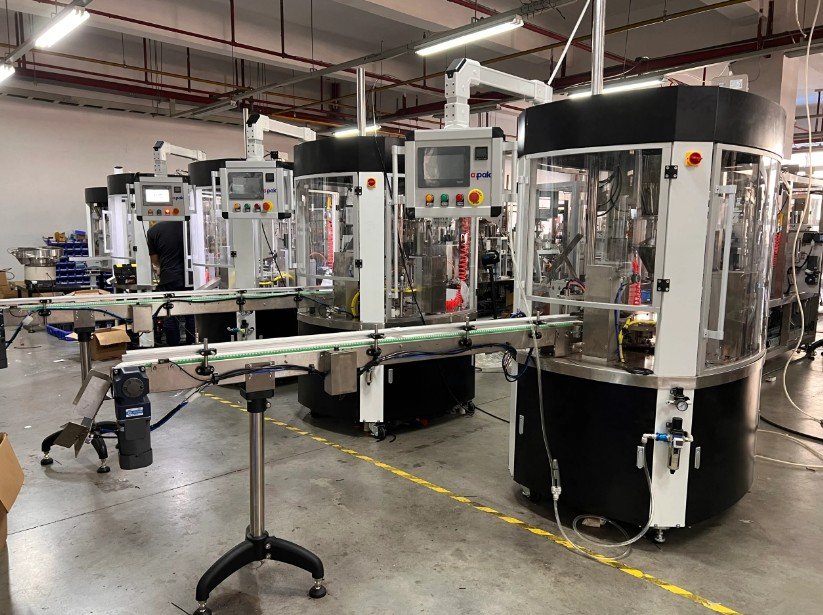
AFPAK publishes a category for K-cup filling machines. In an Engineering Handoff Card, such a category can be recorded as a format reference with a boundary: published information exists, while project suitability remains open. This helps a team talk about a particular family without claiming that materials, coffee, site conditions, or final presentation have already been matched.

Place the format reference at the top of the card. Beneath it, write the source, the question it raises, and the person expected to confirm the next condition. A receiver can then see the difference between an externally published category and an internal project requirement.

Keep utilities questions visible

Utilities are often mentioned late because they are less visible than a capsule or carton. They still belong on an early handoff card. List the question without inventing a value: which site utilities, connections, or environmental conditions need to be reviewed for this proposed work? Name the person who has the relevant site information. Leave the card open until an appropriate review has occurred.

Careful wording matters here. A line drawing cannot verify a facility condition. A supplier page cannot replace a site assessment. Writing the unknown down makes it easier to bring it to the people who can inspect the actual location and requirements.

Separate filling and sealing interfaces

AFPAK also presents a K-cup filling-and-sealing category. The paired words are a useful reminder that related stages can still need separate handoff notes. For filling, the card can identify the product information that must accompany a discussion. For sealing, it can identify what observation or review should happen before work is described as ready for the next stage.

Neither line on the card proves a result. Instead, each line asks what enters the interface, what information travels with it, and what must be returned before packing receives anything. The questions may sound basic; their written form prevents one team from silently assuming another team has already answered them.

Use the Engineering Handoff Card in four moves

Keep the card short enough to read during a working meeting. First describe the item or condition that crosses the interface. Next mark its evidence status. Then name the unresolved question. Finally assign a receiving reviewer and a next review point. The table below is a decision aid, not a commissioning record.

Engineering Handoff Card: preserve the condition and the next question

Move Card field Boundary Receiver
1. Describe Capsule family or pack item. Reference, not approval. Project lead.
2. Mark Evidence status. Observed or conditional. Relevant reviewer.
3. Ask Utilities or process question. No value assumed. Site contact.
4. Return Packing acceptance prompt. Requires next review. Receiving team.

Connect a published reference to a real discussion

AFPAK describes coffee-capsule filling, sealing, packing, and custom production-line options on its site. Teams exploring AFPAK capsule production equipment can use the card to organize a first discussion. Bring the proposed format, list the open utilities question, separate filling from sealing, and ask what information a packing handoff would need. That is a useful briefing structure, not a claim about a future line.

Supplier conversations become easier to follow when each answer has a place on the card. Record whether an answer is published information, a site-specific question, or a response that needs later confirmation. This protects a project from turning helpful early guidance into a statement of assured performance.

Make packing acceptance a receiver question

Packing does not simply receive a completed object. It receives an item with a format context, product context, and evidence status. On the handoff card, write what the receiving team needs to know and what it still needs to review. A concise receiver question might ask which details of the intended presentation must be clarified before an acceptance conversation can be meaningful.

Such a question improves coordination because it makes the receiving role active. The packing group is not asked to guess what earlier stages meant. It can return a specific request for evidence, clarification, or an appropriate review.

Review cards at the change point

Open a new card whenever a key assumption changes. A different capsule family, a revised product description, a new site fact, or a changed pack idea can all alter the handoff. Keeping the earlier card alongside the later one shows which condition moved and which questions stayed open. This is useful history, not extra paperwork for its own sake.

During review, ask four direct questions: What changed? Which interface now needs another look? Who owns the next question? What must not be claimed yet? Short answers are enough. The purpose is to preserve the boundary until evidence is available.

Translate an interface into a meeting agenda

Before a coordination meeting, turn each active card into a three-part agenda. Begin with the stated condition. Follow with the evidence available today. End with the precise request for the receiving role. This keeps attendees from spending the first part of a meeting reconstructing what the sender meant. It also lets someone say “not known” without appearing to block progress.

Operations may need a product condition explained in everyday language. Engineering may need a utilities question placed beside the site owner. Purchasing may need to know which reference is merely exploratory. Packing may need a description of what it is expected to receive. Separate cards allow each discussion to be useful without asking one generic note to carry every detail.

Keep minutes beside the card, not inside it. Minutes capture conversation; the card captures the current handoff boundary. After the meeting, change only the fields supported by the discussion and leave unsupported matters open. Pause when a response depends on trials, safety assessment, or a specialist view.

Use return questions to prevent one-way handoffs

A handoff is incomplete when the receiver has no way to signal what it needs. Add a return-question field to every card. For example: “What must be clarified before this packing discussion can continue?” or “Which site fact is still missing from this utilities question?” A clear return question gives the sender a next action instead of an impression that the work has disappeared into another department.

Receivers should also label the kind of response required. Some questions call for a document, some for a physical review, and some for a conversation with a qualified person. That label does not promise a result. It prevents a verbal reassurance from being confused with the form of evidence the project really needs.

Keep an assumption from becoming inherited fact

Assumptions travel quickly when cards are copied. Mark them explicitly. Write “assumption” before any working statement that has not been checked, and add its source or origin. When a later reader sees the card, that reader can test the statement against current project conditions rather than repeating it as fact. This is especially helpful when a project changes hands or pauses for a period.

Read it back. Mark it. Return it. These short actions can protect a detailed project from a surprisingly costly misunderstanding, because they make the next question visible before a team acts on a missing condition.

Pause. Compare. Ask. Record. Assign. Return. Check. Listen. Clarify. Mark. Revisit. Escalate. Separate. Confirm. Carry. Receive. Review. Notice. State. Map. Trace. Share. Hold. Test. Query. Frame. Recheck. Align. Explain. Close.

Limitations of an engineering handoff card

An Engineering Handoff Card cannot size a line, verify utilities, establish safe operation, certify compliance, or replace commissioning and qualified review. It cannot confirm compatibility, performance, sealing results, shelf life, or final pack quality. Project-specific trials, instructions, risk assessment, and appropriate technical review remain necessary.

Cards are deliberately limited records. Their strength is not technical authority; it is traceability. By identifying the condition, question, and receiver, they stop a project from confusing an early reference with a completed engineering decision.

Carry clarity, not assumptions

Good handoffs make it easier for people to do their own work well. Define the interface, record the capsule family as a reference, keep utilities open, separate filling from sealing, and invite packing to state its needs. The Engineering Handoff Card gives teams a practical way to carry clarity between roles while leaving technical conclusions to the evidence and reviewers that can support them.

When a short interface note moves from an engineering discussion to operations, purchasing, a site contact, and a packing receiver, it can accumulate unspoken expectations about utilities, format, product condition, sealing, or acceptance unless the original card continues to show exactly what entered the handoff, what evidence exists, what remains conditional, and who is responsible for returning the next answer.