92,000 employed under Samarth scheme for capacity-building in textile industry: Secretary

92,000 employed under Samarth scheme for capacity-building in textile industry: Secretary


By Shailesh Yadav |
Up-to-date:
Mar 03, 2023 21:45 IST

New Delhi [India], March 3 (ANI): As lots of as 92,000 weavers and artisans got placement in the ‘Samarth’ plan, the desire-driven and placement-oriented umbrella skilling programme of the ministry of textiles due to the fact 2020, explained Textile ministry Secretary Rachna Shah.
The secretary explained that the plan penetrated 28 states and six Union Territories of the state, and caters to all the sections of the society including Scheduled Caste (SC), Scheduled Tribe (ST) and other marginalised groups.
Of the skilling focus on of 3.47 lakh beneficiaries allocated so considerably, 1.5 lakh beneficiaries have been supplied coaching, she explained.
“More than 85 for each cent of the beneficiaries educated so far beneath the scheme are girls. A lot more than 70 per cent of the beneficiaries skilled in organised sector classes have been furnished placement,” she said.
The ministry has partnered with 116 textile Industries/industry associations, 12 central/state government organizations and three sectoral organisations of the ministry for undertaking training programmes below Samarth.
To broad foundation the panel of utilizing associates, the ministry has invited proposals for empanelment from the textile field and marketplace associations, linked to the sector. The portal for the submission of purposes is open until March 14.
The implementation interval of the scheme is up to March 2024. Samarth plan was formulated under the wide skilling coverage framework adopted by the ministry of ability development and entrepreneurship.
Samarth aims to incentivise and complement the industry’s attempts in developing work opportunities in the organised textile and associated sectors, masking the entire price chain of textiles, excluding spinning and weaving.
According to a assertion from the ministry of Textiles, the instruction programme and system curriculum have been rationalised keeping in watch the technological and market desire of the domestic and international economies.
In addition to the entry-amount skilling, a unique provision for upskilling/re-skilling programme has also been operationalised below the plan towards improving the efficiency of the current staff in apparel and garment segments. ‘Samarth’ also caters to the upskilling/ re-skilling need of the regular textile sector these as handloom, handicraft, silk and jute.
The scheme is implemented as a result of implementing companions (IPs) comprising the textile marketplace, sector associations, condition authorities companies and sectoral corporations of the ministry of textiles like Progress Commissioner Handloom, DC/Handicrafts and Central Silk Board.
Samarth has been formulated with highly developed attributes these kinds of as an Aadhaar-Enabled Biometric Attendance Procedure (AEBAS), Education of Trainers (ToT), CCTV recording of the education programme and a devoted phone centre with a helpline number and mobile application, according to the ministry assertion.
The main processes/treatments adopted in the implementation of the plan are Education Centres proposed by the utilizing associates are to be physically confirmed as a result of dedicated Authorities companies to be certain the adequacy of requisite infrastructure as for every the protocol adopted for each and every study course beneath the plan.
Also, a whole of 184 courses aligned with the National Skill Qualification Framework (NSQF) have been adopted below the plan throughout a variety of textile segments masking the classic sector like handloom/ handicrafts to regular sectors like garmenting to highly developed sectors like technological textiles, according to the ministry assertion.
In addition, conclusion-to-conclude digital answer for simplicity of implementation and checking.
Work linkage is mandated in the courses below the organised textile sector with the obligatory placement of 70 for each cent in entry-amount and 90 per cent for upskilling programmes. Also, a cellular application for physical verification of the instruction centres with geo-tagging /time-stamped photographs. (ANI)

Digital Textile Industry Growth Accelerates

Digital Textile Industry Growth Accelerates

Just after seeming to stall for some time, the digital textile market is now projected to grow by 14.4{1668a97e7bfe6d80c144078b89af180f360665b4ea188e6054b2f93f7302966b} to 2030 according to Grand View Analysis. In this short article, compliments of textiles professional and WhatTheyThink contributor Debbie McKeegan, we recap the investigation and why it is vital to the sector and to the earth. The advancement will be driven by the good results of internet-primarily based on-demand from customers enterprise models—the urgency of the sustainability agenda—and the sheer economic effectiveness of electronic textile printing, in accordance to the research.

Digital Textile Industry Growth Accelerates

(Picture courtesy Texintel)

The world-wide electronic textile printing sector sizing was valued at US$2,669.9 million in 2022 and is predicted to expand at a compound once-a-year development fee (CAGR) of 14.4{1668a97e7bfe6d80c144078b89af180f360665b4ea188e6054b2f93f7302966b} from 2023 to 2030, in accordance to Grand View Research. The precision presented by electronic textile printing is driving the need.

It involves sophisticated machinery, and there is an acute lack of expert manpower to function these devices. It is utilized with various styles of textiles these types of as apparel, bedsheets, banners, sporting activities apparel, flags, motor vehicle wrapping, and inside textiles. The development of the sector can also be attributed to fast transforming trend traits and the need for companies to quickly adapt to those people trends to remain pertinent.

This development will be driven by the achievements of world wide web-based mostly on-demand business enterprise models—the urgency of the sustainability agenda—and the sheer financial efficiency of electronic textile printing.

All about the entire world, web-centered on-desire corporations these kinds of as Printful, Cottonbee, Spoonflower, and Merch by Amazon are racking up big progress costs, servicing demand from customers with minimal inventories, speedy deliveries, and high-quality product or service.

Similarly, as the client queries for custom products, they also have an expanding sensitivity to sustainability.

Here, electronic textile printing checks all the containers, using a fraction of the water, a minimal total of electrical power, and a significantly minimized operational footprint than analog textile printing. Digital is demonstrably an eco-friendlier remedy to textile printing than standard screen printing. In addition, the digital textile printing route cuts out several of the time- and vitality-consuming responsibilities that go along with analog generation.

No lengthier do types have to be painstakingly divided and engraved on to cumbersome rotary screens, no for a longer period do huge tracts of the manufacturing facility floor have to be specified up to rotary display storage, no lengthier do shade kitchens have to correctly mix liters and liters of printing inks, and no more time do rotary screens have to be meticulously washed immediately after printing—all of which is inherently unsustainable.

In the electronic textile print small business model, all of the earlier mentioned responsibilities are matters of the earlier, as the electronic workflow gets rid of laborious manual procedures and progresses effortlessly as a result of all actions, building economic performance as it goes.

Similarly, there are important dynamics in the digital inks sector, exactly where Investigation and Markets predicts a 75{1668a97e7bfe6d80c144078b89af180f360665b4ea188e6054b2f93f7302966b} advancement in the market place by 2025.

It is appealing to be aware that this is against a predicted background of minimizing rates where electronic ink as a proportion of electronic textile printing prime expenditures declines from 47.3{1668a97e7bfe6d80c144078b89af180f360665b4ea188e6054b2f93f7302966b} to 24.20{1668a97e7bfe6d80c144078b89af180f360665b4ea188e6054b2f93f7302966b} amongst 2020 and 2025 (Resource: Study and Markets & Allied Market Study). This means that the expansion in electronic ink usage quantity is predicted to be in the get of 200{1668a97e7bfe6d80c144078b89af180f360665b4ea188e6054b2f93f7302966b}.

Likewise, the world digital printing machine industry is forecast by Confirmed Current market Analysis to double in measurement to over $470 million by 2027, reflecting the fundamental change of the textile field away from rotary screen printing to electronic.

On the lookout even more in advance, undoubtedly the most hanging element of all of the latest study predictions is that while electronic textile printing as a proportion of all textile printing is predicted to double by 2025 (Allied Market Research) even by 2025 it will however only signify about 5{1668a97e7bfe6d80c144078b89af180f360665b4ea188e6054b2f93f7302966b} of all the textiles printed (Grand Watch Exploration).

This number by itself is affirmation of the opportunities that lie ahead for digital textile printing. Over the coming yrs, as equipment in present mills has to be replaced, as web-to-print business enterprise types establish, and as capital will become readily available, the proportion of electronic print equipment will proceed to grow—as will the proportion of printed textiles that are digitally printed.

In these conditions, recent charges of development are possible to be managed and it is not unreasonable to expect that by 2035 electronic print machine yearly profits will exceed $1 billion, as electronic ink yearly profits defeat $6 billion and digital textile printing exceeds $35 billion yearly.

No marvel that the PRINTING United Alliance, as they concluded in their PRINTING United Digital Working experience, explained the digital textile current market as an “exploding market” as they focused on “the most interesting market place in the Field.”

So what does that all mean for the textile marketplace as a whole? Switching to digital printing technologies gives the two new alternatives for entrepreneurial advancement and the agility expected for sustainable output at industrial quantity.

It unlocks previous processes and moves forward to replace analog production, handing the electricity again to the shopper by enabling on-desire production. In undertaking so, it also engages the structure community and the shopper, releasing them from mass output, one thing that the retail sector should now tackle if they are to continue to be practical.

The textile marketplace is primed for change—the buyer requires variety and the industry ought to now take flight and undertake the technologies that produce marketplace 4..

The latest innovations are pushing the boundaries of print in an founded marketplace. As new entrants gain traction, the options are infinite when twinned with digital know-how. On the other hand, the textile market has a historic footprint and when technology is disrupting how we essentially print, several of the textiles we print onto have not adjusted in design for far more than a hundred several years. But that’s also about to adjust with new sustainably sourced or round fibers getting mainstream. Much of the issue of sustainability is upstream from print, designed in the manufacture of fibers, pure and artificial, together with the weaving and processing of woven or knitted materials and is responsible for big volumes of carbon emissions and international toxicity.

Printing onto these materials applying traditional printing methods is now equally challenged by digital know-how. Transparency inside the provide chain will quickly develop into a necessity for the retailer, and new electronic systems these as blockchain can and will facilitate this.

Platforms these kinds of as TextileGenesis, a groundbreaking traceability corporation, now help complete traceability from fiber to retail. Lenzing, Tencel, and Ecovero fibers now incorporate the instruments to trace a fabric’s certification of the fiber from its origin by way of to spinning, weaving, knitting, dyeing, and up to garment-making. To day, supply chain transparency has turn out to be a leading precedence for attire and home manufacturers as it addresses the two the consumer’s need for these kinds of and the escalating possibility for correct compliance as now confronted by all brand partners. The platform carries on to development with a phased onboarding pilot system with primary brand names H&M, ArmedAngels, Mara Hoffman, Chicks, and main provide chain players from 10 countries in three areas: Asia, Europe, and the Americas.

It is at this place that electronic engineering comes to the fore, with an rising need for traceability and sustainability.

In purchase to supply a new chapter for the textile industry, we have to comply and find to simplify earlier generation procedures if we are to reverse the environmental legacy of standard creation. Historically, traditional printing has been a difficult science, and the digital swap a steep understanding curve. Standard analog printing needs a sophisticated collection of processing actions, and each and every move needs added equipment. The electronic textile technologies of the future have to supply a new hybrid for production by getting rid of a great deal of the ancillary equipment demanded to provide a simpler alternative. It ought to also provide a higher-quality merchandise that meets the wants of the textile buyer, and that goes outside of the printed surface. Textiles are tactile, and the final merchandise is intended for each top quality, durability, and efficiency.

No matter of market sector, and there are quite a few, textiles and their functionality specs are proven, they are not able to improve.

In get to simplify the process of manufacturing and meet up with need and specification, the electronic textile printing device technological know-how used have to be adaptive—it have to operate with no complexity to print onto several substrates and fabric constructions. It have to satisfy certain customer needs and go to change conventional procedures at the thrust of a button. Printing onto a fine polyester Chiffon, for illustration, would commonly demand from customers a laborious set of processes for the regular print home, as does printing onto a weighty cotton twill. Each and every cloth will respond to printed coloration, managing, and shrinkage differently—all components will have to be managed to assure that the last finished textile output meets anticipations. This would generally involve an arsenal of high-priced in-household textile ending devices and a substantial proportion of labor and power.

Digital printing technology corporations these as Kornit Digital have overturned the challenges of standard production and are disrupting the analog marketplace.

Kornit has developed a printing equipment that is crafted for a new innovative vision of the textile field, a person that moves to simplify manufacturing across all sectors of clothing and residence decoration. With one device, the Kornit Presto, the electronic textile printer can adapt on-the-fly to satisfy shopper demand and to empower on-demand from customers, superior-quality textile printing. All of this makes sure that the company can experience the advantages and prospects that now occur for on-need creation. With just one equipment and a significantly decreased operational footprint, the printer can regulate all factors of textile production, in a clean up, licensed output source chain.

As we enter a new, accelerated chapter for our business, technological innovation paves the way toward a new long term that delivers the designer, retailer, and buyer incredible creative imagination, range, and prospect together with licensed printed creation and offer chain visibility. Just about every and every lover in the source chain of a person single products will before long appear below increasing scrutiny.

To create a upcoming-risk-free business enterprise design, the textile printing industry need to now adapt and pick its technologies partners and suppliers correctly in buy to satisfy marketplace demands and do all of this at an accelerated rate. Switching to a qualified offer chain, with a sustainable electronic footprint, will produce a prosperous on-demand from customers commercial upcoming.

www.texintel.com

Textile Recycler Circ Closes $25 Million Funding Round From Avery Dennison, Zalando

Textile Recycler Circ Closes $25 Million Funding Round From Avery Dennison, Zalando

Fiber-to-fiber recycling tech business Circ has shut a $25 million spherical of funding backed by European online fashion giant Zalando, and world resources science organization Avery Dennison. Korean company Youngone also joined the round.

The latest injection of money follows a $30 million Collection B spherical past July, which was joined by Bill Gates-backed Breakthrough Strength Ventures, American textile maker Milliken & Organization, and Spanish rapid-trend big Inditex, father or mother firm of Zara, among the other folks.

Far more from WWD

“Transforming the manner economic system requires management from influential players in the textile marketplace, the money group, as well as technologies innovators,” mentioned main executive officer Peter Majeranowski.

“The Circ crew, which involves not only our employees but also our traders and partners, encompasses a various team of retail, producing and engineering leaders throughout the U.S., Europe and Asia. We share a typical watch that a cleanse long term for the manner field is not only possible but also essential for humanity. With each individual funding round and expansion in our husband or wife base, we come to be far more capable of ending the expensive and preventable cycle of garment waste.”

The most up-to-date spherical will proceed to accelerate Circ’s engineering enlargement as it scales up to industrial-degree facilities and enable the business produce its to start with shopper solutions to market.

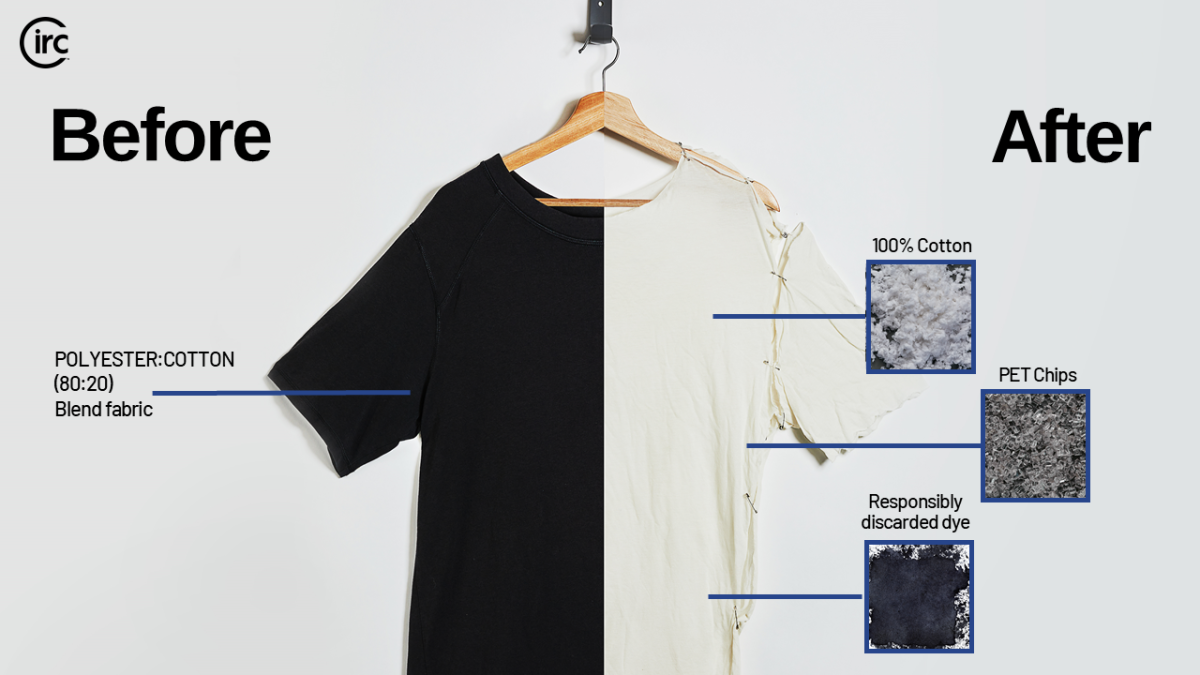
Majeranowski launched Circ in 2011, and has made a hydrothermal procedure to split down textiles, recuperate cotton and polyester while sustaining its integrity and transform them into new components.

Circ’s tech can also separate and recover poly-cotton blends, so far a big challenge for the field. Whilst poly-cotton blends account for a substantial chunk of the outfits designed currently, much less than 1 {1668a97e7bfe6d80c144078b89af180f360665b4ea188e6054b2f93f7302966b} is at present recycled.

“With the investment in Circ, we are contributing to an emerging infrastructure for circularity that will eventually assist the fashion marketplace at big, to shift away from a just take-make-waste model,” explained Zalando co-main executive officer David Schneider. “We want to be a sustainable trend system with a internet-optimistic impression for men and women and the earth, and we are energized about the probable of Circ to add to this vision.”

“The time for round techniques and their enabling technologies is now. Using smart labeling in clothes, Avery Dennison is working with Circ and other offer chain associates to give a alternative for the just take-again and sorting of waste at scale,” reported Michael Colarossi, Avery Dennison’s vice president of innovation and sustainability.

Circ’s fiber-to-fiber tech aims to lessen the want for virgin textiles in the offer chain. Getting those textiles again into circular production will choose petroleum and tree-primarily based merchandise out of the fashion program, Circ states. According to Breakthrough Strength Ventures, the textiles business is believed to account for extra than 1 billion metric tons of carbon emissions, the major part of which comes from raw resources.

Most effective of WWD

Simply click right here to examine the entire post.

Sustainable water management in Pakistan’s textile industry

Sustainable water management in Pakistan’s textile industry

By Shahid Sattar and Noreen Akhtar

Unsustainable industrial water use has develop into a substantial environmental sustainability obstacle. Discharge of untreated wastewater, absence of water-effective systems, and absence of recycling and reuse tactics are considerable contributors to industrial water pollution. All industrial manufacturing functions and raw substance production eat h2o extensively. Textile dyeing is regarded as the next major drinking water polluter globally, with 20{1668a97e7bfe6d80c144078b89af180f360665b4ea188e6054b2f93f7302966b} of the world’s wastewater produced by the style industry on your own. This is majorly thanks to significant quantities of h2o used for textile producing that is afterwards discarded as wastewater without having successful cure.

Pakistan’s textile field contributes 8.5{1668a97e7bfe6d80c144078b89af180f360665b4ea188e6054b2f93f7302966b} to the GDP, more than 60{1668a97e7bfe6d80c144078b89af180f360665b4ea188e6054b2f93f7302966b} to the country’s exports, and employs about 45{1668a97e7bfe6d80c144078b89af180f360665b4ea188e6054b2f93f7302966b} of the country’s labor pressure. However, the adoption of sustainable business enterprise practices, and not just the mounting export figures can make the sector hugely competitive in the world wide export marketplace. Simply place, corporations that are incorporating environmental, social, and governance (ESG) elements of sustainability in their business versions are the only effective foreseeable future corporations, as they devise stringent insurance policies to cut down pollution and shield ecosystems.

Pathways of impact

At the moment, the country’s textile sector is snowed under by extrinsic worries which include the government’s withdrawal of RCETs, as perfectly as intrinsic troubles of environmental and social sustainability. Major environmental issues together with increasing GHG emissions, unsustainable water consumption, and discharge of hazardous chemical effluents, that require the correct monetary allocations and technological advancements for regulate, are related to the industry’s functioning. On the other hand, regardless of significant financial burdens resulting from the present governing administration guidelines and local weather change, environmental consciousness is not an forgotten philosophy any longer by the sector due to various variables of affect.

International conventions on ecosystem and local climate transform are between the foremost influencers, that have shaped the sector’s insurance policies toward decarbonization and water footprint reduction. Drinking water stewardship, in certain, has emerged as a leading sustainability most effective practice, inspired by these world treaties. These protocols, also mandated by the EU’s GSP+, have positively built-in the CSR concept into the industry’s production, whereby firms have willingly fully commited to making certain sustainable h2o intake and wastewater cure on their web sites. The worldwide industry and inexperienced preferences of the purchasers are other recognized motorists of h2o stewardship, as they assistance acquire competitive standing and trustworthiness in the export current market. Textile companies are complying with these tastes by means of acquiring certification schemes, the absence of which triggers the boycott of items, finally harming the competitive position as opposed to other regional export leaders these types of as Bangladesh.

Expanding awareness amid industry stakeholders about the rewards of drinking water conservation has also scaled up the development on water stewardship. Research exhibits that water conservation steps in the marketplace not only minimize creation costs but also vitality usage, wastewater treatment charge, and pollutant load. It also assures drinking water availability for long run use. Furthermore, the thoughtfulness to the simple fact that climate alter as effectively as constant unsustainable drinking water withdrawal are exhausting the country’s pure drinking water sources as a result resulting in h2o insecurity, has also been central in upscaling h2o management in the sector.

Examine more: Barriers to renewable electrical power changeover for Pakistan’s textile market

Marketplace examples

Our textile field is actively engaged in conference the maximum benchmarks of environmental overall performance for drinking water stewardship.

Interloop, for instance, has adopted nano-bubble engineering to lower h2o consumption by 95{1668a97e7bfe6d80c144078b89af180f360665b4ea188e6054b2f93f7302966b}, chemical compounds usage by 71{1668a97e7bfe6d80c144078b89af180f360665b4ea188e6054b2f93f7302966b}, and energy intake by 50{1668a97e7bfe6d80c144078b89af180f360665b4ea188e6054b2f93f7302966b}. It is marketing sustainable textile bleaching as a result of the fill and drain systems for a number of processing cycles. The enterprise has partnered with WWF for Alliance for H2o Stewardship (AWS) certification to make sure behavioral shift and neighborhood-level impact towards h2o stewardship. Major functions incorporate water catchment research, water audit for high quality, amount, and sanitation methods, stakeholder engagement, and neighborhood expense for h2o conservation. Interloop has planned to scale up 60{1668a97e7bfe6d80c144078b89af180f360665b4ea188e6054b2f93f7302966b} water recycling capability and has devoted wastewater therapy and recycling crops to make textile damp procedures less environmentally destructive.

In the same way, dependable h2o utilization is a basis of Sarena Textile’s motivation to sustainable textile manufacturing. The corporation has put in a biological wastewater treatment plant with a capability to take care of 3840 m3/day and fulfills ZDHC, PEQS, and IPE necessities. The drinking water-saving initiatives taken involve a condensate recovery procedure, shark washing on washing equipment, and h2o reuse at all important methods. Sarena’s normal daily water conserving is around 35{1668a97e7bfe6d80c144078b89af180f360665b4ea188e6054b2f93f7302966b} of its overall h2o consumption, which is 1880 cubic meters.

Drinking water management is a single of the significant sustainability troubles mapped by US Clothing and Textiles. It has pledged to conserve 50{1668a97e7bfe6d80c144078b89af180f360665b4ea188e6054b2f93f7302966b} of drinking water by using minimize, reuse, and recycle methods by deploying h2o-efficient systems. Drinking water procedure plants are to be utilized to recycle 15{1668a97e7bfe6d80c144078b89af180f360665b4ea188e6054b2f93f7302966b} of hazardous wastewater. The firm aims to decrease water withdrawal worry from freshwater resources by harvesting rainwater for its features. 117 finishes have been transformed to waterless recipes saving 1,40,000 m3 of water in 1 12 months. Figure 1 offers the firm’s development on sustainable water administration. Similarly, the sustainability framework of Yunus Textiles is primarily based on the triple-bottom-line tactic to provide folks, the planet, and earnings. The organization has set up one of Pakistan’s largest effluent treatment crops to recycle and reuse water and recycle efficiency is preserved at up to 90{1668a97e7bfe6d80c144078b89af180f360665b4ea188e6054b2f93f7302966b} with an in depth vision towards Zero Liquid Discharge.

Go through more: The Snake Bites After Once more – Power

Our foremost textile industries give lots of other comparable examples of drinking water stewardship to make positive their exports give sleek enterprise figures even though also complying with world-wide sustainability prerequisites. These procedures must be adopted much extensively to have a sustainable and significant effects. The prevailing problem, nevertheless, is to integrate the relaxation of the small and medium enterprises in the collective initiatives to achieve sustainable water management.

blank

Existing challenges and the way ahead

ILO’s Worldwide Labour and Environmental Specifications (ILES) application aims to market sustainable and inclusive advancement by supporting the financial integration of Pakistan’s SMEs into the regional and worldwide financial system. Underneath this task, WWF aims to apply Alliance for H2o Stewardship (AWS) requirements in the leather and textile sector SMEs. This inclusive potential making will enrich the export functions and compliance of the SME sector to develop into qualified also to join ILO’s Better Do the job System that supports the textile sector to raise its competitiveness by way of the achievement of labor legal rights for employees.

Despite the fact that worldwide plans on natural environment and social sustainability are integrating textile SMEs into their agenda, these enterprises have been confronting numerous problems hindering their adherence to countrywide and global polices on environmental sustainability. Deficiency of fiscal resources and authorities incentives, technologies constraints, and non-existent potential building of the employees are some of the vital issues. The latest restrictions demand drinking water conservation at each individual step of producing which is unaffordable for the SMEs consequently generating their operating environmentally destructive.

Further more, there is a lack of stringent checking of industrial h2o use and effluent air pollution by the relevant govt authorities. According to UNCTAD, land, and marine ecotoxicities are key environmental problems associated with Pakistan’s textile industry. Also, investigate displays that the industry consumes more drinking water than needed. This implies that the now put in effluent procedure crops are not proficiently functional, therefore triggering land and water air pollution downstream. Aside from, the higher than-talked about very best techniques of water stewardship are not currently being broadly adopted by the field. As growing water shortage owing to glacial retreat ensuing from weather alter, unsustainable drinking water management and withdrawal, and deficiency of infrastructure for h2o storage, is an rising existential threat for Pakistan, the unmonitored and unregulated industrial h2o use and pollution can worsen the present-day scenario.

Read much more: EU’s textile squander and utilised clothing in Pakistan

In buy to tackle the enduring troubles, the emerging water stewards of the textile field need to occur ahead to assistance the SME sector develop its ability to comply with the mounting world environmental criteria. This can be in the sort of know-how and know-how transfer as perfectly as incentives. Whilst aiming to lengthen their export industry, there is a require for the SME sector to create sustainability departments to check their sustainability progress but also to take part and acquire comprehensive advantage of the countrywide and worldwide funding and capacity-making systems. What’s more, the unsustainable h2o withdrawal patterns and hazardous effluent discharge from the industry will have to be monitored in get to make guaranteed the export-oriented sectors are sustainable in a genuine fashion. The decrease, recycle, and reuse approaches have to be designed obligatory to lower down the industry’s cost and waste hence minimizing the stress on the country’s purely natural assets.

Industrial h2o withdrawal and effluent discharge have to be controlled and monitored by a regulatory company, that is formulated inclusively with appropriate associates from all sectors of the financial state. In order for this company to be helpful, it need to be specified fine lines of power to impose penalties for any non-compliance with pollution directives by the sector. keeping in see the abysmal state of water bodies in the region, the regulatory company ought to have the authority to impose pollution taxes on the polluters to enhance the high-quality of drinking water channels. This seems to be the only practical way forward to boost the top quality of our drinking water bodies, decrease unsustainable styles of industrial drinking water consumption and satisfy the increasingly stringent compliance demands of our textile imports into the western economies.


Mr. Shahid Sattar, now Government Director & Secretary Typical of All Pakistan Textile Mills Association (APTMA), has earlier served as a Member Planning Fee of Pakistan and an advisor to the Ministry of Finance, Ministry of Petroleum, and Ministry of H2o & Electric power.

Noreen Akhtar is a investigation analyst at APTMA. 

The sights expressed by the writers do not necessarily depict World wide Village Space’s editorial policy.

Green ideas can propel textile industry to the next level

Green ideas can propel textile industry to the next level

As the 2030 time frame for achieving United Nations’ 17 Sustainable Development Goals nears, sustainability has become the topmost priority across sectors. India too has set green goals as a key agenda en route to achieving Amrit Kaal. Industries and businesses, therefore, are making conscious efforts to formulate strategies to walk the fine line between bettering bottom lines and adopting environment-friendly practices.

Applicable also to the Indian textile industry, making sustainability a norm will play a huge role in impacting the environment and driving India towards a tech-focussed, knowledge-based economy. Aptly dubbed the ‘silent cash cow’, this industry accounts for 2{1668a97e7bfe6d80c144078b89af180f360665b4ea188e6054b2f93f7302966b} of the nation’s GDP, 4{1668a97e7bfe6d80c144078b89af180f360665b4ea188e6054b2f93f7302966b} of global textile and apparel commerce and 7{1668a97e7bfe6d80c144078b89af180f360665b4ea188e6054b2f93f7302966b} of industry output in value terms. The textile, garment and handicraft sector provided 11.4{1668a97e7bfe6d80c144078b89af180f360665b4ea188e6054b2f93f7302966b} of all exports from the country even in the Covid-affected fiscal year of 2020–21. Additionally, it is India’s second-largest employer.

On the flipside, the production methods in this industry are responsible for emitting over 1.2 billion tonnes of Greenhouse Gas (GHG) annually. In fact, the global textile production contributes to 8-10{1668a97e7bfe6d80c144078b89af180f360665b4ea188e6054b2f93f7302966b} of the Greenhouse Gas (GHG) emissions and 20{1668a97e7bfe6d80c144078b89af180f360665b4ea188e6054b2f93f7302966b} of industrial wastewater pollution, making it the second-most polluting industry.

Processes such as dyeing, finishing chemicals in textile substrates, desizing (the process of removing sizing material from yarn), scouring, bleaching, and mercerising (chemically treating fabric to increase affinity toward dye) consume enormous amounts of water. To give a perspective, creation of a single cotton shirt requires as much water as a person would drink in two-and-a-half years.

Synthetic materials such as nylon and polyester use less water during production but emit dangerous GHGs.

The majority of finished goods in the garment industry are manufactured and supplied by China and India, two neighbours whose textile sectors are largely supported by coal-fired power plants. Needless to say, these numbers call for a quick switch to sustainable production methods especially when our country has committed to reduce the emissions intensity of its GDP by 45{1668a97e7bfe6d80c144078b89af180f360665b4ea188e6054b2f93f7302966b} by 2030. As the figures stand in direct conflict with the country’s ambitions, the government’s onus on green growth in Budget 2023-24 does not come as a surprise.

A few years ago, the Centre launched the Integrated Scheme on Powerloom Sector that intends to help the industry shift to more energy-efficient modes of production. Additionally, the Ministry of Textiles started a Green Technology Mission to promote the adoption of eco-friendly products and methods. By encouraging the use of environment-friendly materials, dyes and production techniques, the mission seeks to lessen the sector’s impact on the environment. Further, it has set up the National Textiles Corporation to promote the use of sustainable technologies. The corporation provides technical and financial assistance to the industry and has also built the Centre for Sustainable Textiles to promote sustainable practices.

Additionally, the government has been actively supporting Production Linked Incentive (PLI) schemes over the past few years, which has given the textile industry the opportunity to advance India’s sustainability objectives. However, efforts are required in terms of incentives, infrastructure and research and development, even as the industry embraces the already laid out plans.

Consumers, too, are growing cautious of what they wear. Data shows that web searches for eco-friendly clothing have risen by more than 70{1668a97e7bfe6d80c144078b89af180f360665b4ea188e6054b2f93f7302966b} over five years. According to McKinsey, three in five people now claim environmental impact is an important factor in making purchasing decisions. The growth of e-commerce has produced a new business model, where the customer is now in control. In order to meet their expectations, manufacturing has also begun to improve as on-demand designs take centre stage. Clothes are ordered before they are made as opposed to being made and then sold.

Reusable, regenerable and recyclable clothing is also proving to be a great alternative. There are a few eco-friendly textile replacements, including those created from recycled materials and agricultural waste. These new textiles offer replacements to biodegradable ones and generate less waste during production. Fabrics made of plastic bottles are increasingly being used to make stylish garments as demonstrated by our Prime Minister Narendra Modi, who wore a stylish light blue jacket made of plastic bottles at the Parliament earlier this month. Green substitutes for cotton include natural fibres such as hemp, bamboo and ramie, and they too are increasingly becoming popular.

Among a gamut of solutions for more sustainable textiles is the use of biotechnology. This typically involves the application of science and technology to natural fibres to create a variety of textiles.

Textiles can be made from bio waste and are combined with existing fibres using chemical processes. A recent research at IIT Ropar may just have come as another boon to the industry. The team has created an innovative green technology called air nano bubble, which when dispersed in water can cut water use and chemical dosage by 90-95{1668a97e7bfe6d80c144078b89af180f360665b4ea188e6054b2f93f7302966b}, thus saving 90{1668a97e7bfe6d80c144078b89af180f360665b4ea188e6054b2f93f7302966b} of energy usage.

Though the modern, environmentally-healthy alternatives may cost more as technology is still at the nascent stages, automation and innovation in manufacturing, combined with guaranteed sales, are bound to offset these costs over time. The key stakeholders need to lead from the front and infuse new ideas and talent into the sector for India to make a visible impact in the near future.


Linkedin


Disclaimer

Views expressed above are the author’s own.


END OF ARTICLE


  • Union of 100 states: Why India must have many small states. It will make for better economy and better politics

  • MPs, use the break: Budget session’s second half should hopefully see some quality arguments on the GoI economic policy

  • Don’t spook the justice system

  • Was Adani stock rise really a con? GoI’s ex-CEA & IMF’s Executive Director, India, argues a plausible explanation for the high market valuation was a combination of public capital spending and irrational exuberance

  • Maharajah of deals: How AI plane orders can increase India’s strategic leverage and manufacturing prowess

  • America’s wild balloon chase: Is expending $4,00,000 missiles on $400 or $4,000 Chinese pop-ups the best use of America’s resources? Its vigilance has failed to check a far more insidious Chinese incursion

  • Make then sell: India’s ambitious defence export target comes up against long delays in product development

  • Fasten your seatbelt, India: Air India’s huge order has multiple implications, for the airline, for civil aviation, for policy and for manufacturing. Here’s a deep dive

  • Moving with times: SC’s flexible approach to interpreting the Constitution has enhanced its relevance to governance

  • Planes + NDRF = Help: Does the aid to Turkiye and Syria mark the coming of age of India’s humanitarian assistance?

Piyush Goyal, Minister of Commerce & Industry, Consumer Affairs, Food & Public Distribution, Textiles, GoI

Piyush Goyal, Minister of Commerce & Industry, Consumer Affairs, Food & Public Distribution, Textiles, GoI
  • India to see better use of complex textiles turning out to be a solid pillar of India’s advancement
  • To concentration on advancement, scale, and speed for India to create and aspire to consider its technological textiles current market to 40 billion pounds by 2025-26

MUMBAI, India, Feb. 24, 2023 /PRNewswire/ — Mr. Piyush Goyal, Minister of Commerce & Market, Shopper Affairs, Food & Public Distribution, Textiles, Authorities of India currently stated, “This is the correct time for us to appear at progress, scale, and velocity. The globe wants to see India in the resilient offer chains. Now is the time to seize the globe current market and India will play a key purpose in the global financial state.”

Addressing the 10th edition of Techotex’23, arranged by the Ministry of Textiles, Authorities of India and FICCI, Mr. Goyal, mentioned “By 2047 the complex textile field should really be $100-125 bn strong. If we accelerate, we can aim for $200 bn.” “The Indian Specialized Textile current market will improve much more than 10-12{1668a97e7bfe6d80c144078b89af180f360665b4ea188e6054b2f93f7302966b} if we are able to showcase its usages for alternate functions,” he added.

The Minister claimed that provided the wide selection of utilization for specialized textiles, this is the area of the long term. “I attraction to startups and significant firms to think about growing swiftly in the technological textiles field. Our world-wide market place share is about 2.5{1668a97e7bfe6d80c144078b89af180f360665b4ea188e6054b2f93f7302966b} I believe the Indian market place will grow faster than 12{1668a97e7bfe6d80c144078b89af180f360665b4ea188e6054b2f93f7302966b} if we can showcase its uses.”

“The course for India is to become an intercontinental participant actively playing an integral function in the worldwide provide chain, a thing that no region has carried out. We have to integrate our economic system with those of other produced nations around the world to get to our opportunity and the want of our youthful population,” he extra.

Even though emphasising the G20 Presidency Option, he recalled the 5-F Principle of Farm to Fibre to Manufacturing facility to Fashion to International espoused by the Primary Minister as the way forward for the industry. Highlighting the Rs. 1,480 crore Countrywide Specialized Textile Mission, the minister urged the sector and other stakeholders to look at what new research, new compounds, fabrics, composites, and final items can be leveraged to seize the world-wide industry, supplying all 8 Textile Analysis Associations and other federal government institutes to assist any personal sector initiative that will get large-quality scientific rigour into your innovations and speedy observe their proposals.

Ms. Rachna Shah, Secretary, Ministry of Textiles, Federal government of India, explained, “It is gratifying to be aware that the response to Technotex’23 has been quite encouraging, with a lot more than 150 exhibitors and a lot more than 250 prospective buyers from a lot more than 30 international locations. We are assured and concentrated on the overarching vision of producing India a hub for specialized textiles.”

“The government is functioning on the Countrywide Technological Textiles Mission and criteria and high quality. The Manufacturing Connected Incentive Plan has generated a superior volume of interest, which is envisioned to bring in roughly Rs. 10,000 crores in the specialized textiles sector,” she extra.

Mr. Rajeev Saxena, Joint Secretary, Ministry of Textiles, Govt of India, reported there ended up exclusive stalls by DPIIT, Textile Exploration Affiliation, and Centre of Excellence highlighting Make in India to the entire world. He additional emphasised that seven specialized periods ended up held to chart a way ahead toward the eyesight of Specialized Textiles in 2047.

Mr. H K Aggarwal, Member Countrywide Executive Committee, FICCI and Managing Director, Grasim Industries Confined, explained, “The Indian complex textile industry is envisioned to grow at 8{1668a97e7bfe6d80c144078b89af180f360665b4ea188e6054b2f93f7302966b}-10{1668a97e7bfe6d80c144078b89af180f360665b4ea188e6054b2f93f7302966b} for every year, when the government and the field are doing the job really hard to accelerate this expansion price to 15{1668a97e7bfe6d80c144078b89af180f360665b4ea188e6054b2f93f7302966b} – 20{1668a97e7bfe6d80c144078b89af180f360665b4ea188e6054b2f93f7302966b} for every 12 months.”

Mr. Aggarwal further more added that initiatives this kind of as the Nationwide Complex Textile Mission would boost the textile sector in India, accelerating the momentum of development. Noting that the specialized textiles field encompasses many programs and sectors, he reported every single software has a exceptional value chain.

Mr. Mohan Kavrie, Chairman & Mentor, FICCI Technotex SME Organizing Committee & Chairman, Supreme Nonwovens Industries Pvt Ltd, delivered the vote of many thanks and wished the exhibition achievements. 

The 10th edition of Technotex 2023 was organised on the topic of ‘Envisioning Indian Complex [email protected]’ with a emphasis on highlighting the existing trends, developments, challenges and prospective buyers of the industry. The 3-working day convention and exhibition have a participation of in excess of 150 exhibitors and far more than 250 consumers from additional than 30 nations which includes Taiwan, Germany, Switzerland, South Africa, Korea, Russia and Luxembourg delivering them with an opportunity to showcase their hottest technologies in the arena of complex textiles to more than 5200 site visitors in two times.

About Federation of Indian Chambers of Commerce & Field (FICCI):

A non-authorities, not-for-gain organisation, FICCI is the voice of India’s business enterprise and business. From influencing coverage to persuade discussion, partaking with policy makers and civil modern society, FICCI articulates the sights and concerns of business. It serves its customers from the Indian personal and public corporate sectors and multinational corporations, drawing its toughness from diverse regional chambers of commerce and marketplace throughout states, achieving out to above 2,50,000 organizations. More information is obtainable at: http://ficci.in

For much more aspects, stop by: https://www.technotexindia.in/

Resource Federation of Indian Chambers of Commerce & Business (FICCI)