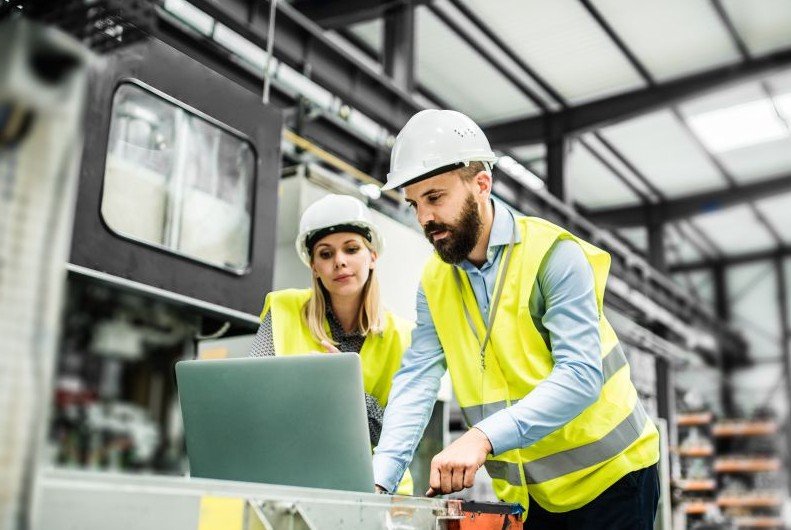

Warehouse robots often require structural components that carry loads, maintain motor and sensor alignment, and withstand repeated movement without unnecessary weight. Their designs also change as engineers test payload capacity, drive systems, battery placement, and interfaces. CNC machining supports these iterations because geometry can be revised without producing dedicated molds or dies. For custom metal machining, brackets, housings, shafts, and mounting components can move from revised CAD models to physical prototypes without restarting manufacturing.
CNC Machining Supports Fast Design Changes in Load-Bearing Robot Components
Typically, the design of robots does not go straight from the CAD file to the product. In this case, payload conditions, placement of motors, clearance of wheels, location of batteries, and structural loading may be changed during testing. The ability to make quick modifications will help engineers try out different ideas without the need for special tooling.
CNC steel machining can be used in manufacturing of shafts, structural couplings, gear boxes and other elements that require strength and precision. Engineers can alter holes, thicknesses, mounting surfaces, or weight-relief structures and make another modification using different toolpaths. This may be useful when there is a need to add material around the high load areas or remove it in order to decrease the robot weight.
Material choice also depends on the type of part that needs to be created. If a lightweight and relatively stiff construction is needed then aluminum should be used. However, in case of heavy loads or wear-proneness the steel is more preferable. CNC steel machining allows engineers to investigate structural configurations while keeping dimensional tolerances under control. WayKen produces robotic parts by CNC machining for prototype and small-batch development, where designs can continue changing before production is finalized.
5-Axis Machining Holds Critical Interfaces Across Complex Robot Components
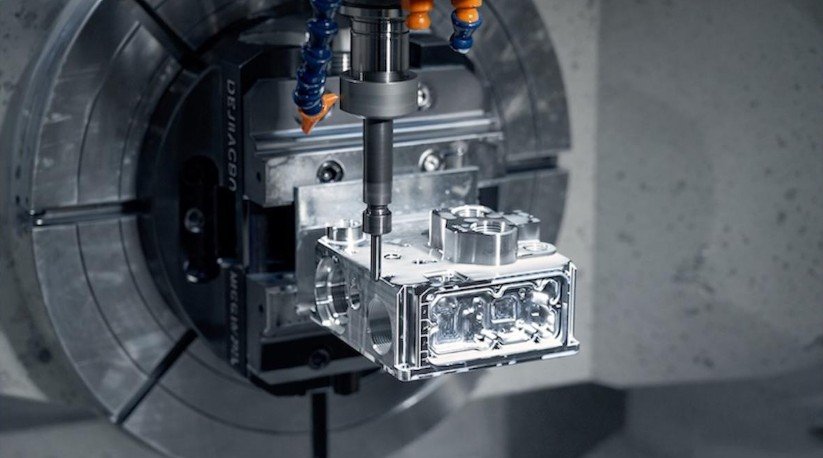
The internal parts of warehouse robots, such as motors, bearings, sensors, wheels, batteries, and control units, have to fit within the limited confines of the robot. Its housing may involve slanted surfaces, bearing bores, screw holes, wire passages, and locating structures which have to stay precisely aligned.
The repeated repositioning of the workpiece increases the possibilities of datum-transfer errors. In each setup, the fixture has to place the workpiece back into its exact position, whereas any new offset would create an error in the workpiece location. The combination of errors when accumulated from the bearing seat locations, motor mounting surfaces, and screw holes may negatively impact assembly alignment.
5-axis machining decreases the problem of the exposure to the datum-transfer errors by permitting the cutting tool to access multiple surfaces of the workpiece while keeping the latter precisely located. 3-axis machines can be used to make simpler brackets, whereas 3+2 positioning may work better for multi-face geometries. Strategy should come after the analysis of geometry and tolerances.
At Wayken, custom metal machining of the robotic components that have through-holes, threads, seal grooves, and other multi-face features is performed with 5-axis machining. For example, one exoskeleton part was made with 3-axis roughing and 5-axis finishing operations in a single clamping operation.
In-Process Inspection Verifies Fit and Alignment Before Robot Assembly
Dimensional compliance alone does not guarantee that a robotic component will assemble correctly. A hole can have the correct diameter but be incorrectly positioned relative to a bearing bore. Two individually acceptable components can also create interference when their tolerances accumulate.
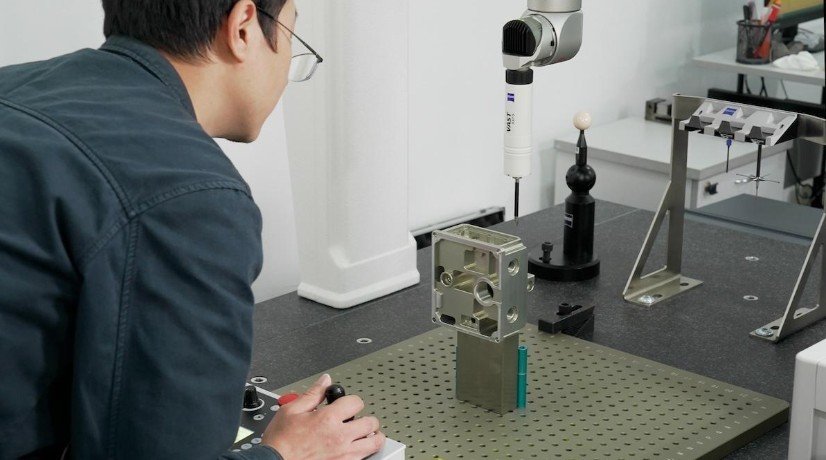
In-process inspection identifies these problems while machining is underway. Probing can verify workpiece position, establish datums, and measure critical features before subsequent operations. If tool wear or thermal changes shift a dimension, the process can be corrected before the deviation affects additional components.
Inspection should prioritize functional interfaces such as hole position, bore diameter, flatness, perpendicularity, and locating-surface relationships. For custom metal machining, these measurements are valuable when prototype components move directly from machining into robot testing.
WayKen applies in-process quality control before finishing and assembly, while CMM inspection verifies fine holes and structural features. For complex contours, 3D scanning provides another method of checking geometry. CNC steel machining also benefits when critical interfaces must remain stable under higher cutting forces.
Conclusion
CNC machining gives warehouse robot developers flexibility to revise load-bearing components while maintaining dimensional control. Multi-axis machining reduces setup-related errors on complex interfaces, while in-process inspection verifies the relationships that determine assembly and movement. WayKen’s machining and inspection approach provides a practical example of moving from changing CAD designs to validated robot hardware without making every revision dependent on dedicated production tooling.