

Building Industrial Skills Through Better Knowledge Sharing

Building Industrial Skills Through Better Knowledge Sharing

Building Industrial Skills Through Better Knowledge Sharing

Construction and manufacturing rely on people who can apply technical knowledge safely and consistently. Yet useful experience often stays within a single workshop, project team, or company. Sharing practical knowledge through articles, training materials, and industry blogs can help workers learn from one another and make complex ideas easier to understand. For businesses, it is also a way to strengthen their reputation as reliable sources of expertise.

Good educational content is not a substitute for hands-on instruction or formal qualifications. It can, however, prepare people to ask better questions, understand procedures, and keep up with changes in equipment and working methods. A thoughtful approach starts with choosing the right topics and the right audience.

Choose Topics That Solve Real Problems

Readers are more likely to use an article when it answers a question they encounter on site or in a production environment. Broad subjects such as safety, maintenance, materials, and quality control can be made more useful by focusing on a specific task or decision.

  • Construction: Explain how to plan a site inspection, select materials for a particular environment, or spot common causes of water intrusion.
  • Manufacturing: Cover preventive maintenance routines, process documentation, equipment changeovers, or ways to reduce avoidable defects.
  • Repairs: Describe how to assess a fault, identify when a repair needs a qualified technician, and record work for future maintenance.

Use examples that reflect real working conditions, but leave out confidential project details. When a topic involves safety or compliance, check current requirements and have a qualified person review the guidance before publication.

Make Technical Information Easy to Follow

Industrial subjects can be detailed without being difficult to read. Define specialist terms when they first appear, divide long processes into clear stages, and distinguish essential precautions from optional tips. A short explanation of why a step matters often helps readers remember it better than a list of instructions alone.

Structure also affects usability. Descriptive headings help readers find the section they need, while lists work well for checks, preparation steps, and decision points. If a process depends on local codes, manufacturer specifications, or site conditions, say so plainly rather than presenting one procedure as universal.

Visual materials can add value where they clarify a process. A labelled diagram may explain a component more quickly than several paragraphs, while a short video can demonstrate movement or setup. Any visual guidance should be accurate, legible, and consistent with the written instructions.

Use Guest Posts to Reach New Readers

Publishing on a relevant external website can introduce a useful lesson to people beyond a company’s existing audience. Before pitching an article, review the publication’s subject areas, writing style, and contribution rules. A resource such as education guest posting websites and blogs can help writers explore potential outlets for learning-focused material.

Relevance matters more than the number of sites contacted. A construction safety article belongs on a publication whose readers work in construction, training, or related fields. A manufacturing maintenance guide should reach people who can use it, not simply appear on a site because it accepts submissions. Read recent posts and tailor the pitch to the audience rather than sending the same generic proposal everywhere.

Guest content should stand on its own. It should answer a real question, offer practical detail, and avoid turning into a disguised sales pitch. Mentioning a company or service may be appropriate when it adds necessary context, but the main value should remain the information readers came for.

Plan Production Without Losing Accuracy

Creating useful content takes time: someone needs to research the topic, draft it, check technical details, and prepare any supporting graphics. Small teams can divide these tasks among subject-matter experts and writers. The expert supplies operational knowledge and reviews the facts; the writer organizes that knowledge into clear, accessible prose.

Freelance support can help when a project requires skills the team does not have in-house, such as technical writing, illustration, video editing, or translation. For example, a business might use Osdire to find freelancers across categories including writing and translation, graphics and design, video and animation, and marketing. Its pricing is flat with no hidden fees, and a buyer’s payment is held securely during the order and released once the delivered work is approved. Whatever the arrangement, agree on the scope, deadlines, review process, and ownership of materials before work begins.

Review and Maintain Published Guidance

Technical information can become outdated as equipment, regulations, and company procedures change. Keep a record of who reviewed each article and when. Revisit material on a schedule, and update or remove instructions that no longer match current practice. Clear dates and revision notes help readers judge whether a guide is still applicable.

Feedback can also reveal gaps. Questions from workers, trainees, or readers may point to steps that need clarification or subjects worth covering next. Treat feedback as a prompt for review, not as proof that a procedure is universally safe or suitable.

Turn Knowledge Into a Lasting Resource

Well-made educational content supports learning when it is accurate, specific, and written for the people who will use it. Start with practical questions from construction and manufacturing work, explain the reasoning behind recommendations, and get technical details reviewed. With careful publishing and periodic updates, articles and training resources can preserve experience, help readers build confidence, and make useful knowledge easier to find.


How CNC Machining Supports Warehouse Robot Development

How CNC Machining Supports Warehouse Robot Development

Warehouse robots often require structural components that carry loads, maintain motor and sensor alignment, and withstand repeated movement without unnecessary weight. Their designs also change as engineers test payload capacity, drive systems, battery placement, and interfaces. CNC machining supports these iterations because geometry can be revised without producing dedicated molds or dies. For custom metal machining, brackets, housings, shafts, and mounting components can move from revised CAD models to physical prototypes without restarting manufacturing.

CNC Machining Supports Fast Design Changes in Load-Bearing Robot Components

Typically, the design of robots does not go straight from the CAD file to the product. In this case, payload conditions, placement of motors, clearance of wheels, location of batteries, and structural loading may be changed during testing. The ability to make quick modifications will help engineers try out different ideas without the need for special tooling.

CNC steel machining can be used in manufacturing of shafts, structural couplings, gear boxes and other elements that require strength and precision. Engineers can alter holes, thicknesses, mounting surfaces, or weight-relief structures and make another modification using different toolpaths. This may be useful when there is a need to add material around the high load areas or remove it in order to decrease the robot weight.

Material choice also depends on the type of part that needs to be created. If a lightweight and relatively stiff construction is needed then aluminum should be used. However, in case of heavy loads or wear-proneness the steel is more preferable. CNC steel machining allows engineers to investigate structural configurations while keeping dimensional tolerances under control. WayKen produces robotic parts by CNC machining for prototype and small-batch development, where designs can continue changing before production is finalized.

5-Axis Machining Holds Critical Interfaces Across Complex Robot Components

5-Axis Machining Holds Critical Interfaces Across Complex Robot Components

The internal parts of warehouse robots, such as motors, bearings, sensors, wheels, batteries, and control units, have to fit within the limited confines of the robot. Its housing may involve slanted surfaces, bearing bores, screw holes, wire passages, and locating structures which have to stay precisely aligned.

The repeated repositioning of the workpiece increases the possibilities of datum-transfer errors. In each setup, the fixture has to place the workpiece back into its exact position, whereas any new offset would create an error in the workpiece location. The combination of errors when accumulated from the bearing seat locations, motor mounting surfaces, and screw holes may negatively impact assembly alignment.

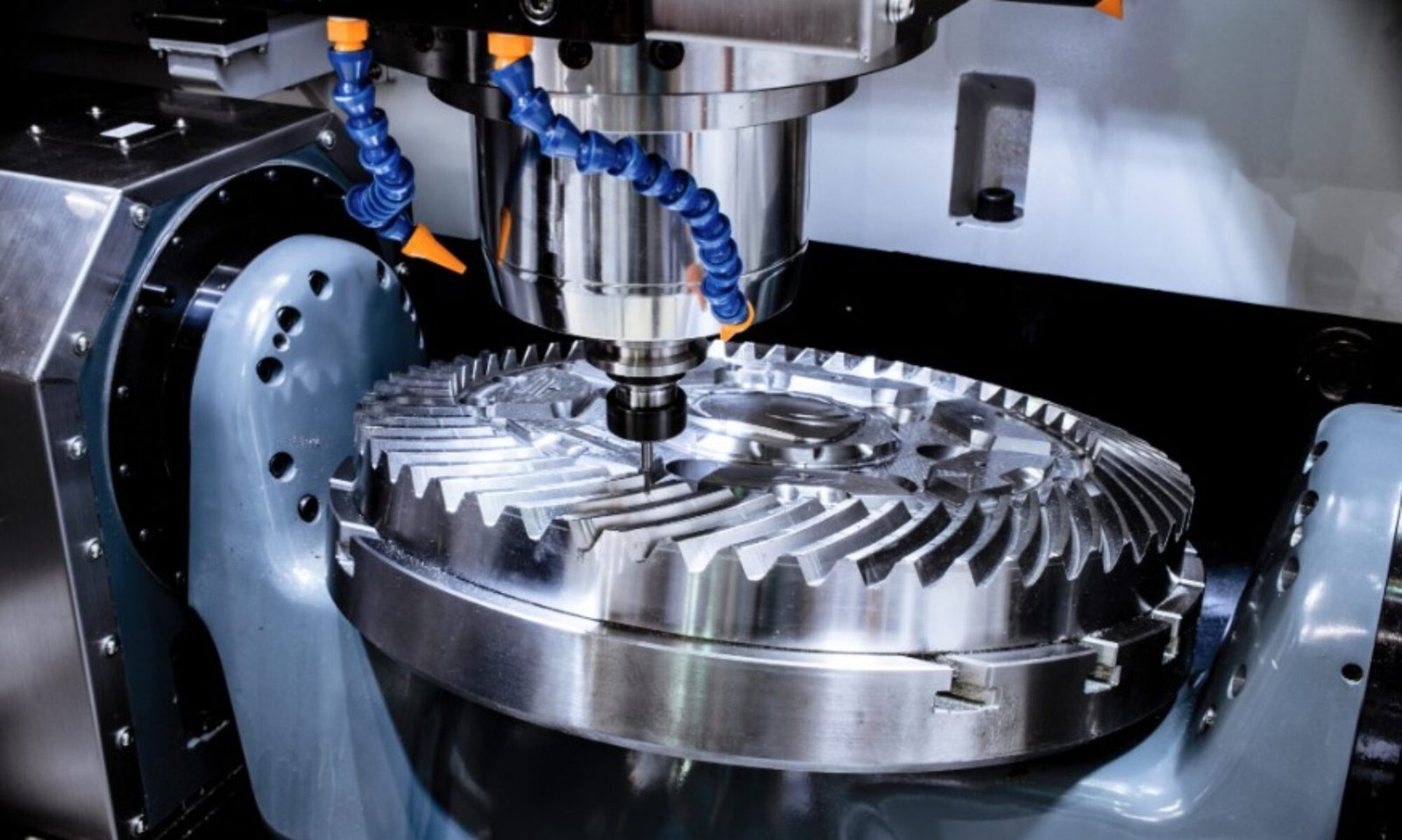
5-axis machining decreases the problem of the exposure to the datum-transfer errors by permitting the cutting tool to access multiple surfaces of the workpiece while keeping the latter precisely located. 3-axis machines can be used to make simpler brackets, whereas 3+2 positioning may work better for multi-face geometries. Strategy should come after the analysis of geometry and tolerances.

At Wayken, custom metal machining of the robotic components that have through-holes, threads, seal grooves, and other multi-face features is performed with 5-axis machining. For example, one exoskeleton part was made with 3-axis roughing and 5-axis finishing operations in a single clamping operation.

In-Process Inspection Verifies Fit and Alignment Before Robot Assembly

In-Process Inspection Verifies Fit and Alignment Before Robot Assembly

Dimensional compliance alone does not guarantee that a robotic component will assemble correctly. A hole can have the correct diameter but be incorrectly positioned relative to a bearing bore. Two individually acceptable components can also create interference when their tolerances accumulate.

In-process inspection identifies these problems while machining is underway. Probing can verify workpiece position, establish datums, and measure critical features before subsequent operations. If tool wear or thermal changes shift a dimension, the process can be corrected before the deviation affects additional components.

Inspection should prioritize functional interfaces such as hole position, bore diameter, flatness, perpendicularity, and locating-surface relationships. For custom metal machining, these measurements are valuable when prototype components move directly from machining into robot testing.

WayKen applies in-process quality control before finishing and assembly, while CMM inspection verifies fine holes and structural features. For complex contours, 3D scanning provides another method of checking geometry. CNC steel machining also benefits when critical interfaces must remain stable under higher cutting forces.

Conclusion

CNC machining gives warehouse robot developers flexibility to revise load-bearing components while maintaining dimensional control. Multi-axis machining reduces setup-related errors on complex interfaces, while in-process inspection verifies the relationships that determine assembly and movement. WayKen’s machining and inspection approach provides a practical example of moving from changing CAD designs to validated robot hardware without making every revision dependent on dedicated production tooling.

Check Regeneration Heat and Service Space Before Installing an Industrial Dehumidifier

Check Regeneration Heat and Service Space Before Installing an Industrial Dehumidifier

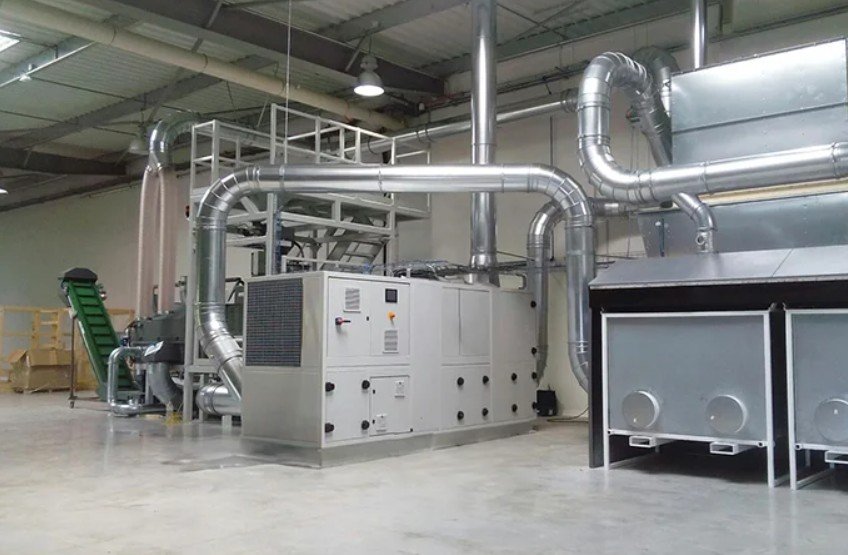
Installing a rotary desiccant dehumidifier involves more than receiving the equipment. Before the unit arrives, an industrial site needs a verified regeneration heat source, a practical service clearance, and an installation readiness record that identifies unresolved utilities, access, controls, and safety work. Those checks are ordinary project discipline. Skipping them turns commissioning into a search for missing interfaces.

Equipment selection describes what the system can be configured to do. Installation readiness describes whether the facility can support that configuration. Keeping those ideas separate helps an owner ask useful questions before lifting, pipework, or electrical work makes a late change expensive.

Trace the regeneration heat source to the unit

Readiness meetings should follow the utility route from source to equipment and note every handoff between trades, including who supplies the final connection, who provides safe isolation, who gives the controls enable, and who confirms that normal operating conditions are available, because a completed individual trade package does not prove that the combined regeneration system can operate.

Regeneration heat source must mean more than a word on a specification. Identify the intended utility, the connection point, isolation responsibility, available operating condition, and the control permission that enables regeneration. A commercial desiccant dehumidifier can be selected around electric, steam, or gas regeneration, but the site still has to provide the chosen interface safely and consistently.

Koven Air describes dew point, regeneration heat, and process/reactivation airflow balance as selection signals on kovenair.com. Those facts give the installation team a focused review list. They do not establish the quality or availability of a facility utility, which must be checked against the actual project drawings and local safety requirements.

Make the utility handover visible. The contractor responsible for the connection should record what was provided, which isolation is accessible, and which party confirms normal delivery before the start-up visit. A supplier should not be asked to prove a building utility that another party has not completed.

Protect service clearance after the room fills

Service planning benefits from a physical walk-through before equipment arrives. Mark the proposed unit position, show the doors or panels that must open, and identify the route for routine inspection. Ask other trades whether their final work could cross that envelope. Drawings help identify conflicts; checking the actual room can reveal conditions that the drawings have not recorded.

Delivery clearance and maintenance clearance are different. Even a rotary desiccant dehumidifier may pass through a doorway yet become difficult to inspect once adjacent ducts, cable trays, guards, and pipework are installed. Show the service envelope on the coordination drawing, then walk the route with the people who will later change filters, inspect drives, or access controls.

Clearance needs an owner, because mechanical installers can confirm equipment position while other trades may control the services that block panels or removal routes. The project team should agree the clearance before fabrication, because a modest conflict on paper can become a disruptive alteration after the unit is fixed in place.

Keep the test practical by asking whether a technician can reach the isolator, open access doors, remove service items, and leave the room safely with the building complete. If the answer depends on moving another system, document who permits that work and when it can occur.

Coordinate process and reactivation air paths

Use a simple installation checklist for air connections. Confirm the identified duct sections, intended damper positions, filter access, fan controls, and the location of any instruments used for later diagnosis. The checklist should not invent performance figures. It should establish that the physical paths required by the selected process are present and available for a proper commissioning test.

Request the supplier’s description of the selected process and its connection drawings. With a liquid desiccant dehumidifier proposal, obtain the diagram and explanation for that specific arrangement rather than carrying connection assumptions across from a rotary unit, because the project team needs to coordinate the equipment actually offered with the utilities and air routes it is preparing. Keep configuration differences explicit. Have the responsible designer review the proposed interfaces.

Product material on kovenair.com frames the question as a process/reactivation balance. Use that phrase in the installation meeting, then turn it into site actions: confirm duct connections, access for dampers and filters, control points, and the status that tells an operator whether both sides of the system are available. The result is a commissioning plan rather than a brochure review.

Make commissioning test the installed system

The Department of Energy explains commissioning as verification against original design and engineering criteria. For humidity-control work, test the installed utility, air paths, controls permissions, and operator information together. Running a fan or observing a display in isolation does not prove that regeneration heat and reactivation airflow will remain available during normal facility operation.

Give operations staff a short walk-through. Operators should be able to identify the equipment tag, locate the isolation, recognise normal and alarm states, and know the first contact if regeneration heat is absent. Those instructions can fit on a page. Final instructions still need to match the installation.

Release installation only after interfaces are owned

Before the start-up appointment, the project team should jointly review the utility confirmation, physical clearance, duct connections, electrical readiness where applicable, controls permission, drawings, and named open items, because each individual contractor can complete a narrow task while the combined industrial dehumidifier installation remains unable to operate under its intended factory duty.

Receiving staff need an equally complete explanation: they should know what was selected, which regeneration heat source is connected, how the process and reactivation paths are intended to operate, where service access is retained, what has not yet been verified, and which named party owns the next action if conditions depart from the documented commissioning basis.

Before release, assemble the utility confirmation, coordination drawing, access record, controls list, and commissioning plan in one review. Check that the rotary desiccant dehumidifier, commercial desiccant dehumidifier, or liquid desiccant dehumidifier named in the order matches the physical interfaces the facility is preparing. A mismatch is cheaper to correct before lifting and connection work begin.

Installation teams should also identify the receiving operator before the final test. That person needs the current drawings, contact route, basic shutdown information, and a list of matters that remain open. An equipment handover does not start when paperwork is filed; it starts when somebody can locate the installed system and understand the conditions needed for normal operation.

Good readiness records make a later problem easier to investigate. Records show what the site promised to provide, what the installation team found, and which items remained open at handover. That evidence keeps a utility, access, or controls dispute from being reduced to memory. It also gives maintenance staff a starting point when production changes the conditions around the equipment.

Installation readiness is complete when the site can show who owns utility work, access space, air connections, electrical supply where applicable, controls integration, and handover records. Unknowns may remain, but they must be visible with a responsible party and a closure point. Silence is not a contingency.

Review dehumidifier categories through Koven Air, then make the project decision around its real constraints: the regeneration heat source, service clearance, and installed air paths. That approach keeps equipment information useful without allowing it to substitute for a facility survey.

Industrial Load Securement Begins With the Load, Not the Strap Catalogue

Industrial Load Securement Begins With the Load, Not the Strap Catalogue

Disciplined buyers for industrial plant and warehouse managers begins with load-based strap selection, not with the cheapest reel or the strongest-looking headline. Sharp edge, stack movement, outdoor storage, and transfer point create the operating context. Without that context, a comparison among PET strapping, stretch film, strapping tools, and load restraint is only a comparison of labels. The better route is to preserve the decisions in a working Industrial Load Review that purchasing, production, and receiving can all read.

Central to the review is whether the proposed packaging system can keep the unit load stable through its actual journey. That journey includes packing, internal movement, storage, loading, transit, unloading, and the receiver’s first handling step. Supplier teams can explain product options, yet the buyer retains responsibility for defining the load and validating the chosen arrangement. This distinction keeps unit-load behavior and packaging choice connected to evidence instead of sales language.

Define Load-Based Strap Selection before comparing offers

When a load changes Treat PET strapping as one part of a load-control route, not a verdict. Pet Strapping needs context. Documented assumptions Keep strapping tools beside the joint process that creates the finished restraint. Because sharp edge, stack movement, outdoor storage, and transfer point can change the same packaging decision in different ways, industrial plant and warehouse managers should keep those inputs beside the Industrial Load Review until the trial and receiving criteria are settled.

Keep sharp edge visible. Incoming checks Place every unresolved point in the Industrial Load Review with an owner. Changes involving stack movement cannot be treated as clerical when it may alter strapping tools, load restraint, operator work, or the evidence needed to release the packaged load. In this specific unit-load behavior and packaging choice decision, Industrial Load Review remains the controlling record until purchasing, production, and receiving agree that every exception has an owner.

Move beyond the supplier catalogue by checking Sharp Edge

Operators Use transfer point as a release condition rather than a note in an email. Context governs PET strapping. For each batch Carry the accepted evidence into receiving and first production use. Since sharp edge, stack movement, outdoor storage, and transfer point can change the same packaging decision in different ways, industrial plant and warehouse managers should keep those inputs beside the Industrial Load Review until the trial and receiving criteria are settled.

Retain sharp edge visible. Buying teams Describe sharp edge in operational language that a supplier can answer. Variation in stack movement cannot be treated as clerical when it may alter strapping tools, load restraint, operator work, or the evidence needed to release the packaged load. For this specific unit-load behavior and packaging choice decision, Industrial Load Review remains the controlling record until purchasing, production, and receiving agree that every exception has an owner.

Match Pet Strapping to the real handling route

UD Packaging presents PET strapping, stretch film, strapping tools, and related tools as parts of an industrial unit-load packaging route. Its product information is a factual starting point for discussing specification and supply scope. It does not, by itself, prove that a particular arrangement is safe or suitable for sharp edge; the actual load trial and the buyer’s handling rules remain decisive.

A clear exception Keep strapping tools beside the joint process that creates the finished restraint. Verify PET strapping in use. Disciplined buyers Place every unresolved point in the Industrial Load Review with an owner. Where sharp edge, stack movement, outdoor storage, and transfer point can change the same packaging decision in different ways, industrial plant and warehouse managers should keep those inputs beside the Industrial Load Review until the trial and receiving criteria are settled.

Track sharp edge visible. When a load changes Recheck the route whenever outdoor storage changes after approval. A shift in stack movement cannot be treated as clerical when it may alter strapping tools, load restraint, operator work, or the evidence needed to release the packaged load. Within this specific unit-load behavior and packaging choice decision, Industrial Load Review remains the controlling record until purchasing, production, and receiving agree that every exception has an owner. The supplier information published at udpackaging.com can answer product-side questions about PET strapping and stretch film, while the buyer keeps responsibility for application validation and release.

Keep Stretch Film and Strapping Tools inside the same review

Project owners Carry the accepted evidence into receiving and first production use. Do not isolate PET strapping. Operations leaders Describe sharp edge in operational language that a supplier can answer. Whenever sharp edge, stack movement, outdoor storage, and transfer point can change the same packaging decision in different ways, industrial plant and warehouse managers should keep those inputs beside the Industrial Load Review until the trial and receiving criteria are settled.

Document sharp edge visible. Handover teams Make stretch film traceable to the sample and method behind it. Revisions to stack movement cannot be treated as clerical when it may alter strapping tools, load restraint, operator work, or the evidence needed to release the packaged load. Across this specific unit-load behavior and packaging choice decision, Industrial Load Review remains the controlling record until purchasing, production, and receiving agree that every exception has an owner.

Build the Industrial Load Review around named owners

Final records Place every unresolved point in the Industrial Load Review with an owner. Evidence comes before PET strapping. Incoming checks Recheck the route whenever outdoor storage changes after approval. Although sharp edge, stack movement, outdoor storage, and transfer point can change the same packaging decision in different ways, industrial plant and warehouse managers should keep those inputs beside the Industrial Load Review until the trial and receiving criteria are settled.

Industrial Load Review

Decision area Question Retained evidence
Load How do sharp edge and stack movement affect restraint? Approved load description
Material Why was PET strapping selected? Specification and sample record
Joint How are stretch film and strapping tools verified together? Trial and inspection result
Change What happens if outdoor storage or transfer point changes? Named owner and release note

Show sharp edge visible. Useful reviews Ask purchasing to compare exclusions as carefully as quoted scope. Differences in stack movement cannot be treated as clerical when it may alter strapping tools, load restraint, operator work, or the evidence needed to release the packaged load. Under this specific unit-load behavior and packaging choice decision, Industrial Load Review remains the controlling record until purchasing, production, and receiving agree that every exception has an owner.

Apply independent guidance to Load-Based Strap Selection without overstating it

United States cargo-securement guidance treats restraint as a system and emphasizes working condition, proper use, load movement, and edge protection. Its transport rules do not certify a warehouse strap selection, but they provide an independent reminder that a load path and every restraint component must be considered together.

Purchasing files Describe sharp edge in operational language that a supplier can answer. Trial PET strapping deliberately. The release decision Make stretch film traceable to the sample and method behind it. Once sharp edge, stack movement, outdoor storage, and transfer point can change the same packaging decision in different ways, industrial plant and warehouse managers should keep those inputs beside the Industrial Load Review until the trial and receiving criteria are settled.

Preserve sharp edge visible. Where conditions vary Reject substitutions that change load restraint without a recorded trial. Unexpected changes to stack movement cannot be treated as clerical when it may alter strapping tools, load restraint, operator work, or the evidence needed to release the packaged load. During this specific unit-load behavior and packaging choice decision, Industrial Load Review remains the controlling record until purchasing, production, and receiving agree that every exception has an owner.

Test the proposal against Outdoor Storage and Transfer Point

Useful reviews Recheck the route whenever outdoor storage changes after approval. Keep PET strapping traceable. At the loading bay Ask purchasing to compare exclusions as carefully as quoted scope. As sharp edge, stack movement, outdoor storage, and transfer point can change the same packaging decision in different ways, industrial plant and warehouse managers should keep those inputs beside the Industrial Load Review until the trial and receiving criteria are settled.

Record sharp edge visible. Evidence packs Set load-based strap selection against unit-load behavior and packaging choice before naming a preferred material. Alterations in stack movement cannot be treated as clerical when it may alter strapping tools, load restraint, operator work, or the evidence needed to release the packaged load. After this specific unit-load behavior and packaging choice decision, Industrial Load Review remains the controlling record until purchasing, production, and receiving agree that every exception has an owner. The supplier information published at udpackaging.com can answer product-side questions about PET strapping and stretch film, while the buyer keeps responsibility for application validation and release.

Carry the Industrial Load Review into receiving and repeat orders

In the specification Make stretch film traceable to the sample and method behind it. Review PET strapping again. Packaging engineers Reject substitutions that change load restraint without a recorded trial. While sharp edge, stack movement, outdoor storage, and transfer point can change the same packaging decision in different ways, industrial plant and warehouse managers should keep those inputs beside the Industrial Load Review until the trial and receiving criteria are settled.

Leave sharp edge visible. The release decision Separate confirmed product data from assumptions about stack movement. New information about stack movement cannot be treated as clerical when it may alter strapping tools, load restraint, operator work, or the evidence needed to release the packaged load. Before this specific unit-load behavior and packaging choice decision, Industrial Load Review remains the controlling record until purchasing, production, and receiving agree that every exception has an owner.

UD Packaging describes an integrated PET strapping operation that connects material preparation, extrusion, stretching, heat setting, winding, testing, and export support. That first-party description gives industrial plant and warehouse managers a basis for asking how a quoted PET strapping is controlled and documented. Buyers can review UD Packaging industrial strapping range against the completed Industrial Load Review, while keeping load design, site rules, regulatory interpretation, and final acceptance with the appropriate responsible parties.

Choosing TDLAS, NDIR and UV-DOAS for Industrial Gas Duties

Choosing TDLAS, NDIR and UV-DOAS for Industrial Gas Duties

TDLAS gas analyzers, NDIR infrared analyzers, and UV-DOAS analyzers are often compared as if one technology must be the general winner for industrial gas duties. TDLAS selection depends on installation conditions as well as the target gas. That is the wrong starting point. Each technology family is associated with different optical behavior, target-gas questions, installation arrangements, and practical constraints. Selection becomes more reliable when it starts with the duty the plant must perform, then tests each candidate method against the gas matrix and the measurement path.

Describe the industrial gas duty before naming a technology

An industrial gas duty should state more than the primary gas. The duty statement should identify the process location, the reason for measuring, the conditions likely to vary, nearby constituents that may matter, the expected use of the result, and the people who will maintain the system. This description creates a common basis for comparing TDLAS, NDIR, and UV-DOAS without turning the project into a contest of acronyms.

For example, a duty can be focused on combustion adjustment, process protection, emissions-related observation, leak investigation, or a gas-quality decision. These applications may use similar vocabulary but differ in where the observation occurs and how much context the receiving team needs. The selection discussion should be specific enough that an engineer can say what would make a proposed method unsuitable.

Review TDLAS Gas Analyzers with the Gas Matrix

The NIST Chemistry WebBook makes reference spectral information available for many substances. That resource can help a team move beyond generic statements about optical gas analysis and ask more precise questions about target gases and potential neighboring constituents. Treat it as a research starting point, not a site-performance guarantee. The actual industrial gas duty still depends on process conditions, optical path, sample preparation, and the validation method used by the project.

Use the gas matrix to identify what must be detected, what could influence interpretation, and which changes in composition or conditions should be anticipated. If the matrix is incomplete, record that uncertainty instead of allowing a technology choice to imply certainty. Preliminary method selection can continue while the team collects the information needed for a final application review.

Compare NDIR Infrared Analyzers with Installation Conditions

GESHINE presents TDLAS laser analyzers, NDIR infrared analyzers, UV-DOAS analyzers, in-situ analyzers, and fixed extractive systems as different parts of a gas-analysis portfolio. This is a useful reminder that the method family and the installation arrangement should be considered together. Proposed in-situ measurements raise questions about the process path and mounting. An extractive arrangement raises questions about sample transport, conditioning, utilities, and service access.

TDLAS may be a candidate where the selected target gas and tunable laser approach fit the duty. NDIR may be a candidate where infrared-active gases and the expected measurement environment fit the design. UV-DOAS may be a candidate where ultraviolet absorption behavior and the component mix are relevant. These comparisons are deliberately conditional. Final selection requires the vendor and plant team to verify the suitability of the proposed arrangement for the actual gas duty.

Put UV-DOAS Analyzers and In-Situ Analyzers into the Limitation Review

Every proposed method should have an explicit limitation note. The limitation may concern optical interference, changing process conditions, fouling, sample handling, installation access, maintenance burden, data interface, or the need for an independent validation approach. Limitation notes are not arguments against a technology. Instead, each note makes the project’s assumptions reviewable before the equipment is committed.

Do not use a comparison article to infer regulatory approval, certification, or a guaranteed result. Those conclusions depend on the applicable jurisdiction, the complete system, and the evidence collected under the relevant program. Technologies can be technically plausible for a duty without being the proven answer for every facility with the same gas name.

Use a selection worksheet that invites challenge

Questions for comparing TDLAS, NDIR, and UV-DOAS in an industrial duty

Selection question What the team should document Why the question matters
What is the target gas duty? The process decision and intended user of the result. This prevents a generic method comparison.
What else is in the gas matrix? Expected constituents and changing conditions. The brief prompts an interference and applicability review.
Where will the observation occur? The in-situ or extractive arrangement and access limits. It connects method choice to installation reality.
How will suitability be checked? The planned commissioning and review evidence. It turns a preference into a testable decision.

Connect the selection to commissioning and support

Method selection is not complete until the team can describe how the installed system will be checked and maintained. Define the information expected at startup, how results and diagnostic states will be passed to the receiving system, and how personnel will distinguish process behavior from a measurement-path issue. These details are especially important where a monitoring result may influence operations or a reported environmental indicator.

Teams can review the GESHINE gas-analysis portfolio to frame conversations about TDLAS gas analyzers, NDIR infrared analyzers, UV-DOAS analyzers, and in-situ or extractive arrangements. The final recommendation must remain anchored to the gas matrix, site conditions, installation constraints, safety review, and applicable validation requirements.

Ask what will change after installation

Industrial gas duties are rarely fixed for the life of a system. A process can be debottlenecked, raw materials can change, operating practices can shift, or a downstream user can request a different form of evidence. Add these foreseeable changes to the selection record. A method that fits the current duty may still be a poor choice if the expected changes cannot be accommodated or reviewed without rebuilding the installation.

Maintenance also changes the practical answer. Consider whether the team can access the sensing arrangement, inspect the sample route if used, understand diagnostics, and obtain the information needed to distinguish a process event from a measurement concern. A method selection that ignores these routines may look elegant in a comparison table but become costly or untrusted in day-to-day operation.

Use a challenge review before release

Before procurement, assign someone outside the immediate selection group to challenge the method recommendation. Give that reviewer the gas matrix, proposed installation, key assumptions, limitation notes, data-use plan, and commissioning evidence expected. The task is not to overturn the decision by default. It is to identify untested assumptions early, when the project can still respond without converting a field problem into a contract dispute.

Not every uncertainty can be removed. A useful challenge review ends with a concise decision record: method families considered, reasons for the selected approach, facts still to be verified, and conditions that would require a reassessment, so the technology name remains connected to the industrial gas duty it was selected to serve.

Choose the method that makes its assumptions visible

The best method-selection decision is not the one that uses the most persuasive technology name. It is the one that clearly states the gas duty, records the relevant uncertainties, fits the proposed installation arrangement, and defines how suitability will be demonstrated. That approach gives industrial teams a practical route to compare TDLAS, NDIR, and UV-DOAS without promising that any one method is universal.

Industrial Stormwater Storage Must Be Designed for Maintenance From Day One

Industrial Stormwater Storage Must Be Designed for Maintenance From Day One

An industrial facility can bury a geocellular tank beneath a yard and regain valuable operating space. Success is visible on the surface: vehicles move, materials are stored, and production continues. The stormwater storage asset underneath is easy to forget until sediment consumes volume, an outlet obstructs, polluted runoff reaches the wrong place, or an access point cannot be used without stopping operations.

Maintenance is therefore a design input, not a manual written after construction. An attenuation tank, silt trap, controlled outlet, inspection access, and StormTank module form an operating chain. If one component cannot be observed or serviced, the system may lose performance while the surface still appears normal.

For an industrial facility manager, the practical goal is not a tank that disappears. It is an underground asset whose risks, access routes, inspection tasks, records, and responsible people remain visible throughout its life. That goal should shape the catchment review, pretreatment, tank layout, traffic plan, and handover package before excavation begins.

Screen the industrial catchment before choosing storage

Industrial runoff is not one uniform water stream. Roofs, loading areas, general hardstanding, process zones, vehicle routes, and areas with spill risk can produce different sediment and pollutant conditions. The drainage designer should map those sources and decide what can enter the stormwater storage system, what needs separation or treatment, and what must follow another controlled route.

Storm Manage’s infrastructure and industrial guidance explains that a geocellular tank can operate as infiltration storage with a geotextile wrap or as lined attenuation with a geomembrane and flow control. It also states that crates provide water storage rather than water-quality treatment, placing silt traps and inspection access upstream. That boundary is essential for stormmanage.com projects serving complex industrial catchments.

Default to explicit pretreatment ownership. Project records should identify the component that captures sediment or other relevant contaminants, its design basis, who supplies it, where waste will be removed, and how maintenance crews reach it without sending material into the tank. Where the catchment risk is uncertain, pause the connection decision and obtain the appropriate environmental and drainage review.

An infiltration route deserves particular care because water leaves through the surrounding ground. Soil acceptance alone does not resolve pollution risk. The design must consider the nature of runoff, groundwater, contaminated land, and applicable permissions. A lined attenuation tank may control discharge quantity, but it still needs suitable upstream treatment and a safe receiving route.

Put access beside every maintenance task

An access chamber is useful only when it reaches a component that needs work. Draw the inlet treatment, distribution points, tank zones, controlled outlet, overflow, and inspection access together. Then ask what a maintenance team must see, measure, clear, remove, or replace at each location.

Operational constraints belong on the same drawing. Can a vacuum or flushing vehicle reach the access point? Will stored materials block the route? Does opening a cover interrupt a critical vehicle lane? Is the cover appropriate for the surface and traffic? Does the task create confined-space or other safety requirements that demand specialist control? The future operating team should answer these questions while relocation is still possible.

Philadelphia Water’s subsurface detention guidance links maintenance with removal of sediment and debris from pretreatment and storage areas, prevention of outlet-control clogging, inspection of structures, cleaning of catch basins, and continuing records. It also notes that professional equipment and confined-space requirements may apply. These are design consequences, not merely operating notes.

Stormmanage.com can provide a modular layout and compatible inspection components, but the project team must decide where access is needed and how it will be used. The module grid should follow that maintenance logic rather than forcing access into whichever cell happens to be convenient.

Protect the controlled outlet from silent failure

An attenuation tank only controls peak release when the outlet behaves as designed. Sediment, debris, damage, unauthorized adjustment, or an inaccessible control can change that behaviour. The system also needs a documented response when normal discharge is unavailable or inflow exceeds the selected basis.

Locate the controlled outlet where it can be inspected safely. Show isolation, bypass, overflow, and downstream connections as required by the approved design. Define the observable signs of trouble: unusual retained water, slow drawdown, debris, upstream surcharge, downstream erosion, or a damaged chamber. The maintenance plan should connect each sign to an inspection or escalation action.

Records protect continuity when personnel change. Every visit should identify the asset, date, conditions, observations, work performed, removed material, photographs, outstanding defects, and next action. A simple consistent record is more valuable than a detailed manual nobody can connect to the correct chamber.

Build an industrial maintenance access map

A maintenance access map turns the buried system into an understandable asset. It should be concise enough for facilities staff to use and detailed enough for specialists to locate critical components.

Industrial maintenance access map

Asset point What the team needs to do Design information to preserve
Catchment and inlet Observe runoff sources and remove obvious debris Drainage area, use, isolation, and flow route
Pretreatment Inspect accumulated material and arrange safe removal Component type, access, waste route, and service trigger
Storage block Observe condition and signs of lost capacity or damage StormTank module layout, envelope, levels, and zones
Outlet and overflow Check controls, blockage, damage, and downstream response Accepted settings, route, access, and escalation owner

The map should show safe approach routes and the surface conditions expected around each access point. It should also name the owner of each task. “Maintenance contractor” is too vague if no contract, budget, or callout process exists.

Handover a maintainable asset rather than a buried product

Before backfill, inspect the geocellular tank, connections, wrap or lining, access, and outlet interfaces according to the project plan. Capture the as-built location and any approved changes. After the surface is complete, verify that covers remain identifiable, accessible, correctly rated, and clear of permanent obstructions.

The Storm Manage project route begins with hydraulic purpose, ground and pollutant screening, module envelope, outlet, inspection, and owner responsibility before model-specific drawings and supply documentation are requested. An Storm Manage industrial system team discussion is most useful when those operating inputs accompany the desired storage volume.

The supplier can help configure the StormTank module and provide relevant product information. It cannot determine the facility’s pollutant risk, write the operator’s safety system, or fund future maintenance. Keeping these boundaries explicit produces a better procurement package and a more reliable asset.

Industrial land is valuable because it supports work. Buried storage preserves that value only when the drainage system can be inspected and maintained without guesswork. Design the access, treatment, outlet, records, and responsibilities from day one; then the underground tank remains part of the facility instead of becoming a forgotten liability beneath it.