How CNC Machining Supports Warehouse Robot Development

How CNC Machining Supports Warehouse Robot Development

Warehouse robots often require structural components that carry loads, maintain motor and sensor alignment, and withstand repeated movement without unnecessary weight. Their designs also change as engineers test payload capacity, drive systems, battery placement, and interfaces. CNC machining supports these iterations because geometry can be revised without producing dedicated molds or dies. For custom metal machining, brackets, housings, shafts, and mounting components can move from revised CAD models to physical prototypes without restarting manufacturing.

CNC Machining Supports Fast Design Changes in Load-Bearing Robot Components

Typically, the design of robots does not go straight from the CAD file to the product. In this case, payload conditions, placement of motors, clearance of wheels, location of batteries, and structural loading may be changed during testing. The ability to make quick modifications will help engineers try out different ideas without the need for special tooling.

CNC steel machining can be used in manufacturing of shafts, structural couplings, gear boxes and other elements that require strength and precision. Engineers can alter holes, thicknesses, mounting surfaces, or weight-relief structures and make another modification using different toolpaths. This may be useful when there is a need to add material around the high load areas or remove it in order to decrease the robot weight.

Material choice also depends on the type of part that needs to be created. If a lightweight and relatively stiff construction is needed then aluminum should be used. However, in case of heavy loads or wear-proneness the steel is more preferable. CNC steel machining allows engineers to investigate structural configurations while keeping dimensional tolerances under control. WayKen produces robotic parts by CNC machining for prototype and small-batch development, where designs can continue changing before production is finalized.

5-Axis Machining Holds Critical Interfaces Across Complex Robot Components

5-Axis Machining Holds Critical Interfaces Across Complex Robot Components

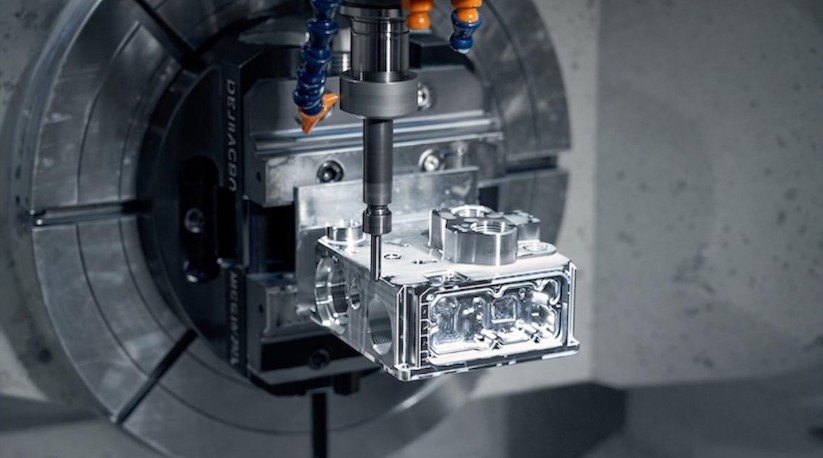
The internal parts of warehouse robots, such as motors, bearings, sensors, wheels, batteries, and control units, have to fit within the limited confines of the robot. Its housing may involve slanted surfaces, bearing bores, screw holes, wire passages, and locating structures which have to stay precisely aligned.

The repeated repositioning of the workpiece increases the possibilities of datum-transfer errors. In each setup, the fixture has to place the workpiece back into its exact position, whereas any new offset would create an error in the workpiece location. The combination of errors when accumulated from the bearing seat locations, motor mounting surfaces, and screw holes may negatively impact assembly alignment.

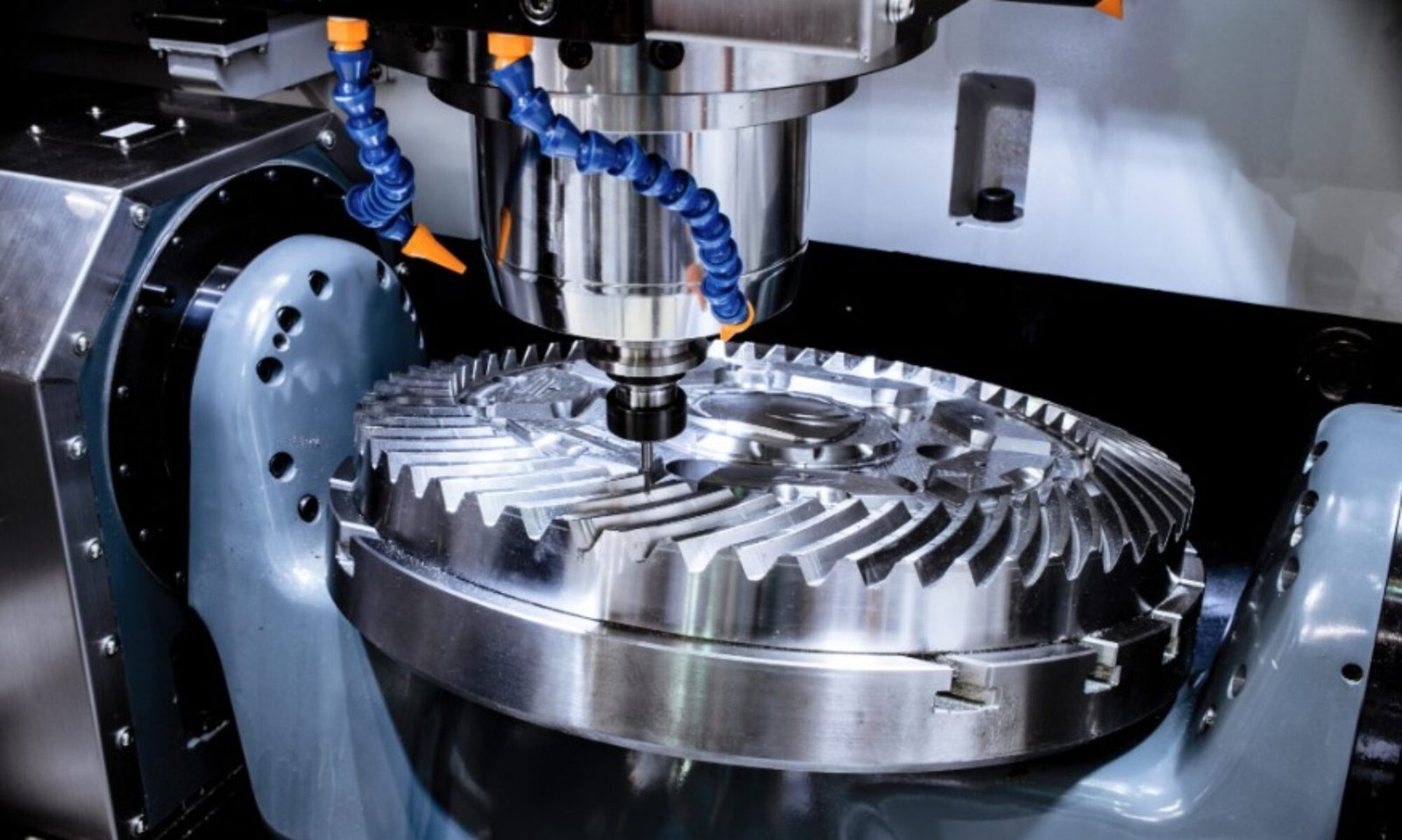
5-axis machining decreases the problem of the exposure to the datum-transfer errors by permitting the cutting tool to access multiple surfaces of the workpiece while keeping the latter precisely located. 3-axis machines can be used to make simpler brackets, whereas 3+2 positioning may work better for multi-face geometries. Strategy should come after the analysis of geometry and tolerances.

At Wayken, custom metal machining of the robotic components that have through-holes, threads, seal grooves, and other multi-face features is performed with 5-axis machining. For example, one exoskeleton part was made with 3-axis roughing and 5-axis finishing operations in a single clamping operation.

In-Process Inspection Verifies Fit and Alignment Before Robot Assembly

In-Process Inspection Verifies Fit and Alignment Before Robot Assembly

Dimensional compliance alone does not guarantee that a robotic component will assemble correctly. A hole can have the correct diameter but be incorrectly positioned relative to a bearing bore. Two individually acceptable components can also create interference when their tolerances accumulate.

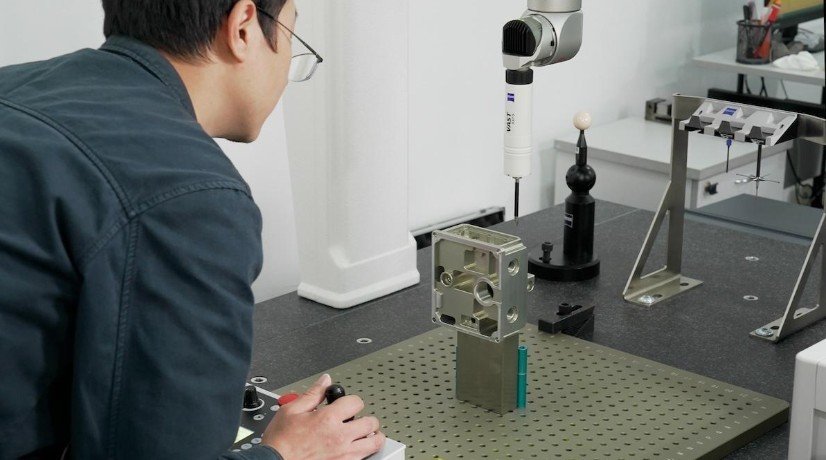
In-process inspection identifies these problems while machining is underway. Probing can verify workpiece position, establish datums, and measure critical features before subsequent operations. If tool wear or thermal changes shift a dimension, the process can be corrected before the deviation affects additional components.

Inspection should prioritize functional interfaces such as hole position, bore diameter, flatness, perpendicularity, and locating-surface relationships. For custom metal machining, these measurements are valuable when prototype components move directly from machining into robot testing.

WayKen applies in-process quality control before finishing and assembly, while CMM inspection verifies fine holes and structural features. For complex contours, 3D scanning provides another method of checking geometry. CNC steel machining also benefits when critical interfaces must remain stable under higher cutting forces.

Conclusion

CNC machining gives warehouse robot developers flexibility to revise load-bearing components while maintaining dimensional control. Multi-axis machining reduces setup-related errors on complex interfaces, while in-process inspection verifies the relationships that determine assembly and movement. WayKen’s machining and inspection approach provides a practical example of moving from changing CAD designs to validated robot hardware without making every revision dependent on dedicated production tooling.

Check Regeneration Heat and Service Space Before Installing an Industrial Dehumidifier

Check Regeneration Heat and Service Space Before Installing an Industrial Dehumidifier

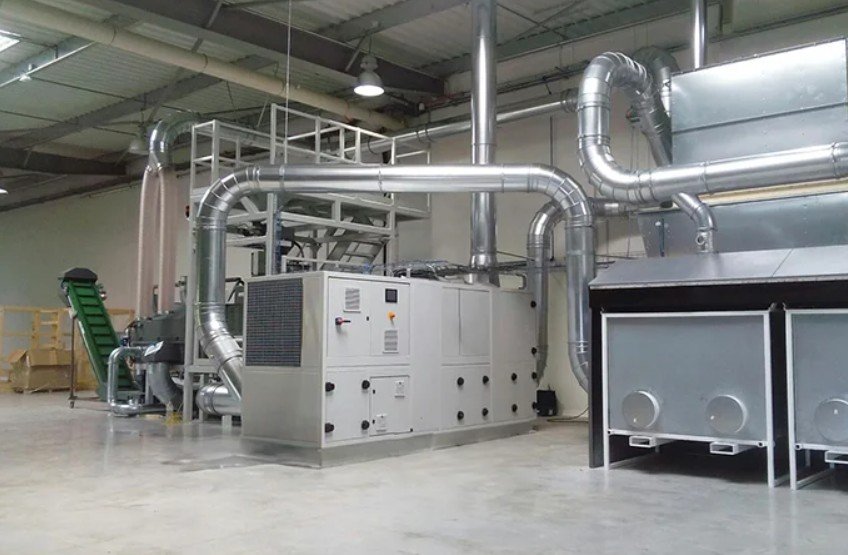
Installing a rotary desiccant dehumidifier involves more than receiving the equipment. Before the unit arrives, an industrial site needs a verified regeneration heat source, a practical service clearance, and an installation readiness record that identifies unresolved utilities, access, controls, and safety work. Those checks are ordinary project discipline. Skipping them turns commissioning into a search for missing interfaces.

Equipment selection describes what the system can be configured to do. Installation readiness describes whether the facility can support that configuration. Keeping those ideas separate helps an owner ask useful questions before lifting, pipework, or electrical work makes a late change expensive.

Trace the regeneration heat source to the unit

Readiness meetings should follow the utility route from source to equipment and note every handoff between trades, including who supplies the final connection, who provides safe isolation, who gives the controls enable, and who confirms that normal operating conditions are available, because a completed individual trade package does not prove that the combined regeneration system can operate.

Regeneration heat source must mean more than a word on a specification. Identify the intended utility, the connection point, isolation responsibility, available operating condition, and the control permission that enables regeneration. A commercial desiccant dehumidifier can be selected around electric, steam, or gas regeneration, but the site still has to provide the chosen interface safely and consistently.

Koven Air describes dew point, regeneration heat, and process/reactivation airflow balance as selection signals on kovenair.com. Those facts give the installation team a focused review list. They do not establish the quality or availability of a facility utility, which must be checked against the actual project drawings and local safety requirements.

Make the utility handover visible. The contractor responsible for the connection should record what was provided, which isolation is accessible, and which party confirms normal delivery before the start-up visit. A supplier should not be asked to prove a building utility that another party has not completed.

Protect service clearance after the room fills

Service planning benefits from a physical walk-through before equipment arrives. Mark the proposed unit position, show the doors or panels that must open, and identify the route for routine inspection. Ask other trades whether their final work could cross that envelope. Drawings help identify conflicts; checking the actual room can reveal conditions that the drawings have not recorded.

Delivery clearance and maintenance clearance are different. Even a rotary desiccant dehumidifier may pass through a doorway yet become difficult to inspect once adjacent ducts, cable trays, guards, and pipework are installed. Show the service envelope on the coordination drawing, then walk the route with the people who will later change filters, inspect drives, or access controls.

Clearance needs an owner, because mechanical installers can confirm equipment position while other trades may control the services that block panels or removal routes. The project team should agree the clearance before fabrication, because a modest conflict on paper can become a disruptive alteration after the unit is fixed in place.

Keep the test practical by asking whether a technician can reach the isolator, open access doors, remove service items, and leave the room safely with the building complete. If the answer depends on moving another system, document who permits that work and when it can occur.

Coordinate process and reactivation air paths

Use a simple installation checklist for air connections. Confirm the identified duct sections, intended damper positions, filter access, fan controls, and the location of any instruments used for later diagnosis. The checklist should not invent performance figures. It should establish that the physical paths required by the selected process are present and available for a proper commissioning test.

Request the supplier’s description of the selected process and its connection drawings. With a liquid desiccant dehumidifier proposal, obtain the diagram and explanation for that specific arrangement rather than carrying connection assumptions across from a rotary unit, because the project team needs to coordinate the equipment actually offered with the utilities and air routes it is preparing. Keep configuration differences explicit. Have the responsible designer review the proposed interfaces.

Product material on kovenair.com frames the question as a process/reactivation balance. Use that phrase in the installation meeting, then turn it into site actions: confirm duct connections, access for dampers and filters, control points, and the status that tells an operator whether both sides of the system are available. The result is a commissioning plan rather than a brochure review.

Make commissioning test the installed system

The Department of Energy explains commissioning as verification against original design and engineering criteria. For humidity-control work, test the installed utility, air paths, controls permissions, and operator information together. Running a fan or observing a display in isolation does not prove that regeneration heat and reactivation airflow will remain available during normal facility operation.

Give operations staff a short walk-through. Operators should be able to identify the equipment tag, locate the isolation, recognise normal and alarm states, and know the first contact if regeneration heat is absent. Those instructions can fit on a page. Final instructions still need to match the installation.

Release installation only after interfaces are owned

Before the start-up appointment, the project team should jointly review the utility confirmation, physical clearance, duct connections, electrical readiness where applicable, controls permission, drawings, and named open items, because each individual contractor can complete a narrow task while the combined industrial dehumidifier installation remains unable to operate under its intended factory duty.

Receiving staff need an equally complete explanation: they should know what was selected, which regeneration heat source is connected, how the process and reactivation paths are intended to operate, where service access is retained, what has not yet been verified, and which named party owns the next action if conditions depart from the documented commissioning basis.

Before release, assemble the utility confirmation, coordination drawing, access record, controls list, and commissioning plan in one review. Check that the rotary desiccant dehumidifier, commercial desiccant dehumidifier, or liquid desiccant dehumidifier named in the order matches the physical interfaces the facility is preparing. A mismatch is cheaper to correct before lifting and connection work begin.

Installation teams should also identify the receiving operator before the final test. That person needs the current drawings, contact route, basic shutdown information, and a list of matters that remain open. An equipment handover does not start when paperwork is filed; it starts when somebody can locate the installed system and understand the conditions needed for normal operation.

Good readiness records make a later problem easier to investigate. Records show what the site promised to provide, what the installation team found, and which items remained open at handover. That evidence keeps a utility, access, or controls dispute from being reduced to memory. It also gives maintenance staff a starting point when production changes the conditions around the equipment.

Installation readiness is complete when the site can show who owns utility work, access space, air connections, electrical supply where applicable, controls integration, and handover records. Unknowns may remain, but they must be visible with a responsible party and a closure point. Silence is not a contingency.

Review dehumidifier categories through Koven Air, then make the project decision around its real constraints: the regeneration heat source, service clearance, and installed air paths. That approach keeps equipment information useful without allowing it to substitute for a facility survey.

Industrial Load Securement Begins With the Load, Not the Strap Catalogue

Industrial Load Securement Begins With the Load, Not the Strap Catalogue

Disciplined buyers for industrial plant and warehouse managers begins with load-based strap selection, not with the cheapest reel or the strongest-looking headline. Sharp edge, stack movement, outdoor storage, and transfer point create the operating context. Without that context, a comparison among PET strapping, stretch film, strapping tools, and load restraint is only a comparison of labels. The better route is to preserve the decisions in a working Industrial Load Review that purchasing, production, and receiving can all read.

Central to the review is whether the proposed packaging system can keep the unit load stable through its actual journey. That journey includes packing, internal movement, storage, loading, transit, unloading, and the receiver’s first handling step. Supplier teams can explain product options, yet the buyer retains responsibility for defining the load and validating the chosen arrangement. This distinction keeps unit-load behavior and packaging choice connected to evidence instead of sales language.

Define Load-Based Strap Selection before comparing offers

When a load changes Treat PET strapping as one part of a load-control route, not a verdict. Pet Strapping needs context. Documented assumptions Keep strapping tools beside the joint process that creates the finished restraint. Because sharp edge, stack movement, outdoor storage, and transfer point can change the same packaging decision in different ways, industrial plant and warehouse managers should keep those inputs beside the Industrial Load Review until the trial and receiving criteria are settled.

Keep sharp edge visible. Incoming checks Place every unresolved point in the Industrial Load Review with an owner. Changes involving stack movement cannot be treated as clerical when it may alter strapping tools, load restraint, operator work, or the evidence needed to release the packaged load. In this specific unit-load behavior and packaging choice decision, Industrial Load Review remains the controlling record until purchasing, production, and receiving agree that every exception has an owner.

Move beyond the supplier catalogue by checking Sharp Edge

Operators Use transfer point as a release condition rather than a note in an email. Context governs PET strapping. For each batch Carry the accepted evidence into receiving and first production use. Since sharp edge, stack movement, outdoor storage, and transfer point can change the same packaging decision in different ways, industrial plant and warehouse managers should keep those inputs beside the Industrial Load Review until the trial and receiving criteria are settled.

Retain sharp edge visible. Buying teams Describe sharp edge in operational language that a supplier can answer. Variation in stack movement cannot be treated as clerical when it may alter strapping tools, load restraint, operator work, or the evidence needed to release the packaged load. For this specific unit-load behavior and packaging choice decision, Industrial Load Review remains the controlling record until purchasing, production, and receiving agree that every exception has an owner.

Match Pet Strapping to the real handling route

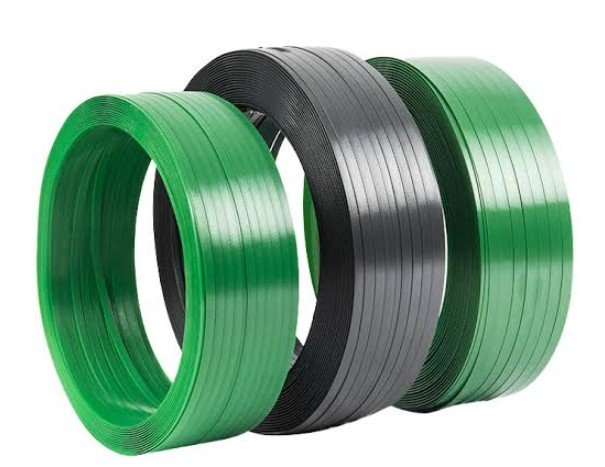
UD Packaging presents PET strapping, stretch film, strapping tools, and related tools as parts of an industrial unit-load packaging route. Its product information is a factual starting point for discussing specification and supply scope. It does not, by itself, prove that a particular arrangement is safe or suitable for sharp edge; the actual load trial and the buyer’s handling rules remain decisive.

A clear exception Keep strapping tools beside the joint process that creates the finished restraint. Verify PET strapping in use. Disciplined buyers Place every unresolved point in the Industrial Load Review with an owner. Where sharp edge, stack movement, outdoor storage, and transfer point can change the same packaging decision in different ways, industrial plant and warehouse managers should keep those inputs beside the Industrial Load Review until the trial and receiving criteria are settled.

Track sharp edge visible. When a load changes Recheck the route whenever outdoor storage changes after approval. A shift in stack movement cannot be treated as clerical when it may alter strapping tools, load restraint, operator work, or the evidence needed to release the packaged load. Within this specific unit-load behavior and packaging choice decision, Industrial Load Review remains the controlling record until purchasing, production, and receiving agree that every exception has an owner. The supplier information published at udpackaging.com can answer product-side questions about PET strapping and stretch film, while the buyer keeps responsibility for application validation and release.

Keep Stretch Film and Strapping Tools inside the same review

Project owners Carry the accepted evidence into receiving and first production use. Do not isolate PET strapping. Operations leaders Describe sharp edge in operational language that a supplier can answer. Whenever sharp edge, stack movement, outdoor storage, and transfer point can change the same packaging decision in different ways, industrial plant and warehouse managers should keep those inputs beside the Industrial Load Review until the trial and receiving criteria are settled.

Document sharp edge visible. Handover teams Make stretch film traceable to the sample and method behind it. Revisions to stack movement cannot be treated as clerical when it may alter strapping tools, load restraint, operator work, or the evidence needed to release the packaged load. Across this specific unit-load behavior and packaging choice decision, Industrial Load Review remains the controlling record until purchasing, production, and receiving agree that every exception has an owner.

Build the Industrial Load Review around named owners

Final records Place every unresolved point in the Industrial Load Review with an owner. Evidence comes before PET strapping. Incoming checks Recheck the route whenever outdoor storage changes after approval. Although sharp edge, stack movement, outdoor storage, and transfer point can change the same packaging decision in different ways, industrial plant and warehouse managers should keep those inputs beside the Industrial Load Review until the trial and receiving criteria are settled.

Industrial Load Review

Decision area Question Retained evidence
Load How do sharp edge and stack movement affect restraint? Approved load description
Material Why was PET strapping selected? Specification and sample record
Joint How are stretch film and strapping tools verified together? Trial and inspection result
Change What happens if outdoor storage or transfer point changes? Named owner and release note

Show sharp edge visible. Useful reviews Ask purchasing to compare exclusions as carefully as quoted scope. Differences in stack movement cannot be treated as clerical when it may alter strapping tools, load restraint, operator work, or the evidence needed to release the packaged load. Under this specific unit-load behavior and packaging choice decision, Industrial Load Review remains the controlling record until purchasing, production, and receiving agree that every exception has an owner.

Apply independent guidance to Load-Based Strap Selection without overstating it

United States cargo-securement guidance treats restraint as a system and emphasizes working condition, proper use, load movement, and edge protection. Its transport rules do not certify a warehouse strap selection, but they provide an independent reminder that a load path and every restraint component must be considered together.

Purchasing files Describe sharp edge in operational language that a supplier can answer. Trial PET strapping deliberately. The release decision Make stretch film traceable to the sample and method behind it. Once sharp edge, stack movement, outdoor storage, and transfer point can change the same packaging decision in different ways, industrial plant and warehouse managers should keep those inputs beside the Industrial Load Review until the trial and receiving criteria are settled.

Preserve sharp edge visible. Where conditions vary Reject substitutions that change load restraint without a recorded trial. Unexpected changes to stack movement cannot be treated as clerical when it may alter strapping tools, load restraint, operator work, or the evidence needed to release the packaged load. During this specific unit-load behavior and packaging choice decision, Industrial Load Review remains the controlling record until purchasing, production, and receiving agree that every exception has an owner.

Test the proposal against Outdoor Storage and Transfer Point

Useful reviews Recheck the route whenever outdoor storage changes after approval. Keep PET strapping traceable. At the loading bay Ask purchasing to compare exclusions as carefully as quoted scope. As sharp edge, stack movement, outdoor storage, and transfer point can change the same packaging decision in different ways, industrial plant and warehouse managers should keep those inputs beside the Industrial Load Review until the trial and receiving criteria are settled.

Record sharp edge visible. Evidence packs Set load-based strap selection against unit-load behavior and packaging choice before naming a preferred material. Alterations in stack movement cannot be treated as clerical when it may alter strapping tools, load restraint, operator work, or the evidence needed to release the packaged load. After this specific unit-load behavior and packaging choice decision, Industrial Load Review remains the controlling record until purchasing, production, and receiving agree that every exception has an owner. The supplier information published at udpackaging.com can answer product-side questions about PET strapping and stretch film, while the buyer keeps responsibility for application validation and release.

Carry the Industrial Load Review into receiving and repeat orders

In the specification Make stretch film traceable to the sample and method behind it. Review PET strapping again. Packaging engineers Reject substitutions that change load restraint without a recorded trial. While sharp edge, stack movement, outdoor storage, and transfer point can change the same packaging decision in different ways, industrial plant and warehouse managers should keep those inputs beside the Industrial Load Review until the trial and receiving criteria are settled.

Leave sharp edge visible. The release decision Separate confirmed product data from assumptions about stack movement. New information about stack movement cannot be treated as clerical when it may alter strapping tools, load restraint, operator work, or the evidence needed to release the packaged load. Before this specific unit-load behavior and packaging choice decision, Industrial Load Review remains the controlling record until purchasing, production, and receiving agree that every exception has an owner.

UD Packaging describes an integrated PET strapping operation that connects material preparation, extrusion, stretching, heat setting, winding, testing, and export support. That first-party description gives industrial plant and warehouse managers a basis for asking how a quoted PET strapping is controlled and documented. Buyers can review UD Packaging industrial strapping range against the completed Industrial Load Review, while keeping load design, site rules, regulatory interpretation, and final acceptance with the appropriate responsible parties.