

‘We Ain’t Gonna Get It’: Why Bernie Sanders Says His ‘Medicare for All’ Dream Must Wait

‘We Ain’t Gonna Get It’: Why Bernie Sanders Says His ‘Medicare for All’ Dream Must Wait

Following railing at the injustices of U.S. wellbeing treatment for decades, Sen. Bernie Sanders in January turned the new chairman of the Senate Health, Training, Labor & Pensions Committee. The job provides the well being care industry’s most significant Washington nemesis an unprecedented possibility to form overall health care reform in Congress. But the form of radical variations he seeks could prove elusive. Even Sanders concedes there are boundaries to the powers of his posture.

President Joe Biden’s Point out of the Union tackle Tuesday evening confirmed how significantly of Sanders’ system has moved into the mainstream of the Democratic Get together, with Biden at periods sounding like his former Democratic major foe, lashing out at Significant Pharma and its “record earnings.” Biden bragged about measures taken to reduced drug prices and halt surprise charges in the course of his expression consequently far, and he urged Congress to pass a federal growth of Medicaid.

Even now, the radical alterations Sanders seeks could prove elusive. In the course of an job interview with KHN at his Senate workplace not long ago, the independent from Vermont spoke about the prospective customers for reducing drug price ranges, expanding access to most important treatment, and his greatest purpose of “Medicare for All.”

The job interview has been edited for length and clarity.

Q: What do you hope to achieve as chair of the Assistance Committee — in conditions of legislation, but also messaging and investigations?

What I in the long run would like to achieve is not going to occur proper now. We have Republicans managing the Residence. And numerous of the sights that I maintain, which includes Medicare for All — I imagine if we had a vote tomorrow, we’d get 15 to 20 votes in the Senate and would not get in the Residence. I recognize that. But I come about to believe that our existing health care program is dysfunctional.

We expend twice as much for each capita on wellness treatment as other countries and 85 million people have no insurance policy or are underinsured. It is a dysfunctional method that to my mind needs to be basically improved to a Medicare for All process — but we ain’t gonna get it.

Q: What can you in fact complete?

[From] a poll a pair of months back just amid Republicans. Top rated problem? Significant price of prescription prescription drugs. We’re long overdue to acquire on, in a quite bold way, the greed and outrageous actions of the pharmaceutical market.

Q: There are so a lot of areas of the program that are messed up — patents, 340B, pharmacy profit administrators, insurance coverage troubles with formularies …

Ideal, there are a million parts to this dilemma.

Q: So shorter of a complete overhaul, what are the parts that you assume you can improve?

Each individual calendar year the U.S. govt by means of [the National Institutes of Health] spends tens of billions of bucks on investigation. The Moderna vaccine was co-made among Moderna and NIH and acquired billions of pounds in support, assured income, and you know what is happened in the very last couple of many years. The CEO of Moderna is now worth $6 billion. All their prime executives are worthy of billions. And now they are threatening to quadruple selling prices. This is a business that was really supported by taxpayers of this country. And that’s a person case in point of many.

What is the obligation of a drug corporation that gets quite important help — economical help, intellectual aid for exploration and development — to the individuals of this state? Right now, it is zero. “Thank you quite significantly for your assistance. I will cost you any price I pick.” We have to close that.

Which is the starting position.

Q: But what’s the system? “March-in” rights, whereby the governing administration could pressure a company to share its license for a drug that was formulated with federal expenditure, allowing other folks to deliver it?

That is a person tactic. Threatened by men and women in George W. Bush’s administration, by the way. March-in is just one option.

Acceptable pricing is yet another location. I have manufactured two journeys to Canada: when as a congressman from Vermont, took a bunch of doing the job-class girls across the border to get a breast most cancers drug after as a presidential prospect, took individuals from the Midwest, and we purchased insulin. The selling price was one particular-tenth of the U.S. value in both equally cases.

A different space is primary well being treatment. I have labored difficult with other customers via the Economical Treatment Act and American Rescue Approach [Act] to appreciably expand local community wellness facilities. FQHCs [federally qualified health centers] deliver most important care, dental treatment, mental wellbeing counseling, and small-charge prescription medicines. About one-3rd of [people in Vermont] get principal care by group well being facilities.

Q: I was at a conference of Fda and patent office environment folks, hearing from biosimilars corporations, people, and so forth., and a great deal of what they were being stating is that the U.S. Patent and Trademark Office environment just can’t do that much about patent thickets, and it’d be fantastic if Congress did something.

That is a single of the disgraceful applications that pharma utilizes to make positive we spend high prices and don’t get generics. Yes, it’s definitely one thing that we must be seeking at.

Q: Other priorities?

The disaster in the wellbeing care workforce. We do not have more than enough physicians, nurses, dentists, mental well being counselors, pharmacists. The nursing crisis is huge. We have a clinic in Burlington, moderate sizing by nationwide criteria, greatest by much in Vermont. They explained to me they are going to commit $125 million on touring nurses this calendar year. A person average-sized medical center! Meanwhile we have youthful people today who want to come to be nurses, and we just cannot teach them. We do not have adequate nurse educators. I assume we get bipartisan support for that challenge.

A further detail I want to appear at is dental treatment. Not more than enough dentists, far too high priced, complete areas really don’t have them.

Q: Did you concur with President Biden’s determination to conclude the public health crisis in May possibly?

[Frowns] I have some worries. [Sanders appeared to be the only member of Congress wearing a mask during Biden’s speech on Tuesday.] It’s heading to dump a good deal a lot more persons into the uninsured once more. 

Q: And matters like vaccines would not be protected any longer.

They’d go on the market. Our close friends at Pfizer and Moderna want to quadruple the charges. So if you’re hesitant now about receiving vaccinated, and it is absolutely free, what about when it expenses you $125?

Q: As you say, drug rates are a major concern for all people. But amid Republicans there appears to be to be far more inclination to push on pharmacy benefit supervisors, or PBMs, as opposed to drug businesses. Is that an place in which there could be laws?

You have bought the coverage firms, the PBMs, and pharma. Every person would like to blame the other dude. And yet they’re all culpable. And we’re likely to acquire a tricky appear at it.

Q: Is Dr. Robert Califf, the Fda commissioner, a very good interlocutor for you?

A lot of do the job has to be accomplished with Food and drug administration. Let us just say I believe it is significant that we acquire a tricky look at what they’re carrying out. They have some duty for pricing. It’s aspect of that mission that they have not exercised.

Q: What about the 340B challenge? Accusations that hospitals are gaming the program.

Of course, it is one thing. Just one of the first factors [I did] when I was mayor of Burlington from 1981-89 was consider absent the tax-exempt standing of the healthcare facility. Mainly because I did not feel they ended up satisfying their responsibility to provide the weak and working households. We had a good deal of discussions, and the problem enhanced. Suitable now the conditions to get tax-exempt position is extremely nebulous. That’s an concern somewhere down the road I want to glance at. If you are not going to shell out taxes, what are you, in simple fact, undertaking?

Q: Do you have specific allies in either celebration?

I talked now with a conservative GOP senator who will work with me on difficulty X, but not issue Y. It depends on the concern. If we’re likely to be prosperous, we’re going to need to have bipartisan assistance. And there is that level of assist. I have talked to now four out of the 10 or 11 Republicans on the committee, and I’ll chat to the rest.

Q: Do you have a policy for dealing with the lobbyists?

I never have lobbyists flooding by my door. These lobbyists are successful, nicely paid, and they assistance condition the lifestyle of the place you are going. My culture is shaped by heading out and chatting to everyday men and women. I have talked to far too numerous aged persons who slice their prescription medicines in 50 {1668a97e7bfe6d80c144078b89af180f360665b4ea188e6054b2f93f7302966b}.

I’m not worried about the lobbyists. Fear about the individuals who are dying because they can not afford to pay for prescription medications.

I don’t have to have some guy who will make seven figures a calendar year telling me about challenges of the drug organizations. They have to demonstrate to American folks why they produced $80 billion previous 12 months and persons can’t manage medication.

Q: Are you likely to carry in pharma executives for hearings?

We’re hunting at all alternatives.
Linked Subject areas

Get in touch with Us

Submit a Story Suggestion

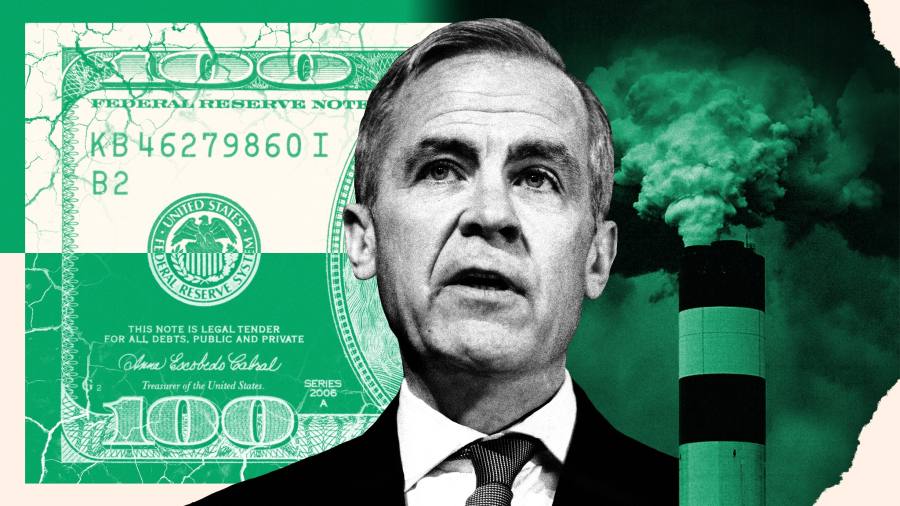
COP27: Mark Carney clings to his dream of a greener finance industry

COP27: Mark Carney clings to his dream of a greener finance industry

In the months leading up to the Glasgow COP26 climate change conference last November, the UK government spent long hours lining up landmark agreements to be announced during the fortnight on car emissions, deforestation, methane and more.

Among the most eye-catching of the announcements was the commitment unveiled by Mark Carney, the former Bank of England governor, on the conference’s finance day: a pledge that $130tn — four in every 10 dollars under management globally — would be deployed to limit global warming. “This is a watershed,” he said. Quoting the climate activist Greta Thunberg, he added: “It’s not blah blah blah.”

The promise was made on behalf of the Glasgow Financial Alliance for Net Zero (Gfanz), the grouping of banks, asset managers, insurers, pension funds and other money managers Carney had launched in April 2021. It was greeted as a fundamental shift away from purely profit-driven capitalism by the financial sector.

Behind the scenes in 2021, not everyone working on COP26 in government was convinced of the timing, or the wisdom, of Carney’s announcement. “Carney saying we’ve got $130tn of money ready” risked looking “misleading”, says one civil servant working on negotiations at a time when the COP26 presidency was struggling to persuade developed governments to deliver on a promise of $100bn in annual climate assistance to poorer nations.
 
There were also concerns the announcement was more promotional than tangible. “A lot of this came down to Carney’s desire to have something branded as his own thing,” says Ben Caldecott, finance strategy adviser to the UK government in the run-up to COP26. “It became a running joke among those working on finance for Glasgow.”

You are seeing a snapshot of an interactive graphic. This is most likely due to being offline or JavaScript being disabled in your browser.


But without Carney’s “convening power” there would have been no alliance at all, says Alex Michie, who advised the Treasury on private finance ahead of COP and now co-leads Gfanz’s secretariat. “The only design we had was to get the global financial system to make science-based commitments to net zero and take near-term action to implement it.”

To reduce the risk of greenwashing, the UK government laid down a single red line, according to Caldecott and the civil servant. Carney’s brainchild would have to agree to work alongside an existing verification body for corporate and financial sector pledges: the UN’s Race to Zero.

“Civil society knew that many of the finance sector commitments were rubbish, so we needed to be proactive on integrity,” says Caldecott, who also leads the University of Oxford’s sustainable finance group.

When Gfanz expanded in November, its governance documents show Race to Zero was put in charge of vetting new and existing members and helping define the speed at which they decarbonised their portfolios.

Yet one year on, and just 10 days before COP27, that red line was erased. Gfanz officially relegated the UN-backed body to the status of one adviser among many at the end of last month. The financial institutions under the Gfanz umbrella no longer have to be aligned with the multilateral body meant to uphold their integrity.

UN guidelines on preventing corporate greenwashing published at the summit on Tuesday concluded that Gfanz and other alliances needed to tighten their standards and be prepared to remove poorly performing members.

The split from the UN-backed body reflects the difficulties Carney’s team has had keeping this self-governing club of financiers together. It came under intense pressure from mutinous American banks reluctant to divorce the fossil fuel sector in the middle of an energy crisis. It also faced a backlash by litigious rightwing political forces who criticise “woke investing” and say the financial sector’s first duty ought to be to shareholders.

Contacted for an interview, Carney sent the FT a written statement in which he said the perceived risk of antitrust penalties over collective action had been a “big challenge” for Gfanz this year, and called on governments to “move more rapidly” on setting guidelines for company transition plans.

As COP negotiators meet in Egypt on Wednesday to discuss how to raise the capital for green energy and climate adaptation, the troubles Gfanz has faced reflect a broader struggle within the financial sector over whether business or government should be responsible for channelling cash into stemming the financial crisis, and whether they should take a purist or “broad church” approach to fossil fuels. They also raise wider questions about the strength of the finance community’s commitment to the green transition — and whether institutions promised the rest of the world too much too soon at Glasgow.

A battle over coal

An early harbinger of difficulties in how to define the central goal of Carney’s alliance was a battle over coal: specifically, meeting a target of net zero “financed” emissions, which are linked to financing and investment decisions, by 2050.

Scientists at the International Energy Agency and the United Nations broadly agree that reaching net zero by 2050 means fossil fuels should be actively phased out and plans for new coal power plant projects immediately junked.

The co-chair of Gfanz, businessman and philanthropist Michael Bloomberg, funds anti-coal campaigns and has described the fuel as “enemy No 1 in the battle over climate change.”

But as transaction data rolled in over the months following COP26, it became clear that Gfanz members had continued to double down on existing financing patterns — for example, bond issuances for coal companies maturing well into the 2030s. 

This was especially glaring among the banks who had been convinced to join Carney’s alliance in the unsettled weeks immediately before Glasgow.

JPMorgan Chase, for example, underwrote a $788mn share issuance by the Indian miner Vedanta Resources the month after it joined the alliance in October, according to open source financial data analysed by the NGO Reclaim Finance. Vedanta is developing a new coal mine in India. JPMorgan declined to comment.

But it was not just US banks. Only 60 out of the alliance’s 240 largest members had any policy excluding support for companies developing new coal projects, according to evidence submitted to the UK’s environmental audit committee by the campaign group ShareAction in June.

Beyond coal, only a few leading banks showed a material reduction in bond underwriting for carbon-intensive industries including mining and automobiles in 2021 compared to 2019, according to a report by financial sector research group Autonomous.

Column chart of $tn showing Financing of high-emission industries has not slowed

In June, this continuing activity by Gfanz members and other companies was addressed in a revised, much tougher set of membership rules from Race to Zero. The official interpretation guide to its new criteria made clear that members must “restrict” their facilitation of all new fossil fuel projects, and that “no new coal” must be supported.

Carney’s alliance did not officially adopt this messaging, and nor did financial sector subgroups whose members had strict fiduciary obligations to clients. Some members cited fears that such strict wording would lead to attacks from competition authorities concerned about potentially higher energy costs for consumers if coal plants have to close.

Many financiers argue the sale of a high-emitting asset does not necessarily stop the associated carbon from entering the atmosphere, which means the “carrot” of investment matters more than the “stick” of divestment.

As financiers’ discomfort with the new Race to Zero guidance became clear, activist groups and some lawyers perceived it as a litmus test of their seriousness on climate action. “Banks at Glasgow saw the alliance as a kind of ethereal thing on climate change without ever mentioning the F-word: fossil fuels,” said Beau O’Sullivan, from the Sunrise Project, a network of NGOs. “It is only when the ambition was lifted that the antitrust concern was raised.”

Others like Simon Holmes, a competition law expert and visiting professor at Oxford university, say that if the alliance collectively refused to invest in fossil fuels it could face “genuine issues” of antitrust, particularly in the US. “From a competition law perspective it can be seen as a collective boycott agreement not to provide a service like finance or insurance to customers,” he says.

The political risks of rapid decarbonisation were uncontestably real, especially in the US. Republican attorneys-general and state governors in the US spent the summer cracking down on members of Carney’s alliance, including the asset manager BlackRock, for perceived environmentally driven neglect of the oil and gas industries that provide jobs to the US economy’s heartlands.

This pressure, amplified by rocketing energy prices, pulled at the seams of the alliance. A grouping of US banks including JPMorgan threatened to leave altogether if they were not given more freedom to decarbonise at their own pace, according to a senior banking executive and people involved in talks between Gfanz and banks.

“JPMorgan” superimposed on an Image of nuclear cooling towers
The US bank underwrote a $788mn share issuance by the Indian miner Vedanta Resources

Given the success of Gfanz had in part been measured by its ability to attract a broad church of capital, the stakes of any exit were high. “There was a bit of gamesmanship [from the banks],” says a party to crisis talks within Gfanz. “Were they threatening to leave to force the disconnect to Race to Zero, or did they want out anyway because it was an easy sacrificial lamb to give to the attorneys-general?”

Then, one evening in September, “no new coal” was quietly wiped from Race to Zero’s website. The UN-backed body had taken legal advice, it said when asked, and was told the strict language put its own staff at risk.

The next month, Gfanz put out a statement highlighting its members’ legal rights to follow whatever voluntary pledges they chose to. The banks remain within the alliance.

No business as usual

Despite its shift away from the UN framework, Gfanz says it is committed to transparency and robust benchmarks. “We are acutely aware that unclear boundaries and guardrails on these financing activities can obscure ‘business as usual’ financing,” Mary Schapiro, vice-chair of Gfanz and former chair of the US Securities and Exchange Commission told a press conference in the run-up to COP27.

A new Gfanz-backed data initiative designed to provide greater transparency will be up and running by the end of 2023, the alliance has said, while net zero targets will be “systematically embedded across the financial sector” by 2027. It has galvanised many of its members to set near-term decarbonisation targets, meaning they have pledged to reduce financed emissions as soon as 2025 or 2030.

“We’re going to get real time feedback, not just on individual performance, Gfanz member performance, but also the system as a whole,” Carney said at the FT Moral Money Americas summit last month.

Global banks’ pledges to date put them on track to deliver $1.9tn in energy transition finance a year until 2030, according to research group Autonomous. It says this number is growing but is still roughly half the level of bank support needed for the transition to net zero, which it puts at between $3tn and $5tn a year.

The HSBC logo superimposed on an image of a British Airways aircraft
HSBC counts £2.2bn of sustainability-linked loans it organised last year for British Airways and UAE’s Etihad airline towards $1tn of green finance by 2030

“The hardest work is still to come,” says Hortense Bioy, global director of sustainability research at Morningstar, describing the situation as an “existential crisis” for Carney’s climate finance movement — now worth $150tn. “The reality is that not enough has been done in the past 12 months — some would argue we have moved backwards.”

In his statement, Carney emphasised the alliance’s long term plans. “We need to ensure that energy supply is maintained during the transition so that consumers do not continue to bear the burden of unreliable, expensive energy sources,” he said. “In the short term, that will involve financing for some oil and gas, but what is important is ensuring that we are dramatically scaling up investment in renewable energy to a 4:1 ratio.”

But as Gfanz sets out new commitments, the voluntary bodies intended to set independent standards for the finance industry are falling by the wayside.

Chart: Few banks curb bond underwriting for high-emission industries

The Finance Sector Expert Group, set up during COP26 to develop Race to Zero membership criteria for financial institutions, was quietly disbanded in February. Race to Zero has also postponed plans to set up a new accountability mechanism in order to examine the progress of individual financial institutions. Race to Zero did not respond to requests for comment.

Thomas Hale, a public policy professor at the University of Oxford and co-chair of Race to Zero’s expert peer review group, says the UN body did not have the capacity to be a “global police force” that helps the world sort “good” and “bad” net zero. “I’m glad the UN has created this much more robust system . . . but it will need to be backed up by standards and a whole ecosystem working together.”

A different world

The world has changed since last November and, in a time of escalating financial and energy crises, the need to fund the green transition has had to compete with the need to keep the lights on.

The energy crisis sparked by Russia’s invasion of Ukraine has “dented the idealism” of some of the worlds biggest financiers, says Huw van Steenis, a former senior adviser to Carney at the BoE.

US banks’ exposure to oil and gas increased in the first half of 2022 on the back of higher energy prices, while it fell at Canadian and European banks. “There’s a bit of ‘oh, we live in the real world, not the world we want it to be’,” Van Steenis says. “They have to look at some very complex trade-offs between energy security, energy affordability and environmentalism.”

Those trade-offs risk shifting the timeline of the alliance’s path to net zero, especially as it has focused on setting targets over ensuring they are delivered.

The Munich Re logo superimposed on an image of gas pipelines
The German insurance company has cut back coverage of oil and gas projects but has not ruled out offering coverage for new gas pipelines, liquefied natural gas plants and gas-fired power plants

While just 8 out of 122 banks in Gfanz have set a 2030 emissions reduction target for the coal sector, 31 have set such a target for oil and gas, covering on average 80 per cent of their oil and gas portfolio, according to analysis published by Gfanz’s banking subgroup on Wednesday.

Close to a third are so-called intensity targets, which assess emissions only in relation to revenues, production or the size of portfolios. These targets are meant to incentivise investments in transition industries — like a steel company investing in hydrogen technology — but do not guarantee any change in real world emissions.

Targets expressed in absolute terms are less common, and stymied by gaps in disclosures and coverage — the asset manager Vanguard, a member of Gfanz, has only committed to manage 4 per cent of its assets under management in line with net zero goals.

Other targets are overly broad and open to interpretation. In the US, for example, Goldman Sachs’ target of $750bn by 2030 includes its advisory business — suggesting it could include the entire value of deals as long as these contribute to the bank’s core pillars of “climate transition and inclusive growth”. The bank declined to comment for this story.

“Brookfield” superimposed on an image of Gamesa wind turbines
The Canadian asset manager, where Carney is head of transition investing, recently raised a $15bn energy transition fund

Alliances such as Gfanz will only work if they introduce binding requirements to make sure they have an impact on real world emissions, says Jakob Thomä, co-founder of the 2 degree Investing Initiative think-tank.

He blames a reluctance by financiers to acknowledge the difficult decisions involved in transitioning away from fossil fuels, for example in the case of national governments’ exposure to oil and gas investments.

“If a bank comes out with general guidance on no new fossil fuels, and a smart-ass like me says: ‘Well that means no investment in US sovereigns [government debt] or UK bonds’, that’s a necessary translation,” he adds.

There are undoubtedly more trade-offs to come, as financial institutions wrestle with their obligations to investors, to governments, and to the planet. And nobody involved with Gfanz would dispute that there is much more to do.

Claire Perry, a former energy minister for the UK now at the World Business Council For Sustainable Development, credits the alliance with having already “unlocked chunks of capital into tricky parts of the transition”.

“There is a weird presumption that everything corporates do is a load of greenwash and what governments do is golden,” she says. “We need to be a little more nuanced in thinking about what needs to happen.”

Additional reporting by Camilla Hodgson

Climate Capital

Where climate change meets business, markets and politics. Explore the FT’s coverage here.

Are you curious about the FT’s environmental sustainability commitments? Find out more about our science-based targets here

​Letter in response to this article:

Banks must live up to their climate rhetoric / From Andrea Webster, Financial Systems lead, World Benchmarking Alliance, Amsterdam, The Netherlands