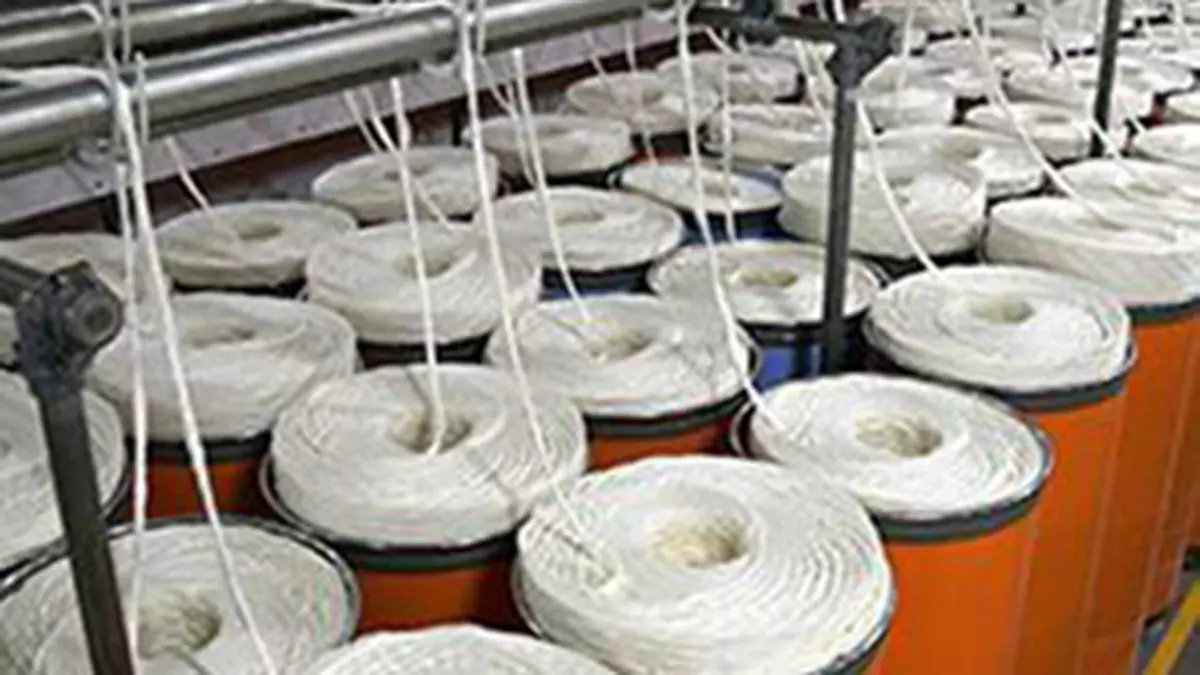

Textile companies on long road to recovery

Textile companies on long road to recovery

The Indian textile sector confronted a rough patch in 2022. A triple whammy of elevated raw substance rates, lower exports demand from customers thanks to the Russia-Ukraine war, and subdued capability utilization eroded their margins. The predicament worsened for spinners, with domestic cotton costs trading at a big top quality in contrast to worldwide kinds, creating Indian cotton goods uncompetitive globally.

Tiny marvel then that textile shares have been overwhelmed black and blue. For instance, in 2022, so much, midcap textile stocks, these kinds of as Vardhman Textiles Ltd and Trident Ltd, have corrected by 29{1668a97e7bfe6d80c144078b89af180f360665b4ea188e6054b2f93f7302966b} and 37{1668a97e7bfe6d80c144078b89af180f360665b4ea188e6054b2f93f7302966b}, respectively. Smallcaps, these types of as Indo Depend Industries Ltd, bore a better brunt falling all-around 47{1668a97e7bfe6d80c144078b89af180f360665b4ea188e6054b2f93f7302966b} in the period of time.

Graphic: Mint

See Total Graphic

Graphic: Mint

You could possibly also like 

Why IT attrition is high in spite of a hazard of economic downturn

Silver shines on contemporary demand from customers outlook, but gold glitters brighter

Subsequent CEO have to recognize Ujjivan objectives: Ghosh

Of training course, midcaps and little caps are inclined to see a steeper decrease than substantial caps throughout a marketplace correction. On the other hand, for this sector, close to-time period headwinds persist, which has also weighed on their stock performances. “H1FY23 has been a turbulent interval for the Indian textile worth chain owing to spiralling domestic cotton selling prices and retailers, globally, saddled with surplus inventory,” claimed ICICI Immediate Exploration report. In accordance to the investigation residence, bigger inventory levels of worldwide retailers in contrast to previously quarters is probable to hit the get e book of Indian exporters through the holiday year (Q3FY23) and spring-summer (Q4FY23/Q1FY24).

As matters stand, the demand from customers situation appears bleak owing to a looming world economic downturn. But investors can just take some convenience from the reality that the offer facet circumstance is improving. Cotton charges in India have corrected from ~ ₹1 lakh for every candy to ~ ₹70,000. Worldwide cotton futures are down ~50{1668a97e7bfe6d80c144078b89af180f360665b4ea188e6054b2f93f7302966b}. Many thanks to greater rainfall, the increase in cotton output in the approaching season should normalize the supply-facet problem and simplicity the value differential in between domestic and global cotton price ranges. In accordance to analysts at Emkay World wide Economical Services Ltd, the last 5-12 months differential averaged at ~5{1668a97e7bfe6d80c144078b89af180f360665b4ea188e6054b2f93f7302966b} as opposed to far more than 25{1668a97e7bfe6d80c144078b89af180f360665b4ea188e6054b2f93f7302966b} now. “Even in a slightly small-need circumstance, this differential minimize will convey relief to the Indian exporters, especially spinners,” they mentioned in a report.

Having said that, India is at a disadvantage compared to Asian exporting peers thanks to supplemental tariffs. “When a Bangladeshi or a Pakistani agency exports a textile product or service to the EU, they are offering it without having any import duty. But an Indian player pays up to 9.5{1668a97e7bfe6d80c144078b89af180f360665b4ea188e6054b2f93f7302966b} duty. Bangladesh and Pakistan are better placed in terms of labour cost as very well,” claimed Anuj Jain, investigation head and co-founder at portfolio management support Inexperienced Portfolio.

That explained, the increased adoption of a China-additionally-a person system by world wide organizations need to assist the sector’s extensive-phrase outlook. China+1 approach means lowering focus chance in China by diversifying corporations in other international locations.

As this more plays out, anticipations are that the textile industry share globally will shift absent from China, the world’s most significant textile exporter, to essential exporting nations around the world this kind of as India, Bangladesh, Pakistan and Vietnam. World wide trade of textiles stands at $1 trillion for every annum. At $350 billion, China commands 35{1668a97e7bfe6d80c144078b89af180f360665b4ea188e6054b2f93f7302966b} of world trade, whilst India is at 4{1668a97e7bfe6d80c144078b89af180f360665b4ea188e6054b2f93f7302966b}. Even if 1{1668a97e7bfe6d80c144078b89af180f360665b4ea188e6054b2f93f7302966b} of business enterprise moves from China to India, it implies the Indian textile industry will double from right here,” he reported.

Buyers in textile shares will want to maintain an eye on the finalization of cost-free trade agreements (FTAs) with the European Union and the Uk. FTAs with the UAE and Australia are already performed.

One of the added benefits of FTAs is that they assistance lessen tariffs for exporting merchandise to a investing lover nation. Clearly, a hold off in finalizing the FTAs will dampen sentiments.

Somewhere else in Mint

In Opinion, Pradeep S. Mehta argues that courts really should take into account economic impact of verdicts. Himanshu tells why we have been unable to double the cash flow of farmers. Pankaj Mishra says 2022 was the yr of the Left’s international revival. Lengthy Tale appears to be like back again at 15 tales that captured 2022 developments.

&#13
Know your interior trader&#13
Do you have the nerves of steel or do you get insomniac over your investments? Let’s determine your investment method.&#13

Get the take a look at

Catch all the Business Information, Market Information, Breaking Information Activities and Most recent News Updates on Are living Mint.
Down load The Mint Information Application to get Every day Sector Updates.

Much more
A lot less

Increased Demand from the Garment Industry Bolsters Growth

Increased Demand from the Garment Industry Bolsters Growth
Company Logo

Company Logo

Global Textile Dyes Market

Global Textile Dyes Market

Global Textile Dyes Market

Dublin, Dec. 27, 2022 (GLOBE NEWSWIRE) — The “Textile Dyes Global Market Report 2022: Ukraine-Russia War Impact” report has been added to ResearchAndMarkets.com’s offering.

The global textile dyes market is expected to grow from $8.18 billion in 2021 to $8.72 billion in 2022 at a compound annual growth rate (CAGR) of 6.57{1668a97e7bfe6d80c144078b89af180f360665b4ea188e6054b2f93f7302966b}. The textile dyes market is expected to reach $11.25 billion in 2026 at a CAGR of 6.59{1668a97e7bfe6d80c144078b89af180f360665b4ea188e6054b2f93f7302966b}.

Asia-Pacific was the largest region in the textile dyes market in 2021. North America is expected to be the fastest-growing region in the forecast period. The regions covered in textile dyes market report are Asia-Pacific, Western Europe, Eastern Europe, North America, South America, Middle East and Africa.

The increased demand in the garment industry is expected to propel the textile dye market. The garment industry has a significant raw material base that includes all types of natural and synthetic fibre dyes, which has helped it achieve global prominence. These apparel industries are consumer-based, contributing to the economy by providing trade along the clothing and garment production and value chain.

Such growing global business and the use of natural and synthetic fibre dyes in various garments applications lead to the increasing demand for textile dyes. According to a report published in February 2022 by Obrelo, a Russia-based drop shipping company, the fashion industry grew by 18.4 {1668a97e7bfe6d80c144078b89af180f360665b4ea188e6054b2f93f7302966b} in 2021, with sales figures for 2022 forecast at $473.42 billion. Therefore the increasing demand in the garment and fashion industry will drive the textile dyes market.

New technology is a key trend gaining popularity in the textile dyes market. The textile dyes sector is constantly innovating and adopting new advanced dying technologies to become a more sustainable industry. The use of nanotechnology to create more scientific clothing, such as fire-repellent, self-cleaning, and water-repellent clothes, has resulted in significant advancement in the textile industry. These advancements in textile manufacturing technology will enable textile material and product dying markets to use more sustainable and advanced dying technology. Major companies operating in the textile dyes sector are focused on new technologies to sustain their position in the market.

For instance, In April 2020, Alchemie technology, a UK-based manufacturer of unique digital materials fabrication technologies, launched Alchemie Endeavour, a waterless smart dying technology. This waterless smart dying uses advanced digital manufacturing technology to achieve a breakthrough in cost structure, supply chain capability, and fabric colouration for sustainability. Endeavour employs advanced digital colourant application and fixation technology to provide fabrics with single pass roll-to-roll solid colours.

Reasons to Purchase

  • Gain a truly global perspective with the most comprehensive report available on this market covering 12+ geographies.

  • Understand how the market is being affected by the coronavirus and how it is likely to emerge and grow as the impact of the virus abates.

  • Assessment of Russia – War Impact on agriculture, energy and mineral commodities supply and their direct and indirect impact on the market analyzed in the report.

  • Impact of high global inflation on market growth.

  • Create regional and country strategies on the basis of local data and analysis.

  • Identify growth segments for investment.

  • Outperform competitors using forecast data and the drivers and trends shaping the market.

  • Understand customers based on the latest market research findings.

  • Benchmark performance against key competitors.

  • Utilize the relationships between key data sets for superior strategizing.

  • Suitable for supporting your internal and external presentations with reliable high quality data and analysis

Scope
Markets Covered:

1) By Dye Type: Direct; Reactive; VAT; Basic; Acid; Disperse; Other Dye Types
2) By Fiber Type: Wool; Nylon; Cotton; Viscose; Polyester; Acrylic; Other Fiber Types
3) By Application: Clothing & Apparels; Home Textiles; Industry Textiles

Key Topics Covered:

1. Executive Summary

2. Textile Dyes Market Characteristics

3. Textile Dyes Market Trends And Strategies

4. Textile Dyes Market – Macro Economic Scenario

5. Textile Dyes Market Size And Growth

6. Textile Dyes Market Segmentation

7. Textile Dyes Market Regional And Country Analysis

8. Asia-Pacific Textile Dyes Market

9. China Textile Dyes Market

10. India Textile Dyes Market

11. Japan Textile Dyes Market

12. Australia Textile Dyes Market

13. Indonesia Textile Dyes Market

14. South Korea Textile Dyes Market

15. Western Europe Textile Dyes Market

16. UK Textile Dyes Market

17. Germany Textile Dyes Market

18. France Textile Dyes Market

19. Eastern Europe Textile Dyes Market

20. Russia Textile Dyes Market

21. North America Textile Dyes Market

22. USA Textile Dyes Market

23. South America Textile Dyes Market

24. Brazil Textile Dyes Market

25. Middle East Textile Dyes Market

26. Africa Textile Dyes Market

27. Textile Dyes Market Competitive Landscape And Company Profiles

28. Key Mergers And Acquisitions In The Textile Dyes Market

29. Textile Dyes Market Future Outlook and Potential Analysis

30. Appendix

Companies Mentioned

  • Archroma

  • Atul Ltd

  • Colorant Limited

  • Vipul organics Ltd

  • Zhejiang Runtu Co Ltd

For more information about this report visit https://www.researchandmarkets.com/r/lkjv85

Attachment

CONTACT: CONTACT: ResearchAndMarkets.com Laura Wood,Senior Press Manager press@researchandmarkets.com For E.S.T Office Hours Call 1-917-300-0470 For U.S./ CAN Toll Free Call 1-800-526-8630 For GMT Office Hours Call +353-1-416-8900

Indian textile industry cautious as COVID-19 cases surge in China

Indian textile industry cautious as COVID-19 cases surge in China
Indian textile marketplace is careful immediately after a spike in COVID-19 circumstances in China. Industry and trade specialists are now examining the genuine danger from the pandemic and the disruption. Some traders explained that companies have reduced their buys now. Federal government of India has also reinstated COVID-19 protocols and particular restrictions. 

Textile marketplace and trade are dealing with very poor need from the global marketplace thanks to the economic slowdown and high inflation. Better price ranges of cotton and other fibres are also pushing the charge of generation up, thus squeezing the profit margins of manufacturers. The danger of the new COVID wave is a further obstacle for the industry, which is currently working with unfavourable marketplace problems. 

Trade sources said that industry sentiment more dampened following reports of COVID spike in China and mounting threat in India. There is a common sense of uncertainty in trade because prospective buyers and sellers are clueless about the upcoming circumstance of pandemic. 

Indian textile business is cautious soon after a spike in COVID-19 situations in China. Market and trade specialists are currently examining the real risk from the pandemic and the disruption. Some traders said that manufacturers have decreased their purchases now. Govt of India has also reinstated COVID-19 protocols and specified constraints.

Some authorities are of the view that India may well be a delicate focus on of the pandemic simply because of its proximity to China, even though many others come to feel that India is presently previous its worst COVID wave that strike the nation in April-June 2021. Traders mentioned that trade pursuits will be disrupted only if lockdowns are imposed. 

“Manufacturers have decreased their buys as they do not want to choose much more possibility,” Nikhil Jain, a trader from Ludhiana, informed Fibre2Manner. They experienced previously been dealing with losses thanks to low demand and the high cost of creation. 

However, a Delhi-based mostly trader was optimistic. He claimed that likely the scenario will not deteriorate to the extent it did earlier. The points will be clearer in the following one or two weeks. Ideally, the condition will be less than command in China in the subsequent couple months and the influence of the present wave will be milder than prior to. 

A cotton trader from Bathinda was also optimistic as he hoped to get some gain from the improving desire for Indian cotton and yarn soon after a disruption in the Chinese market. He told Fibre2Style, “A sharp rise in COVID cases in China might disrupt the standard trade and marketplace. Probably, exports of cotton, yarn, and fabrics from China to India and other nations around the world will be affected. Hence, desire might divert to India which may perhaps assistance support the charges of textile products.” 

&#13

Fibre2Manner News Desk (KUL)

&#13

Textile industry capacity utilisation halves on high cotton prices

Textile industry capacity utilisation halves on high cotton prices

The ability utilisation of the textile marketplace has plunged 50 per cent with domestic cotton price ranges ruling substantially previously mentioned the global sector because of to levy of import duty.

Nevertheless uncooked cotton prices are hovering about ₹60,000 per sweet (of 356 a kg) from its peak rate of ₹1.10 lakh for every sweet, the rates are however higher than pre-Covid concentrations.

Cotton in India is offering at a premium compared to competing international locations owing to the import responsibility of 11 for every cent levied by the authorities previous February.

‘Retrograde measure’

Talking at the 100th Annual Standard Conference of Cotton Association of India, Atul S Ganatra, President, mentioned the import duty on cotton has eroded the competitiveness of value-included products in the global markets and the textile field is now constrained to operate with only 50 for each cent of its put in capacity.

Levy of import obligation is a retrograde measure not in consonance with free trade coverage of the state and sends a improper sign to the globe cotton group, he mentioned urging the govt to get rid of it.

Cotton efficiency in India carries on to be amid the cheapest in the world, in spite of an envious growth of Indian cotton sector above the many years that has carved a market for by itself in the entire world cotton overall economy.

India’s cotton productivity for every hectare is just 468 kg from the entire world normal of 744 kg. India lags behind lesser nations around the world this kind of as Bangladesh, Syria, Sudan in cotton efficiency.

All stakeholders together with Cotton Association of India have produced repeated representations to the Governing administration to revive Know-how Mission on Cotton, he explained.

GM cotton yield doubled

Introduction of Genetically Modified cotton engineering in India experienced furnished the considerably-needed thrust to enhance cotton productiveness from 307 kg per hectare in 2001-02 to 566 kg for each hectare in 2013-14. The produce has virtually doubled in 5 decades following the introduction GM know-how in India, he reported.

Popularising Large Density Planting, farm mechanisation and providing a thrust to investigation-oriented agronomy are some other crucial techniques forward to enhance our cotton productivity, he advised.

Added-lengthy staple (ELS) cotton generation is a great deal reduce than the demand from customers in the nation. India demands about 20 lakh bales of ELS cotton to cater the domestic marketplace. Even so, the domestic generation is about 5 lakh bales and imports the rest from Egypt, US and Australia.

“We have recommended to the Authorities to detect regions suited for cultivation of ELS cotton, offer superior quality cottonseed and plan guidance with extra MSP,” he claimed.

Demand crunch: Textile sector bats for stimulus, cotton import duty removal

Demand crunch: Textile sector bats for stimulus, cotton import duty removal
&#13
&#13
&#13
&#13
&#13

&#13
Textile sector players are batting for removing of import obligation on cotton and a stimulus from the authorities immediately after currently being strike by a dip in desire owing to the world-wide money crisis and the Ukraine war. The marketplace has been also impacted by the rise in Indian uncooked cotton price ranges, which are at minimum 10-20 per cent increased than global cotton correct now.

&#13

&#13
“The charge of Indian raw cotton is 10-20 per cent larger than the international cotton, which includes the Chinese cotton. This would make Indian spinning mills not to source cotton from India due to the greater amount. At the very same time, the Govt of India has imposed 11 for every cent import obligation. This spoils the level-actively playing industry,” claimed K Venkatachalam, chief advisor, Tamil Nadu Spinning Mills Affiliation (Tasma).&#13

&#13
India’s cotton textile and uncooked cotton exports dipped by 29 for every cent to $5.406 billion in the April-September period, in contrast to $7.606 billion through the very same time in 2021-22. All through the exact same interval, cotton textile exports dipped by 23 per cent to $4.791 billion as against $6.468 billion last calendar year. Likewise, uncooked cotton exports much too declined by 62 for each cent from $1.138 billion from April to September 2021 to $435.9 million in 2022, in accordance to the details shared by the Tasma.

&#13

&#13
“Our cotton fees are not competitive globally. Domestic current market is also shifting faster from cotton to polyester and use is down. For this reason, the governing administration should really remove the import duty and make our raw products at par with worldwide rates,” said Sanjay Kumar Jain of Delhi-based mostly TT Ltd.

&#13

&#13
This will come at a time when there is a lack of demand for textile goods globally because of to the Ukraine-Russia war. “Unless the Govt of India proposes a stimulus offer to textile industries at all levels, whether or not they are spinning, weaving, fabricating, prepared-built garments and dwelling textiles, most of the industries will develop into NPAs incredibly soon, as they are all functioning only for two to 3 days in a 7 days and their performance has appear down to the extent of 30 per cent only,” Venkatachalam added.

&#13

&#13
On the other hand, relocating in line with the general items exports that dipped by 16.7 per cent to $29.8 billion in Oct, completely ready-manufactured garment (RMG) exports too dipped in the course of the thirty day period.

&#13

&#13
“Since most of the conventional markets of Indian RMG together with British isles, EU and the US are witnessing recession and world headwinds, leading to shrinking of demand on one side and customers inquiring for 15 for every cent lower price on the other, we have requested the governing administration for expediting FTAs in these marketplaces and make certain all tariff strains of RMG sector, which will permit a responsibility reduction from the existing 9.6 per cent and act as a powerful breather,” said Naren Goenka, chairman, Clothing Export Advertising Council (AEPC).

&#13

&#13
The whole set focus on of attire exports for 2022-23 is $17.6 billion as against $16.01 billion in 2021-22, out of which $ 9.2 billion was obtained in the course of April-October 2022.

&#13

&#13
Tiruppur knitwear exports back in development observe

&#13

&#13
After clocking destructive development in the course of the months of August, September, and October by 14.6 for every cent, 24.4 for every cent and -34.1 per cent, respectively as opposed to the corresponding months of past year 2021, Tiruppur knitwear exports turned favourable in November by recording a 10.6 for every cent development. Tiruppur contributes to 55 for every cent of the country’s knitwear exports, according to the Tiruppur Exporters’ Association (TEA).

&#13

&#13
The export date for the month of November 2022 reveals that readymade garment exports have reversed the detrimental development and posted a beneficial advancement of 22.71 per cent as opposed to November 2021.

&#13

&#13
“The good development in November is rather encouraging and variables like Economic Cooperation and Trade Agreement (ECTA) entered with Australia will come into effect from December 29 and the envisaged Settlement with Uk will occur in another two months, will help to raise the knitwear exports from Tiruppur,” explained K M Subramanian, President, TEA. He more mentioned that the Uk and Australian potential buyers are intrigued to place orders with Tiruppur due to the fact of the China In addition one particular policy of the respective nations.

&#13

&#13
&#13

India’s textile industry faces tough times as consumers cut spending

India’s textile industry faces tough times as consumers cut spending
  • Textile exports drop for 5 months in row
  • International prospects in 2023 seem tough – Mckinsey
  • Compact brands lower generation, alert of career losses
  • Govt probably to announce sops for textile market: govt resource

NEW DELHI/MUMBAI, Dec 16 (Reuters) – India’s $200 billion textile and clothing market is facing a disaster as shoppers in the United States, Europe and other massive marketplaces have cut shelling out on garments subsequent a surge in inflation soon after the war in Ukraine, industry officers claimed.

When the general economy is relatively solid and is outperforming major economies, the textile sector is a notable exception and orders counsel the downturn will proceed well into 2023, elevating the possibility of layoffs in an field that employs far more than 45 million people.

Exports, which represent about 22{1668a97e7bfe6d80c144078b89af180f360665b4ea188e6054b2f93f7302966b} of the industry, have fallen for five months in a row – declining around 15{1668a97e7bfe6d80c144078b89af180f360665b4ea188e6054b2f93f7302966b} year-on-year in November to $3.1 billion. Domestic profits are sluggish despite solid development in the overall financial state simply because of higher expenses and low-cost imported garments, brands say.

After bumper profits earlier this yr, nearby textile factories are now reducing output – contributing to a 4.3{1668a97e7bfe6d80c144078b89af180f360665b4ea188e6054b2f93f7302966b} contraction in production output in July-September quarter that has raised problems between policymakers.

The shock arrives as Key Minister Narendra Modi’s federal government struggles to produce employment for millions of kids coming into the task sector just about every 12 months.

Soon after 18 months of robust expansion through mid-2022, world retail revenue of clothes have been dragged down by higher inflation and depressed consumer sentiment, and prospects for 2023 look gloomy, a McKinsey report reported final thirty day period.

Reuters Graphics

In India, the producing sector, contributing 16{1668a97e7bfe6d80c144078b89af180f360665b4ea188e6054b2f93f7302966b} of GDP, has been strike by increasing uncooked substance expenditures and weak demand, in spite of shiny expansion in other places. Producing confirmed no indications of growth in the initially fifty percent of the existing April-March fiscal yr while the overall financial state, aided by agriculture and products and services, expanded 6.3{1668a97e7bfe6d80c144078b89af180f360665b4ea188e6054b2f93f7302966b}. read through a lot more

Textile companies, along with makers of footwear, home furnishings, digital and electricals, have been hit as organizations fight to move on mounting input expenses, when people have slice expenditure on these merchandise as they commit much more on food stuff and gas.

Reuters Graphics

In the textile marketplace, suppliers say bigger domestic cotton price ranges and other charges have hit earnings margins, whilst abroad orders for up coming summer time are down by about a person-third and domestic demand from customers continues to be weak.

“We see hard moments at the very least for the upcoming six months as orders from significant markets including the EU and the United states have arrive down significantly,” said Naren Goenka, chairman, Clothing Export Advertising Council, citing inflation and world wide headwinds hitting domestic income as effectively.

Sahid Khan, a clothes producer in Ahmedabad, the textile hub in Modi’s dwelling condition of Gujarat, stated regardless of a slide in cotton price ranges by about 40{1668a97e7bfe6d80c144078b89af180f360665b4ea188e6054b2f93f7302966b} from file highs strike in 2022, financial gain margins were down due to reduced gross sales in the domestic current market.

“Fascination prices on lender financial loans have absent up along with labour costs, but my sales are down,” he said introducing that domestic cotton price ranges remained significant when compared to world-wide costs, and brands have been not able to contend with low-cost imports from Bangladesh.

Community cotton is at the very least 10{1668a97e7bfe6d80c144078b89af180f360665b4ea188e6054b2f93f7302966b} a lot more high-priced than world wide benchmarks, reported Atul Ganatra, president of the Cotton Association of India (CAI).

“The authorities demands to scrap the 11{1668a97e7bfe6d80c144078b89af180f360665b4ea188e6054b2f93f7302966b} import obligation on cotton so nearby textile mills can have a amount participating in subject,” Ganatra explained. “This will enable mills to have possibilities to import cotton from overseas which is virtually 10 cents per pound more cost-effective than nearby supplies.”

Shares of top textile corporations like Arvind Ltd (ARVN.NS), Vardhman Textiles (VART.NS), Trident (TRIE.NS) and Nahar Spinning Mills (NHRS.NS) have plunged among 20{1668a97e7bfe6d80c144078b89af180f360665b4ea188e6054b2f93f7302966b} and 40{1668a97e7bfe6d80c144078b89af180f360665b4ea188e6054b2f93f7302966b} this 12 months, though the benchmark Nifty (.NSEI) is up over 7{1668a97e7bfe6d80c144078b89af180f360665b4ea188e6054b2f93f7302966b}.

The field has sought duty absolutely free imports of cotton, an fascination subsidy on lender loans and growth of creation joined incentives to confront the crisis.

The federal government could quickly contemplate the needs, and an announcement is likely in the annual finances owing in February, mentioned a federal government formal with direct understanding of matter, inquiring for anonymity as he was not authorised to speak to media.

Reuters Graphics

Worry OF Task CUTS

A lot of textile manufacturers, who have frozen selecting of workers, have warned of work cuts if the governing administration fails to deliver relief shortly.

In Tirupur, a knitwear manufacturing hub in southern India utilizing over 600,000 workers, quite a few small corporations have slashed the workforce as they say they are working on much less than 50{1668a97e7bfe6d80c144078b89af180f360665b4ea188e6054b2f93f7302966b} potential.

With once-a-year manufacturing worth above $8 billion for domestic and abroad markets, the regional field fears it will suffer up to a a single-3rd slide in exports this yr from $4.5 billion in 2021/22, said Raja Shanmugham, previous president of the Tirupur Exporters’ Association.

“There are few orders for future summer months,” he explained, adding significant vendors had been asking for hefty bargains to elevate before booked orders.

Gross sales in the domestic market, which usually decide on up for the duration of the pageant and marriage period commencing October, have been weak this 12 months, he mentioned.

Chandira Kumar, head of Sentinel Garments in Tirupur, mentioned he had let go two-thirds of his employees and was left with 150, as he was acquiring it complicated to endure on skinny gain margins and handful of orders.

“If the latest pattern carries on, I might before long have to shut down the manufacturing facility,” he claimed.

($1 = 82.5050 Indian rupees)

Extra reporting by Amit Dave in Ahmedabad Graphic by Riddhima Talwani Enhancing by Raju Gopalakrishnan

Our Standards: The Thomson Reuters Have confidence in Principles.