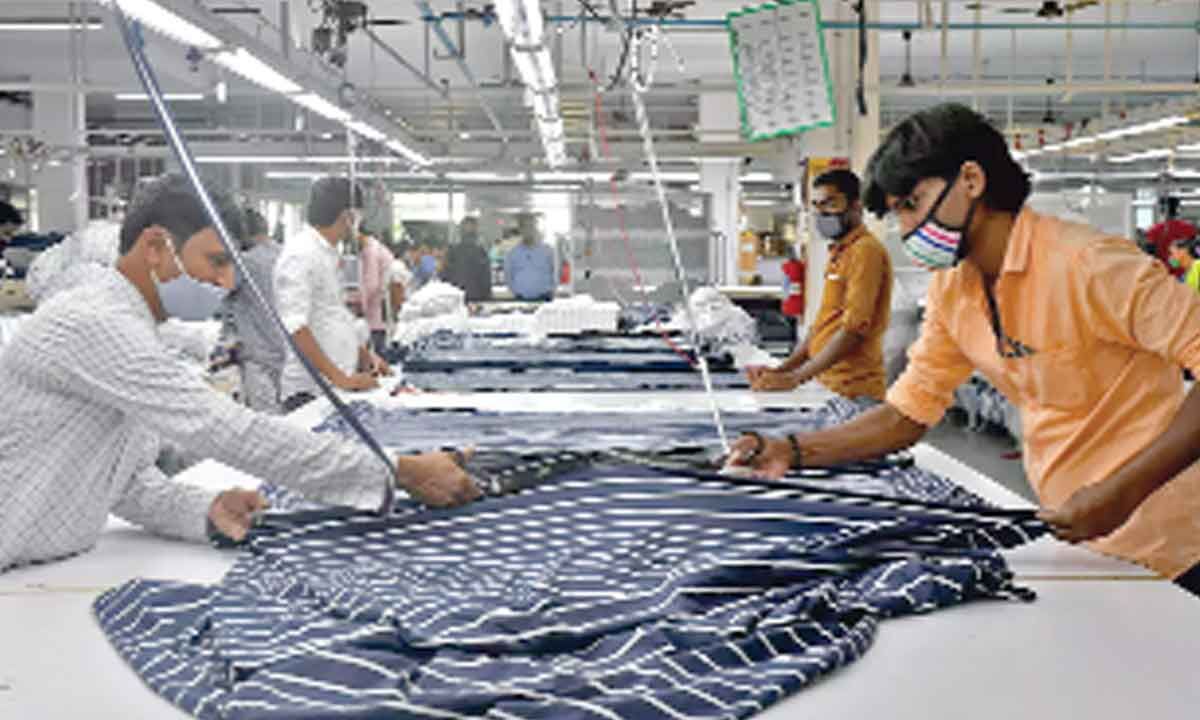

Trends In the Textile Industry

Trends In the Textile Industry

Views expressed by Entrepreneur contributors are their personal.

You’re reading Entrepreneur India, an global franchise of Entrepreneur Media.

Sustainability and recycling are overarching themes for the long run of business enterprise, as is evident from the quantity of consideration paid to them in the news cycles as perfectly as world wide governments.


Freepik

The industry segment is anticipated to see a contraction at the very least until finally 2024. India’s $200 billion textile and attire field is experiencing a disaster as customers in Europe, U.S and other large marketplaces for Indian makers have cut paying out on clothing, as inflation is on rise and consequences of the Ukraine war lead to extra hardships. COVID constraints in China have also been between contributing variables. Returning to normalcy will take some time, likely by 2025.

The textile business, like the relaxation of the globe, is changing to new demands by implementing new approaches of production. The demand from customers for all-natural fibers like cotton, silk and linen has amplified exponentially. Most of this comes from a new generation of prospects who are willing to shell out extra for sustainability. This is a fantastic detail, as it is the demand from customers that will generate organisations to turn out to be additional sustainable, apart from regulation. According to a report by the UN, “Every 2nd, the equivalent of a person garbage truck of textiles is landfilled or burned. If absolutely nothing improvements, by 2050 the manner market will use up a quarter of the world’s carbon price range.”

Troubles like accountable producing, recycled thread apparel, reduced usage of electricity, sustainable and eco-welcoming clothing traces, lower water utilization, and zero-discharge producing are some of the challenges that concern the industry. The Govt of India is pushing textile suppliers to have zero-discharge crops so that fewer pollutants are enable out into freshwater bodies. This will bear fruit, but over time as organisations adapt to the mandates. The timeframe for this has been fixed for 2030.

Another crucial problem that the sector is grappling with is the usage of coal for boilers. A reduction in carbon footprint demands the phasing out of coal electricity, but cleaner choices are high priced. Textile gamers have questioned for alternate resources and engineering like gas to be provided at subsided rates, else the added expenditures will have to be handed on to buyers.

A move in the correct way to lessen pollution and progress sustainability is traceability — the means to monitor and trace the entire lifestyle-cycle of the merchandise from uncooked content and remaining great to intake, disposal and recycling. If key players adopt this kind of tactics, the industry’s effectiveness could strengthen, ensuring frequent source of top quality material and greater risk management.

Circularity is an additional important difficulty from a sustainability perspective. Recycling a garment will help in decreasing GHG emissions, saves means and aids increase economic, social and environmental rewards.

Countries like China and those in Europe have a coverage to recycle textile squander. India does not have these types of a plan yet, and a appropriate plan where the Indian textile industry can add in advancing electrical power transition commitments and recycle textiles is will need of the hour.

It is envisioned that by 2030-2035, most of the organised sector textile companies will be utilizing a sustainable product of doing organization. Tamil Nadu could turn out to be a model state for this sector – most of the makers in the state use 100 for each cent environmentally friendly electrical power, and have implemented zero liquid-discharge in processing. They also have PET recycling vegetation, use squander from spinning procedures to make yarn and fabric, deliver 100 per cent PET-recycled textile products for apparel, use garment cutting waste recycling to make new dresses, dwelling their plants in inexperienced-certified properties, and so on.

Challenges facing the global textile industry in 2023

Challenges facing the global textile industry in 2023

Translated by

Nicola Mira

Revealed


Dec 22, 2022

Right after two pandemic-stricken decades, textile and attire producers ended up hoping to be in a position to capture their breath in 2022. But then Russia invaded Ukraine, and manufacturers are now experiencing new problems putting their already pressured cash positions below stress, from the strength disaster to fluctuating raw elements rates to the global offer chain’s transformation.

Shutterstock

Electrical power provides at threat

Energy and gasoline are at the heart of European textile manufacturers’ concerns as 2023 is about to start off. Default threats are at their greatest, although some factories are urgently hoping to equip by themselves with solar panels. The fuel and electrical power crisis is also a source of tension inside the European textile field: some nations around the world, like Spain and Portugal, have been in a position to decouple electrical power costs from fuel price ranges, so as to minimise power invoice raises. A distortion of competition that is resulting in for illustration French producers to gnash their teeth in anger.

Moreover, even though the pandemic introduced nearly to a halt the overall textile and clothing sector, the present energy disaster is concentrated in Europe, accentuating the value gap involving the latter and other significant sourcing areas. With out sizeable state intervention, declarations of industrial sovereignty notwithstanding, manufacturers think that a scenario showcasing a huge new wave of sourcing delocalisation is no longer to be dominated out.

Uncooked elements decision and prices

In the meantime, the crisis in transportation and uncooked elements selling prices is by no means about for the market. The Harpex index for the charge of container ship charters stays nonetheless just about 100{1668a97e7bfe6d80c144078b89af180f360665b4ea188e6054b2f93f7302966b} earlier mentioned the level observed in January 2020.

Textile Trade

On the uncooked supplies facet, the invasion of Ukraine brought on worrying price fluctuations all through 2022. Synthetic fibres at this time account for almost two thirds of world wide textile fibre output, possessing had the lion’s share given that the cotton disaster of 2010-11. Whilst selling prices have steadily diminished yet again, most of them have achieved a new typical, at levels previously mentioned pre-crisis kinds.

The world geopolitical context continues to be uncertain and, now a lot more than at any time, textile buyers are confronted with a require to change to all-natural materials, which individuals say they are calling for. A need that will have to nevertheless come to phrases with the cotton industry’s present woes. In addition to, there are suspicions swirling around extremely sought-following natural cotton, which accounted for 24{1668a97e7bfe6d80c144078b89af180f360665b4ea188e6054b2f93f7302966b} of all cotton made in 2021. The Textile Exchange NGO has sounded the alarm bell about the unexplained gap in between volumes created and the volumes style labels assert are featured in their collections.

Transformation of worldwide sourcing

Growing uncooked elements charges are also starting to leave traces on the international sourcing map. Enmeshed in the scandal of its procedure of Uighurs, and simply because of the inconsistency in output volumes induced by the zero-Covid policy, China is looking at Western orders change towards its neighbours.

IFM

Bangladesh, Pakistan, India, Myanmar and Vietnam have benefited from the condition, but China commenced easing its Covid limits in December 2022, and this may properly adjust the outlook for 2023. 

Potential buyers, caught concerning a need to resource closer to residence and the pragmatic impulse to minimise the budgetary affect of rocketing charges, are as a result faced with complicated decisions at the start out of 2023.

Orders are growing a lot more in worth than in quantity, so that producers are commencing to stress that volumes will go on to stagnate even when output expenses will sooner or later drop. A situation that would undermine their profitability. 

Inflation has closing say

Challenged in phrases of power, uncooked materials and sourcing, the textile market is also experiencing the supreme arbiter in times of disaster: buyers. Deconsumption as a option, created by people today wishing to consume significantly less but improved, is now heading hand in hand with the compelled deconsumption induced by inflation. Apparel and footwear are no for a longer time priorities for consumers. A actuality whose effects will sooner or later be felt throughout the total textile and clothing offer chain.

Copyright © 2023 FashionNetwork.com All legal rights reserved.

India’s textile industry is facing a crisis

India’s textile industry is facing a crisis

US, Europe and other large markets have lower paying out on clothing following a surge in inflation right after the war in Ukraine


India’s $200 billion textile and apparel marketplace is facing a crisis as customers in the US, Europe and other big markets have cut paying on garments next a surge in inflation following the war in Ukraine, business officials said.

Although the general economic climate is fairly powerful and is outperforming big economies, the textile sector is a noteworthy exception and orders recommend the downturn will continue on very well into 2023, boosting the possibility of layoffs in an field that employs additional than 45 million men and women.

Also study: Celebrating India’s textile heritage

Exports, which constitute about 22{1668a97e7bfe6d80c144078b89af180f360665b4ea188e6054b2f93f7302966b} of the sector, have fallen for 5 months in a row, declining around 15{1668a97e7bfe6d80c144078b89af180f360665b4ea188e6054b2f93f7302966b} year-on-yr in November to $3.1 billion. Domestic gross sales are sluggish regardless of strong expansion in the over-all economic climate for the reason that of higher expenditures and cheap imported clothes, companies say.

Just after bumper product sales previously this year, local textile factories are now slicing creation – contributing to a 4.3{1668a97e7bfe6d80c144078b89af180f360665b4ea188e6054b2f93f7302966b} contraction in manufacturing output in July-September quarter that has lifted concerns between policymakers.

The shock arrives as Key Minister Narendra Modi’s govt struggles to generate employment for hundreds of thousands of youngsters entering the career sector just about every year.

Soon after 18 months of robust advancement by mid-2022, world retail gross sales of clothes have been dragged down by substantial inflation and frustrated shopper sentiment, and prospective clients for 2023 glimpse gloomy, a McKinsey report stated last month.

In India, the manufacturing sector, contributing 16{1668a97e7bfe6d80c144078b89af180f360665b4ea188e6054b2f93f7302966b} of GDP, has been hit by climbing uncooked material fees and weak demand from customers, in spite of vivid advancement in other places. Production confirmed no indicators of expansion in the initial 50 percent of the recent April-March fiscal year whilst the overall financial system, served by agriculture and expert services, expanded 6.3{1668a97e7bfe6d80c144078b89af180f360665b4ea188e6054b2f93f7302966b}.

Textile brands, along with makers of footwear, furnishings, electronic and electricals, have been strike as corporations fight to pass on soaring enter charges, whilst buyers have slice expenditure on these products as they devote additional on meals and fuel.

In the textile sector, companies say increased domestic cotton selling prices and other expenses have strike earnings margins, while abroad orders for up coming summer are down by about a single-third and domestic demand remains weak.

“We see complicated instances at the very least for the up coming 6 months as orders from key marketplaces including the EU and the United states of america have appear down substantially,” explained Naren Goenka, chairman, Attire Export Promotion Council, citing inflation and global headwinds hitting domestic product sales as effectively.

Sahid Khan, a clothes company in Ahmedabad, the textile hub in Modi’s property condition of Gujarat, explained even with a fall in cotton rates by about 40{1668a97e7bfe6d80c144078b89af180f360665b4ea188e6054b2f93f7302966b} from report highs strike in 2022, income margins had been down owing to decreased profits in the domestic current market.

“Interest prices on bank loans have gone up alongside with labour charges, but my gross sales are down,” he reported introducing that domestic cotton rates remained substantial as opposed to global selling prices, and manufacturers had been not able to contend with affordable imports from Bangladesh.

Neighborhood cotton is at the very least 10{1668a97e7bfe6d80c144078b89af180f360665b4ea188e6054b2f93f7302966b} extra high priced than global benchmarks, explained Atul Ganatra, president of the Cotton Affiliation of India (CAI).

“The governing administration wants to scrap the 11{1668a97e7bfe6d80c144078b89af180f360665b4ea188e6054b2f93f7302966b} import obligation on cotton so area textile mills can have a degree actively playing field,” Ganatra stated. “This will allow mills to have possibilities to import cotton from abroad which is virtually 10 cents per pound less expensive than nearby materials.”

Shares of foremost textile providers like Arvind Ltd, Vardhman Textiles, Trident and Nahar Spinning Mills have plunged in between 20{1668a97e7bfe6d80c144078b89af180f360665b4ea188e6054b2f93f7302966b} and 40{1668a97e7bfe6d80c144078b89af180f360665b4ea188e6054b2f93f7302966b} this yr, whilst the benchmark Nifty is up over 7{1668a97e7bfe6d80c144078b89af180f360665b4ea188e6054b2f93f7302966b}.

The marketplace has sought duty cost-free imports of cotton, an fascination subsidy on bank loans and enlargement of manufacturing linked incentives to confront the crisis.

The governing administration could quickly consider the calls for, and an announcement is probable in the once-a-year spending plan owing in February, reported a government official with immediate expertise of matter, asking for anonymity as he was not authorised to talk to media.

Several textile companies, who have frozen hiring of personnel, have warned of careers cuts if the govt fails to supply reduction soon.

In Tirupur, a knitwear production hub in southern India utilizing more than 600,000 workers, lots of modest companies have slashed the workforce as they say they are operating on considerably less than 50{1668a97e7bfe6d80c144078b89af180f360665b4ea188e6054b2f93f7302966b} ability.

With yearly production truly worth above $8 billion for domestic and abroad marketplaces, the local sector fears it will go through up to a a single-third drop in exports this calendar year from $4.5 billion in 2021/22, explained Raja Shanmugham, former president of the Tirupur Exporters’ Affiliation.

“There are handful of orders for next summer time,” he explained, adding massive stores had been asking for hefty discount rates to raise previously booked orders.

Income in the domestic industry, which commonly decide on up all through the pageant and marriage time starting off October, had been weak this yr, he reported.

Chandira Kumar, head of Sentinel Apparel in Tirupur, stated he had let go two-thirds of his employees and was still left with 150, as he was acquiring it hard to survive on thin revenue margins and few orders.

“If the current trend carries on, I might soon have to shut down the manufacturing facility,” he claimed.

Also go through: How a French-Indian textile designer is reviving Mughal prints

Textile Dyes Global Market Report 2022: Significant Growth in the Worldwide Textile Industry Bolsters Sector – ResearchAndMarkets.com

Textile Dyes Global Market Report 2022: Significant Growth in the Worldwide Textile Industry Bolsters Sector – ResearchAndMarkets.com

DUBLIN–(Organization WIRE)–The “Textile Dyes Market place: International Marketplace Tendencies, Share, Sizing, Growth, Prospect and Forecast 2022-2027” report has been extra to ResearchAndMarkets.com’s giving.

The world-wide textile dyes market place sizing attained US$ 9.6 Billion in 2021. Searching forward, the publisher expects the market place to get to US$ 13.5 Billion by 2027, exhibiting a CAGR of 5.85{1668a97e7bfe6d80c144078b89af180f360665b4ea188e6054b2f93f7302966b} through 2021-2027. Maintaining in mind the uncertainties of COVID-19, we are repeatedly monitoring and analyzing the direct as perfectly as the oblique affect of the pandemic on diverse end use industries. These insights are incorporated in the report as a significant current market contributor.

Textile dyes refer to pigmented chemicals made use of for imparting colours or hues to textiles. These dyes are extra by way of the approach of absorption, diffusion or temperature bonding. Some of the usually made use of textile dyes contain immediate, reactive, vat, simple, acid and disperse dyes. They are ordinarily made working with organic or artificial resources, these as plants, animals and petroleum and are employed for elements this kind of as denim, wool, polyester, cotton, acrylics, fur, nylon and silk. The dyes incorporate uniform color with the expected saturation to the materials and boost their over-all aesthetic charm. As a end result, they are extensively utilized to manufacture protective, professional medical, industrial, household and sportswear textiles.

Significant development in the textile sector across the globe signifies one of the key things creating a constructive outlook for the market place. Also, the expanding demand from customers for colored textiles and fibers throughout industries is also driving the current market advancement. Textile brands are extensively utilizing reactive dyes as they provide better shade compatibility and improved wash-fastness. Together with this, proliferating on the internet retail channels are acting as a different important development-inducing element.

The quick availability of clothes as a result of these on the net channels is expanding the need for higher-high-quality clothing, which, in convert, is expanding the utilization of textile dyes. Additionally, many item improvements, such as the enhancement of price-efficient plant-based mostly dyes, are contributing to the current market advancement. These variants do not comprise harmful substances, this kind of as hefty metals, arsenic and lead, and are highly value-successful and biodegradable. Other variables, together with rapid urbanization throughout the world, alongside with the advancement of ground breaking and highly developed dyeing procedures that have small water and electricity prerequisites, are expected to generate the marketplace more.

Important Industry Segmentation:

The publisher delivers an examination of the important tendencies in each individual sub-segment of the world-wide textile dyes industry report, along with forecasts at the international, regional and nation degree from 2022-2027. Our report has classified the marketplace dependent on dye sort, fiber variety and application.

Separation by Dye Variety:

  • Direct
  • Reactive
  • Vat
  • Primary
  • Acid
  • Disperse
  • Other folks

Breakup by Fiber Form:

  • Wool
  • Nylon
  • Cotton
  • Viscose
  • Polyester
  • Other folks

Breakup by Software:

  • Clothes and Apparels
  • Home Textiles
  • Automotive Textiles
  • Other individuals

Break up by Location:

North The us

Asia-Pacific

  • China
  • Japan
  • India
  • South Korea
  • Australia
  • Indonesia
  • Other people

Europe

  • Germany
  • France
  • United Kingdom
  • Italy
  • Spain
  • Russia
  • Other individuals

Latin The united states

  • Brazil
  • Mexico
  • Others
  • Center East and Africa

Critical Concerns Answered in This Report:

  • How has the global textile dyes sector done so considerably and how will it accomplish in the coming years?
  • What has been the influence of COVID-19 on the world textile dyes market place?
  • What are the crucial regional marketplaces?
  • What is the separation of the market place primarily based on the dye form?
  • What is the breakup of the current market primarily based on the fiber type?
  • What is the separation of the market place primarily based on the application?
  • What are the various phases in the price chain of the sector?
  • What are the vital driving things and difficulties in the marketplace?
  • What is the construction of the international textile dyes sector and who are the important players?
  • What is the diploma of competitiveness in the industry?

Critical Matters Protected:

1 Preface

2 Scope and Methodology

3 Executive Summary

4 Introduction

5 World wide Textile Dyes Industry

6 Market Separation by Dye Kind

7 Marketplace Separation by Fiber Form

8 Industry Separation by Application

9 Market place Breakup by Location

10 SWOT Analysis

11 Price Chain Investigation

12 Porters Five Forces Evaluation

13 Rate Evaluation

14 Competitive Landscape

Companies Mentioned

  • Archroma Administration GmbH
  • Atul Ltd. (Lalbhai Team)
  • Huntsman Company
  • JAY Chemical Industries Restricted
  • Jihua Group
  • Kiri Industries Ltd.
  • LANXESS AG
  • Organic and natural Dyes and Pigments
  • S.A. Robama
  • Sumitomo Chemical Co. Ltd
  • Zhejiang Runtu Co. Ltd.

For additional information about this report go to https://www.researchandmarkets.com/r/nb8xnn

About ResearchAndMarkets.com

ResearchAndMarkets.com is the world’s top resource for worldwide sector investigate stories and market place facts. We provide you with the most current details on intercontinental and regional marketplaces, important industries, the prime organizations, new items and the hottest trends.

Like 2022, 2023 will be a good year for Indian textile industry

Like 2022, 2023 will be a good year for Indian textile industry

We should really be thankful as 2022 was a effective year for the Indian textile field and I have no question that 2023 will be even far more beneficial for our trade.

There have been headwinds like world wide recessionary developments, Russia-Ukraine war, volatility in uncooked content selling prices, substantial inflation and now all over again expanding Covid-19 instances and that way too in numerous nations around the world.

But we received FTAs with major markets like UAE, Australia schemes like Manufacturing joined Incentive (PLI), and major progress has been finished with regard to PM Mega Integrated Textile Region and Clothing (PM MITRA) plan.

Comparable steps will be progress engines in 2023 as we can have FTA with the British isles and hopefully with Canada also. PLI 2. will be unveiled in 2023 an underneath PM MITRA scheme, point out-smart allocation of all 7 parks is also to be announced. So this calendar year is also heading to be a beneficial yr for our trade.

We want to see these developments in a blend with FTAs are producing market place chances for complete textile value chain, above talked about Govt techniques will aid to build potential, scale of production. And as the Govt emphasis is to endorse competitive production, with volume production, expense will the natural way appear down.

It is not that these progress are heading to advantage only the industry at the export entrance, Indian current market will also obtaining the advantages of these like that making it possible for the import of 51,000 metric tons of responsibility-absolutely free cotton from January 2023 and 419 metric tons of responsibility-totally free cotton from December 29-31, 2022, from Australia would gain the cotton textiles benefit chain. It is sizeable as Indian textile field has begun going through the shortage of top quality cotton with the increased demand from customers.

New Yr is knocking the door with large hope as properly as the unpredictable aspects as we are not able to be positive that how lengthy and critical covid-19 will be at the world wide level but as planet has study a great deal from preceding practical experience and this time Governments are also proactive, it will not be improper to foresee that possibility must be minimise. Primarily in India, when we have the golden chance of G20 presidency. In simple fact this is an celebration to clearly show the India’s strengths in textile trade, proper from our abundant heritage of handloom and handicrafts to industry’s stronghold on sustainable procedures. Aside from the activities or initiatives led by the Governing administration through the G-20 presidency, Trade bodies, as effectively as providers, really should arrive forward to use this prospect with their overseas associates. This can be a fantastic system to convey India’s capabilities to worldwide models and have improved business enterprise relations, explore much more organization options with new providers as effectively.

We ought to value our leadership as this yr has witnessed the highest meetings of the market with the Ministry of Textiles and this regular communication has assisted the field to get a self-assurance that Govt is with them, supporting them not only with major plan-amount matters but also as and when what ever interventions are necessary. With all these initiatives, actions and most significant the resilience of our field we are in proper way towards to reach the envisaged exports of $100 billion and also the full textile small business dimension of $350 billion in a span of 5 to six yrs.

But need of the hour is to continue to momentum and to get optimum edge of recent world wide problems as our competitive nations around the world are also aggressively performing in direction of to maximize their share in world-wide textile trade. At the identical time domestic market place will be making additional need as industry experts has stated that India will most likely emerge as the strongest key overall economy with 7 per cent progress price in FY23 amid the fears of the globe slipping into economic downturn.

And this reflects in the with regard to textile value chain as international models are repeatedly coming into into Indian current market and overseas companies are also now coming forward to commit in India. From 2017-2022, Indian textile market experienced FDI of $1.5 billion.

In 2023, India will launch its nationwide retail policy and the impending spending plan will be the past comprehensive-12 months finances from the authorities forward of the Lok Sabha elections owing in early 2024 so, I never see any purpose that there will be any absence from the Federal government side to help the Indian current market, purchaser sentiments.

So we have to see far more capex and profits for the sector in the 12 months of optimism and options. There are not able to be a improved starting of the New Calendar year with the substantial hopes of development.

(The creator owns a garment producing set up in a rural spot, which employs generally gals workers)

Textile Dyes Global Market Report 2022: Increased Demand

Textile Dyes Global Market Report 2022: Increased Demand

Dublin, Dec. 27, 2022 (World NEWSWIRE) — The “Textile Dyes International Current market Report 2022: Ukraine-Russia War Influence” report has been added to ResearchAndMarkets.com’s featuring.

The world wide textile dyes current market is predicted to increase from $8.18 billion in 2021 to $8.72 billion in 2022 at a compound annual growth rate (CAGR) of 6.57{1668a97e7bfe6d80c144078b89af180f360665b4ea188e6054b2f93f7302966b}. The textile dyes industry is expected to get to $11.25 billion in 2026 at a CAGR of 6.59{1668a97e7bfe6d80c144078b89af180f360665b4ea188e6054b2f93f7302966b}.

Asia-Pacific was the greatest area in the textile dyes market in 2021. North The united states is predicted to be the quickest-growing region in the forecast interval. The locations covered in textile dyes industry report are Asia-Pacific, Western Europe, Eastern Europe, North The usa, South The us, Middle East and Africa.

The amplified demand in the garment field is predicted to propel the textile dye sector. The garment business has a substantial raw content foundation that includes all styles of normal and synthetic fibre dyes, which has helped it obtain world wide prominence. These clothing industries are consumer-based, contributing to the overall economy by supplying trade together the outfits and garment generation and worth chain.

These kinds of rising world wide organization and the use of purely natural and artificial fibre dyes in a variety of garments applications guide to the rising demand from customers for textile dyes. In accordance to a report published in February 2022 by Obrelo, a Russia-based mostly drop shipping organization, the manner business grew by 18.4 {1668a97e7bfe6d80c144078b89af180f360665b4ea188e6054b2f93f7302966b} in 2021, with product sales figures for 2022 forecast at $473.42 billion. Therefore the rising need in the garment and style sector will generate the textile dyes marketplace.

New know-how is a critical craze getting level of popularity in the textile dyes current market. The textile dyes sector is continuously innovating and adopting new state-of-the-art dying systems to become a more sustainable marketplace. The use of nanotechnology to develop more scientific clothes, these kinds of as hearth-repellent, self-cleansing, and h2o-repellent outfits, has resulted in major improvement in the textile industry. These advancements in textile production technological know-how will enable textile materials and merchandise dying markets to use much more sustainable and state-of-the-art dying technologies. Main companies working in the textile dyes sector are targeted on new technologies to sustain their situation in the marketplace.

For occasion, In April 2020, Alchemie engineering, a United kingdom-based producer of distinctive digital components fabrication technologies, released Alchemie Endeavour, a waterless wise dying engineering. This waterless wise dying utilizes state-of-the-art digital producing technology to attain a breakthrough in charge framework, provide chain functionality, and fabric colouration for sustainability. Endeavour employs superior digital colourant software and fixation technology to supply materials with solitary move roll-to-roll stable colours.

Good reasons to Acquire

  • Achieve a certainly world-wide viewpoint with the most complete report out there on this marketplace masking 12+ geographies.
  • Fully grasp how the current market is getting influenced by the coronavirus and how it is possible to arise and improve as the impression of the virus abates.
  • Evaluation of Russia – War Impression on agriculture, energy and mineral commodities source and their direct and oblique effects on the sector analyzed in the report.
  • Impression of superior world wide inflation on industry progress.
  • Develop regional and place procedures on the basis of nearby knowledge and examination.
  • Detect development segments for investment.
  • Outperform rivals making use of forecast information and the motorists and traits shaping the current market.
  • Recognize consumers centered on the most up-to-date current market investigate results.
  • Benchmark general performance towards crucial competitors.
  • Benefit from the interactions concerning important knowledge sets for outstanding strategizing.
  • Suited for supporting your inner and exterior presentations with reputable higher high quality info and analysis

Scope
Marketplaces Protected:

1) By Dye Sort: Direct Reactive VAT Essential Acid Disperse Other Dye Styles
2) By Fiber Kind: Wool Nylon Cotton Viscose Polyester Acrylic Other Fiber Styles
3) By Application: Outfits & Apparels Household Textiles Industry Textiles

Important Matters Included:

1. Government Summary

2. Textile Dyes Market place Features

3. Textile Dyes Current market Developments And Tactics

4. Textile Dyes Market – Macro Economic State of affairs

5. Textile Dyes Sector Sizing And Advancement

6. Textile Dyes Industry Segmentation

7. Textile Dyes Industry Regional And Country Investigation

8. Asia-Pacific Textile Dyes Market

9. China Textile Dyes Marketplace

10. India Textile Dyes Industry

11. Japan Textile Dyes Marketplace

12. Australia Textile Dyes Market

13. Indonesia Textile Dyes Current market

14. South Korea Textile Dyes Industry

15. Western Europe Textile Dyes Market

16. United kingdom Textile Dyes Market place

17. Germany Textile Dyes Industry

18. France Textile Dyes Market place

19. Jap Europe Textile Dyes Marketplace

20. Russia Textile Dyes Market place

21. North The us Textile Dyes Marketplace

22. United states of america Textile Dyes Market place

23. South America Textile Dyes Marketplace

24. Brazil Textile Dyes Market place

25. Middle East Textile Dyes Industry

26. Africa Textile Dyes Marketplace

27. Textile Dyes Marketplace Competitive Landscape And Corporation Profiles

28. Crucial Mergers And Acquisitions In The Textile Dyes Sector

29. Textile Dyes Market place Long term Outlook and Likely Investigation

30. Appendix

Companies Stated

  • Archroma
  • Atul Ltd
  • Colorant Confined
  • Vipul organics Ltd
  • Zhejiang Runtu Co Ltd

For far more details about this report check out https://www.researchandmarkets.com/r/lkjv85