The Worldwide Digital Out of Home Industry is Projected to Reach $58.6 Billion by 2031

The Worldwide Digital Out of Home Industry is Projected to Reach .6 Billion by 2031
Company Logo

Company Logo

Global Digital Out-Of-Home Market

Global Digital Out-Of-Home Market

Global Digital Out-Of-Home Market

Dublin, Jan. 09, 2023 (GLOBE NEWSWIRE) — The “Digital Out of Home Market By End-User, By Format Type, By Application: Global Opportunity Analysis and Industry Forecast, 2021-2031” report has been added to ResearchAndMarkets.com’s offering.

The global digital out-of-home market was valued at $18.80 billion in 2020, and is projected to reach $58.67 billion by 2031, registering a CAGR of 11.6{1668a97e7bfe6d80c144078b89af180f360665b4ea188e6054b2f93f7302966b} from 2022 to 2031.

Digital out of home or DOOH refers to the digital media used for marketing purposes outside the home. This media includes any out-of-home (OOH) display such as digital billboards in airports, subways, taxis, and street furniture among others.

The growth of the global digital out of home market is majorly driven by shift in consumer prefer from traditional to digital display advertisement solutions across the globe.

Further, rapid digitization is anticipated to drive the growth of digital out of home market. However, complex and expensive digital signage coupled with rise in trend of online/broadcast advertisement are major restraint that are projected to hamper the global market. On the contrary, surge in urbanization across emerging economies globally is anticipated to provide lucrative opportunities for the digital out of home industry during the forecast period.

The global digital out of home market is segmented based on format type, application, end-user, and region. On the basis of format type, the market is divided into billboard, transit, street furniture, and others. Based on application, it is bifurcated into indoor and outdoor.

On the basis of end-user, the market is segmented into automotive, personal care & households, entertainment, retail, food & beverages, telecom, BFSI, and others. Region-wise, the digital out of home market trends are analyzed across North America (the U.S., Canada, and Mexico), Europe (the UK, Germany, France, Russia, and the rest of the Europe), Asia-Pacific (China, India, Japan, Australia, and the rest of the Asia-Pacific), and LAMEA (Latin America, the Middle East, and Africa).

The key players that operate in the market include Broadsign International, Inc., Clear Channel Outdoor Holdings, Inc., Daktronics, Inc., JCDecaux SA, Lamar Advertising Company, NEC Corporation, OOh!media Ltd, Outfront Media Inc., Samsung Electronics Co. Ltd., and Mvix Inc.

Key Benefits

  • This report provides a quantitative analysis of the market segments, current trends, estimations, and dynamics of the digital out of home market analysis from 2020 to 2031 to identify the prevailing digital out of home market opportunities.

  • The market research is offered along with information related to key drivers, restraints, and opportunities.

  • Porter’s five forces analysis highlights the potency of buyers and suppliers to enable stakeholders make profit-oriented business decisions and strengthen their supplier-buyer network.

  • In-depth analysis of the digital out of home market segmentation assists to determine the prevailing market opportunities.

  • Major countries in each region are mapped according to their revenue contribution to the global market.

  • Market player positioning facilitates benchmarking and provides a clear understanding of the present position of the market players.

  • The report includes the analysis of the regional as well as global digital out of home market trends, key players, market segments, application areas, and market growth strategies.

Report Attribute

Details

No. of Pages

270

Forecast Period

2020 – 2031

Estimated Market Value (USD) in 2020

$18.8 billion

Forecasted Market Value (USD) by 2031

$58.67 billion

Compound Annual Growth Rate

10.9{1668a97e7bfe6d80c144078b89af180f360665b4ea188e6054b2f93f7302966b}

Regions Covered

Global

Key Topics Covered:

CHAPTER 1: INTRODUCTION

CHAPTER 2: EXECUTIVE SUMMARY

CHAPTER 3: MARKET OVERVIEW
3.1.Market definition and scope
3.2.Key findings
3.2.1.Top investment pockets
3.3.Porter’s five forces analysis
3.4.Top player positioning
3.5.Market dynamics
3.5.1.Drivers
3.5.2.Restraints
3.5.3.Opportunities
3.6.COVID-19 Impact Analysis on the market

CHAPTER 4: DIGITAL OUT OF HOME MARKET, BY FORMAT TYPE
4.1 Overview
4.1.1 Market size and forecast
4.2 Billboard
4.2.1 Key market trends, growth factors and opportunities
4.2.2 Market size and forecast, by region
4.2.3 Market analysis by country
4.3 Transit
4.3.1 Key market trends, growth factors and opportunities
4.3.2 Market size and forecast, by region
4.3.3 Market analysis by country
4.4 Street Furniture
4.4.1 Key market trends, growth factors and opportunities
4.4.2 Market size and forecast, by region
4.4.3 Market analysis by country
4.5 Others
4.5.1 Key market trends, growth factors and opportunities
4.5.2 Market size and forecast, by region
4.5.3 Market analysis by country

CHAPTER 5: DIGITAL OUT OF HOME MARKET, BY APPLICATION
5.1 Overview
5.1.1 Market size and forecast
5.2 Indoor
5.2.1 Key market trends, growth factors and opportunities
5.2.2 Market size and forecast, by region
5.2.3 Market analysis by country
5.3 Outdoor
5.3.1 Key market trends, growth factors and opportunities
5.3.2 Market size and forecast, by region
5.3.3 Market analysis by country

CHAPTER 6: DIGITAL OUT OF HOME MARKET, BY END-USER
6.1 Overview
6.1.1 Market size and forecast
6.2 Automotive
6.2.1 Key market trends, growth factors and opportunities
6.2.2 Market size and forecast, by region
6.2.3 Market analysis by country
6.3 Personal Care and Households
6.3.1 Key market trends, growth factors and opportunities
6.3.2 Market size and forecast, by region
6.3.3 Market analysis by country
6.4 Entertainment
6.4.1 Key market trends, growth factors and opportunities
6.4.2 Market size and forecast, by region
6.4.3 Market analysis by country
6.5 Retail
6.5.1 Key market trends, growth factors and opportunities
6.5.2 Market size and forecast, by region
6.5.3 Market analysis by country
6.6 Food and Beverages
6.6.1 Key market trends, growth factors and opportunities
6.6.2 Market size and forecast, by region
6.6.3 Market analysis by country
6.7 Telecom
6.7.1 Key market trends, growth factors and opportunities
6.7.2 Market size and forecast, by region
6.7.3 Market analysis by country
6.8 BFSI
6.8.1 Key market trends, growth factors and opportunities
6.8.2 Market size and forecast, by region
6.8.3 Market analysis by country
6.9 Others
6.9.1 Key market trends, growth factors and opportunities
6.9.2 Market size and forecast, by region
6.9.3 Market analysis by country

CHAPTER 7: DIGITAL OUT OF HOME MARKET, BY REGION

CHAPTER 8: COMPANY LANDSCAPE
8.1. Introduction
8.2. Top winning strategies
8.3. Product Mapping of Top 10 Player
8.4. Competitive Dashboard
8.5. Competitive Heatmap
8.6. Key developments

CHAPTER 9: COMPANY PROFILES
9.1 Clear Channel Outdoor Holdings, Inc.
9.1.1 Company overview
9.1.2 Company snapshot
9.1.3 Operating business segments
9.1.4 Product portfolio
9.1.5 Business performance
9.1.6 Key strategic moves and developments
9.2 Broadsign International, Inc
9.2.1 Company overview
9.2.2 Company snapshot
9.2.3 Operating business segments
9.2.4 Product portfolio
9.2.5 Business performance
9.2.6 Key strategic moves and developments
9.3 Daktronics, Inc
9.3.1 Company overview
9.3.2 Company snapshot
9.3.3 Operating business segments
9.3.4 Product portfolio
9.3.5 Business performance
9.3.6 Key strategic moves and developments
9.4 JCDecaux SA
9.4.1 Company overview
9.4.2 Company snapshot
9.4.3 Operating business segments
9.4.4 Product portfolio
9.4.5 Business performance
9.4.6 Key strategic moves and developments
9.5 Lamar Advertising Company
9.5.1 Company overview
9.5.2 Company snapshot
9.5.3 Operating business segments
9.5.4 Product portfolio
9.5.5 Business performance
9.5.6 Key strategic moves and developments
9.6 NEC Corporation
9.6.1 Company overview
9.6.2 Company snapshot
9.6.3 Operating business segments
9.6.4 Product portfolio
9.6.5 Business performance
9.6.6 Key strategic moves and developments
9.7 Ooh!mediaLtd
9.7.1 Company overview
9.7.2 Company snapshot
9.7.3 Operating business segments
9.7.4 Product portfolio
9.7.5 Business performance
9.7.6 Key strategic moves and developments
9.8 Outfront Media Inc
9.8.1 Company overview
9.8.2 Company snapshot
9.8.3 Operating business segments
9.8.4 Product portfolio
9.8.5 Business performance
9.8.6 Key strategic moves and developments
9.9 Samsung Electronics Co. Ltd
9.9.1 Company overview
9.9.2 Company snapshot
9.9.3 Operating business segments
9.9.4 Product portfolio
9.9.5 Business performance
9.9.6 Key strategic moves and developments
9.10 MvixInc
9.10.1 Company overview
9.10.2 Company snapshot
9.10.3 Operating business segments
9.10.4 Product portfolio
9.10.5 Business performance
9.10.6 Key strategic moves and developments

For more information about this report visit https://www.researchandmarkets.com/r/rsvjf1

Attachment

CONTACT: CONTACT: ResearchAndMarkets.com Laura Wood,Senior Press Manager press@researchandmarkets.com For E.S.T Office Hours Call 1-917-300-0470 For U.S./ CAN Toll Free Call 1-800-526-8630 For GMT Office Hours Call +353-1-416-8900

How Three Black Women Hope to Change the Home Appraisal Industry

How Three Black Women Hope to Change the Home Appraisal Industry

The residence appraisal business is overwhelmingly white, male and ageing: the Bureau of Labor Studies states that of the 75,000 appraisers in the United States, 97 p.c are white, and other surveys show that practically 3-quarters are both male and higher than the age of 45.

This lack of illustration, Black genuine estate professionals say, is a obtrusive problem, contributing to a persistent, prevalent apply in the home appraisal marketplace to give bigger values to houses when the occupants are white, and devalue them if the homeowners are Black.

“The problem of discriminatory appraisals is a major obstacle in our local community,” explained Lydia Pope, president of the National Association of Authentic Estate Brokers, an advocacy corporation for Black experts in the sector.

The most straightforward remedy, Ms. Pope stated, is recruiting a lot more Black appraisers, and specifically Black ladies. The New York Moments spoke to three of them — two marketplace veterans and just one just completing her coaching — about racism, representation, and cautious optimism in the business. The responses have been evenly edited for clarity.

Jillian White

Chief govt and founder of a consultancy addressing bias in appraising

Ms. White, 41, has been a qualified appraiser for 20 a long time. She estimates that of 75,000 appraisers in the United States, she’s a person of about 300 Black women actively operating in the market. Aspect of the issue is the appraisal industry’s training structure: In addition to the value of education, most states also need aspiring appraisers to uncover a mentor to spend hundreds of hrs or much more coaching them. For Black men and women — and significantly Black females — seeking to enter the career, the absence of mentors within just their communities is normally a dead close.

Ms. White explained she is driven to serve as an adviser for youthful women keen to enter the market. Previously the head of development for Aloft, an appraisal start out-up, she just lately introduced her have consultancy to help house owners understand their rights if they sense their dwelling was appraised unfairly.

When I seem again on my profession, I can definitely say factors have gotten better in terms of the prospects presenting on their own as I become far more founded. But when I believe about my early days, it’s only in hindsight that I see just how lots of odds have been stacked versus me in conditions of even getting capable to become an appraiser.

My new enterprise is a combination of consulting, educating and speaking. It’s about putting out written content that educates the house owner on what to do if you get an appraisal back again and it is low and you think it is because of to bias or any other rationale.

In the party that a Black homeowner has an appraisal that arrives in lower and they do not have a family member who is a Black appraiser, the info they have readily available to them generally will come both from anyone who isn’t an actual appraiser, but is making an attempt to offer assistance on the appraisal process. Or if that individual is an appraiser, they may be involved about bias, but they aren’t a individual of shade on their own. Black appraisers in this house are commonly however only talking about how to come to be an appraiser in the very first spot. There was not any one in the place who was a Black appraiser speaking to Black home owners about the particular problems they experience. I can phase into that place and present steerage.

My mandate to continue to be in that marketplace is crystal very clear. There are so couple of us who can discuss to equally sides of this discussion, the two what it’s like to be Black in The us, and also to what it is like to be an appraiser and have an appraiser’s methodology.

Ayako Marsh

Licensed appraiser and member of the Appraisal Foundation Advisory Council

Ms. Marsh, 54, lives in Baltimore and has been an appraiser for 22 several years. She was earlier president of the Appraisal Institute’s Washington, D.C. chapter. To draw in extra Black appraisers, she said, the job needs to be marketed as a relatives organization that can be handed down from technology to generation.

What we’re getting is that when we check out to introduce the business to younger Black folks, they know nothing about it. So we’re striving to catch them though they’re in university. There are a ton of programs establishing all around the country to deliver new appraisers into the business. But on the flip side, it’s heading to be an additional two, three or even five a long time right before they are doing the job in the market. And while this taking place, Black householders carry on to eliminate fairness every single day.

There demands to be obligatory bias coaching within just the appraisal sector. And there has to be a far more energetic job by creditors in banks to produce an appraisal bias evaluate procedure.

Representation is important. I surely required to make sure, when I entered the market, that I was active and representing. It’s essential for the persons guiding me, and for other appraisers who are looking up at me. Now that I’m far more obvious, there are lot of younger African Americans who achieve out to me.

Yotunde Oshodi

At this time teaching to develop into an appraiser by way of the New York House loan Coalition Appraisal teaching program

In New York Point out, the New York Home finance loan Coalition is covering the price tag of appraisal instruction and supplies for dozens of aspiring Black appraisers, the vast majority of them females. Ms. Oshodi, 36, is 1 of them. She life in Harlem and operates diversity and fairness instruction packages for nonprofit organizations. A longtime renter, she turned fascinated in a next vocation as an appraiser right after investing a few years making an attempt — and failing — to acquire a dwelling for herself.

It is no wonder that the residence appraiser discipline is not definitely talked about in our communities. Devoid of this teaching application, I would never ever have been ready to retain going when doing work total-time because there are just so many courses you have to complete. All the time, after function, I’m studying.

The truth that there are so many white male appraisers is why I want to be an advocate. I fully grasp that for local community wellness, range plays a huge element. It can make me come to feel like, Ok, I have to do this. As a woman and a particular person of shade, my perspectives will be distinctive.

A large amount of individuals test to steer clear of racism or discrimination by just not talking about it. And in truth, that just will cause it to perpetuate. Remaining a Black female, though, I really don’t have that possibility. You have to be anti-racist, or operating toward it.

Top Home Health Trends For 2023

Top Home Health Trends For 2023

Residence health care’s 2022 was dimmed by the dim cloud of Medicare rate cuts. That cloud nevertheless hangs overhead in 2023.

To climate the storm, providers are scrambling to locate responses to persistent complications, specifically staffing shortages. At the similar time, they’re renegotiating arrangements with Medicare Gain (MA) designs and pivoting from specific services lines to other people. They’re trying to develop into additional successful – in any way achievable.

Just like any new year in the dwelling health business, 2023 delivers an onslaught of problems, but also possibilities.

As January will get underway, the workforce at Home Health and fitness Treatment Information took a stab at identifying leading trends for 2023. The subsequent are based on our analysis, reporting and considerable marketplace expertise.

Curious what we forecasted for last yr? Revisit our 2022 predictions below.

The selection of property health agencies will continue to decline

About the previous couple yrs, the number of present residence overall health agencies has steadily diminished.

In 2020, there had been 9,378 agencies, as opposed to 9,893 in 2019 and 10,852 in 2014, according to the Investigate Institute for Household Care’s 2022 Dwelling Treatment Chartbook.

There are a selection of elements that counsel this will continue.

Just one of these is the ongoing staffing issues vendors are experiencing. While staffing has alway been a ache level, the impact of the pandemic has place a critical strain on recruitment and retention. Additional compounding issues, nurses have left health and fitness treatment altogether due to burnout.

Even although the household health industry’s common turnover fee has gone down a little bit, it hasn’t been a considerable adequate dent to enhance staffing circumstances for vendors. There have been symptoms of improvement in the again 50 percent of 2022, but perhaps not enough to hold up with mounting desire set forth by the country’s aging populace.

In 2022, the turnover price for LPNs was 30.25{1668a97e7bfe6d80c144078b89af180f360665b4ea188e6054b2f93f7302966b}, down from 36.54{1668a97e7bfe6d80c144078b89af180f360665b4ea188e6054b2f93f7302966b} 2021, and 31.19{1668a97e7bfe6d80c144078b89af180f360665b4ea188e6054b2f93f7302966b} for RNs, down from 32.35{1668a97e7bfe6d80c144078b89af180f360665b4ea188e6054b2f93f7302966b} in the past year, in accordance to info from the most new Property Treatment Salary & Added benefits report from Healthcare facility & Healthcare Payment Company.

In the long run, not having sufficient labor has restricted development: Past year, David Totaro, chief authorities affairs officer at Bayada Household Wellness Care, explained that the corporation had a practically 67{1668a97e7bfe6d80c144078b89af180f360665b4ea188e6054b2f93f7302966b} referral decrease rate. As an field the house overall health decrease fee was 58{1668a97e7bfe6d80c144078b89af180f360665b4ea188e6054b2f93f7302966b} past 12 months, according to CarePort information.

Worsening referral-rejection fees in 2023 will possible consider a toll on agencies’ base traces, and people that just cannot sustain a business in this natural environment will be pressured to close store.

An additional main element that will add to a minimize in the amount of present agencies: residence overall health amount cuts.

With the property wellness ultimate payment rule, suppliers noticed a 7.85{1668a97e7bfe6d80c144078b89af180f360665b4ea188e6054b2f93f7302966b} permanent adjustment to the 30-working day payment level. As well as, the U.S. Centers for Medicare & Medicaid Providers (CMS) will usher in other cuts and lasting adjustments connected to the rebalancing of the Individual-Driven Groupings Design.

“This 7.85{1668a97e7bfe6d80c144078b89af180f360665b4ea188e6054b2f93f7302966b} cut is worse than initially proposed and when absolutely carried out in 2024, will end result in an rapid drop in access to household overall health,” Partnership for Quality Home Health care CEO Joanne Cunningham claimed in a assertion in November. “This will have adverse effects on the availability of treatment for the most chronically unwell of the Medicare populace and outcome in access to care challenges. Even though this short-time period stage-in blunts the rapid impact, the prolonged-phrase penalties of this rule, until mitigated, will devastate accessibility to treatment in the home.”

Businesses will have to adapt to a extra complicated rate-for-service Medicare setting

At the time there have been signals of COVID-19 eventually letting up, household health companies have been hit with a payment rule proposal from the CMS that ended up gripping significantly of their emphasis for the calendar year.

Even though CMS didn’t apply its proposed cuts in its ultimate rule for 2023, the agency is relocating forward with plans to claw back again billions in perceived PDGM overpayments whilst instituting long-lasting fee adjustments.

Both CMS and the Medicare Payment Advisory Commission (MedPAC) feel dwelling health and fitness businesses are overpaid. Suppliers disagree, pointing to inflationary expenditures, staffing constraints, weak MA reimbursement, amongst other base-line burdens.

Vendors and CMS are not possible to occur to a resolution, meaning providers require to equipment up for what could be yrs of unsteady payment from their traditionally ideal payer, price-for-service Medicare.

The omnibus investing bill passed in December will need CMS to be a lot more transparent with its methodologies and figures. That could be a phase in the correct path. Sector advocates, such as Homecare Homebase, have previously shared their have math.

The home health and fitness market has a great deal of good friends in Congress who agree cuts are unfair. Even so, making more than enough momentum to get them to intervene in household wellness affairs is a tall activity.

As a last vacation resort, there could even be legal motion versus CMS.

HHCN sees this as staying the defining battle of this era of property health and fitness leaders and advocates, a single that started in 2022 and will carry on by 2023.

Big names will remain lively in the household health M&A area

Last yr noticed gamers this sort of as UnitedHealth Team (NYSE: UNH), CVS Well being (NYSE: CVS) and other people make important moves in the residence-centered care M&A place.

In 2022 by yourself, CVS Overall health inked an $8 billion deal to invest in Signify Wellbeing (NYSE: SGFY), and UnitedHealth Group introduced designs to obtain LHC Team Inc. for approximately $6 billion.

Household-dependent treatment has been heralded as the upcoming of wellness care, so it should really be no shock that merchants, insurers and other significant firms are vying for the chance to work within just the area.

Payers, in distinct, are in a wonderful position to obtain into property overall health.

“The money that they experienced set aside to shell out on medical utilization did not get expended for the duration of the pandemic,” Michael Abrams, controlling associate of Numerof & Associates, explained to HHCN in December. “The pent-up desire that there was concern would materialize when the pandemic sort of faded under no circumstances definitely materialized. They have been left with, you could say, a windfall profit, which they have been employing to acquire their way into things of the overall health care shipping system vertical integration.”

Also, now that the residence wellbeing last rule has been introduced, potential buyers have a much better strategy of what the upcoming of the sector holds and will be much more keen to choose a leap.

Even though America’s company giants will retain their attention on dwelling-centered care chances, there is a fantastic opportunity that 2023 passes without having a further monster, jaw-dropping mega deal that is anywhere shut to UnitedHealth Group’s LHC Group invest in.

That’s legitimate for the reason that, on a single hand, the dwelling wellness field is even now remarkably fragmented, with the premier organizations only managing solitary-digit sector shares. When LHC Group is providing to UnitedHealth Team, HHCN does not anticipate any of its in close proximity to-sizing friends to choose a comparable route.

And on the other hand, executing mega promotions will be tough in 2023, with curiosity rates large and buyers’ borrowing-qualities confined.

SNF-to-home diversion will hit a pace bump

When experienced nursing amenities (SNFs) ended up having difficulties mightily with COVID-19 at the commencing levels of the pandemic, property wellness stakeholders jumped on what they observed as an prospect.

SNF-at-property designs and SNF diversion to residence wellness in basic grew to become the chat of the city. But in 2023, HHCN sees that slowing down.

For a person, SNF referrals have rebounded. In actuality, they are at 104{1668a97e7bfe6d80c144078b89af180f360665b4ea188e6054b2f93f7302966b} of what they had been prior to the pandemic, in accordance to CarePort.

Resource: CarePort

In the meantime, the Select Household Treatment Act of 2021 – which would produce an increase-on to the household overall health reward, letting for far more SNF-form individuals to be referred to the house – has misplaced momentum.

CMS also laid out a proposal on Dec. 15 that would be certain there is not inappropriate SNF diversion to household well being treatment in MA.

Providers, whilst dealing with the aforementioned and troublesome fee natural environment, will possible aim far more on bread-and-butter worries as opposed to investing in new assistance strains or SNF-at-home systems.

General public players will see a rebound

For most publicly traded dwelling wellbeing providers, 2022 was not a banner year.

As a substitute of rebounding from two very hard several years because of to the COVID-19 pandemic and all else that arrived with the community health and fitness crisis, a number of property well being corporations ongoing to wrestle. That was the circumstance for industry-foremost corporations and newcomers to the scene.

In August, Enhabit Inc. (NYSE: EHAB) turned the most recent player on the community market. In its 1st quarter, Enhabit struggled to locate footing thanks to increasing expenditures for each go to, an maximize in the use of PTO from personnel, a minimize in admissions at acute care hospitals and various other components.

Earnings for Enhabit barely saw an uptick in the pursuing quarter as the organization touted its agreements with managed care ideas, which is becoming a craze close to the field.

Aveanna Healthcare Holdings Inc. (Nasdaq: AVAH) experienced related struggles. Just after a calendar year of currently being a publicly traded corporation, Aveanna had difficulties with labor, economic inflation, higher-than-expected adjustments in earnings reserves and numerous other enterprise dealings.

For all of the optimism heading into 2022, several of the significant house well being players might have been a year much too early in considering that they would be in a position to settle into a new typical.

Now, with the ultimate rule in location, the start of Property Wellbeing Worth-Based mostly Paying for (HHVBP) model’s very first functionality 12 months and other variables tied to the pandemic that may well not be as huge of an challenge, 2023 appears to be like to be a yr of stabilization.

“We anticipate this enterprise to expand in the large-solitary digits 12 months immediately after yr and go on to create gross margins in the superior 40s to 50{1668a97e7bfe6d80c144078b89af180f360665b4ea188e6054b2f93f7302966b},” former Aveanna CEO Tony Weird explained in November.

Other providers like the Pennant Group Inc. (Nasdaq: PNTG) and Amedisys (Nasdaq: AMED), who also experienced up and down decades, should really anticipate balance in the yr in advance.

HHVBP will set off more value-primarily based care preparations outside of rate-for-service Medicare

Price-dependent care styles have been prolonged touted. Now, suppliers are obtaining their arms pressured with HHVBP. But that could be a superior issue.

Now that the initially efficiency yr is right here, there is a actual risk that value-primarily based arrangements are here to continue to be and will turn out to be an even larger sized aspect of the way house overall health providers do small business.

CVS Health and fitness, for occasion, is a person of the largest organizations in the place. Ahead of creating the Signify offer, it experienced by now been flirting with house-based treatment, but it even now needed a business that drove worth and had more abilities in the household.

“This acquisition will improve our connection to people in the house and enables providers to better address affected person needs as we execute our vision to redefine the health and fitness treatment knowledge,” CVS Wellbeing CEO Karen Lynch reported in a assertion just after the acquisition was announced. “In addition, this combination will strengthen our capability to develop and acquire new solution offerings in a multi-[payer] technique.”

Leaders in the market consider that price-based treatment has handed the tipping place and 2023 ought to be the year where it will become a far more mainstream technique to care in the property.

Just in the previous four months, Humana Inc. (NYSE: HUM) has claimed household health is important to its worth-based mostly care technique, Aveanna has fully commited to value-based mostly treatment in the extensive-expression long term, and Amedysis has told other programs to “take note” of their case-price offer with CVS Health’s Aetna.

“I feel it’s below to keep,” Signify Chief Healthcare Officer Dr. Marc Rothman informed HHCN in December. “I feel you’re observing extra providers just eventually accepting that they have to consider draw back hazard. And you’ve obtained lots additional companies forming to aid enable these factors.”

C-suite leadership shake-ups will prioritize payer executives

The dwelling-based care place has seen important turnover throughout the C-suite level in excess of the past 18 months, with management alterations at Amedisys, Encompass Health and fitness (NYSE: EHC)/Enhabit, EvergreenHealth Residence Care, Aid at Property and somewhere else standing as illustrations.

That pattern was reflective of a sector-large development in 2022. More than 830 health care CEOs experienced remaining their roles as of August very last calendar year, with hospital main executives departing at a history pace, in accordance to knowledge from business enterprise and government coaching firm Challenger, Gray & Xmas.

From 2021 to 2022, house health C-suite leaders left their posts regardless of the simple fact salaries routinely climbed.

On the lookout in advance towards 2023, HHCN sees a lot more C-suite variations coming, but not for the reason that of burnout, lackluster effectiveness or unfavorable motives, essentially. As property well being providers try to develop outside of payment-for-company Medicare towards hazard- and worth-based mostly payment models, they’ll increasingly flip to executives who are familiar with how payers believe.

VNS Overall health is a excellent example of a supplier that has now done so, with CEO Dan Savitt formerly at UnitedHealth Team and Landmark, for instance. AccentCare’s chief, Steve Rodgers, previously led OptumHealth Collaborative Care, far too.

With rate-for-services Medicare enrollment shrinking, MA and risk-primarily based payment designs will become the long run of the market. C-suite shake-ups will mirror that truth in 2023.

There will be extra expense in instruction, technological innovation in response to bigger-acuity patients

The patients likely into the clinic in 2023 will be sicker than regular. In switch, when they are referred out to home wellbeing businesses, they will nonetheless be sicker.

Average size of stay for patients inside of the clinic was 11{1668a97e7bfe6d80c144078b89af180f360665b4ea188e6054b2f93f7302966b} lengthier in October 2022 than it was in Oct 2019, according to CarePort. In the meantime, patients are far extra probable to be suffering from muscular conditions, alcohol or drug abuse, and fat reduction than they were being in the previous.

Resource: CarePort

Working with sicker individuals will call for new strategies of delivering home overall health companies, regardless of whether bolstered by improved schooling, greater engineering or both.

How to adapt to this adjust is what Lissy Hu, the president of connected networks at CarePort, just lately known as the “million-dollar dilemma.”

“It’s the million dollar question, right?” she stated. “And so as we imagine about property health and taking treatment of these bigger-acuity individuals, I assume a lot of house health organizations are now investing in treatment coordination, analytics and teaching their workforce to service some of these larger-acuity people. I imagine we’re heading to see much more of that than in the earlier.”

In 2023, HHCN predicts agencies will wrestle dealing with greater-acuity put up-acute patients – acquiring methods to evolve due to the fact of that challenge.

Contributions from Joyce Famakinwa, Patrick Filbin and Robert Holly.

4 Stocks to Watch Amid a Challenging Outpatient Home Health Industry

4 Stocks to Watch Amid a Challenging Outpatient Home Health Industry

The pandemic altered the nature and dynamics of the healthcare industry. The Zacks Medical – Outpatient and Home Healthcare industry bore the brunt of lower outpatient clinic visits and struggled to provide quality care with respect to home healthcare due to the risk of exposure to the virus as well as the record level of staffing shortages. The decline in the severity of the pandemic was followed by the mass opening up of the economy. However, risks related to the emergence of several subvariants of Omicron, including XBB and BQ.1.1, loom large on the U.S. MedTech sector. On a positive note, rising dependence on telehealth and artificial intelligence (AI) is likely to help the industry thrive in the near term. Option Care Health, Inc. OPCH, LifeStance Health Group, Inc. LFST, Addus HomeCare Corporation ADUS and The Pennant Group, Inc. PNTG are likely to gain from the prospects.

Industry Description

The industry comprises companies that offer ambulatory care in an outpatient setting or at home. These companies use advanced medical technologies for diagnosis, observation, consultation, treatment and rehabilitation services. The industry participants also include operators of HMO medical centers, kidney dialysis centers, freestanding ambulatory surgical units, emergency centers and other outpatient care centers. Some of the companies in this space have been at the forefront of the COVID-19 pandemic response since 2020 by expanding access to laboratory insights to enable people to lead healthier and safer lives through both molecular diagnostic and antibody serology tests, which help in the diagnosis of COVID-19 and the identification of immune response to the virus.

Major Trends Shaping the Future of the Outpatient and Home Healthcare Industry

Cost Effectiveness: The primary advantage of outpatient clinics is cost-effectiveness. Outpatient medical care clinics do not retain patients for long hours (overnight) or charge exorbitantly. Notably, modern-day outpatient clinics offer a broad spectrum of treatment and diagnostic options and even minor surgical procedures. Financial incentives like health plans and government program payment policies supporting services in lower-cost care settings have also been driving outpatient care. In fact, this is the primary reason why middle-class Americans, making up more than 62{1668a97e7bfe6d80c144078b89af180f360665b4ea188e6054b2f93f7302966b} of the total population, prefer outpatient clinic visits.

Participating in Alternative Payment Models: It only seems reasonable for outpatient clinics to shift from fee-for-service (FFS) to alternative payment models (APM) with shared savings, risk, bundled payments or population-based payments. With value-based models of care steadily emerging as the future of healthcare, this shift is an ongoing parallel trend. FFS will be crucial to care organizations as a benchmark by which providers can assess alternative payment models. By obtaining the payment schedule from payers and comparing it to the organization’s FFS reimbursements from the same payer, providers can ascertain APM that would be financially the most advantageous to its operation.

AI’s Dominant Role: AI has been a roaring success in healthcare. It’s no wonder that it has taken the outpatient and home healthcare space by storm. Outpatient companies prefer bots and automated techniques for managing health information. With the help of AI, hospitals have been achieving better outcomes, with patients receiving more efficient and personalized care. The outpatient industry has been generating huge profits from Electronic Health Records, Revenue Cycle Management, eLabs and ePrescriptions.

Increased Dependence on Telehealth: The pandemic resulted in a decline in outpatient clinic visits. Home healthcare providers struggled to offer quality care due to the risk of exposure to the virus. Though the impact of the pandemic has been far-reaching, it has accelerated healthcare innovation. Visits to outpatient clinics have been witnessing a noticeable rebound, with the majority of people being vaccinated. But there are patients who want to be cautious and are resorting to telehealth. Meanwhile, home healthcare can gain from the benefits provided by Medicare (and several other payers) that comprise a broad range of services that can be delivered in a patient’s home, including post-operative and chronic wound care, rehabilitation, and physical therapy. These services serve as lifelines for vulnerable patients, including the Medicare population, who can suffer from complications arising from COVID-19. Moreover, home healthcare has seen a surge in the utilization of the telehealth platform in response to the pandemic.

A notable trend that has been emerging in this respect is the increasing popularity of the hybrid mode of treatment. As there are certain chronic health conditions, which cannot be identified over a telephone or video call, patients are embracing the hybrid mode of seeking treatments from their physicians in those cases.

Prominent Role of Remote Patient Monitoring: Remote patient monitoring (RPM) has been gradually gaining ground since the pandemic. During that phase, it was difficult to keep a watch on non-COVID patients in the hospital care setting as hospital capacities were brimming with COVID-19 patients. Thus, non-critical patients were increasingly being provided with healthcare in the comfort of their homes while being remotely monitored by their care providers. Even with the gradual return to normalcy, patients are increasingly preferring to be monitored from their homes via RPM devices. This is also boosting home healthcare services as vulnerable patients can be safely and adequately cared from the home setting instead of hospital settings, where the risk of COVID-19 or other infections persists.

Zacks Industry Rank

The Zacks Medical – Outpatient and Home Healthcare industry falls within the broader Zacks Medical sector. It carries a Zacks Industry Rank #210, which places it in the bottom 15{1668a97e7bfe6d80c144078b89af180f360665b4ea188e6054b2f93f7302966b} of nearly 250 Zacks industries.

The group’s Zacks Industry Rank, which is basically the average of the Zacks Rank of all the member stocks, indicates bleak near-term prospects. Our research shows that the top 50{1668a97e7bfe6d80c144078b89af180f360665b4ea188e6054b2f93f7302966b} of the Zacks-ranked industries outperforms the bottom 50{1668a97e7bfe6d80c144078b89af180f360665b4ea188e6054b2f93f7302966b} by a factor of more than 2 to 1.

Before we present a few outpatient home health stocks that you may want to consider for your portfolio, let’s take a look at the industry’s recent stock-market performance and valuation picture.

Industry’s Stock Market Performance

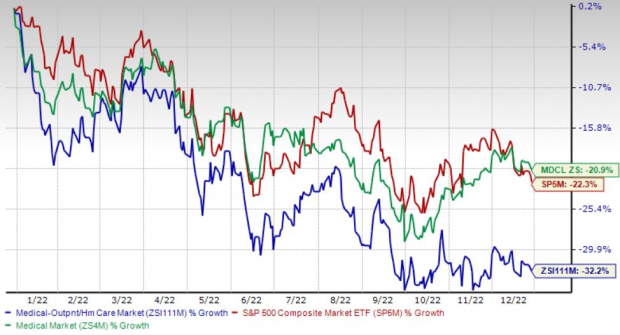
The industry has underperformed both its sector and the Zacks S&P 500 composite in the past year.

The industry has declined 32.2{1668a97e7bfe6d80c144078b89af180f360665b4ea188e6054b2f93f7302966b} over this period compared with the S&P 500’s decline of 22.3{1668a97e7bfe6d80c144078b89af180f360665b4ea188e6054b2f93f7302966b}. The broader sector has declined 20.9{1668a97e7bfe6d80c144078b89af180f360665b4ea188e6054b2f93f7302966b} in the same time frame.

One Year Price Performance

Zacks Investment Research
Image Source: Zacks Investment Research

Industry’s Current Valuation

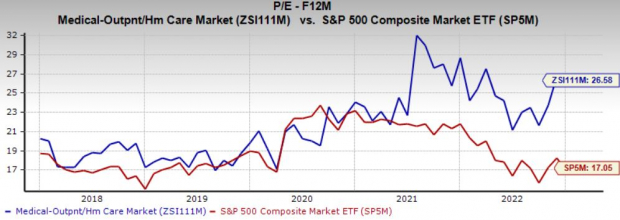
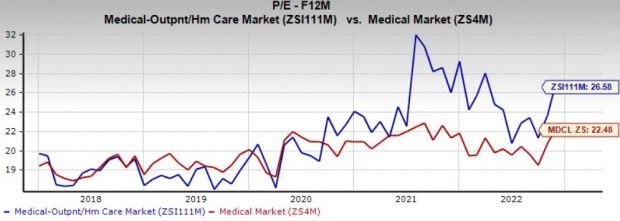
On the basis of the forward 12-month price-to-earnings (P/E), which is commonly used for valuing medical stocks, the industry is currently trading at 26.6X compared with the S&P 500’s 17.1X and the sector’s 22.5X.

Over the last five years, the industry has traded as high as 31.5X and as low as 16.8X, with the median being at 21X, as the charts below show.

Price-to-Earnings Forward Twelve Months (F12M)

Zacks Investment Research
Image Source: Zacks Investment Research

Price-to-Earnings Forward Twelve Months (F12M)

Zacks Investment Research
Image Source: Zacks Investment Research

4 Bankable Outpatient and Home Healthcare Stocks

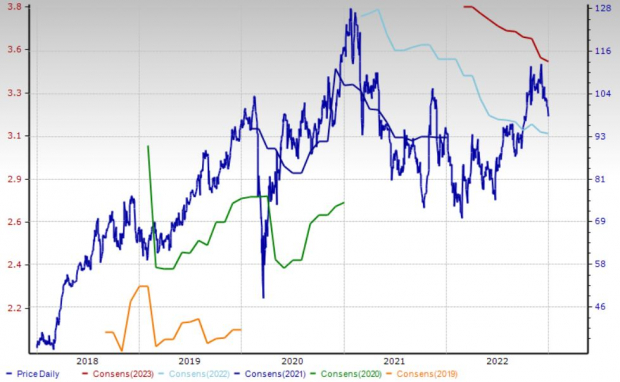
LifeStance Health Group: LifeStance Health Group is a renowned provider of outpatient mental health care. The company announced its third-quarter 2022 results last month, wherein it registered a solid uptick in its overall revenues. It also recorded a robust improvement in its total clinicians in the reported quarter. Management is currently focusing on continuing its shift to organic growth, investing in strategic initiatives to build scalable infrastructure and driving operating leverage and profitability. LFST carries a Zacks Rank of 3 (Hold). You can see the complete list of today’s Zacks #1 Rank (Strong Buy) stocks here.

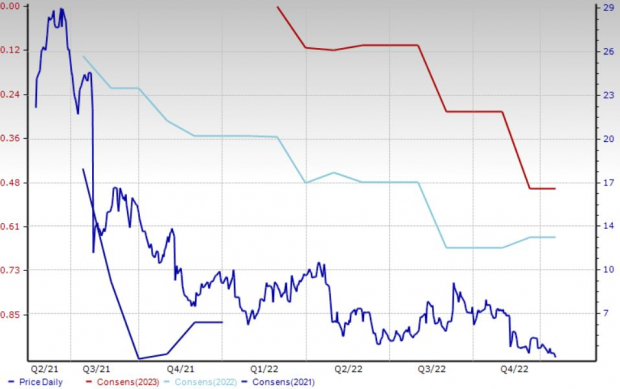
Price and Consensus: LFST

Zacks Investment Research
Image Source: Zacks Investment Research

For this Scottsdale, AZ-based company, the Zacks Consensus Estimate for 2022 revenues suggests growth of 26.8{1668a97e7bfe6d80c144078b89af180f360665b4ea188e6054b2f93f7302966b}. The same for earnings indicates an increase of 39.1{1668a97e7bfe6d80c144078b89af180f360665b4ea188e6054b2f93f7302966b}. The company’s P/B ratio of 1.1 compares favorably with the industry’s 2.1.

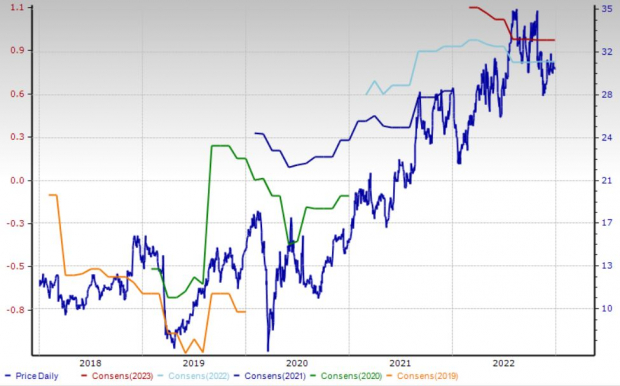
Addus HomeCare: Addus HomeCare’s services and operating model address a number of crucial needs across the healthcare continuum. In October, the company announced its third-quarter 2022 results, where it registered a solid uptick in its net service revenues. Management confirmed that its personal care revenues (accounting for 74.5{1668a97e7bfe6d80c144078b89af180f360665b4ea188e6054b2f93f7302966b} of overall revenue) improved on a same-store basis. For its home health business, Addus HomeCare achieved a robust organic growth rate in new admissions and total volumes on a same-store basis. ADUS carries a Zacks Rank of 3.

Price and Consensus: ADUS

Zacks Investment Research
Image Source: Zacks Investment Research

For this company, the Zacks Consensus Estimate for 2022 revenues suggests growth of 9.9{1668a97e7bfe6d80c144078b89af180f360665b4ea188e6054b2f93f7302966b}. The company’s return on equity (ROE) of 8.5{1668a97e7bfe6d80c144078b89af180f360665b4ea188e6054b2f93f7302966b} compares favorably with the industry’s 5.8{1668a97e7bfe6d80c144078b89af180f360665b4ea188e6054b2f93f7302966b}.

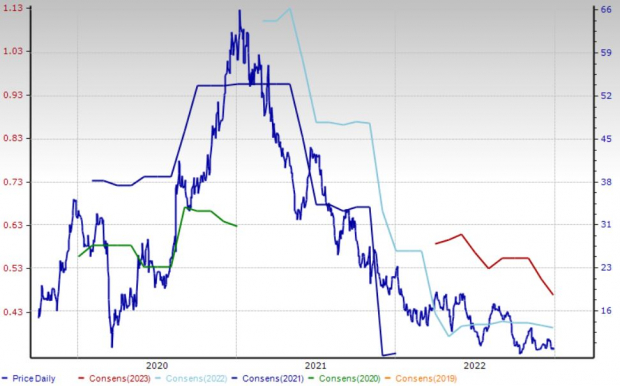
Option Care Health: Option Care Health is a renowned independent provider of home and alternate site infusion services. In October, the company announced its third-quarter 2022 results, where it registered a solid uptick in its net revenues. At the time of the earnings release, Option Care Health confirmed that it has completed the acquisition of Rochester Home Infusion, Inc. OPCH carries a Zacks Rank of 3.

Price and Consensus: OPCH

Zacks Investment Research
Image Source: Zacks Investment Research

For this Bannockburn, IL-based company, the Zacks Consensus Estimate for 2022 revenues suggests growth of 14.6{1668a97e7bfe6d80c144078b89af180f360665b4ea188e6054b2f93f7302966b}. The same for earnings indicates an increase of 31.7{1668a97e7bfe6d80c144078b89af180f360665b4ea188e6054b2f93f7302966b}. The company’s ROE of 11.8{1668a97e7bfe6d80c144078b89af180f360665b4ea188e6054b2f93f7302966b} compares favorably with the industry’s 5.8{1668a97e7bfe6d80c144078b89af180f360665b4ea188e6054b2f93f7302966b}.

The Pennant Group: The Pennant Group is the parent company of the Pennant group of affiliated home health, hospice and senior living companies. It reported its third-quarter 2022 results last month, where it witnessed solid improvement in its overall top line. Its Home Health and Hospice Services segment recorded a robust uptick in revenues, whereas the company also recorded strength in its total home health admissions and total Medicare home health admissions. The uptick in total hospice admissions and same-store senior living revenues for the third quarter was also impressive. PNTG carries a Zacks Rank of 3.

Price and Consensus: PNTG

Zacks Investment Research
Image Source: Zacks Investment Research

For this Eagle, ID-based company, the Zacks Consensus Estimate for 2022 revenues suggests growth of 5.5{1668a97e7bfe6d80c144078b89af180f360665b4ea188e6054b2f93f7302966b}. The same for earnings indicates an increase of 23.9{1668a97e7bfe6d80c144078b89af180f360665b4ea188e6054b2f93f7302966b}. The company’s ROE of 9{1668a97e7bfe6d80c144078b89af180f360665b4ea188e6054b2f93f7302966b} compares favorably with the industry’s 5.8{1668a97e7bfe6d80c144078b89af180f360665b4ea188e6054b2f93f7302966b}.

Zacks Names “Single Best Pick to Double”

From thousands of stocks, 5 Zacks experts each have chosen their favorite to skyrocket +100{1668a97e7bfe6d80c144078b89af180f360665b4ea188e6054b2f93f7302966b} or more in months to come. From those 5, Director of Research Sheraz Mian hand-picks one to have the most explosive upside of all.

It’s a little-known chemical company that’s up 65{1668a97e7bfe6d80c144078b89af180f360665b4ea188e6054b2f93f7302966b} over last year, yet still dirt cheap. With unrelenting demand, soaring 2022 earnings estimates, and $1.5 billion for repurchasing shares, retail investors could jump in at any time.

This company could rival or surpass other recent Zacks’ Stocks Set to Double like Boston Beer Company which shot up +143.0{1668a97e7bfe6d80c144078b89af180f360665b4ea188e6054b2f93f7302966b} in little more than 9 months and NVIDIA which boomed +175.9{1668a97e7bfe6d80c144078b89af180f360665b4ea188e6054b2f93f7302966b} in one year.

Free: See Our Top Stock and 4 Runners Up >>

Want the latest recommendations from Zacks Investment Research? Today, you can download 7 Best Stocks for the Next 30 Days. Click to get this free report

Option Care Health, Inc. (OPCH) : Free Stock Analysis Report

Addus HomeCare Corporation (ADUS) : Free Stock Analysis Report

The Pennant Group, Inc. (PNTG) : Free Stock Analysis Report

LifeStance Health Group, Inc. (LFST) : Free Stock Analysis Report

To read this article on Zacks.com click here.

Zacks Investment Research

The views and opinions expressed herein are the views and opinions of the author and do not necessarily reflect those of Nasdaq, Inc.

Schneider Electric to Unveil Latest Innovations in Sustainable Home Energy Management at CES 2023

Schneider Electric to Unveil Latest Innovations in Sustainable Home Energy Management at CES 2023
  • Industry leader premieres award-winning solutions offering homeowners new levels of control and simplicity to increase energy efficiency and reduce costs
  • Schneider Electric executives will discuss new strategies and solutions to bring more clean, cost-effective, resilient, and secure energy to homeowners in booth #53711

BOSTON, Dec. 28, 2022 /PRNewswire/ — Schneider Electric, the leader in the digital transformation of energy management and automation, will unveil the latest award-winning innovations in sustainable home energy management at this year’s Consumer Electronics Show (CES) in Las Vegas (booth #53711, Tech West – Venetian Expo, Halls A-D).

As the industry leader trusted in 4 of 10 U.S. homes with a legacy in smart, sustainable home electrification, Schneider Electric is meeting the needs of consumers by changing the way they engage with energy in their lives every day. This comes at a critical time as the cost of utility power in the U.S continues to increase, while damaging weather events and grid instability are driving the need for more clean, cost-effective, resilient, and secure energy. 

What:               

Schneider Electric will unveil the latest in sustainable home energy management. Recognized by CES for their innovation, these award-winning solutions will help consumers address their home energy challenges by providing new levels of control and simplicity to increase energy efficiency and reduce their monthly energy bills 


Who:               

Schneider Electric executives will be available to demonstrate the latest innovations in sustainable home energy management, discuss their benefits for consumers and answer your questions


Where:             

Schneider Electric booth #53711 – Tech West, Venetian Expo, Level 2, Halls A-D 2023 Consumer Electronics Show (CES) in Las Vegas


When:             

Wednesday, January 4 through Sunday, January 8, 2023

Innovation Talks at CES

Schneider Electric will also host a series of Innovation Talks in their booth throughout the meeting. These consumer-focused sessions will explore important home energy topics, including industry trends, technical innovations and strategies for reducing energy costs. These sessions will take place as follows:

Thursday, January 5, 2023

  • 11:40-12:00 pm Navigating the Paths to Energy Independence
  • 1:30-1:50 pm The Inflation Reduction Act and How You Can Benefit
  • 2:00-2:20 pm The New Energy Landscape: Top Trends Driving Change in Home Energy
  • 2:30-2:50 pm Technology’s Role in the Race to Build Sustainable and Resilient Communities
  • 3:00-3:20 pm Build with Matter: A Promise to a Home Ecosystem

Friday, January 6, 2023

  • 11:00-11:20 am Transforming Home Energy Systems for the EV Revolution
  • 11:40-12:00 pm Build with Matter: A Promise to a Home Ecosystem
  • 1:30-1:50 pm Imagination Made Possible: From Fishing Nets to Light Switches
  • 2:00-2:20 pm Five Ways to Save on Your Energy Bill with Smart Tech
  • 2:30-2:50 pm Your Home CAN be Net Zero, Discover How

Saturday, January 7, 2023       

  • 11:00-11:20 am Navigating the Paths to Energy Independence
  • 11:40-12:00 pm The New Energy Landscape: Top Trends Driving Change in Home Energy
  • 1:30-1:50 pm The Inflation Reduction Act and How You Can Benefit
  • 2:00-2:20 pm Imagination Made Possible: From Fishing Nets to Light Switches
  • 2:30-2:50 pm Build with Matter: A Promise to a Home Ecosystem
  • 3:00-3:20 pm Transforming Home Energy Systems for the EV Revolution

Sunday, January 8, 2023

  • 11:00-11:20 am Five Ways to Save on Your Energy Bill with Smart Tech
  • 11:40-12:00 pm Your Home CAN be Net Zero, Discover How
  • 1:30-1:50 pm Build with Matter: A Promise to a Home Ecosystem
  • 2:00-2:20 pm The New Energy Landscape: Top Trends Driving Change in Home Energy
  • 2:30-2:50 pm Technology’s Role in the Race to Build Sustainable and Resilient Communities

SOURCE Schneider Electric

Death is anything but a dying business as private equity cashes in on the $23 billion funeral home industry

Death is anything but a dying business as private equity cashes in on the  billion funeral home industry

Private equity firms are investing in health care from cradle to grave, and in that latter category quite literally. A small but growing percentage of the funeral home industry—and the broader death care market—is being gobbled up by private equity-backed firms attracted by high profit margins, predictable income, and the eventual deaths of tens of millions of baby boomers.

The funeral home industry is in many ways a prime target for private equity, which looks for markets that are highly fragmented and could benefit from consolidation. By cobbling together chains of funeral homes, these firms can leverage economies of scale in purchasing, improve marketing strategies, and share administrative functions.

According to industry officials, about 19,000 funeral homes make up the $23 billion industry in the U.S., at least 80{1668a97e7bfe6d80c144078b89af180f360665b4ea188e6054b2f93f7302966b} of which remain privately owned and operated—mostly mom and pop businesses, with a few regional chains thrown in. The remaining 20{1668a97e7bfe6d80c144078b89af180f360665b4ea188e6054b2f93f7302966b}, or about 3,800 homes, are owned by funeral home chains, and private equity-backed firms own about 1,000 of those.

Consumer advocates worry that private equity firms will follow the lead of publicly traded companies that have built large chains of funeral homes and raised prices for consumers. “The real master that’s being served is not the grieving family who’s paying the bill—it’s the shareholder,” said Joshua Slocum, executive director of the Funeral Consumers Alliance, a nonprofit that seeks to educate consumers about funeral costs and services.

Although funeral price data is not readily available to the public, surveys by the local affiliates of the alliance have found that when publicly traded or private equity-backed chains acquire individual funeral homes, price hikes tend to follow.

In Tucson, Arizona, for example, when a local owner sold Angel Valley Funeral Home in 2019 to private equity-backed Foundation Partners Group, prices increased from $425 to $760 for a cremation, from $1,840 to $2,485 for a burial with no viewing or visitation, and from $3,405 to $4,480 for a full, economical funeral.

In the Arizona city of Mesa, the sale of Lakeshore Mortuary to the publicly traded funeral home chain Service Corporation International led to price increases for a cremation from $1,565 in 2018 to $1,770 in 2021, for a burial from $2,795 to $3,680, and for an economical funeral from $4,385 to $5,090.

“We believe our pricing is competitive and reasonable in the markets in which we operate,” a Service Corporation International official said in an email.

Details of those price increases were provided by Martha Lundgren, a member of the Funeral Consumers Alliance of Arizona’s board. She said funeral home acquisitions have led to the cancellation of pricing agreements negotiated on behalf of consumers who are members of the alliance. In 2020, a cremation at Adair Dodge Chapel in Tucson cost members $395, nearly two-thirds off the $1,100 standard price. But after Foundation Partners Group acquired the funeral home, the member pricing agreement was canceled, and the price of a direct cremation rose to $1,370.

Foundation Partners Group officials said the price increases partly reflect the higher price of supplies, such as caskets, as well as increasing labor costs. But most of the increases, they said, represent a move to a more transparent pricing system that includes administrative and transportation fees that other funeral homes add on later.

“We don’t take advantage of people in there when they’re not thinking clearly,” said Kent Robertson, the company’s president and CEO. “That’s just not who we are.”

A big surge of consolidation happened in the U.S. funeral home industry in the late 1980s and early 1990s, and again around 2010, said Chris Cruger, a Phoenix-based consultant to the industry. And acquisitions have reached a feverish pace in the past two to three years. Many investors are banking on a significant uptick in demand for death care services in the coming years as 73 million baby boomers, the oldest of whom will be in their late 70s, continue to age.

“Sheer demographics are obviously in everybody’s favor here,” Cruger said. Funeral homes have attractive margins already, and combining them into chains to share administrative costs could boost profits even more.

Meanwhile, many funeral home owner-operators are reaching retirement age and have no one in the family willing to take over. A 2021 survey by the National Funeral Directors Association found that 27{1668a97e7bfe6d80c144078b89af180f360665b4ea188e6054b2f93f7302966b} of owners planned to sell their business or retire within five years.

The desire to sell, combined with the investment money pouring into the field, has driven prices for funeral homes to new heights. Before private equity turned its eye to funeral homes, they were selling for three to five times their annual revenue. “Now I’m hearing seven to nine,” said Barbara Kemmis, executive director of the Cremation Association of North America, a trade group for the cremation industry.

The value in funeral homes lies in more than their brick-and-mortar assets. Funeral home directors are often integral parts of their communities and have established significant goodwill with their neighbors. So when corporate chains acquire these homes, they rarely change the name and often keep the former owners around to smooth the transition.

Tony Kumming, president of the NewBridge Group in Tampa, Florida, helps broker funeral home sales. Many of his clients remain skeptical of the large firms and often will take less money to sell to someone they believe won’t stain their hard-earned reputations. Most former owners plan to live in the community and don’t want their friends and neighbors to be mistreated. “I’m not saying someone is going to take half of what another company is offering,” Kumming said. “But there’s two big pieces to a sale now: That’s money and the right fit.”

Five years ago, when Robert Olthof decided to sell his family’s funeral home in Elmira, New York, he contacted some of the large publicly traded funeral home chains. But as representatives from multiple companies visited him to make their offers, Olthof realized that none of the big chains had sent someone versed in the service side of the business. “They sent their accountants, and they sent their lawyers,” he recalled. “Everything was about the numbers, the numbers, the numbers. And I didn’t like that.”

Instead, Olthof sold to Greg Rollings, a former funeral director who had amassed a privately owned, 90-site chain of funeral homes throughout the Northeast. Rollings had offered less money than the big chains had, but he knew what it was like to be awoken at 2:30 a.m. and put on a suit to go help a grieving family. He knew what it was like to bury a child.

Rob Olthof
Rob Olthof stands next to a portrait of his father, Robert, in this undated photo. Olthof sold his family’s funeral home in Elmira, New York, to a private owner after finding that the big chains interested in buying him out were more focused on the finances than the service side of the business.

Rob Olthof

“I can’t put a dollar-amount value on how much it’s really worth selling to a person who is a funeral director themselves,” Olthof said. “Because moving forward, your name is still going to be on the front of that building.”

Victoria Haneman, a Creighton University School of Law professor who studies the funeral home industry, worries that new corporate ownership might be devastating for grieving families. “They are not behaving like normal, rational consumers,” she said. “They’re not bargain-shopping because death is viewed as an inappropriate time to bargain-shop.”

For most families, a funeral will be one of the largest expenses they ever incur. But they often enter the shopping process cognitively impaired by grief and unsure of what is customary or appropriate.

Only 1 in 5 consumers visit more than one funeral home to obtain a price list, according to a 2022 survey commissioned by the Consumer Federation of America. And online comparisons are virtually impossible—a study by the federation and the Funeral Consumers Alliance found that just 18{1668a97e7bfe6d80c144078b89af180f360665b4ea188e6054b2f93f7302966b} of the funeral homes they sampled listed their prices on their websites. As a result, families generally lean heavily on the expertise of a single funeral director, who has a motive to sell them the most expensive options. So consumers can be pushed into buying packages for open-casket funerals that include embalming and other services that drive up the cost and may be unnecessary.

“Is that sort of pickled, shellacked, cosmetized, preserved corpse where the future will be? I don’t know that the answer is ‘yes,’” Haneman said. “And I think there are investors who are betting that it’s not.”

Foundation Partners Group is a prime example. Backed by the private equity firm Access Holdings, the funeral home chain shifted five years ago to acquiring funeral homes with high cremation rates. Cremation rates nationally have been steadily climbing over the past two decades, with nearly 58{1668a97e7bfe6d80c144078b89af180f360665b4ea188e6054b2f93f7302966b} of families now choosing cremation over casket burials. Foundation Partners expects that rate to hit 70{1668a97e7bfe6d80c144078b89af180f360665b4ea188e6054b2f93f7302966b} by 2030.

The company has acquired more than 75 businesses in high-cremation states, including Arizona, California, Colorado, and Florida. Most of those funeral homes average a bit over 150 funerals per year.

Individual funeral homes “don’t have access to marketing budgets, they don’t have access to safety and health plans and benefits and these different things,” said Robertson, the Foundation Partners CEO. “And because we have the ability to drive marketing and do other things, we also take that 150-call firm to maybe 200 calls.”

Robertson said the funeral home industry is different from other sectors that private equity firms might consider investing in, describing it as a calling comparable to working in hospice care. Foundation Partners is fortunate their backers understand the service part of the industry, as well as the financials, he said. “Private equity firms aren’t necessarily known for having deep compassion for people. They’re more known for their financial returns,” he said. “To get both is really important.”

Foundation Partners owns Tulip Cremation, an online service that allows people to order a cremation with just a few clicks—and without having to set foot in a funeral home. Tulip currently operates in nine states where Foundation Partners has funeral homes. The company expects the service to eventually operate nationally.

Haneman said innovative approaches like Tulip’s are sorely needed in the funeral home industry, which has barely changed in 100 years. “It’s absurd to me that the average cost of a funeral is running $7,000 to $10,000,” she said. “People need less expensive options, and innovation is going to get us there.” Tulip charges less than $1,000 for a cremation; ashes are mailed back to the families.

Other online cremation services are Solace Cremation, Smart Cremation, and Lumen Cremation.

“Private equity investment has the potential to go one of two directions: It’s either going to entrench status quo and drive price, or the purpose of the investment is going to be disruption,” Haneman said. “And disruption promises the possibility of bringing more affordable processes to market.”

KHN (Kaiser Health News) is a national newsroom that produces in-depth journalism about health issues. Together with Policy Analysis and Polling, KHN is one of the three major operating programs at KFF (Kaiser Family Foundation). KFF is an endowed nonprofit organization providing information on health issues to the nation.

Correction, September 23, 2022: This article was updated to to correct the spelling of Greg Rollings’ name.