

The Underlying Trends That Matter Most For The Home Health Industry In 2023

The Underlying Trends That Matter Most For The Home Health Industry In 2023

This article is a part of your HHCN+ Membership

While they may seem like outliers from the perspective of most providers in the country, publicly traded home health companies are often a great indicator of where the industry is – and where it’s going.

Whether they’re investing in new service lines or diversifying their revenue streams, the big providers on the block continue to change the home health industry at large.

Scott Fidel, an analyst at the private investment banking company Stephens, is part of a team that analyzes and evaluates those moves. He covers the post-acute space, as well as the managed care space.

Fiedel sat down with Home Health Care News on the latest edition of HHCN+ Talks to discuss Medicare Advantage trends, financial stability, home-based care M&A and a lot more.

The transcription of that conversation is below.


HHCN: Before we get going, Scott, I do want to get your background and a background on your company.

Scott Fidel: I’ve been a sell-side equity research analyst covering the health care services sector on Wall Street for the past 24 years or so. I focused on health care services for pretty much my entire career on Wall Street. The way that we break down our coverage is we look at three primary subsectors.

First, and very relevant for this conversation, is the post-acute care space — including all of the home-based care areas. We cover most of the publicly traded home health companies. Then we also cover managed care. That’s a sector I’ve covered very closely for the past quarter century. In areas like Medicare Advantage, for example, we’ve been covering that space for a long time.

I actually was a health care lobbyist for a while even before working on Wall Street where I had been involved with the whole Balanced Budget Act of ’97, and the transition of Medicare+Choice — ultimately leading to Medicare Advantage. Then we also covered the health care facilities, companies, acute care hospitals and behavioral health companies as well.

In terms of Stephens, the firm is one of the largest privately-held independent investment banks in the US. The firm has offices in the U.S. and Europe. The firm was founded in 1933 and provides a range of services to our clients, including equity research, investment banking, capital markets and capital management.

Given your scope of research and coverage, how are home-based care companies specifically faring right now compared to everyone else?

Let’s put that in context since the pandemic. It’s really been a tale of two different stories for this sector. The stocks actually started out the pandemic as real pandemic winners when we had the whole work-from-home-type analog trade in the market and with the expectation that the space would be a significant beneficiary of that.

Then, as the pandemic sustained itself, and a lot of the pressure started to build and when the broader investment climate deteriorated, the stocks faced more challenges. When we look at the overall aggregate period of the last three years, the post-acute home health sector has actually underperformed on the market. In managed care and health care facilities, that underperformance has been more weighted towards the last 18 months or so.

Within the sector, though, there’s been variation in generally what we see and companies focused more on personal care and home-based care outperform given how much better the reimbursement environment has been there. Whereas companies that are more levered to Medicare home health reimbursement, in particular, have been relative underperformers.

Then we’ve had all the consolidation dynamics, too, at play.

One of the things I love that Stephens puts out are the underlying drivers that dictate success in home health care. There are a few things that you’re measuring on a monthly or quarterly basis that generally are good indicators of the long-term and short-term success of these companies. Can you go into that a little bit? What are you tracking in order to see if these companies are on the right track?

For personal care, we focus on hours served and billable hours. On reimbursement for home health, we focus on their organic growth trends. It ultimately comes down to this home-based care tracker that we cover and it looks at a whole range of functions. It looks at home health admissions trends, reimbursement trends that we see in Medicare, Medicare Advantage trends and what we’re seeing in the episodic and non-episodic trends.

With personal care, we look at particularly billable hours and then the rate trends.

We also cover hospice in this as well. We’d look at a number of the variables that drive the hospice sector including things like hospice admissions, length of stay — which has been a big area of focus as well from the pandemic. Ultimately, what we’re trying to do with this product is determine inflection trends across these bottom-up metrics. And, while looking at the broader subset of all the drivers of the industry, trying to glean which companies are outperforming in particular areas.

What’s interesting is we do see a wide range of success factors across different companies in the sector. We put this out in our home-based care dashboard product where we look at all the KPIs. That’s just one of a lot of products that we publish.

A few examples. It’s interesting if we look at just home health to start with and look at same-store admissions trends. Going into the fourth quarter, we actually saw Humana — who had acquired the Kindred at Home asset and is now the largest home-health operator — actually show some of the strongest same-store admissions trends in the fourth quarter.

We thought that was interesting because Humana is now rolling out their value-based care program across the contracting structures for home health. They’re still relatively early into that phase, but that’s likely going to continue here into 2023 and into 2024.

When we look at some of the revenue generation statistics in terms of maximizing revenue opportunity — the Pennant Group — which is the spinout from Ensign, has actually shown quite strong performance when we look at things like revenue per admission and revenue per day on the hospice side. That company has actually been effective at realizing the revenue opportunities, particularly as we transitioned into the PDGM model and away from the former Prospective Payment System for home health.

Then if we look at the personal care, I would say that some of the themes have been consistent across operators. If we look at the rate trends, generally, they’ve been pretty robust across all the companies that disclose these metrics. We tend to look at Addus.

Modivcare, as well, has become a meaningful player in that market. Amedisys has traditionally disclosed some of these metrics but now they’re actually divesting that asset.

On the hours side, in terms of the volumes, what we’ve seen is that it’s been constrained because of the challenges in hiring caregivers, but it does feel like we are on the cusp now of starting to see those volumes start to inflect more positive for these companies starting in the fourth quarter. We think that will likely continue into the first quarter and then continue to improve in 2023.

Are you surprised at all by Humana’s effectiveness with CenterWell this early? Is that something that you thought may take a little bit longer to get going, or just because of how established Kindred was, how established Humana is as a company, is that something that’s not as surprising?

It’s not too surprising for us just because of how deliberate Humana really was around the process of ultimately acquiring Kindred at Home, which is now a centerpiece of the CenterWell brand and broader clinical platform that Humana continues to build. Remember that Humana had a long-term investment in the platform and they really spent a couple of years deliberating on whether they would be able to successfully create value by acquiring the asset and rolling out the value-based care platform.

Now, clearly, the backdrop has gotten that much more challenging since they acquired the asset with the pressures that we’re seeing with add-on expenses – on wages, on reimbursement and on volumes. With Humana, we are seeing them committed to that rollout. Also, they’re going to be taking on a larger piece of the spend as part of this. It actually helps them enhance the revenue picture, too, in terms of the partners that they’re working with.

We really think that tracking Humana in terms of how they’re performing on this rollout of the value-based care initiative in home health is going to be really insightful for the rest of the industry because, clearly, right behind them we have UnitedHealth and Optum. Now having acquired LHCG, we’re going to be very interested in whether Optum and United roll out a similar model for LHCG or take a bit of a different track.

That’s the conversation that we’re having about UnitedHealth and another company that we cover as well. Clearly, the focus on value-based contracting and on Medicare Advantage contracting is a huge area of focus right now and critical for home-based companies.

What will another rate cut mean for these companies given that it had made them underperform recently? It’s obviously something that’s baked into how people are viewing these companies right now, but at the same time, it’d be yet another cut. Obviously, that’s going to be a challenge for them. How do you feel about how that’s going to affect them, short and long-term?

It’s the biggest single overhang in the public investor community right now around the home health companies and it’s frustrating because CMS clearly utilizes a meaningful level of lag data in terms of how they conduct their analyses. The real-world inflation has clearly accelerated. We do understand that CMS, even more recently in some of the stakeholder interactions, hasn’t seemed to reflect that they are fully recognizing or sympathetic to the idea that this will be a major challenge and affect access to care.

We can see, in the volume trends that these companies report, that it is really constraining the ability to hire more skilled nurses. This is something with CMS that can often be a bit frustrating — and with payers in general — is where they’ll speak to certain policy objectives that are core to their view on advancing the health care system, and making for a more efficient and productive health care system. But then they do things with reimbursement that don’t seem to be aligned with that.

To boil it down: while there is a lot going on across all three of these subsectors, what CMS does with the 2024 home health rates is most likely going to be the single largest determinant of investor sentiment, and then also of investment in general. It’s important, putting aside just the publicly traded stocks, how things like the M&A environment will be dictated.

For example, just yesterday I spent the day hosting investor meetings with the Addus management team. They have been a successful, consistent operator. They operate in all three of these markets. Home health for them is relatively smaller. It’s only around 5{1668a97e7bfe6d80c144078b89af180f360665b4ea188e6054b2f93f7302966b} of their revenue. With that said, it is an area they wanted to deploy capital to grow that business through acquisitions, but clearly, they’re going to be very disciplined right now and prudent around engaging in deals focused on home health until we have that clarity on the reimbursement. And again, how that influences the valuation dynamics too where the publicly traded companies have been under the microscope for a while.

A lot of these stocks have been substantially pressured. The valuation multiples have come down quite meaningfully since their peaks during the earlier part of the pandemic, but on the sellers’ side, I think a lot of these sellers are still holding on to some of the memories of where deals were getting done and that’s creating friction in the market right now. That’s going to have to work itself out.

Hospice is another good example of that where we had a tremendously active deal environment for a number of years. Really, hospice was the tip of the spear in terms of M&A activity with strategics and with private equity, too. Valuation multiples have gotten very rich, but hospice fundamentals themselves have been more pressured over the last 12 to 18 months with a variety of headwinds from the pandemic.

That’s affecting margins, and that’s affecting EBITDA for these companies, and that’s another area where it feels like the pace of activity has frankly slowed quite significantly from where we were 12, 18, 24 months ago.

Because of those Medicare fee-for-service conditions, how important do you think it is for these companies to be successful in their negotiating with Medicare Advantage payers moving forward to offset some of those cuts to make sure that the financials are stable as they take on more beneficiaries in MA?

It’s central to the story and to the strategies. It’s absolutely critical. Separate from even if the Medicare fee-for-service reimbursement environment hadn’t suddenly gotten so stunted, the long-term structural trend in Medicare is still towards a significant long-term movement into Medicare Advantage. The numbers are simple right now, right? We’ve just pretty much eclipsed 50{1668a97e7bfe6d80c144078b89af180f360665b4ea188e6054b2f93f7302966b} or half of the overall Medicare market being in Medicare Advantage.

When I started covering the managed care stocks after the Balanced Budget Act of ’97, we had dipped into the low-teens percentage. I’ve watched this go from 12{1668a97e7bfe6d80c144078b89af180f360665b4ea188e6054b2f93f7302966b}, 15{1668a97e7bfe6d80c144078b89af180f360665b4ea188e6054b2f93f7302966b} to 50{1668a97e7bfe6d80c144078b89af180f360665b4ea188e6054b2f93f7302966b} in, let’s call it, a little bit over 20 years. And the Medicare Advantage space is still growing 7{1668a97e7bfe6d80c144078b89af180f360665b4ea188e6054b2f93f7302966b} to 9{1668a97e7bfe6d80c144078b89af180f360665b4ea188e6054b2f93f7302966b} annually, and Medicare fee-for-service is barely growing. Now, when you add on the variance and the margin profiles, the economics where you look at many of these Medicare home health companies, maybe they’re reporting 12{1668a97e7bfe6d80c144078b89af180f360665b4ea188e6054b2f93f7302966b}, 13{1668a97e7bfe6d80c144078b89af180f360665b4ea188e6054b2f93f7302966b}, 14{1668a97e7bfe6d80c144078b89af180f360665b4ea188e6054b2f93f7302966b} adjusted EBITDA margins.

Inside of that, you have Medicare fee-for-service business with margins substantially higher. MedPAC tries to argue that the margins are in the low 20s. I’m sure the industry would push back on that, but they’re clearly higher than the consolidated average. Medicare Advantage is barely profitable for a lot of these companies with single-digit margins to begin with. Ultimately, the economics need to balance out between Medicare fee-for-service and Medicare Advantage. It’s as simple as that.

I have these conversations on both sides of the negotiating table. I cover the home health companies and I cover all the managed care companies too. I do find it very interesting that the managed care companies across the board, when they talk about their key long-term mega themes in health care, obviously value-based care is an enormous one, but the shift to the home is a theme that all these companies emphasize over and over again in their investor presentations to investors and in their discussions with the market and with analysts. Yet we always hear from home health companies about how terrible the reimbursement is in home health.

I think, ultimately, there’s going to have to be some shaking out and some achievement of more of a balance here. It does feel to me right now like the economics are inordinately skewed toward MA, relative to home health in this particular area. Remember, the other challenge that we’re going to have to remember is out there. And that is that the Medicare Advantage companies themselves are going to be facing a tougher reimbursement climate.

In the last couple of years, CMS has given the MA companies unusually strong reimbursement updates and it’s still been really tough for home health companies to get proper reimbursement. Now the MA companies are looking at much tighter reimbursement, a new risk model that’s being implemented that is going to create a lot of complexity, and at the same time, the home health companies have to even negotiate more furiously for higher reimbursements. That’s a story we’re going to be tracking, but it’s uncertain exactly what the end result is going to be as we look out to 2024 and beyond.

It’s interesting to see, it could go two ways. Obviously, home health providers are hoping that those MA plans will react to that by saying, “Hey, let’s put more money and more focus on the home-based care side of things to control post-acute spend,” but they could also say, “Hey, we’re getting less. That means you’re getting less.” It’ll be interesting to see that dynamic play out.

Yes, absolutely. Ultimately, we need to remember that when you’re shifting a care consumption or utilization into the home, it drives substantial savings for Medicare Advantage plans, relative to being in a SNF or relative to being in an ERF or clearly, being in an acute care facility.

At some level, I do scratch my head sometimes around why MA plans are being so difficult on reimbursement to home health when in the overall scheme of things, that’s not a lot of money, relative to having patients end up staying in a facility.

This also comes down to how fragmented the home health industry is and the difficulties for a lot of home health agencies to really distinguish themselves with MA plans as not just being commoditized, right? Ultimately, value-based care is an area that could separate that dynamic. That is something that probably the more highly scaled companies are able to, on the home health side, participate in more because there is a significant investment in complexity, separate from the regulatory complexity that we’re dealing with that’s being pushed on the industry by CMS. That’s probably a theme that ultimately would drive more consolidation over time.

There’s a lot of debate right now, too, around how this consolidation will play out. Because we’ve got larger home health companies wanting to acquire smaller ones, but there’s this friction around multiples and around deal valuations right now. Then, obviously, you have the Medicare Advantage companies just taking out some of these largest players, too. Remember, they’ve got that leverage dynamic, too, with Medicare Advantage as well, whereas a Humana takes a Kindred as a subsidiary, and United takes on LHCG as a subsidiary — they’re going to want to ensure that the economic future for those subsidiaries is positive and emphasize that opportunity.

They have folks like us writing reports on them every quarter, evaluating them on that. It also raises the point of whether, at Humana or United, how much more interested are they going to be in raising reimbursements right now for these other operators out there when they need to focus on maximizing the value of these assets that they’ve recently acquired.

How was the event with Addus yesterday? Was there anything else that you gleaned from it that you maybe had not considered prior it?

I always enjoy catching up with the Addus management team. I think that they have a long track record of disciplined operation in the industry. They’ve been through the home-based markets in both easy and difficult times. They’re very prudent. Particularly, we see that with their balance sheet, for example, they’ve kept their debt leverage very low. That’s something that their stock has been rewarded for, relative to some of the other stocks with higher leverage, given the market’s focus on rising interest rates and liquidity, essentially.

With Addus, on the M&A side, I think they are eager and ready to do transactions. They’ve talked about wanting to focus a bit more on the personal care, which is their core market, and home health as compared to hospice, where Addus had been very active on the M&A front for a number of years in terms of building out that platform. They want to be very disciplined as well on the acquisition side. Separately, they do think that the reimbursement outlook will remain solid, actually looking at even 12 to 24 months for personal care because of the current positions of the state budgets, which have been favorable.

We’re going to be watching that area, frankly. Clearly, investors are going to be focused on whether or not the economy does flow. What that means for state budgets and what that means for reimbursements as well.

I do want to also mention redetermination. The return of that, which just kicked off four days ago, is a huge area of focus for investors, but it is less relevant — frankly — to personal care companies and to home-based companies in general because the clients and the patients that they serve tend to be polychronic dual-eligible-type patients who are just eligible for core Medicare or Medicaid services.

That doesn’t have to do with normal Medicaid eligibility based on income levels. We cover the managed Medicaid companies, for example, where this is a big area of focus but we’re not expecting that particular issue to be really much of a headwind at all for the personal care companies.

Do you think the home-based care companies on the public market reflect the rest of the industry?

I think that you already named a few of the attributes that are important, but it really sets the overall tone for thinking about both some of the investment considerations as it relates to things like sentiment and valuation, and then also how the market is thinking about evolution in the operating environment. Clearly, from the sentiment perspective, much of the market is going to be at least referencing what is happening with the stock prices and valuations of publicly traded companies.

It’s the most visible and constantly evolving valuation metric to reflect all the latest information in the market. When you think of investor sentiment, many of the large investors are talking to the publicly traded companies, and that’s dictating their overall sentiment in the industry. Then when we think about the operating environment. These companies do tend to have higher margins and more ability to generate free cash flow, which they can then use to invest to try to adapt to how the market is evolving. So whether it’s with Medicare Advantage, whether it’s with value-based care, investing in programs to do that.

I think a clear example of this would be Amedisys acquiring Contessa, which clearly has also had its challenges. I think Amedisys would be the first one to admit to that in terms of the ramp-up of that business. When you think about trying to create a new category within the space by moving more into those hospital- and SNF-at-home-type programs, you need a lot of capital to do that, though.

Frankly, Amedisys has spent a lot of capital, both on what they pay for it and the losses that they’ve invested in to build that business. A small company is not going to be able to do that, but ultimately if the market moves there and that becomes part of the core package of what these companies do, they’re going to have to adapt as well.

There were a lot of rumors about a few home-based care companies going public in 2020 and 2021. Since then, a lot of those rumors have subsided, probably because of those macroeconomic trends that are affecting the entire economy. Do you expect any more home-based care companies to be go public in the near-term future?

Good question. I think that in the near future, the market is still licking its wounds, frankly, from the IPO cycle of 2021. There were a lot of health care services businesses that hadn’t really proven profitability, and they have struggled mightily.

The main one that happened directly in this area was Aveanna, which has struggled, too, with some of these pressures — clearly with both their stock price and also with some of the changes in the fundamental environment. Clearly, the overall market environment is going to have to improve. Then, there’s the bottoms-up-type dynamics that we’ve just spent the last 35 minutes talking about.

If I had to assign a higher weight to a couple of those, I do think that on the home health side, clearly, the investor community getting more conviction on Medicare reimbursements, both for fee-for-service and for MA, is going to be key. Investors are going to want more clarity on that.

Personal care — frankly — that’s been an area where it’s been a bit more stable. More recently, obviously, there are areas to monitor in terms of potential headwinds if the economy slows, but there’s a little bit less controversy right now around the reimbursement dynamics. Again, that’s always the rearview mirror. One thing we’ve always seen is the pendulum swing back and forth around reimbursement, for sure with payers, and particularly with CMS.

CMS tends to overshoot on reimbursement cuts and then will come back and ultimately put corrective reimbursement in. That creates a positive reimbursement cycle. Then the market, both the industry and investors, think that’s going to be sustainable forever and maybe the sentiment gets overinflated. Then, CMS comes and pulls the rug out from underneath everybody and we wash and repeat.

Ultimately, we think that’s going to happen again, most likely. Clearly, if margins get pressured and that data on a lag basis starts to catch up to CMS, we will start to see better reimbursements and that could reopen that opportunity for more active public investing of some of the companies that are still private in terms of opportunities to go public.

I do want to ask you before we go, a prediction that you might have about the home-based care industry at large?

In terms of the under-the-radar screen, I don’t know about that because we try to keep everything above the radar screen as much as possible. I would say that as we just talked about, the centrality of the focus will be on these reimbursement trends. On some of the policy dynamics, there have been some proposals to really invest more in the home-based care area that Biden had proposed, for example, that ultimately didn’t come through.

I’m going to bring it back to something that’s not so spicy, but I think that ultimately, it does come down to having the actual frontline personnel to actually deliver these services. When you look at really the crux of everything, reimbursement has been key, but the other issue has just been around the labor dynamics and it’s been around whether it’s skilled or unskilled.

If I had a prediction to give you there, it does feel like the environment — from the hiring perspective — probably will get better more quickly in the unskilled area. That does tend to be more directly correlated with the overall economic cycle and with the labor market. I would be surprised if we don’t see personal care companies, for example, start to be able to improve their hiring right as the unemployment rate starts to rise.

I think there will also be some level of correlative benefit for skilled workers as well. When the economy gets tougher, nurses that have been sitting out for a while may come back into the workforce, but we still also have the long-term structural constraints that we have around nurse staffing and clinical staffing shortages. That’s going to be an issue for a long, long time to come.

It’s been something that we’ve been focusing on really the whole time I’ve covered the space. I think 10 years from now if we did the same type of talk, we’d still be talking about some of the structural challenges that we’re facing in staffing. Especially as we even have more seniors to care for in the future.

4 Promising Stocks From a Challenging Outpatient Home Health Industry

4 Promising Stocks From a Challenging Outpatient Home Health Industry

The pandemic altered the nature and dynamics of the healthcare industry. The Zacks Medical – Outpatient and Home Healthcare industry bore the brunt of lower outpatient clinic visits and struggled to provide quality care with respect to home healthcare due to the risk of exposure to the virus as well as the record level of staffing shortages. In recent times, although the severity of the infection has declined, there has been a circulation of a mixture of respiratory viruses per a recently-published data published by the Centers for Disease Control and Prevention. Apart from the respiratory ailments, the U.S. healthcare system is also currently being bothered by the recent increasing threat of spread of the antimicrobial resistant fungus — Candida auris (C. auris) — in healthcare facilities. Another concern plaguing the U.S. healthcare system is the persistent cost inflation and supply-chain constraints. These are consistently pushing up the operating costs of the healthcare industry, thereby lowering the margins of industry players.

On a positive note, rising dependence on telehealth and artificial intelligence (AI) is likely to help the industry thrive in the near term. Chemed Corporation CHE, Addus HomeCare Corporation ADUS, RadNet, Inc. RDNT and The Pennant Group, Inc. PNTG are likely to gain from the prospects.

Industry Description

The industry comprises companies that offer ambulatory care in an outpatient setting or at home. These companies use advanced medical technologies for diagnosis, observation, consultation, treatment and rehabilitation services. The industry participants also include operators of HMO medical centers, kidney dialysis centers, freestanding ambulatory surgical units, emergency centers and other outpatient care centers. Some of the companies in this space have been at the forefront of the COVID-19 pandemic response since 2020 by expanding access to laboratory insights to enable people to lead healthier and safer lives through both molecular diagnostic and antibody serology tests. These tests help in the diagnosis of COVID-19 and the identification of immune response to the virus.

Major Trends Shaping the Future of the Outpatient and Home Healthcare Industry

Cost Effectiveness: The primary advantage of outpatient clinics is cost-effectiveness. Outpatient medical care clinics do not retain patients for long hours (overnight) or charge exorbitantly. Notably, modern-day outpatient clinics offer a broad spectrum of treatment and diagnostic options and even minor surgical procedures. Financial incentives like health plans and government program payment policies supporting services in lower-cost care settings have also been driving outpatient care. In fact, this is the primary reason why middle-class Americans, making up more than 62{1668a97e7bfe6d80c144078b89af180f360665b4ea188e6054b2f93f7302966b} of the total population, prefer outpatient clinic visits.

Participating in Alternative Payment Models: It only seems reasonable for outpatient clinics to shift from fee-for-service (FFS) to alternative payment models (APM) with shared savings, risk, bundled payments or population-based payments. With value-based models of care steadily emerging as the future of healthcare, this shift is an ongoing parallel trend. FFS will be crucial to care organizations as a benchmark by which providers can assess alternative payment models. By obtaining the payment schedule from payers and comparing it to the organization’s FFS reimbursements from the same payer, providers can ascertain APM that would be financially the most advantageous to its operation.

AI’s Dominant Role: AI has been a roaring success in healthcare. It is no wonder that it has taken the outpatient and home healthcare space by storm. Outpatient companies prefer bots and automated techniques for managing health information. With the help of AI, hospitals have been achieving better outcomes, with patients receiving more efficient and personalized care. The outpatient industry has been generating huge profits from Electronic Health Records, Revenue Cycle Management, eLabs and ePrescriptions.

In recent times, healthcare facilities are experimenting with software designed to help doctors automatically generate notes from conversations with patients. Microsoft, in its official blog, has confirmed that it (along with Nuance) is introducing a solution — Dragon Ambient eXperience (DAX) Express. It is an automated clinical documentation application integrated into the workflow that combines proven conversational and ambient AI with advanced reasoning and natural language capabilities of OpenAI’s GPT-4.

Increased Dependence on Telehealth: The pandemic resulted in a decline in outpatient clinic visits. Home healthcare providers struggled to offer quality care due to the risk of exposure to the virus. Though the impact of the pandemic has been far-reaching, it has accelerated healthcare innovation. Visits to outpatient clinics have been witnessing a noticeable rebound, with the majority of people being vaccinated. But there are patients who want to be cautious and are resorting to telehealth. Meanwhile, home healthcare can gain from the benefits provided by Medicare (and several other payers) that comprises a broad range of services that can be delivered in a patient’s home, including post-operative and chronic wound care, rehabilitation, and physical therapy. These services serve as lifelines for vulnerable patients, including the Medicare population, suffering from complications arising from COVID-19. Moreover, home healthcare has seen a surge in the utilization of the telehealth platform in response to the pandemic.

A notable trend that has been emerging in this respect is the increasing popularity of the hybrid mode of treatment. As there are certain chronic health conditions, which cannot be identified over a telephone or video call, patients are embracing the hybrid mode of seeking treatments from their physicians in these cases.

Prominent Role of Remote Patient Monitoring: Remote patient monitoring (RPM) has been gradually gaining ground since the pandemic. During that phase, it was difficult to keep a watch on non-COVID patients in the hospital care setting as hospital capacities were brimming with COVID-19 patients. Thus, non-critical patients were increasingly being provided with healthcare in the comfort of their homes while being remotely monitored by their care providers. Even with the return to normalcy, patients are increasingly preferring to be monitored from their homes via RPM devices. This is also boosting home healthcare services as vulnerable patients can be safely and adequately cared from the home setting instead of hospital settings, where the risk of COVID-19 or other infections persists.

Zacks Industry Rank

The Zacks Medical – Outpatient and Home Healthcare industry falls within the broader Zacks Medical sector. It carries a Zacks Industry Rank #156, which places it in the bottom 38{1668a97e7bfe6d80c144078b89af180f360665b4ea188e6054b2f93f7302966b} of nearly 250 Zacks industries.

The group’s Zacks Industry Rank, which is basically the average of the Zacks Rank of all the member stocks, indicates bleak near-term prospects. Our research shows that the top 50{1668a97e7bfe6d80c144078b89af180f360665b4ea188e6054b2f93f7302966b} of the Zacks-ranked industries outperforms the bottom 50{1668a97e7bfe6d80c144078b89af180f360665b4ea188e6054b2f93f7302966b} by a factor of more than 2 to 1.

Before we present a few outpatient home health stocks that you may want to consider for your portfolio, let’s take a look at the industry’s recent stock-market performance and valuation picture.

Industry’s Stock Market Performance

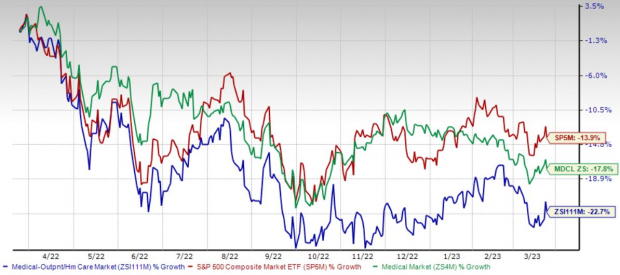
The industry has underperformed both its sector and the Zacks S&P 500 composite in the past year.

The industry has declined 22.8{1668a97e7bfe6d80c144078b89af180f360665b4ea188e6054b2f93f7302966b} over this period compared with the S&P 500’s decline of 13.9{1668a97e7bfe6d80c144078b89af180f360665b4ea188e6054b2f93f7302966b}. The broader sector has declined 17.8{1668a97e7bfe6d80c144078b89af180f360665b4ea188e6054b2f93f7302966b} in the same time frame.

One Year Price Performance

Zacks Investment Research
Image Source: Zacks Investment Research

Industry’s Current Valuation

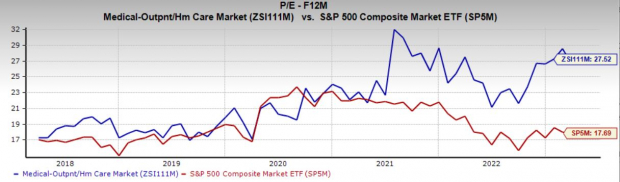
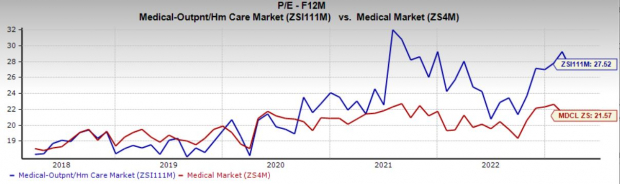
On the basis of the forward 12-month price-to-earnings (P/E), which is commonly used for valuing medical stocks, the industry is currently trading at 27.5X compared with the S&P 500’s 17.7X and the sector’s 21.6X.

Over the last five years, the industry has traded as high as 31.5X and as low as 16.8X, with the median being at 21.7X, as the charts below show.

Price-to-Earnings Forward Twelve Months (F12M)

Zacks Investment Research
Image Source: Zacks Investment Research

Price-to-Earnings Forward Twelve Months (F12M)

Zacks Investment Research
Image Source: Zacks Investment Research

4 Promising Outpatient and Home Healthcare Stocks

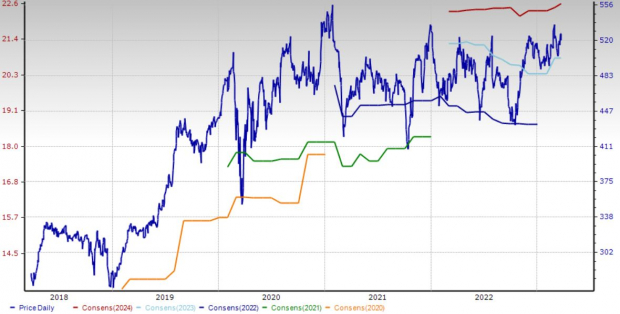
Chemed: The company operates through two wholly owned subsidiaries — VITAS Healthcare Corporation (a renowned provider of end-of-life care) and Roto-Rooter (a well-known commercial and residential plumbing and drain cleaning services provider). Chemed announced its fourth-quarter 2022 results last month, wherein it registered an uptick in its overall revenues. It also recorded robust reported sales in its Roto-Rooter business, wherein the total Roto-Rooter branch commercial revenues improved 8.7{1668a97e7bfe6d80c144078b89af180f360665b4ea188e6054b2f93f7302966b} from last year on a 5.5{1668a97e7bfe6d80c144078b89af180f360665b4ea188e6054b2f93f7302966b} increase in drain cleaning revenues, a 13.8{1668a97e7bfe6d80c144078b89af180f360665b4ea188e6054b2f93f7302966b} rise in commercial plumbing, 5.1{1668a97e7bfe6d80c144078b89af180f360665b4ea188e6054b2f93f7302966b} growth in excavation revenues and a 27.3{1668a97e7bfe6d80c144078b89af180f360665b4ea188e6054b2f93f7302966b} hike in commercial water restoration revenues. CHE carries a Zacks Rank of 2 (Buy). You can see the complete list of today’s Zacks #1 Rank (Strong Buy) stocks here.

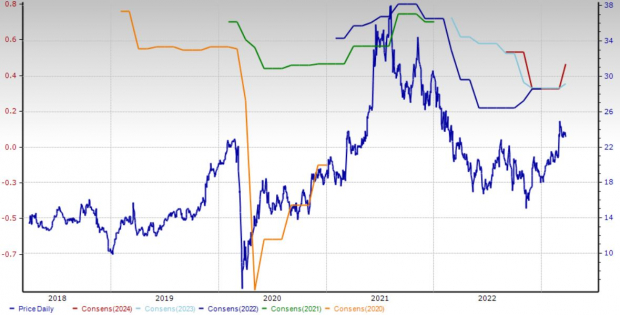
Price and Consensus: CHE

Zacks Investment Research
Image Source: Zacks Investment Research

For this company, the Zacks Consensus Estimate for 2023 revenues suggests growth of 4.7{1668a97e7bfe6d80c144078b89af180f360665b4ea188e6054b2f93f7302966b}. The same for earnings indicates an increase of 5.6{1668a97e7bfe6d80c144078b89af180f360665b4ea188e6054b2f93f7302966b}. The company’s return on equity (ROE) of 41.5{1668a97e7bfe6d80c144078b89af180f360665b4ea188e6054b2f93f7302966b} compares favorably with the industry’s 6.4{1668a97e7bfe6d80c144078b89af180f360665b4ea188e6054b2f93f7302966b}.

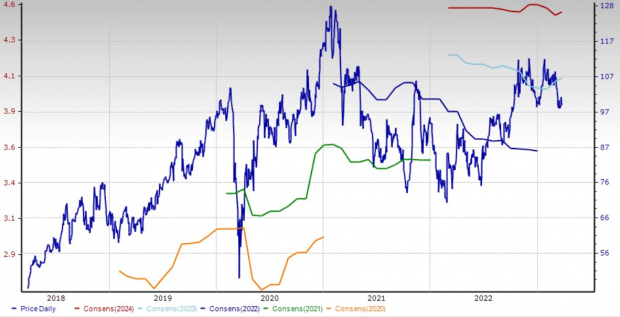
Addus HomeCare: Its services and operating model address a number of crucial needs across the healthcare continuum. Last month, Addus HomeCare announced its fourth-quarter 2022 results, where it registered a solid uptick in its net service revenues. Management confirmed that its personal care revenues (accounting for 74.2{1668a97e7bfe6d80c144078b89af180f360665b4ea188e6054b2f93f7302966b} of overall revenue) improved year over year on a same-store basis, reflecting steady volume growth trends. Home health revenues, which included the operations of Armada Home Health and Summit Home Health acquired in 2021, and the addition of Apple Home Healthcare operations effective Oct 1, 2022, were also up year over year on a same-store basis. ADUS carries a Zacks Rank of 2.

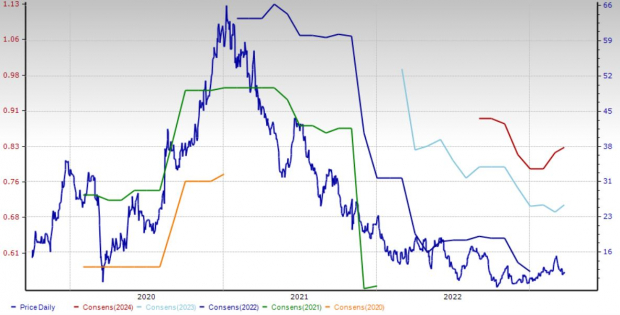
Price and Consensus: ADUS

Zacks Investment Research
Image Source: Zacks Investment Research

For this company, the Zacks Consensus Estimate for 2023 revenues suggests growth of 8.2{1668a97e7bfe6d80c144078b89af180f360665b4ea188e6054b2f93f7302966b}. The same for earnings indicates an increase of 9.4{1668a97e7bfe6d80c144078b89af180f360665b4ea188e6054b2f93f7302966b}. The company’s ROE of 8.6{1668a97e7bfe6d80c144078b89af180f360665b4ea188e6054b2f93f7302966b} compares favorably with the industry’s 6.4{1668a97e7bfe6d80c144078b89af180f360665b4ea188e6054b2f93f7302966b}.

RadNet: It is a renowned provider of fixed-site outpatient diagnostic imaging services through a network of owned and/or operated outpatient imaging centers. Last month, RadNet announced its fourth-quarter 2022 results, where it registered a solid uptick in its net revenues, both including and excluding revenues from the AI reporting segment. The company’s aggregate procedural volumes and same-center procedural volumes also increased year over year in the reported quarter. On the back of its performance in the fourth quarter of 2022, management is optimistic about its financial position and operating model, which has presented RadNet with targeted opportunities to expand its business, particularly through the construction of new centers to meet growing demand and utilization in strategic markets. RDNT carries a Zacks Rank of 2.

Price and Consensus: RDNT

Zacks Investment Research
Image Source: Zacks Investment Research

For this Los Angeles, CA-based company, the Zacks Consensus Estimate for 2023 revenues suggests growth of 9.6{1668a97e7bfe6d80c144078b89af180f360665b4ea188e6054b2f93f7302966b}. The same for earnings indicates an increase of 70{1668a97e7bfe6d80c144078b89af180f360665b4ea188e6054b2f93f7302966b}. The company’s P/CF ratio of 6.6 compares favorably with the industry’s 9.4.

The Pennant Group: It is the parent company of the Pennant group of affiliated home health, hospice and senior living companies. This month, The Pennant Group completed the acquisition of operations of Robins Landing at New Berlin, WI and Robins Landing at Brookfield, WI. Last month, it reported its fourth-quarter 2022 results, where it witnessed solid improvement in its overall top line. Its Home Health and Hospice Services segment recorded a robust uptick in revenues, whereas the company also recorded strength in its total home health admissions and total Medicare home health admissions. The uptick in total hospice admissions, Senior Living Services segment and Same store Senior Living Services segment for the fourth quarter was also impressive. PNTG carries a Zacks Rank of 2.

Price and Consensus: PNTG

Zacks Investment Research
Image Source: Zacks Investment Research

For this Eagle, ID-based company, the Zacks Consensus Estimate for 2023 revenues suggests growth of 8.4{1668a97e7bfe6d80c144078b89af180f360665b4ea188e6054b2f93f7302966b}. The same for earnings indicates an increase of 24.6{1668a97e7bfe6d80c144078b89af180f360665b4ea188e6054b2f93f7302966b}. The company’s ROE of 12.4{1668a97e7bfe6d80c144078b89af180f360665b4ea188e6054b2f93f7302966b} compares favorably with the industry’s 6.4{1668a97e7bfe6d80c144078b89af180f360665b4ea188e6054b2f93f7302966b}.

Is THIS the Ultimate New Clean Energy Source? (4 Ways to Profit)

The world is increasingly focused on eliminating fossil fuels and ramping up use of renewable, clean energy sources. Hydrogen fuel cells, powered by the most abundant substance in the universe, could provide an unlimited amount of ultra-clean energy for multiple industries. 

Our urgent special report reveals 4 hydrogen stocks primed for big gains – plus our other top clean energy stocks.  

See Stocks Now

Want the latest recommendations from Zacks Investment Research? Today, you can download 7 Best Stocks for the Next 30 Days. Click to get this free report

Chemed Corporation (CHE) : Free Stock Analysis Report

Addus HomeCare Corporation (ADUS) : Free Stock Analysis Report

RadNet, Inc. (RDNT) : Free Stock Analysis Report

The Pennant Group, Inc. (PNTG) : Free Stock Analysis Report

To read this article on Zacks.com click here.

Zacks Investment Research

The views and opinions expressed herein are the views and opinions of the author and do not necessarily reflect those of Nasdaq, Inc.

Innovations disrupting Indian pharma industry, Health News, ET HealthWorld

Innovations disrupting Indian pharma industry, Health News, ET HealthWorld
RePharma Summit: Innovations disrupting Indian pharma industry

New Delhi: India plays a crucial purpose in the international prescription drugs and vaccine marketplace. Reports demonstrate that India stands third for quantity-wise pharmaceutical generation throughout the entire world. Fuelled even more by the world pandemic, the sector witnessed huge contributions from a new wave of technological improvements with AI, machine studying, drug layout systems, logistics-offer chain improvements, and recreation-changing discoveries.

To decode the electronic, technological and innovative disruptions in the pharmaceutical sector, ushered in by the entrepreneurial spirits of the veterans and specialists of the market, The Financial Situations is back again with the 3rd version of India Pharmaworld Summit themed ‘The Potential is NOW,’ with presenting husband or wife Anervea, information husband or wife IBM, in affiliation with Salesforce, gold associates Veeva and Wolters Kluwer, analytics lover Qlik, and supporting companions Zota Health care Ltd and Davaindia.

An initiative by ETHealthworld, The RePharma Summit will witness Nawin Sona, Principal Secretary, Government of Maharashtra, just take the phase as the visitor of honour, to share his insights into the present pharmaceutical state of affairs in India and the prospects and worries that lay in advance for the sector.

Panel discussions:

The summit will host influential leaders from the Indian pharmaceutical field, who will meet up with and deliberate on some of the most pertinent troubles. The concentration will be on important spots affecting the sector these types of as drug discovery, vaccine producing and offer chain management that have enabled the industry’s great growth about the a long time as a result of the power of innovation, technologies and governmental insurance policies.

Next the visitor of honour’s handle, the inaugural panel will see participation from Dr Sushil Shah, Founder & Chairman, Metropolis Health care, Sanjiv Navangul, Running Director & CEO, Bharat Serums & Vaccine, Dr Shekhar Mande, Former Director Common, CSIR, Dr Sanjay Singh, CEO, Gennova Biopharmaceuticals, and Shirish Arya, Director, Corporate Approach & Company Advancement, ImmunoACT, and Vikas Dandekar, Editor, Overall health & Pharma, ETPrime as moderator. The inaugural panel is themed ‘India’s Vaccine, Diagnostics and Therapeutics Clout – The Truth of the matter At the rear of the Tale.’

Future up, TEDx Speaker, Ayush Atul Mishra, Managing Spouse, Head Of Details Science, Anervea, will carry out a spouse presentation on ‘Next-Gen Facts Pushed Commercialization for Pharmaceutical Businesses in India.’

The subsequent panel dialogue will be on ‘ Strengthening Indian Pharma by way of Innovation’. Moderated by Ganesan V P, Sr Lover and Distribution Sector Chief, India/South Asia, IBM, the panellists include things like Sreeji Gopinathan, Worldwide CIO, Lupin, Ganesh Ramachandran, Worldwide CIO, Alkem, Phani Mitra, Head Electronic & System Excellence, India & Emerging Marketplaces, Dr Reddy’s Laboratories, and Sujith Eramangalath, Board Advisor, Anervea.

This will be followed by a unique handle on technological enhancements driving the future of Indian pharma by Geena Malhotra, International CTO, CIPLA Ltd.

Immediately after a lover presentation on ‘Accelerating Innovation by way of Lifestyle Sciences Marketplace Cloud’ by Varadarajan Srinivasan, Standard Manager, Veeva Devices, and a spouse presentation by Aditi Sharma, Director, Health and Transformation, Salesforce India, Vikas Dandekar will reasonable the panel dialogue on ‘Vision of Imagined Leaders in Shaping the Pharma Industry’. The panel will consist of Vikrant Shrotriya, MD & CVP, Novo Nordisk, Shyamakant Giri, MD & President, India and Emerging Markets, Amneal Healthcare, Dharmesh Shah, Chairman & Taking care of Director, BDR Pharma, and Maharukh Rustomjee, Main Scientist and Founder, Amaterasu Lifesciences LLP.

The assumed leader’s panel dialogue will be followed by a lover presentation by Chaitanya Avasarala, Founder and CEO, Diagonal Consulting and Neha Vashi, Territory Account Supervisor, Qlik, on ‘Maximizing the value of your SAP Data, Prime Pharma Alternatives with Qlik.’ A different lover presentation on ‘Embracing Electronic Wellness at Just about every Stage of Care: From Clinicians to Hospitals and Pharmaceuticals’ by Ruchi Tushir, Vice President & General Manager, Wolters Kluwer – Worldwide Expansion Market (GGM India) will observe.

The spouse displays will be succeeded by ‘Fireside Chat: Embracing Digitalization in the Pharmaceutical Supply Chain: Scope & Challenges’ amongst Pradeep Gadre, Taking care of Director, SciTech Healthcare, and Manoj Lekhrajani, Chairman, Pharmapoint, moderated by Prabhat Prakash, Senior Digital Material Creator, ETHealthworld. Next the fireside chat, Dr Sujit Paul, Group CEO, Zota Health care will carry out a lover presentation on ‘Pioneering Motion to Acquire the Company to the Next Stage and Lead in the Area of Pharma Retail Segment.’

The ultimate panel of the summit will be a different hearth chat on ‘Criticality of Cyber-Security in the Indian Pharma Sector,’ between Bijender Mishra, CISO and General Manager, Alkem Laboratories, Sandip Parasar, Founder & Director, Dolace Methods, and moderator Amit Mittal, Affiliate Companion, IBM Consulting Protection Solutions, which will conclude the panel discussions with the perspective of protection in knowledge on the cloud, the safer wager concerning the cloud and premise, and the ways to making sure data residency and compliance in the pharma business.

The summit will conclude with India Pharmaworld Awards to accept the initiatives and difficult get the job done of business stakeholders who have been spearheading modern and technological improvements to bolster India’s place as the ‘pharmacy of the world.’

Are TV Drug Ads Bad For Your Health?

Are TV Drug Ads Bad For Your Health?

Tv drug advertisements are a warm button situation for lots of persons. Above the earlier several months, I have been providing lectures about Pharma & Gains, and ordinarily at minimum one audience member will complain that these advertisements are offensive and really should be taken off the air. In addition, people today believe that these drug adverts generate up the value of medications and also have the mistaken check out that extra is spent on promotion than on R&D. (On this latter position, the details are that the sector used about $7 billion on direct-to-client (DTC) promotion in 2021 whilst the collective spend on R&D was $238 billion that very same yr.)

So, why do folks loathe Television set drug advertisements? Based on a study performed by STAT, the explanations fluctuate. Individuals complain not only about the number of these adverts but also the preponderance of ads for the similar drug. This is not astonishing as corporations believe that repetitive advertisements boost the possibility that their messages will get throughout – a belief held by all industries, not just Pharma. People today also loathe the descriptions of the side effects that drugs can lead to. It is not unconventional for fifty percent of a 60 next professional to be devoted to describing adverse activities. These in depth descriptions, nonetheless, are required by the Food and drug administration for the ad to get authorized. Ultimately, folks dislike adverts that deal with conditions connected with intercourse these as erectile dysfunction and HIV infections – specially when these advertisements are aired when young children are probably to be inside of earshot of the television.

A new paper in the Journal of the American Health care Affiliation (JAMA) has extra additional fuel to the “drop the ads” movement. In this research, the authors seemed “to detect the drug characteristics affiliated with a larger share of marketing spending on promotion straight to individuals.” The authors concluded that in 2020 extra dollars was expended on advertisements for drugs that experienced a lessen additional reward and that persons really should query regardless of whether this is the most effective cure for them. This is regular with the watch that DTC advertisements generate the use of pricey medicine of marginal or little benefit. Useless to say, this paper produced enthusiastic guidance from those who want the US to ban these adverts, with distinguished Scripps Research Institute director, Dr. Eric Topol, tweeting “Direct-to-customer drug advertisements: The a lot less a drug’s scientific outcome, the additional spent by the drug company…They must be banned.”

Curiously, most of the experiences on this JAMA research overlooked an accompanying editorial published by Professor Amanda Starc, of Northwestern University’s Kellogg College of Management. Dr. Starc has the refreshing point of view that medication are essential to the population’s standard health citing details that attributes 35{1668a97e7bfe6d80c144078b89af180f360665b4ea188e6054b2f93f7302966b} of the increase in daily life expectancy involving 1990 and 2015 to prescription drugs. She also shines a gentle on the added benefits of DTC advertising and marketing.

“Existing scientific studies conclude that immediate-to-shopper advertising and marketing might improve affected individual requests for advertised products, driving demand from customers, and Iizuka and Jin showed that direct-to-client marketing improves health practitioner visits. Advertising directly to people also appears to improve prescriptions, curiously for both equally the advertised drug and the drug class as a total. The category-enlargement influence is pushed by value-productive generic options, thanks in aspect to business thieving amongst models. Increased use of marketed medication may perhaps also increase adherence and cut down place of work absenteeism”

Dr. Starc gives a quantity of other illustrations in her editorial that: 1) element the advantage of a effectively-knowledgeable affected individual 2) clearly show the great importance of a medical doctor examining the plusses and minuses of a specified drug in a course and 3) admit the role suppliers, hospitals, and insurance coverage payers ALL have in bettering individual wellbeing. Her summary is most important.

“Promotional functions – and immediate-to-customer promoting in individual – do not have universally detrimental results on doctors and sufferers. On the opposite, the literature indicates it causally boosts the patient-health practitioner conversation, improves the use of precious medication, enhances adherence, and will increase productiveness.”

There is a person other point that desires to be manufactured for people who think that the $7 billion expended on DTC would be greater invested in R&D. There is no doubt that DTC drives sales. A single ought to recall that the biopharmaceutical marketplace invests 25{1668a97e7bfe6d80c144078b89af180f360665b4ea188e6054b2f93f7302966b} of its revenues back into R&D. As a result, if these advertisements should lead to an increase in revenue across the business of potentially $60 billion, $15 billion a lot more will be invested in the discovery of new medicines. In outcome, these adverts support guidance R&D. DTC helps to educate sufferers, encourages medical doctor-affected person interactions, lowers absenteeism, and supports R&D investments. That does not damage the country’s health – pretty the reverse.

(John LaMattina is the former President of Pfizer International R&D and the writer of Pharma & Revenue: Balancing Innovation, Drugs, and Drug Rates).

How CVS evolved from a retail pharmacy into a health care behemoth

How CVS evolved from a retail pharmacy into a health care behemoth

CVS Health Corporation (CVS) has emerged as a pioneer in the pharmaceutical industry in the 21st century.

With roughly 85{1668a97e7bfe6d80c144078b89af180f360665b4ea188e6054b2f93f7302966b} of Americans living within five miles of a CVS pharmacy, the company is the most profitable retail pharmacy in the U.S. While Rite Aid has a net worth of roughly $200 million and Walgreens is worth $30.52 billion, CVS’s net worth is a whopping $104.57 billion as of March 3, 2023.

CVS came to dominate the retail pharmacy industry and beyond through ever-expanding operations fueled by acquisitions, mergers, and partnerships:

The first wave of acquisitions

The Consumer Value Store first began in 1963 as a health and beauty retailer in Lowell, Massachusetts, before changing its name to CVS in 1964.

Pharmacies within CVS stores were introduced later in 1967, and two years later the company was sold to Melville Corporation.

By 1988, the chain grew to 750 stores with sales reaching roughly $1.2 billion. But it wasn’t until 1994 that CVS’s health care and pharmaceuticals became the primary sources of revenue.

That’s when CVS introduced PharmaCare, a pharmacy benefit management company (PBM), which serves as the middleman between insurance companies and pharmaceutical manufacturers.

Subsequently, as the internet boom swept across the country, CVS capitalized on the opportunity by acquiring Soma.com for $30 million. Soma was one of the first big digital drugstore startups, and the acquisition helped put CVS on the map digitally, giving the company leverage to launch its own website.

“The Internet is a logical extension of our business strategy of making life easier for our customers,” CEO Tom Ryan said at the time.

PBM domination

Fast forward to 2006, CVS acquired Caremark, a PBM, and merged the company’s operations with PharmaCare. This eventually became CVS Caremark, which is now one of the three biggest PBMs in the prescription drug market that dominate market share. As of 2022, CVS Caremark led the way with 34{1668a97e7bfe6d80c144078b89af180f360665b4ea188e6054b2f93f7302966b} market share while Express Scripts accounted for 24{1668a97e7bfe6d80c144078b89af180f360665b4ea188e6054b2f93f7302966b} and Optum Rx accounted for 21{1668a97e7bfe6d80c144078b89af180f360665b4ea188e6054b2f93f7302966b}.

The Caremark deal was unique in that health insurers, rather than pharmaceutical retailers, are typically the ones who buy PBMs through a strategy known as vertical integration — that is, when a company acquires another company in the supply chain or industry and uses it to its advantage.

Also in 2006, CVS acquired MinuteClinic for $170 million. The company’s annual revenue that year stood at $44 billion, with 70{1668a97e7bfe6d80c144078b89af180f360665b4ea188e6054b2f93f7302966b} coming from pharmacy sales alone. The business buoyed CVS during the Great Financial Crisis, and the company’s stock continued to outperform the broader S&P 500 for years to come.

At the same time, CVS’s dominance in the PBM space correlated with the demise of smaller, independent pharmacies through buyouts and bankruptcies.

As “middlemen,” PBMs have the ability to influence or negotiate drug prices by working with pharmacies, health insurers, patients, manufacturers, and in some cases, the government.

This led to controversy due to the lack of price transparency and fee practices. The lack of price transparency raised alarms at the Federal Trade Commission (FTC), which intervened to investigate CVS Caremark and five other PBMs in June 2022.

The ongoing investigation, according to an FTC report, is intended to look into how PBMs steer insurance networks to their own pharmacies, move drug price tiers, manage rebate contracts with manufacturers, and overall how they make the pharmaceutical supply chain more favorable to them.

“Although many people have never heard of pharmacy benefit managers, these powerful middlemen have enormous influence over the U.S. prescription drug system,” FTC Chair Lina Khan said in a statement at the time. “This study will shine a light on these companies’ practices and their impact on pharmacies, payers, doctors, and patients.”

The PBM issue is also a driving force behind billionaire Mark Cuban’s Cost Plus Drugs Company.

‘Health care destination’

As CVS became one of the main leaders in both the retail pharmacy and PBM space, the company elected to venture even further into the health care industry.

In August 2018, the CVS MinuteClinic launched online services that could be accessed 24 hours a day, which increased market access and revenue for CVS. Virtual visits began at $59, along with an option of insurance coverage. A few months later, CVS officially acquired health insurance company Aetna.

“CVS Pharmacy is evolving from not just a store that happens to have a pharmacy and products into more of a health care destination,” then-CVS CEO Larry Merlo said about the deal.

“The possibilities are incredible,” SCAN Health Plan CEO Sachin Jain told Yahoo Finance Live recently (video above) when asked about CVS being more of than a pharmacy. “You have a company that owns an insurance arm. You also have a company that now owns a clinical care delivery arm as well as a retail pharmacy. And so, if you can make the pieces work together, it’ll be great.”

A woman walks past a CVS Pharmacy in Washington, DC, on November 2, 2022. (Photo by BRENDAN SMIALOWSKI/AFP via Getty Images)

A woman walks past a CVS Pharmacy in Washington, DC, on November 2, 2022. (Photo by BRENDAN SMIALOWSKI/AFP via Getty Images)

Despite antitrust concerns over reduced competition in the market, the CVS-Aetna merger ultimately received the green light from the Department of Justice in September 2019.

The American Medical Association (AMA) opposed the arrangement, which entailed Aetna sending their patients directly to CVS, arguing that the “benefits were speculative, [and] it will likely have anti-competitive impacts in the PDP, health insurance, retail pharmacy, specialty pharmacy, and pharmacy benefit management markets.” AMA also argued that it would raise health insurance premiums.

And with Amazon’s recent $3.9 billion acquisition of One Medical, a primary care organization, retail’s push into health care continues apace.

“These are potentially industry-transforming deals,” Jain said. “I think people have longe hoped that retail plus health care could equal a better experience for patients. The cautionary tale is really about the very different cultures of retail and clinical service entities. And I think these deals could end up being highly transformative for health care, or they could go down as potentially the worst deals in the history of the health care industry.”

‘Publicly-traded entities don’t necessarily understand clinical culture’

When the coronavirus pandemic swept through the U.S. in 2020, all of CVS’s assets were put to the test.

In November 2021, CVS announced its plans to close 900 stores over a span of three years as the prospect of “a CVS next door” was replaced by Amazon (AMZN) goods at the doorstep.

Nevertheless, revenue remained steady for the company, enabling more acquisitions and partnerships.

CVS acquired Signify Health (SGFY) for $8 billion in 2022 and is in agreement to acquire Oak Street Health (OSH) for $10 billion at some point in 2023. Oak Street Health is a health care provider for older adults and promote their economics on “value-based care.”

“These moves demonstrate the continued push by many high-profile pharmacies into fast-growing health care markets such as senior care, primary care, and home health,” Scott Dunn, lead health care analyst at CB Insights, told Yahoo Finance.

At the same time, some experts wonder whether retail’s reach into health care could go too far.

“I’ve just been around the block enough to know that oftentimes publicly-traded entities don’t necessarily understand clinical culture,” Jain said about the recent moves by Amazon and CVS. “They’re making decisions for the short term. And when you’re making decisions to hit a quarterly earnings target, you aren’t necessarily doing the things that you need to do to improve people’s health over the long term.”

Anjalee Khemlani contributed to this report.

—

Tanya is a data reporter for Yahoo Finance. Follow her on Twitter. @tanyakaushal00.

Click here for the latest trending stock tickers of the Yahoo Finance platform

Click here for the latest stock market news and in-depth analysis, including events that move stocks

Read the latest financial and business news from Yahoo Finance

Download the Yahoo Finance app for Apple or Android

Follow Yahoo Finance on Twitter, Facebook, Instagram, Flipboard, LinkedIn, and YouTube

Diathrive Health and Mark Cuban Cost Plus Drug Company Announce New Collaboration

Diathrive Health and Mark Cuban Cost Plus Drug Company Announce New Collaboration

SALT LAKE City and DALLAS, Feb. 20, 2023 /PRNewswire/ — Diathrive Wellbeing, a diabetic issues and chronic disorder administration remedy, and Mark Cuban Price tag Plus Drug Company, PBC (“Charge Plus Medicine”), have declared a new collaboration now, focused on improving health care obtain, decreasing fees, and improving results for people living with diabetic issues and other chronic conditions.

“As a training medical doctor I noticed initially-hand the hazard of clients not currently being in a position to afford to pay for remedies and supplies,” mentioned Alex Oshmyansky, CEO of Mark Cuban Expense Plus Drug Company. “I established the Mark Cuban Price Furthermore Drug Corporation to help solve this dilemma and offer a way for individuals to acquire their therapies at an affordable selling price. We presently provide clear, small costs to funds-shell out people and are energized to now be operating with a business like Diathrive Overall health to even further lessen the value to clients, and to hold the affected individual history complete from equally a scientific and money perspective.”

“Long-term ailments like diabetes are advanced. The partnership with Price tag Furthermore Medicines will give our prospects an additional piece of the puzzle. Diathrive Well being is content to operate with a organization and workforce who share our aims and values,” said Michael Hennessy, Founder and CEO of Diathrive Health and fitness.

Expense In addition Medicines and Diathrive Wellness are both market disruptors. The romantic relationship will give shoppers lower charge remedies and diabetic issues screening materials and much more customized, increased high-quality treatment so that they can accomplish greater health and fitness results.

Diathrive Wellbeing eliminates the financial, administrative and psychosocial boundaries to taking care of a chronic condition. Associates get limitless diabetic issues screening provides, scientific aid from nurses who are Qualified Diabetic issues Treatment and Education Experts (CDCES) and access to the Diathrive Overall health application that enables users to self-teach and train themselves on how to take care of their issue.

About Mark Cuban Expense In addition Drug Firm

The Mark Cuban Cost In addition Drug Company, PBC (Value In addition Prescription drugs) aims to basically improve the way the pharmaceutical sector operates. As a general public-benefit company, its social mission of increasing general public overall health is just as important as the bottom line. Price tag In addition Medications transparently fees a normal markup on each drug it sells. The costplusdrugs.com on the web pharmacy introduced in January 2022 now carries around 1,000 prescription solutions, shipped by mail to thousands of content prospects each day. Expense Moreover Medicine is working with wellness programs, managed-treatment businesses, pharmacy positive aspects professionals (PBMs) and self-insured companies to carry these identical discounts to employer-sponsored advantage plans nationwide. https://www.linkedin.com/business/costplusdrugs/

About Diathrive Wellbeing

Diathrive Health’s solution gives people the highest high-quality option at the cheapest price tag. Users get endless glucose tests materials, time with nurses who are Licensed Diabetic issues Care and Schooling Experts (CDCES) and limitless use of the Diathrive Overall health app wherever they can deal with their data, find out about diabetic issues and hook up with a clinician.

Through its Overall health Advisor alternative, Diathrive Well being is preserving businesses up to 85{1668a97e7bfe6d80c144078b89af180f360665b4ea188e6054b2f93f7302966b} on their diabetes wellness positive aspects and supporting customers obtain far better wellbeing outcomes.

Diathrive Health and fitness was a short while ago awarded highest-amount validation for healthcare personal savings from the Validation Institute.

Master additional about Diathrive Health and fitness.

Source Diathrive Well being