
Car dealer, automaker tensions rise over state bills

Car dealer, automaker tensions rise over state bills

The group’s CEO, John Bozzella, stated in a statement delivered to Automotive Information that he’s “by no means seen this a lot of lousy point out expenditures” right before. He cited initiatives by leaders of condition and regional seller associations to press a flurry of laws that he claimed would “increase a good deal of more fees to the program and, in some cases, ban the improvements that would enhance a customer’s obtaining and ownership encounter.”

“That is not a recipe for a potent franchise technique in the extensive phrase,” Bozzella stated in the assertion. “OEMs and sellers count on 1 a further to provide and service terrific cars and trucks and trucks throughout the nation. We ought to be in the same boat rowing jointly to update the system, but that is evidently not a check out shared by all.”
Tensions around the long term of the franchise process have been creating for many years, in portion prompted by the increase of Tesla and its direct-to-purchaser profits product that has been emulated by other startup electric powered automobile brands, this sort of as Rivian.

Dealers’ worries have been influenced by the pandemic’s acceleration of online profits and the expansion in reservations and vehicle orders resulting from a shortage of semiconductors that curtailed new-car manufacturing. At the exact same time, conventional automakers have rolled out additional EVs and — in some instances — new product sales models to accompany them.

But the advantages franchised dealerships have gleaned through the source lack have more recent opponents cautious of the legislative initiatives.

“In recent years, franchised new car or truck dealers have benefited from provide chain disruptions that have slowed vehicle creation. Dealers have reported report revenue while purchasers are normally paying higher than sticker prices,” Rivian said in a statement. “Condition legislators will have to be conscious of these current market circumstances and resist strain to go legislation that even more entrench seller protections that block opposition and in the end hurt buyers.”
Seller affiliation leaders in a number of states say their aim is to reduce automakers from competing straight with franchised vendors, thus preserving dealers’ function in the revenue product — what ever sort it normally takes.

“The design is normally transforming. It is really been transforming for 100 decades,” reported Brian Maas, president of the California New Auto Dealers Association and 2023 chairman of the Automotive Trade Association Executives.

“Sellers really don’t market autos the identical way they sold them 25 several years in the past ahead of the Internet. They’re not heading to offer them the exact way they sell them now 25 years from now,” Maas claimed. “What we want to make certain is that dealers remain central as element of the retail encounter for shoppers due to the fact the franchise model is the finest retail model.”

That can be accomplished by passing new laws and implementing existing guidelines, a number of seller advocates claimed.

In Florida, for occasion, pending laws would give a motor car or truck vendor affiliation standing to request that the point out Office of Highway Security and Motor Cars overview an automaker’s techniques to identify no matter if they violate franchise regulation. At the moment, only unique sellers are allowed to make this kind of requests.

“Sellers are extremely hesitant to problem any particular practice of the OEM for the noticeable good reasons — it really is their enterprise associate. It can be the entity that supplies their cars and handles so considerably of their working day-to-day everyday living,” explained Ted Smith, president of the Florida Car Sellers Affiliation, which advocated for the modify in coordination with some dealership teams in the condition.

With some previous considerations, Smith reported he located no seller inclined to put his or her name on a problem, even just after contacting dozens of shops.

“Which is a extremely telling want remaining exhibited for owning the association to be in a position to deliver a little something,” he explained.

Automakers Grapple With New Supply Chain Issues, Keeping Car Prices High

Automakers Grapple With New Supply Chain Issues, Keeping Car Prices High
  • Automakers preserve enduring production difficulties.
  • The pandemic, the change to EVs, and provide chain problems are all to blame.
  • But all of that could continue on to influence car or truck prospective buyers, professionals say.

Automakers maintain suffering from creation worries — and these days, it is really not essentially because of to a scarcity of chips. Not only does that suggest auto-shopping for is in no way likely back again to standard, there could be other impacts on customers in terms of expense, far too.

Ford earlier this thirty day period stopped creation of F-150 Lightning electrical pickups as it struggles with the changeover to electric powered vehicles and a battery hearth. Meanwhile, the automobile big also observed downtime at its manufacturing unit in Louisville for the Ford Escape, similar to a software concern. GM’s Bowling Eco-friendly plant will cease Corvette output this week thanks to a “pieces offer difficulty.” Toyota has prepared to halt its Czech plant. 

Which is just in the earlier couple months.

“When well-known designs this sort of as these have their manufacturing interrupted,” Sam Fiorani, vice president of world wide auto forecasting at AutoForecast Solutions, explained to Insider via email, “it demonstrates a larger situation in the supply chain that desires to be dealt with somewhat than working as if this is just aspect of regular operations.”

A much larger concern is looming, without a doubt. Inspite of tailwinds like huge revenue, significant demand, and lower inventory, automakers are bracing on their own for more disruptions. 

Whether those people constraints are residual impacts from the pandemic, newfound elements shortages, or issues shifting to an all-electric powered automobile lineup, car organizations and their sections-makers are navigating an impressive established of troubles.  

What is offering automakers a hard time?

As envisioned, new sector entrants like Rivian have also halted manufacturing. This can, in portion, be attributed to the reality that these corporations do not have the exact same supplier interactions as their legacy competition.

“With a car or truck that has hundreds of suppliers and countless numbers of parts coming from those suppliers, it only takes one particular section from one supplier to end the line,” Rivian CEO RJ Scaringe claimed in a Q3 earnings simply call. He talked about losing 5 days of generation “due to the fact of a one element supply shortage.”

The EV changeover is just just one of the industry’s challenges.

“It can be a whole new source chain. It truly is a total unique supply of product,” Marcus Sprow, associate at firm Foley & Lardner and co-guide of its electrified mobility team. “There is a specific finding out curve there.”

But the shift to EVs is just not everything

There are a whole lot of other dynamics to hold an eye on. The marriage in between automakers and their elements companies has never ever been best, but it’s specifically demanding of late even as the two remain codependent. 

As automakers cashed in on pandemic-induced auto demand that still left all sorts of markups on new and made use of motor vehicles, a good deal of that gain didn’t make its way to suppliers, gurus say.

Now, elements organizations are having difficulties amid macroeconomic concerns, inflation, in addition to the changeover to EV elements (or jeopardizing getting defunct), and that will effect the automakers they source to.

“A great deal of suppliers are quite, incredibly stretched,” Ambrose Conroy, CEO at consultancy Seraph, explained. If automobile giants, in particular those centered on large-stop, luxurious products, really don’t have adequate dollars to bail their elements-makers out and retain them solvent, “we’re anticipating a whole lot of financial distress,” he claimed. 

“But when that cannot occur, the supplier will commonly conclusion up heading bankrupt,” Conroy extra. “It usually means items have to be resourced, prices will go up and it really is a pretty distressing training.” 

And, if automakers lose their parts, “commonly, it adds a lot more inflationary pressures to people,” Conroy mentioned, especially as they will have to place more dollars into the source base. 

“They’re heading to just take that dollars absent from shareholder dividends and share buybacks,” he included, “but it is really also likely to gasoline the inflationary fires even much more.” 

Ford layoffs hit UK car industry struggling with EVs and Brexit

Ford layoffs hit UK car industry struggling with EVs and Brexit

Nissan Leaf battery at Sunderland factory, UK.

A Nissan Leaf battery found at the Imagine factory in Sunderland, United kingdom.
Photograph: Phil Noble (Reuters)

When US carmaker Ford on Feb. 14 announced 1,300 position cuts in the Uk, it was just the most recent blow for an industry that is been struggling to retain up creation concentrations in a put up-Brexit, pandemic-strike overall economy that’s on the brink of economic downturn.

Globally, the car sector is beginning a wholesale adjust to the way it operates, producing battery-building capability and the knowledge required to make electric vehicles in its place of petrol autos. But the UK’s modern history on finding cars and trucks off the generation line, as well as some large-profile failures, propose it may well battle additional than most nations.

The UK’s auto-producing heyday is in the distant past. Manufacturing peaked in 1972 with shut to two million cars built that year, in accordance to the Society of Motor Producers and Traders (SMMT), and the country’s output has fluctuated at any time considering that. A constant increase in excess of the early 2010s was summarily reversed in 2016, the exact same calendar year the British isles voted to leave the EU: The British isles designed perfectly above 1.5 million cars and trucks in 2016, but that range had halved to just 775,000 by 2022.

Why is electrification tricky for the United kingdom?

1 space where by the Uk has long excelled is R&D, with some of the world’s finest investigate establishments and a very long heritage of substantial-level engineering. Constructing batteries at scale shouldn’t be an insurmountable challenge. And, if it proved far too high priced, importing them could be an alternative.

But the UK’s attempts to develop a battery market are faltering. In January 2023, the lithium-ion battery startup Britishvolt, which was constructing a enormous gigafactory in Northumberland, collapsed into personal bankruptcy, leaving £120 million ($146 million) in debt.

“Britishvolt collapsed for the reason that, significantly the very same as any new technologies, changing a promising thought for EV batteries into gains necessitates really significant costs to be paid out up-entrance,” Rebecca Parry, a professor at Nottingham Legislation College, explained to Power Live News. The firm confronted superior competition from overseas and, allegedly, runaway internal costs. “It was correctly a startup and in spite of investment, it had not by the conclusion of 2022 developed a working prototype and it was nevertheless making its manufacturing unit,” Parry reported.

Why not import batteries?

Japanese carmaker Nissan in 2022 became the biggest carmaker in the United kingdom, creating 16.5{1668a97e7bfe6d80c144078b89af180f360665b4ea188e6054b2f93f7302966b} of all British isles motor vehicles, a transform that came about in element mainly because other large makers pulled out entirely. Honda shut its Swindon operations in July 2021, resulting in the reduction of above 3,000 employment. Vauxhall stopped producing Astra vehicles at its Wirral manufacturing facility in April 2022, while its proprietor, Stellantis, does approach to make investments £100 million “supported by the United kingdom governing administration to secure an all-electric powered foreseeable future for the plant,” in accordance to a 2021 announcement.

Nissan is nevertheless backing a huge gigafactory challenge in Sunderland, exactly where batteries will be built near to its creation plant, a signal that the firm thinks producing EV batteries—which are huge, complex, and, of system, vital to the working of an electric powered vehicle—close to where by the vehicles are assembled is essential.

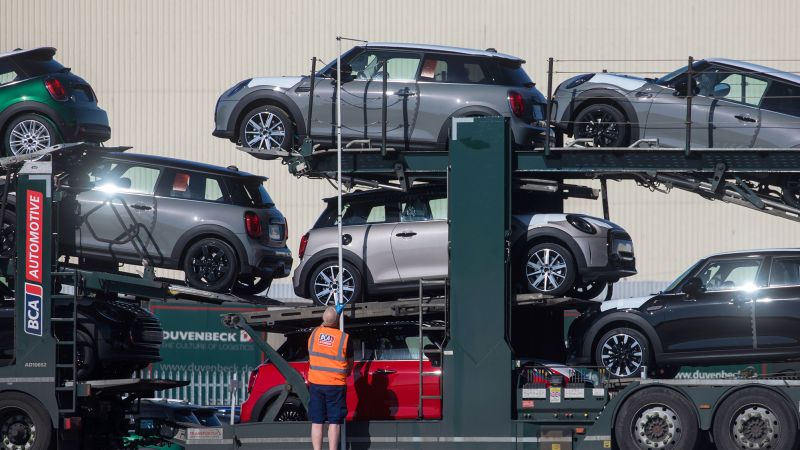
The British isles has lengthy imported specialized goods, which include auto elements. But whilst Brexit did not stop imports or exports, it made some of them them a good deal a lot more sophisticated, pricey, and uncertain. Yrs of negotiation in direction of a “divorce” offer involving the Uk and the EU has remaining grey spots that are nevertheless staying worked out. The Economist pointed out that the crankshaft in a Mini created by BMW has to cross the English Channel three situations for several stages of its manufacture prior to it can be set up in a automobile in the Uk. Producing procedures like this are turning out to be a great deal a lot more onerous submit-Brexit.

Ford also announced layoffs today in Germany, citing a vast-ranging restructure of its company. As an American company, it is very likely becoming tempted by enormous US authorities incentives to invest in a US-based mostly EV manufacturing industry. People incentives are even luring away British providers—yet one more blow to the country’s having difficulties car business.

Saudi Arabia goes electric to launch homegrown car industry

Saudi Arabia goes electric to launch homegrown car industry

For decades, Saudi Arabia has attempted to start its individual auto market with practically nothing to present for it. It is now making an attempt once again — but this time with electric powered autos.

The electrical motor vehicle initiative is part of the kingdom’s bold diversification travel to wean by itself off its reliance on oil profits, which is its main income supply as the world’s major electrical power exporter.

It intends to pour billions into the task to produce an electric automobile manufacturing hub, with the intention of producing 500,000 automobiles a calendar year by 2030.

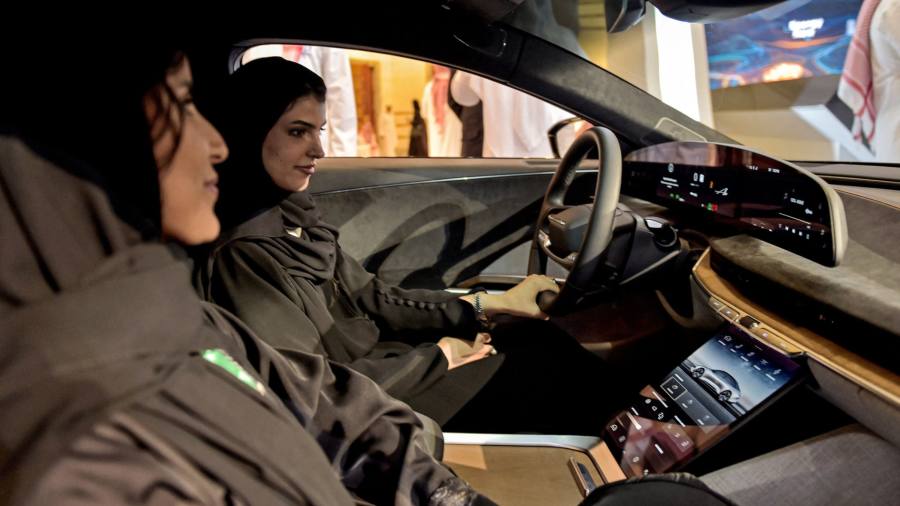
The US-primarily based Lucid Motors, in which Saudi Arabia acquired a majority stake costing around $2bn, intends to develop about a quarter of that target in the kingdom.

Saudi Arabia hopes the transition to electrical will also give the nation a better prospect of accomplishment as the petrol engine marketplace is incredibly tricky to crack into mainly because of the dominance of founded carmakers in Europe, the US and Japan.

The battery run current market presents a much more amount enjoying subject than combustion, said just one Saudi official, and would pit the kingdom in opposition to other large electric powered car or truck producers such as China, Germany and the US.

In addition, Saudi can use its economic muscle mass to “buy into” the electric powered market, served by its significant surplus of petrodollars.

“It’s a sector that is previously been developed,” added Monica Malik, main economist at Abu Dhabi Business Financial institution.

“They [the Saudis] can invest in into it and commit in it rather than make a little something from scratch. It is gaining traction in world wide use, and it things into the strength changeover tale as properly.”

There are some uncertainties around the country’s capability to compete against the likes of China with its potent electrical automobile manufacturing foundation, sturdy technology, significant efficiency and low-cost labour prices.

But nevertheless, electrical vehicle producing is planned as an vital pillar of the kingdom’s diversification drive, which is being overseen by the sovereign wealth fund, the $600bn Community Expenditure Fund.

The purpose of the diversification generate is to increase the local labour force, teach personnel new techniques and generate positions in the personal sector, although attracting overseas immediate investment decision.

The country’s broader economic system includes the creation of the futuristic new city of Neom, a fiscal centre in Riyadh and vacationer resorts.

The Saudis will also proceed their investing spree on sporting activities and technological know-how providers abroad.

An electrical-car or truck charging place in Saudi Arabia © Rotana Hammad/Alamy

Electric powered vehicle manufacturing is central to the initiative for the reason that the kingdom aims to consider gain of the industry’s expected expansion. Electrical vehicles should really make up about 60 for each cent of cars offered each year by 2030, if web zero targets are to be arrived at by 2050, the Intercontinental Electrical power Company claimed.

Essential to the Saudi electric auto system is the development of Ceer, Arabic for drive or go, which the nation hopes will create 170,000 vehicles a calendar year in partnership with Taiwan’s engineering group Foxconn and BMW.

The very first vehicles are prepared to go on sale in 2025 at the very affordable conclude of the market place.

PIF has also obtained a the greater part stake in Lucid Motors, which designs to develop 150,000 vehicles a yr in the kingdom in 2025, and signed contracts with Hyundai and Chinese electrical motor vehicle team Enovate.

Establishing an electrical automobile market would considerably lower the kingdom’s import bill, reported Tarek Fadlallah, the main govt for Nomura Asset Administration in the Center East.

“Transportation accounts for about 15 for every cent of the Saudi import invoice and is the single largest shopper of overseas currency. There is a enormous incentive to substitute individuals imports with domestically manufactured vehicles.”

In addition, the electrical initiative suits with Saudi Arabia’s focus on of 30 for each cent of all automobiles in Riyadh to be powered by batteries by 2030, although putting it between the world’s top rated five producers.

Nevertheless, there are headwinds, stated Al Bedwell, director of World-wide Powertrain at LMC Automotive, as chip shortages and large mineral costs required for batteries threaten development.

He claimed recessionary forces throughout the planet are likely to constrain the enlargement of the electric powered auto sector.

“By the stop of this 12 months, the marketplace is hoping they will create sufficient cars and trucks, but unfortunately at that stage folks may not have ample revenue to get people vehicles.”

He extra: “The position at which you could deliver an electrical car or truck for the very same value as a combustion car was believed to be all-around 2025, but it’s additional probably now that it will be towards the finish of the decade.”

The electric powered car industry has also been strike by inflation and provide chain bottlenecks of minerals and factors that could disrupt Saudi programs.

With this in head, PIF has released a business to make investments in mining abroad to secure its offer of lithium and other minerals utilized in batteries.

At the exact time, Australian battery manufacturer EV Metals is setting up a lithium hydroxide plant in the kingdom.

For its section, Lucid aims to start off the assembly of cars in Saudi this 12 months with autos wholly developed in the region in 2025.

The Lucid and Ceer factories will be dependent in the King Abdullah Financial Metropolis, a Pink Sea zone built to bring in financial commitment and increase the overall economy, which will act as a hub for the supply chain, in accordance to the city’s main executive Cyril Piaia.

“There is a total worth chain. The suppliers will be fully integrated. They will be aspect of the automotive hub. There will be a selection of suppliers that will be proven in this article,” he claimed.

Faisal Sultan, Lucid’s handling director for Saudi Arabia, pressured the value of the authorities using the initiative in creating a offer chain.

“The offer chain is heading to be a most important issue we’re likely to go soon after,” he claimed. “The source chain doesn’t come usually for one particular OEM [manufacturer] . . . that’s why it’s a authorities driven initiative fairly than OEM driven.”

Jan. U.S. car sales: Toyota slides; Ford, Honda, Hyundai, Kia, Subaru and Mazda rise

Jan. U.S. car sales: Toyota slides; Ford, Honda, Hyundai, Kia, Subaru and Mazda rise

The automaker finished January with 130,315 vehicles and gentle trucks in inventory – most of it at ports or in transit, up from 116,201 at the close of December and 125,423 at the close of January 2022. That interprets to a 23-day source at Toyota and a 28-working day supply at Lexus, the organization said Wednesday.

At Ford, profits rose 1.8 per cent past thirty day period, with volume up 1.9 per cent at the Ford division and 1.2 p.c at Lincoln. It was the next straight month of gains for equally brands.

The Ford division’s benefits had been aided by F-Collection, up 8.8 per cent the Bronco, up 26 {1668a97e7bfe6d80c144078b89af180f360665b4ea188e6054b2f93f7302966b} and the Transit, up 106 per cent. TrueCar approximated Ford’s fleet deliveries rose 11 p.c to 35,289 last thirty day period. The automaker said it experienced approximately 370,000 vehicles and gentle vehicles in stock to commence February, such as models in transit. 

Ford also reported it generated 181,912 light-weight motor vehicles in North The united states final month.

Honda Motor Co., also saddled with lower stockpiles in wake of the significant chip lack, reported January volume rose 14 percent, powering a acquire of 10 {1668a97e7bfe6d80c144078b89af180f360665b4ea188e6054b2f93f7302966b} at the Honda division and 66 percent at Acura.  The company stated Honda brand stock on hand much more than doubled final month in contrast to January 2022, supporting “to triumph over the effects of wintertime storms.” Income of the Accord jumped 42 p.c and CR-V deliveries surged 49 per cent, Honda mentioned.

Volume last thirty day period rose 8.6 per cent to 52,001 at Hyundai and 22 {1668a97e7bfe6d80c144078b89af180f360665b4ea188e6054b2f93f7302966b} to 51,983 at Kia, the companies mentioned Wednesday. It was the sixth consecutive thirty day period of calendar year in excess of year gains for the two brand names, with Hyundai edging Kia by just 18 vehicles in January.

Hyundai explained retail income rose 1 percent to 48,247 last month. The organization mentioned it ended January with 45,158 vehicles and mild vehicles in inventory, up from 37,379 at the close of December and 18,060 a calendar year back.

Kia set a January report and said five styles – Niro, Sportage, Telluride, Carnival and Forte – also posted history deliveries for the month. Combined deliveries of Kia’s electrified vehicles jumped 128 per cent.

Subaru, an additional brand name hindered by lean inventory, explained January profits edged up .5 per cent for its sixth straight monthly attain. The success were being aided by report January deliveries of the Crosstrek.

Mazda posted sales of 22,967, a 9 {1668a97e7bfe6d80c144078b89af180f360665b4ea188e6054b2f93f7302966b} raise and the firm’s fourth consecutive achieve.

Genesis also noted history January revenue of 3,905, a 7.3 {1668a97e7bfe6d80c144078b89af180f360665b4ea188e6054b2f93f7302966b} achieve.

Volvo claimed it will launch January sales success on Friday. Other automakers release U.S. income quarterly.

U.S. light-vehicle gross sales were being predicted to rise 2.4 per cent to 6.5 {1668a97e7bfe6d80c144078b89af180f360665b4ea188e6054b2f93f7302966b} in January based on forecasts from J.D. Electricity-LMC Automotive, Cox Automotive, S&P International Mobility and TrueCar. Better fleet shipments ended up expected to offset a drop in retail quantity, analysts claimed.

Deutsche Financial institution, in a report Thursday, explained business revenue elevated 6 p.c final month, with retail quantity and fleet shipments surging 58 {1668a97e7bfe6d80c144078b89af180f360665b4ea188e6054b2f93f7302966b} from a yr back.

The lender said the industry’s sales for each promoting day in January – ordinarily a person of the weakest months of the year – was 44,000 units, or flat with 2022 amounts.

Fleet deliveries ended up forecast to increase 59 per cent to 74 percent to 168,000-183,000 in January from a calendar year before, TrueCar, J.D. Energy and LMC Automotive estimate. As the chip lack eases, automakers are ramping up output and filling a backlog of orders from rental operators and other commercial and authorities customers.

Automakers are counting on ongoing pent-up demand in the wake of limited but improving upon inventories to generate revenue larger this 12 months, after field quantity slumped 8 p.c to 13.865 million in 2022.

Chris Hopson, principal analyst at S&P Worldwide Mobility, mentioned customers facial area an uncertain purchase ecosystem as 2023 unfolds.

“Even though positive developments relating to mildly retreating car or truck price ranges and rising pockets of inventory bode properly, interest premiums keep on being substantial and financial headwinds persist,” stated Hopson.

Affordability, driven by elevated transaction selling prices, also continues to be a hurdle. J.D. Electricity and LMC Automotive estimate the common new-auto retail transaction price in January will get to $46,437, a 4.2 p.c boost from January 2022, but a decrease from a record substantial of $47,362 in December.

“Buyers proceed to confront mounting new-vehicle rates across the field,” claimed TrueCar analyst Zack Krelle. “However, the pace has slowed as inventory for numerous substantial-need automobiles grows. Fewer motor vehicles are seeing markups, especially for import brand names which confronted pronounced shortage all through the peak of the shortages.”

UK car production is at its weakest since 1956. And the industry is losing the EV race

UK car production is at its weakest since 1956. And the industry is losing the EV race


London
CNN
 — 

UK car manufacturing hit a 66-year low in 2022, as the closure of two plants, a global shortage of semiconductors and the effect of Covid lockdowns in China on auto supply chains crippled output.

Figures published Thursday by the Society of Motor Manufacturers and Traders (SMMT), an industry body, showed that the number of passenger cars made in Britain declined 10{1668a97e7bfe6d80c144078b89af180f360665b4ea188e6054b2f93f7302966b} year-on-year to hit 775,014.

That’s the lowest total since 1956, and 41{1668a97e7bfe6d80c144078b89af180f360665b4ea188e6054b2f93f7302966b} down on the 1.3 million cars made in 2019 before the pandemic.

The UK auto industry has suffered a series of setbacks recently, including the closure of Honda’s

(HMC)
Swindon plant in 2021 and BMW’s

(BMWYY)
announcement in October that it will end production of the electric Mini in Oxford this year. The plant will produce internal combustion engine vehicles until those are banned in 2030.

The latest blow came last week when homegrown battery startup Britishvolt entered administration, the UK equivalent of filing for bankruptcy.

Britishvolt’s demise poses questions about whether auto manufacturing has a future in Britain if it doesn’t have the batteries it needs to power electric vehicles.

The company was planning to build a £3.8 billion ($4.7 billion) gigafactory in the north of England, which once complete would have produced enough batteries for over 300,000 electric vehicles a year, equivalent to nearly 40{1668a97e7bfe6d80c144078b89af180f360665b4ea188e6054b2f93f7302966b} of current UK vehicle production.

Its failure leaves Chinese-backed Envision AESC, which supplies Nissan

(NSANF)
, as the only UK-based manufacturer of electric vehicle batteries ahead of the looming ban on the sale of petrol and diesel vehicles in 2030. Hybrids are set to be banned from 2035.

Workers in the cell manufacture area at Envision's gigafactory in Sunderland in the north east of England.

Andy Palmer, the former Aston Martin CEO, called Britishvolt’s collapse an “unmitigated disaster for the auto industry in the UK.” In an interview with the BBC, Palmer said the United Kingdom does not have the battery capacity to support the government’s electric vehicle ambitions.

“That means that ultimately British car manufacturing will migrate to where the batteries are. That is going to be in central Europe,” he added.

Other experts are far less gloomy, but in the wake of Britishvolt’s collapse, UK lawmakers have launched an inquiry into the viability of electric vehicle battery manufacturing in the United Kingdom.

“The future of car manufacturing in the UK is dependent on our ability to make electric vehicles, and to be able to export them into the EU,” Darren Jones, chair of the House of Commons business committee, said in a statement. “That means we need local supplies of electric vehicle batteries — something we’re falling significantly behind on compared to other parts of the world.”

Researchers at the Faraday Institution, Britain’s flagship battery-research program, estimated last June that by 2030, more than 1.5 million electric vehicles would be produced in the UK demanding more than 100 gigawatt hours (GWh) of battery capacity annually — the equivalent of five large gigafactories running at full capacity.

As it stands, Britain has just 36.9 GWh of capacity planned for 2030, according to the report.

By contrast, European gigafactory capacity projected for 2030 is expected to reach over 1,100 GWh across more than 40 plants. The largest planned is Tesla

(TSLA)
’s battery plant in Germany.

“The UK is making progress but not moving fast enough compared to its competitors in Europe and beyond,” the researchers said in the report.

Gigafactories take years to build, so car makers will be deciding in the next two to three years whether to locate future electric vehicle production in the UK or Europe, they added.

The US Inflation Reduction Act, which provides tax breaks for companies in America that make parts for green energy projects, will only make competition more intense.

Speaking to reporters on Wednesday, SMMT CEO Mike Hawes said that the UK government has “got to do something” to respond to the inflation act, which is going to “suck investment” into America’s electric vehicle industry.

The government must also address soaring energy costs through subsidies and incentivize investment in zero emission technologies, including batteries, according to Hawes.

There’s another reason the industry may already be suffering a slow death: Brexit.

Years of uncertainty over the terms of a trade deal diverted investment towards Brexit contingency plans and away from new technologies.

And risks remain. Under the Brexit trade deal that eventually replaced EU membership, tougher “rules of origin” requirements take effect next year.

They will require that a greater proportion of the parts in electric vehicles traded between Britain and the European Union are sourced from one of the two regions in order to avoid costly tariffs.

Neither side is ready to meet the deadline, according to Hawes. “The relationship between the UK and the EU, especially as you electrify, is still fundamental to the success of UK car manufacturing,” he said.

The site in Blyth, Northumberland where Britishvolt had plans to build a gigafactory to make batteries, seen on January 17, 2023.

Despite mounting challenges, Hawes is optimistic about the future of auto manufacturing in Britain and expects car production to return to above 1 million over the next two years. UK factories made a record 234,066 electric vehicles in 2022, almost a third of all UK car production.

He said that the collapse of Britishvolt was “disappointing” but “not the end of the world.”

“I think there’s a danger that we talk ourselves down too much on the back of Britishvolt,” he added, noting that the startup’s site is likely to attract another investor given its proximity to an abundance of renewable energy and access to a deepwater port.

More than a dozen companies, including carmakers, have already expressed an interest in buying the land, the Financial Times reported.

Aston Martin and Jaguar Land Rover, owned by India’s Tata Motors

(TTM)
, are also positive about the prospects for electric vehicle manufacturing in the United Kingdom.

Jaguar Land Rover announced Wednesday that it is transforming its Solihull facility between Birmingham and Coventry to make electric Jaguars and Range Rovers. “Our continued investment in our UK facilities … will herald an exciting new era of electric car production in the UK,” the company said.

Aston Martin, which sells about 6,000 vehicles a year, told CNN that Britishvolt’s failure will have no impact on its electrification strategy, with the launch of the first pure electric Aston Martin targeted for 2025.