In the course of the 2008 economic crisis, so-referred to as too-major-to-are unsuccessful banking institutions ended up deemed much too significant and as well intertwined with the U.S. economic climate for the federal government to make it possible for them to collapse irrespective of their part in creating the subprime mortgage crash.
Nonetheless 15 yrs later, the pressured sale of 166-year-outdated Credit rating Suisse — 1 of 30 banking companies around the earth selected by regulators as “globally major,” as perfectly as the startling failure of regional loan company Silicon Valley Bank (SVB) — are rekindling concerns about the hazard of economical establishments described as much too significant to are unsuccessful.
A single matter that is altered in the intervening several years considering that the housing bust: The nation’s greatest banking institutions have only developed bigger. JPMorgan Chase now has $2.6 billion in belongings, a 16{1668a97e7bfe6d80c144078b89af180f360665b4ea188e6054b2f93f7302966b} improve from 2008, although Financial institution of America’s belongings have jumped 69{1668a97e7bfe6d80c144078b89af180f360665b4ea188e6054b2f93f7302966b} to $3.1 trillion. At the similar time, lawmakers in 2018 weakened the post-disaster polices enacted in what came to be recognised as Dodd-Frank, a sweeping legislation passed in 2010 aimed at making sure the safety of the U.S. banking programs.
The “as well huge to fail” banking companies “are nevertheless unbelievably dangerous, and they are more substantial and extra concentrated than ahead of,” explained Mike Konczal, the director of macroeconomic analysis at the Roosevelt Institute, a liberal-leaning assume tank.
To be guaranteed, the 2008 economic disaster concerned problems together with complicated economic instruments, such as mortgage loan-backed securities, credit history default swaps and derivatives, together with lax lending requirements. Such difficulties aren’t enjoying a section in the modern banking turmoil.
In its place, Switzerland’s Credit score Suisse was hamstrung by a quantity of other problems, including a $5.5 billion reduction on its dealings with private investment business Archegos in 2021 and a spying scandal. When its major investor, Saudi Countrywide Lender, past 7 days declined to place up far more income, traders and depositors headed for the exits, paving the way for UBS’ takeover of the bank on Sunday.
According to the Economic Stability Board, the U.S. banks regarded as “worldwide systemically essential banks” are:
JPMorgan Chase
Bank of The united states
Citi
Goldman Sachs
Lender of New York Mellon
Morgan Stanley
Condition Road
Wells Fargo
“Pretty tedious banking” but continue to dangerous
Investors forged a much more skeptical search at Credit history Suisse in the aftermath of SVB’s March 10 collapse, when U.S. regulators took around the regional lender and declared it bancrupt. In contrast to the 2008 crisis, SVB’s issues stemmed from what Konczal phone calls “very tedious banking, all items thought of.”
SVB was hit by a double-whammy of larger interest fees, which lowered the price of its U.S. government and home loan bond holdings, and a more quickly income-melt away rate by its tech-heavy customers owing to the slowing financial system. With depositors withdrawing dollars at a a lot quicker clip, SVB had to promote its bonds to shore up its cash, but took a $1.8 billion reduction on the sale simply because of the decrease in the price of people investments.
SVB also experienced a drastically larger share of uninsured depositors than other banking institutions, which intended that a great deal of their property would not be shielded by the FDIC’s $250,000 coverage if the financial institution failed. As a final result, spooked depositors rushed to withdraw their money, developing a basic “operate on the financial institution.”
Specialists say Congress opened the doorway to these kinds of difficulties 5 several years in the past when it loosened pieces of Dodd-Frank, which among the other changes forced the nation’s most important financial institutions to adopt safer lending and investing procedures. Under that legislation, banking institutions with more than $50 billion in assets grew to become subject matter to stringent requirements including a strain check, which examines regardless of whether a financial institution has enough capital to endure when fiscal circumstances sour.
The 2018 legislation blunting Dodd-Frank lifted that threshold from $50 billion in property to $250 billion. That meant SVB, with just in excess of $200 billion in belongings, didn’t have to endure a anxiety examination.
“[T]in this article would have been improved scrutiny” Konczal claimed, noting the shift to weaken the banking laws.
“It certainly was the situation that Congress and regulators genuinely did believe that banks in this [midsize] selection would have much less of a issue and it would be mitigated,” he said.
“Contagion” dangers
Senator Elizabeth Warren, a Democrat from Massachusetts, released a invoice on March 14 that would roll back the 2018 legislation weakening Dodd-Frank. Other lawmakers are proposing an overhaul of FDIC coverage in get to safeguard a better share of deposits.
Warren famous in a statement that she had warned that rolling back again pieces of Dodd-Frank would lead to banking companies to “load up on risk to enhance their earnings and collapse, threatening our whole economic system — and that is exactly what took place.”
Requested if just one of the “too major to fall short” financial institutions could falter, Konczal famous the banking issues usually are not as undesirable as in 2008, while including, “We just will not know.”
“All people thought it was high-quality with when the Fed bailed out Bear Stears, and 5 months afterwards Lehman [Brothers] unsuccessful,” he reported.
Cohn claims there’s a “contagion effect” if individuals reduce assurance in banking institutions
06:03
In the meantime, element of the difficulty impacting the banking marketplace boils down to anything which is hard to deal with through regulation: “contagion,” or the opportunity for depositors’ fears about bank security to migrate to other establishments, creating extra financial institution operates and added failures.
“Lender operates are a disaster of self esteem,” claimed Gary Cohn, the previous best financial adviser in the Trump White Household who is now vice chairman of IBM, explained to CBS News’ “Facial area the Nation.”
He included, “There are thousands of little and regional banks in the United States — this commonly isn’t going to end following two [banks].”
Seattle’s place marketing and advertising organization earns various HSMAI Adrian Awards – including platinum for very best community relations/communications marketing campaign
SEATTLE – Pay a visit to Seattle manufactured it rain at this year’s Hospitality Revenue & Promoting Affiliation Global (HSMAI) Adrian Awards on Thursday, Feb. 23 – winning 4 of the evening’s awards for its ‘Kissing in the Rain’ booth. Stop by Seattle – the non-revenue spot marketing group (DMO) serving Seattle and King County – was awarded platinum in the public relations + communications category, and 3 golds for PR/distinctive occasion, PR/innovation and advertising/brand activation.
Check out Seattle’s Kissing in the Rain booth flips the narrative on Seattle’s rainy name – positioning the weather conditions pattern as a romantic purpose to cozy up in the metropolis in the course of tumble and wintertime. To deliver the vision to existence, Pay a visit to Seattle and company companions Copacino Fujikado and C+C established a to start with-at any time traveling rain booth – shocking heat-weather conditions cities with the magic and romance of a wet Seattle working day. The booth immediately made a splash with media and potential tourists – obtaining world media notice and offering Seattle vacation a increase in the slide months.
The HSMAI Adrian Awards celebrates excellence in journey marketing and advertising – awarding the industry’s strategies and hospitality pros in promotion, digital advertising, and general public relations. The 2022 Adrian Awards honorees had been selected from much more than 600 world wide entries by senior market and media authorities.
“We’re so very pleased for our business and the metropolis we really like to be spotlighted on this international stage,” said Ali Daniels, CMO for Stop by Seattle and inventive guide for the challenge. “The rain booth is something we all took a large amount of pleasure in – a way for us to differentiate and get imaginative in how we’re advertising and marketing ourselves to travelers in the course of this crucial period of recovery for the industry. With Seattle as our ‘muse’ we confirmed folks how passionate, spontaneous and wonderful our rain truly is.”
Operating with Copacino Fujikado and C+C, Stop by Seattle designed a booth to replicate a wet Seattle day, with a structure inspired by the Emerald Town. The 17’ x 16 wood-paneled booth experienced rainfall that was captured and pumped back to make the booth completely sustainable. Emulating the passionate portrayal of rain in cinema, website visitors to the booth had been capable to build their possess keepsake, movie-design posters against the passionate backdrop of Seattle’s skyline. The photographs captured Seattle’s wet-working day joys: as persons kissed in the rain, danced in the rain, and rejoiced in the promise of a wet Seattle working day. To develop the activation, Stop by Seattle worked with around 20 of its resort associates to make ‘cozy season’ offers for people all set to expertise the real matter. The rain booth has traveled to Venice Beach front and Scottsdale and will be building its way to other warm-climate cities afterwards this 12 months.
The HSMAI Adrian Awards are regarded as travel marketing’s maximum honors. The rain booth marks Go to Seattle’s first platinum recognition at the awards. The Go to Seattle workforce was honored on-stage at the 2022 ceremony, which took area in Los Angeles.
“It’s a legitimate testomony to the remarkable abilities, ambition and creativity of the whole Take a look at Seattle household – like our internal staff associates, our hotels and our company partners,” reported Tammy Blount-Canavan, CEO for Go to Seattle. “This collective group normally takes these satisfaction in endorsing our good city – and I’m thrilled they’re getting the recognition among the ideal of the ideal at the HSMAI Adrian Awards.”
Browse far more about this year’s winners listed here.
About Check out Seattle: Go to Seattle has served as the official place advertising and marketing corporation (DMO) for Seattle and King County for much more than 50 many years. A 501(c)(6) business, Take a look at Seattle improves the economic prosperity of the location through worldwide destination branding alongside with competitive applications and campaigns in leisure travel promoting, conference revenue and overseas tourism advancement. Visit visitseattle.org.
Editor’s note: Morning Money is a free version of POLITICO Pro Financial Services morning newsletter, which is delivered to our subscribers each morning at 5:15 a.m. The POLITICO Pro platform combines the news you need with tools you can use to take action on the day’s biggest stories. Act on the news with POLITICO Pro.Washington’s financial policy bubble is preoccupied with crypto. But a far more consequential regulatory battle is brewing just below the headlines.
The looming fight is over bank capital — the tool regulators use to ensure lenders have enough of a funding buffer to sustain operations during bad times. It can be more complex than blockchain, and getting it right has huge ramifications for the economy. It requires officials to strike a balance between averting the next financial crisis — which could be triggered by a proverbial unknown unknown — while not limiting banks so much that it holds back growth.
“Every decision a bank makes first factors capital costs or benefits,” Federal Financial Analytics managing partner Karen Petrouwrote earlier this month.
That’s why the biggest banks in the U.S. have started to mobilize their lobbyists and trade groups to try to head off what could be a significant increase in capital requirements.
Wall Street giants are on alert because of Fed Vice Chair for Supervision Michael Barr, President Joe Biden’s pick to serve as the central bank’s pointman on regulation.
Before Barr was confirmed, the Fed and other banking agencies were already working to finalize unfinished post-2008 capital rules from the Basel Committee. Then Barr upped the ante when he announced a “holistic” review of all the capital regulations imposed on banks since the global financial crisis.
Barr says capital levels are “strong.” But he triggered the banks when he indicated that U.S. requirements may nonetheless be too low.
Industry representatives argue that Barr’s rationale for potentially hiking bank capital is flawed and that the review process has been opaque. Some say privately that his push is politically motivated.
The Financial Services Forum, the Bank Policy Institute and the Securities Industry and Financial Markets Association have started to pump out blog posts making the case that higher requirements would be a drag on the economy and force banks to retrench in the capital markets — ceding more ground to less-regulated financial institutions derided as “shadow banks.”
“Nothing really suggests that we need to impose additional capital requirements on the system and on the largest banks in particular,” Financial Services Forum CEO Kevin Fromer, who represents the chief executives of eight U.S. megabanks, told MM.
House Republicans are joining the fight, even as they beat up on the big banks for “woke” social agendas. Rep. Andy Barr, who chairs the subcommittee overseeing bank regulators, told MM that he will conduct “vigorous oversight” of the Fed’s capital review.
“I am particularly focused on preventing regulators from imposing excessive requirements that would sideline capital as we continue to battle forty-year high inflation,” Barr said.
On Capitol Hill,BPI says it has already done “a lot of meetings.” The group is hosting a capital symposium in Washington next month featuring JPMorgan Chase CFO Jeremy Barnum and former Fed Vice Chair Donald Kohn.
But bank reps struggle to speculate on where regulators may land, and so they’re preparing for the worst. Regulators who might be inclined to raise capital levels would no doubt have political cover from some top Democrats like Senate Banking Chair Sherrod Brown and even from smaller banks. European regulators have also rejected banking industry claims that easing capital requirements would boost lending.
“Instead of building up capital to withstand losses or investing in the real economy and workers, they’re spending billions in profits on stock buybacks and dividends,” Brown told MM. “Taxpayers shouldn’t be left holding the bag for Wall Street CEOs who put profits over working families.”
Have a great week — What are we missing? Let us know. We’re [email protected] and [email protected].
The House is out. The Senate is in … Monday … Fed Governor Michelle Bowman speaks at an ABA conference in Florida at 8 a.m. … Treasury assistant secretary Joshua Frost is among the speakers at the CFTC’s Global Markets Advisory Committee meeting that starts at 9:30 a.m. … Tuesday … The Consumer Price Index for January is out at 8:30 a.m. … Senate Banking holds a hearing on the need for crypto safeguards at 10 a.m. … Wednesday … Former Bank of England Governor Mark Carney is among the witnesses at a Senate Budget hearing on climate-related economic risks at 10 a.m. … Senate Finance considers Daniel Werfel’s IRS commissioner nomination at 10:30 a.m. … The Congressional Budget Office will release its budget and economic outlook at 2 p.m. … Thursday … Senate Finance holds a hearing on modernizing trade laws at 10:30 a.m. … Friday … CBO Director Phillip Swagel speaks at the Bipartisan Policy Center’s event on the fiscal health of the U.S. at 10 a.m. …
SEC plans stablecoin case— The SEC has told crypto firm Paxos that it plans to sue the company for violations related to the Binance USD stablecoin that it issues and lists, according to WSJ. Such a case would mark another escalation in the agency’s digital asset crackdown, and it comes as lawmakers have already started drafting legislation to regulate stablecoins.
Binance CEO Changpeng Zhao said if BUSD were deemed a securityit would have “profound impacts on how the crypto industry will develop (or not develop) in the jurisdictions where it is ruled as such.”
The latest on GOP oversight plans — We’ve got a flurry of news nuggets on House Financial Services Republicans ramping up their oversight and investigations agenda, including developments on crypto.
Financial Services Chair Patrick McHenry and his oversight subcommittee chief, Rep. Bill Huizenga, want SEC Chair Gary Gensler to explain why former FTX CEO Sam Bankman-Fried was arrested the night before he was set to appear at a committee hearing in December. Rep. Maxine Waters responded by urging McHenry to have Bankman-Fried follow through on his plans to testify.
On the aforementioned bank capital front, Rep. Andy Barr, chair of the financial institutions subcommittee, told MM that he also plans to closely monitor any “gold plating” of new regs and climate-risk stress testing that he said “compromise the international competitiveness of American financial institutions.”
“We need a capital framework that not only ensures safety and soundness of the financial system, but also protects access to capital for all sectors of our economy, including energy, to help engineer the great American economic comeback,” Barr said.
Barr said it’s something that he’ll talk about with Digital Assets Subcommittee Chair French Hill, and that he expected it to come up at a yet-to-be-scheduled bank regulator hearing.
But Barr indicated he sees some merit in crypto caution. “Not everything the regulators do is wrong,” he said. “In light of FTX, circumspection is warranted. We’ll be looking into it.” (More on this below.)
Today, Rep. Frank Lucas, a senior committee Republican, plans to reintroduce a bill that would restrict the SEC’s ability to implement corporate climate disclosures tied to agricultural products.
Why Powell and Biden are at odds — Our Victoria Guida has news you can use today if you’re trying to understand why Fed Chair Jerome Powell and President Joe Biden are sending different messages on the U.S. economy. The short answer: Inflation is complicated.
The Consumer Price Index for January, which will be released Tuesday, will probably show inflation fell for the seventh consecutive month, but Powell isn’t declaring victory like Biden.
Victoria’s money quote: “I believe both [Biden] and Powell would order the same items off the menu,” said Jason Furman, who served as chief economist to former President Barack Obama. “But they think the menu is very different, with POTUS seeing the soft landing as an item that is on it while Powell is much less certain that it is.”
First look: Progressives launch economic messaging campaign — Victoria also reports that Groundwork Collaborative, a progressive think tank, is stepping up its efforts to shape the narrative around the economy with a new initiative called the Economic Speakers Bureau.
They’ll foster a network of people — think everyone from recently departed Biden administration officials to labor organizers to nonprofits — and do media training and provide talking points.
Their pitch: Everyday people aren’t central enough in the conversations about economic policy.
For now, it’s directed at shaping who gets quoted in the news — broadcast, digital, print, podcasts — but “we are already brimming with ideas for Hill engagement as well,” said Groundwork Executive Director Lindsay Owens.
“We’ve centered industry and business as experts on the economy for decades. We’ve let CEOs weigh in on tax policy, but tax policy affects me and you, too.”
Eric Harris, most recently an aide to the House Select Committee on Economic Disparity, has been tapped to run the project. He recently made headlines for his work on the panel that highlighted inequality through a documentary-style film. He said the speakers bureau would aim to “meet people where they’re at,” reaching them through the media they consume.
Lawmakers will be eager to find ways to communicate the benefits of legislation they helped pass, like the Inflation Reduction Act, said Owens, a former staffer to Sen. Elizabeth Warren (D-Mass.). “For people like Groundwork who believe these were the right policies, now when these policies hit, we have to prove we were right.”
UK gets a pass from CFIUS — The U.S. will allow the UK to keep an exemption from foreign investment screenings, including real estate deals. The FT reports that the decision by the Treasury-led Committee on Foreign Investment in the U.S. is a vote of confidence in Britain’s new foreign investment law, which has blocked several Chinese transactions.
Video: A primer on crypto regulation in 2023
MM’s Sam Sutton and Politico Video’s Krystal Campos have a video rundown of key policymakers in the crypto regulatory debate. Click above to give it a watch.
Bank regulator crackdown isn’t exactly the new ‘Choke Point’ — Digital asset advocates are starting to compare recent crypto policy moves by bank regulators to the Obama-era “Operation Choke Point,” a behind-the-scenes, DOJ-led effort that critics said discouraged banks from serving businesses like gun sellers and payday lenders.
But it’s not really an apples-to-apples comparison, according to a research note from BTIG’s Isaac Boltansky and Isabel Bandoroff.
“‘Operation Chokepoint’ was effectively covert as the pressure was applied at the bank supervisor level.” … Since the second half of last year, “every single bank regulator has expressed its concern with digital assets and issued policies that raise the bar for compliance.”
“Bank regulatory actions over the last 6 months have made accessing the financial system more difficult for crypto firms, but it is important to underscore that this has been done in the light of day and does not carry either the political or procedural baggage of ‘Operation Chokepoint.’”
Federal Reserve Governor Chris Waller put it this way Friday: “If people want to hold such an asset, then go for it. I wouldn’t do it, but I don’t collect baseball cards, either. However, if you buy crypto assets and the price goes to zero at some point, please don’t be surprised and don’t expect taxpayers to socialize your losses.”
Trump, Kushner get boost from Saudi funds — WaPo: “The day after leaving the White House, [Jared] Kushner created a company that he transformed months later into a private equity firm with $2 billion from a sovereign wealth fund chaired by Saudi Crown Prince Mohammed bin Salman. Kushner’s firm structured those funds in such a way that it did not have to disclose the source, according to previously unreported details of Securities and Exchange Commission forms.”
Blackstone burned after courting small investors — WSJ: “[Blackstone’s real-estate fund] Breit has a backlog of billions of dollars worth of redemption requests to work through, and reassuring investors remains paramount. The debacle has raised doubts about the durability of a retail-investor focused strategy and left Breit facing ongoing questions about its property valuations.”
Risks lurk in ESG funds — Bloomberg: “[P]ortfolios intended to uphold environmental, social or good governance principles may end up being exposed to human-rights abuses and environmental damage via supply chains.”
This article initial appeared in the Morning Brief. Get the Morning Brief sent straight to your inbox by signing up here.
The tech field is reeling from a seemingly nonstop parade of layoffs across Silicon Valley and outside of.
And we’re not speaking modest figures possibly.
Meta (META) commenced the mass layoff educate, reducing 11,000 positions in November. Then, on Jan. 4, Amazon (AMZN) piled on by laying off 18,000 staff. Two weeks afterwards, Microsoft (MSFT) enable go of 10,000 workers, and two days after that, on Jan. 20, Alphabet (GOOG, GOOGL) laid off 12,000 personnel.
And all those are just the main announcements.
In accordance to Layoffs.fyi, tech corporations have slash 240,000 careers considering the fact that the start out of 2021. Because the begin of 2023? 68,149 work opportunities have been shed in the sector.
And there’s no indication that the bleeding will quit whenever soon. Just this week, IBM laid off 3,900 staff, though SAP mentioned it will slash 3,000 positions.
But the figures of careers lost are not the entire tale.
The tech layoffs that have roiled the market in excess of the very last two a long time are a catastrophe of the tech companies’ personal building. From more than-hiring, to a belief that the planet would stay perpetually on line soon after the pandemic, the sector is contending with its very own miscalculations.
And now the employees who pinned their futures on these strategic misfires are remaining to deal with the fallout.
So how did we get in this article? The easy respond to is that the financial state soured as the globe started out pulling out of the pandemic. Inflation rose, the Federal Reserve lifted interest fees, and that was that. At the very least that’s how tech executives explain to it.
NEW YORK, NEW YORK – JANUARY 25: A person walks close to Google offices on January 25, 2023 in New York Metropolis. The U.S. Justice Section and a team of eight states sued Google accusing it of illegally abusing a monopoly in excess of the technologies that powers on the web promoting. (Photo by Leonardo Munoz/VIEWpress)
Microsoft’s Satya Nadella advised workforce that the consumers are hunting to do much more with much less now following spending so much for the duration of the pandemic. Google’s Sundar Pichai explained to employees that the business staffed up through the pandemic, but the financial condition has modified. And Amazon’s Andy Jassy explained the uncertain overall economy and its selection to retain the services of so lots of people for the duration of the pandemic is why the company is shifting ahead with layoffs.
The reality is, companies hired for a planet in which they considered the expansion seasoned all through the pandemic was permanent. We would all stay within, buy items on-line, and stream information.
Or to use the parlance of analysts and investors, the pandemic appeared to dramatically enhance the TAM — or Total Addressable Industry — these firms ended up likely following. Applying this logic, rising at all costs into a greater-than-predicted current market was not only sensible, but required, to remain competitive.
From Q4 2019 to Q3 2022, Microsoft grew its headcount 53.5{1668a97e7bfe6d80c144078b89af180f360665b4ea188e6054b2f93f7302966b}, whilst Google included 57{1668a97e7bfe6d80c144078b89af180f360665b4ea188e6054b2f93f7302966b} more workers. Amazon and Meta brought on 93.5{1668a97e7bfe6d80c144078b89af180f360665b4ea188e6054b2f93f7302966b} and 94.3{1668a97e7bfe6d80c144078b89af180f360665b4ea188e6054b2f93f7302966b} far more staff members, respectively.
With profits escalating by leaps and bounds, and inventory price ranges soaring, Big Tech was hunting for a suggests to hold the bash heading, and introducing far more staff was seemingly the most effective way to do that.
And now that a person — study: Jay Powell — flipped on the lights and turned off the music, individuals same tech corporations have to reckon with their shoddy choices. And reckon with a sea modify in how the sector will evaluate achievements likely forward.
As Coinbase CEO Brian Armstrong wrote when disclosing his have firm’s conclusion to reduce 20{1668a97e7bfe6d80c144078b89af180f360665b4ea188e6054b2f93f7302966b} of its team earlier this thirty day period: “More than the previous 10 yrs, we, together with most tech companies, turned as well focused on rising headcount as a metric for success. Specifically in this financial ecosystem, it is really significant to shift our concentrate to operational efficiency.”
Even just before the pandemic, we can remember Meta Platforms — then recognized as Facebook — conversing up the expenditure it would will need to make employing to seize an at any time-developing prospect that appeared in front of them.
Those people days, plainly, are long gone for now.
But it truly is not just workers that Massive Tech is cutting, possibly.
Companies like Amazon, Microsoft, and Google are reevaluating their products portfolios to see what can stay and what can go. Amazon, which significantly expanded its warehouse footprint through the pandemic, is seeking for strategies to sublet some of its warehouse area to third-get-togethers.
Google just shut its Stadia recreation streaming provider, though which is been in the is effective for some time. Meta, for its section, slash portions of its experimental product or service division, according to Platformer.
Despite these layoffs and moves, good friend of Yahoo Finance Sam Ro details out the tech business makes up just 2.8{1668a97e7bfe6d80c144078b89af180f360665b4ea188e6054b2f93f7302966b} of complete U.S. work. In addition, the U.S. financial state included 223,000 employment in December and 4.5 million work previous calendar year.
And even though the big title tech firms could be slicing positions, other industries are incorporating.
Chipotle introduced plans this 7 days to employ 15,000 staff amid ongoing growth options. And Boeing said it would retain the services of 10,000 personnel in 2023 as output ramps up.
So although tech giants seemingly got out around their skis extrapolating brief-expression traits into the upcoming, other industries see the recent economic a person as a single calling out for growth.
Which aspect of this divide is proven suitable lengthy-term could have huge implications for the overall economy in the a long time in advance. Or, probably, both positions will get to be appropriate.
Bought a idea? E mail Daniel Howley at dhowley@yahoofinance.com. Follow him on Twitter at @DanielHowley.
Simply click in this article for the most current technologies enterprise news, evaluations, and valuable content articles on tech and gadgets
Examine the hottest money and business news from Yahoo Finance
On Nov. 2, the cryptocurrency exchange FTX was value tens of billions of dollars. Its chief government, Sam Bankman-Fried, was a billionaire and a person of the most outstanding men and women in the crypto world.
But that morning, CoinDesk, an on-line publication that addresses cryptocurrencies, released a scoop suggesting that FTX’s sister enterprise, Alameda Investigate, was on a shaky economical basis. A cascade of difficulties for FTX and Mr. Bankman-Fried followed: A minor over a 7 days just after the scoop, FTX and Alameda submitted for personal bankruptcy. Mr. Bankman-Fried now faces federal fraud fees.
The write-up, by Ian Allison, raised the profile and readership for CoinDesk, just one in a sea of publications that started out up in excess of the earlier 10 years to deal with cryptocurrencies. Lots of of the publications have been accused of fawning above the marketplace, significantly as it shot to new heights in 2020. Some, which include CoinDesk, are in the strange situation of covering an marketplace that helps fund their operations, placing off debates about their independence.
But now, the complications for CoinDesk are even greater. A single of the organizations owned by its parent business, Electronic Forex Team, a undertaking funds company with stakes in many crypto jobs, faces its individual fiscal difficulties and queries about its operations. It is section of the broader fallout in the crypto marketplace since FTX’s collapse.
This thirty day period, Genesis, a cryptocurrency financial institution owned by DCG, laid off 30 {1668a97e7bfe6d80c144078b89af180f360665b4ea188e6054b2f93f7302966b} of its team. And on Thursday, federal regulators charged Genesis with supplying unregistered securities by means of a plan that promised traders high curiosity on deposits. The regulators explained that Genesis and Gemini Have confidence in, a cryptocurrency trade, lifted billions of pounds of assets from hundreds of countless numbers of traders devoid of registering the application.
The developments have pressured CoinDesk to deal with its proprietors, publishing quite a few content about similar developments in the earlier pair of months.
“We go over DCG like any other corporation, that is component of our common coverage,” Michael Casey, CoinDesk’s main content material officer, wrote in a assertion to The New York Instances.
What to Know About the Collapse of FTX
Card 1 of 5
What is FTX? FTX is a now bankrupt business that was 1 of the world’s major cryptocurrency exchanges. It enabled customers to trade digital currencies for other digital currencies or traditional dollars it also experienced a indigenous cryptocurrency known as FTT. The business, based in the Bahamas, developed its business enterprise on dangerous investing possibilities that are not lawful in the United States.
Who is Sam Bankman-Fried? He is the 30-yr-old founder of FTX and the former main government of FTX. When a golden boy of the crypto industry, he was a main donor to the Democratic Occasion and known for his determination to productive altruism, a charitable motion that urges adherents to give away their prosperity in efficient and sensible approaches.
How did FTX’s difficulties start? Past calendar year, Changpeng Zhao, the main government of Binance, the world’s biggest crypto trade, offered the stake he held in FTX again to Mr. Bankman-Fried, obtaining a range of FTT tokens in exchange. In November, Mr. Zhao stated he would promote the tokens and expressed concerns about FTX’s economic balance. The shift, which drove down the value of FTT, spooked investors.
What led to FTX’s collapse? Mr. Zhao’s announcement drove down the price tag and spooked buyers. Traders rushed to withdraw from FTX, leading to the organization to have a $8 billion shortfall. Binance, FTX’s major rival, supplied a mortgage to help you save the enterprise but later pulled out, forcing FTX to file for bankruptcy on Nov. 11.
Why was Mr. Bankman-Fried arrested? FTX’s collapse kicked off investigations by the Justice Section and the Securities and Trade Fee focused on irrespective of whether FTX improperly made use of client money to prop up Alameda Exploration, a crypto buying and selling platform that Mr. Bankman-Fried experienced aided begin. On Dec. 12, Mr. Bankman-Fried was arrested in the Bahamas for lying to buyers and committing fraud. The day after, the S.E.C. also filed civil fraud costs.
Amanda Cowie, Electronic Currency Group’s head of communications, who would not discuss the investigation, reported that the enterprise was keeping out of editorial decision-creating at CoinDesk.
“Like any top rated-tier media business, it’s crucial to the sector for the foremost outlet to run independently,” Ms. Cowie mentioned.
CoinDesk started in 2013, 5 many years immediately after Bitcoin was released. The publication, which is dependent in New York, stayed small for decades in 2017, it had about 10 staff.
But its growth accelerated during the crypto growth that peaked in 2021, and now the corporation has 160 workforce, in nations such as the United States, India and Turkey. CoinDesk has interns and a 24/7 information channel.
Led by Mr. Casey, CoinDesk’s coverage regularly includes posts about plan, cryptocurrency markets and the idea of a decentralized online regarded as internet3. The publication has newsletters that examine crypto investing as well as interactions among the govt and the market.
Mr. Allison had been amassing data on FTX’s economical point out when, at a convention in Oct, he was instructed off the record about weak spot in Alameda’s harmony sheet, he wrote in an e-mail to The Periods. The source claimed FTT, a cryptocurrency that FTX had invented for traders to use on its platform, was getting applied to borrow other crypto assets. Mr. Allison afterwards attained the equilibrium sheet at the middle of his report.
The posting drew visitors to the web-site. In November, the publication experienced 17 million page sights, up 96 p.c from October, the corporation said. About five million of those people sights were being related to protection of FTX. CoinDesk also broke the information that Mr. Bankman-Fried had dated Caroline Ellison, the main executive of Alameda.
Nick Baker, CoinDesk’s deputy editor in main, who has worked on its coverage of FTX and edited Mr. Allison’s short article, reported he thought the scoop experienced introduced CoinDesk much more recognition.
The Aftermath of FTX’s Downfall
The unexpected collapse of the crypto exchange has left the marketplace stunned.
“Our profile has been lifted enormously,” Mr. Baker said, noting that big legacy media shops have cited the publication.
At the identical time, the collapse of FTX uncovered some of the ties between the crypto sector and the publications committed to covering it. In December, Axios reported that The Block, which addresses the sector, acquired undisclosed funding from Mr. Bankman-Fried, which includes a $16 million mortgage from Alameda that was applied in element to finance an apartment in the Bahamas for Michael McCaffrey, The Block’s chief govt. The funding from Mr. Bankman-Fried raised thoughts about The Block’s reporting on FTX. Mr. McCaffery resigned. He could not be reached for remark.
DCG states it has not acquired any funds specifically from FTX or Alameda.
The internet site, which is free of charge, relies on marketing for its revenue. The publication also tends to make dollars from the Consensus festival, a cryptocurrency meeting. Past year’s speakers integrated Kimbal Musk, Elon Musk’s brother, and Frances Haugen, the Facebook whistle-blower.
Mr. Casey explained crypto companies’ marketing budgets ended up hurt by the economic decline in the business. He also mentioned the subsequent Consensus was most likely to be more compact than it was last calendar year due to the fact of less sponsorship income.
There have also been rumblings that CoinDesk has acquired buyout gives. CoinDesk declined to provide facts on its finances, or about any attainable provides.
Mr. Casey mentioned the firm was fully commited to making a long lasting media business masking the market. “My watch about crypto is that it is just not likely away no make any difference what any one may wish,” he stated.
For now, that means regularly masking DCG. CoinDesk described on layoffs at Genesis, the rates from federal regulators in opposition to Genesis, and a jogging dispute among Barry Silbert, the chief govt of DCG, and Cameron Winklevoss, a co-founder of Gemini.
“The crypto winter season clearly affects a media system like CoinDesk,” Mr. Allison, the reporter with the big FTX scoop, mentioned, referring to the huge slowdown in the crypto marketplace. “But my hope is we can go on to create out the team and provide in-depth independent reporting to crypto.”
Some have tried it but they fell flat on their face.
It is as if the pharmaceutical industry, and more particularly, drug prices were an unbreakable juggernaut.
In 2018, JPMorgan Chase and its CEO Jamie Dimon, Amazon (AMZN) – Get Free Report and its founder Jeff Bezos, and legendary investor Warren Buffett joined forces to shake up this industry. Given the three names involved and their influence, it was expected that something would change in favor of consumers, who often find themselves strangled by colossal drug bills.
Their goal was to bring down the exorbitant cost of health care in the United States, by offering affordable health coverage to their employees initially, and subsequently expand it to all Americans.
The announcement came in the midst of a debate on the explosion of drug prices in the United States and multiple but unsuccessful efforts by Congress to bring down drug prices.
U.S. health care spending grew 2.7 percent in 2021, reaching $4.3 trillion or $12,914 per person, according to the Centers for Medicare & Medicaid Services (CMS). As a share of the nation’s Gross Domestic Product, health spending amounted to 18.3 percent. Despite a recurring debate and a will, for several years, to limit the costs, health care expenses and drugs prices continue to soar.
CostPlus Drug
But after three years, the venture collapsed: health care was too big a problem.
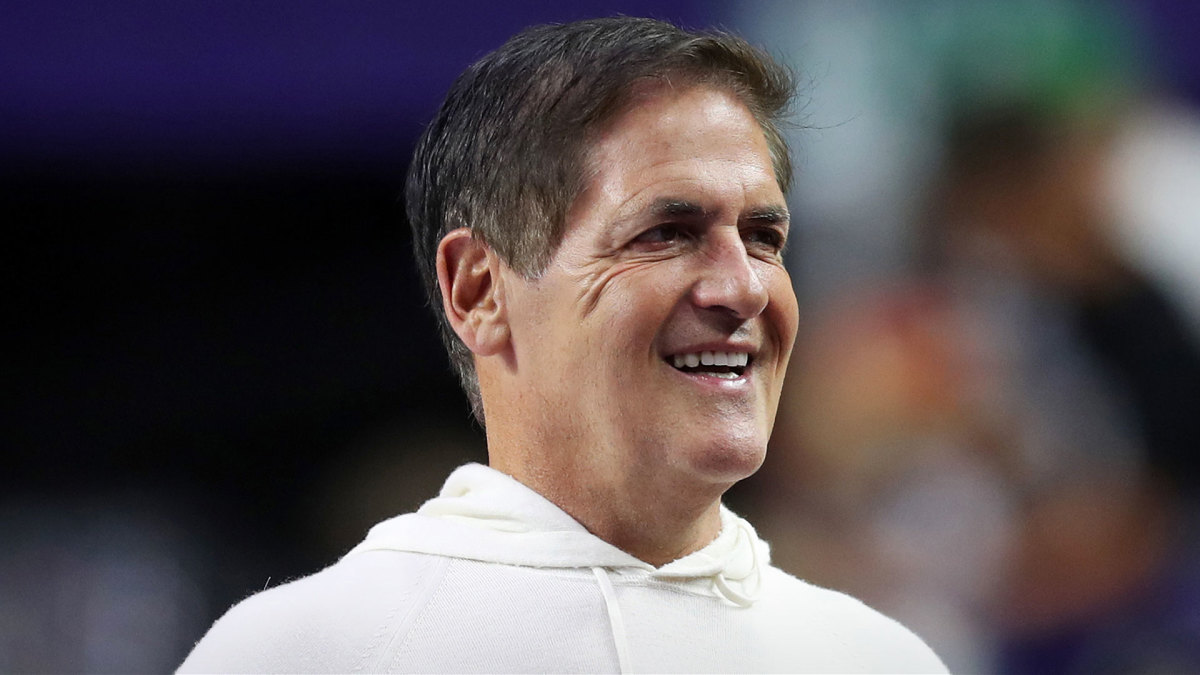
This January, Mark Cuban co-founded CostPlus Drug Company, an online pharmacy. This pharmacy is the only one of his businesses that bears his name. The exact name is Mark Cuban CostPlus Drug Company.
“It’s the only company I have ever put my name on,” the billionaire, 64, told TheStreet last October. “I wanted drug manufacturers, providers, patients to know that I truly care and am committed to making this work.”
CostPlus Drug Company “fills and delivers prescriptions at cost plus a fixed 15{1668a97e7bfe6d80c144078b89af180f360665b4ea188e6054b2f93f7302966b} margin,” the company says on its website.
For example, a 30-count supply of 100mg Imatinib, a drug which treats leukemia and other types of cancer, will cost you $14.40 the firm says on its website. The retail price at other companies is $2,502.60. You save $2,488.20.
For people with type 2 diabetes, one tablet of Metformin, the generic of Fortamet, will cost you $46.20 if purchased from CostPlus Drug. This will save you $518.27, the company claims, because the retail price is $564.47. The medication helps to control high blood sugar.
Cuban is able to provide these prices because there’s no middleperson. CostPlus Drug Company bypasses health-insurers and negotiates directly with drug manufacturers.
“In 2020 alone, Medicare could have spent $3.6 billion less on generic acid-reflux, cancer and other drugs if purchased through Cost Plus Drug Company, a new online pharmacy backed by Mark Cuban,” found a study from Harvard Medical School researchers.
The company’s business model may also be beneficial for health insurers, including Medicare, which spent an estimated $115.6 billion on prescription drugs last year, or nearly a third of the total U.S. drug spending, the study added.
‘Trust Business’
In less than a year, Cost’s success exploded. Comments from consumers and physicians promoting the company on social media abound.
“I am fortunate enough to have excellent insurance but @costplusdrugs has cut my prescription cost by 2/3rds,” hailed a Twitter user on December 21. “My husband’s prescription for his meds dropped to $30 for 90 days versus $100 for a 30 days. We are now saving over $1200 a year. Thank you for this service!”
Another Twitter user was equally thankful: “I just received my first order from costplusdrugs! I are saving me a bundle! My husband just ordered three months of his prescription that was going to cost $49 at Walgreens with his insurance and the same drug from you is $7.50, thank Mark!!!”
“@costplusdrugs just placed my first order. My phosphorus binder that I have to take 9 to 15 pills a day would normally be without insurance almost 1000.00 dollars for 90 days, even with insurance it was going to b near 300.00 with @costplusdrugs. It was 183 shipped to my door,” said another Twitter user.
But how does Cuban explain his success, when others have failed? The Dallas Mavericks owner just gave away the secret in response to a question posed to him by a Twitter user.
“@mcuban what business is @costplusdrugs in?” asked the user on December 21.”@costplusdrugs, We are in the Trust Business,” the billionaire responded. “We buy drugs, we sell drugs. We show our actual cost, margin and fees so you can Trust we are offering the best price we can.”
He added: “Trust & Transparency are in short supply in Healthcare. It’s our unique advantage.”
In October, Cuban told TheStreet that the goal of the company was to be “the low cost provider of every medication we can make available for sale and to be as completely transparent as possible,”
“That will allow us to keep adding customers and continue to grow,” he said.
He also explained that there are “many issues” in the pharmaceutical industry that transparency can solve. And he made a decision to address all these issues which end up ruining consumers.