Aimplas, a plastics technological innovation centre in Spain, has declared its participation in the Threading-CO2 undertaking, an impressive European task that aims to deliver superior-quality polyester textile solutions to the market working with CO2 waste streams. The venture aims to noticeably decrease the carbon footprint of the textile market and boost a round production method running on renewable electrical power sources.
Threading-CO2 is a 1st-of-its-variety technological innovation that produces high-top quality, commercially feasible sustainable PET textile merchandise from CO2 squander streams at an industrial scale, Aimplas reported in a press release.
Spanish plastics know-how centre Aimplas has joined the Threading-CO2 undertaking, an innovative initiative that aims to deliver significant-quality polyester textile products from CO2 waste streams.
The undertaking will appreciably reduce the carbon footprint of the textile business by marketing a round manufacturing approach employing renewable electricity resources.
Aimplas will aim on the preparing of innovative catalysts for the reactions included in the synthesis system, collaborate in the set-up of a pre-industrial pilot for operations in the continuous, substantial sizing reactor of the pilot plant, and goal for a absolutely circular production system by optimising the reuse and recycling of all catalysts, solvents, and additives utilised in the system. Aimplas will also collaborate with Truthful to optimise the preparing methodology in relation to the use of industrial strategies.
The Threading-CO2 consortium has been picked to provide together the abilities and know-how important to realise this very first-in-course technological innovation capable of working with CO2 as a feedstock to make polyester. The partnership is built to have all necessary expertise, complementary experimental facilities, and collaborative networks to hook up with stakeholder groups important to the venture. Leaders in the textile marketplace have also been discovered and concerned in the task to promise merchandise top quality at the remaining stage of the benefit chain.
13 associates from seven EU nations, like Fairbrics, College of Antwerp, Tecnalia, Lut College, CiaoTech, Deutsche Institute fur Textil- und Faserforschung denkendorf, City of Lappeenranta, Digiotouch, Faurecia, Naldeo, SurePure, Les Tissages de Charlieu, and Aimplas, are involved in this task.
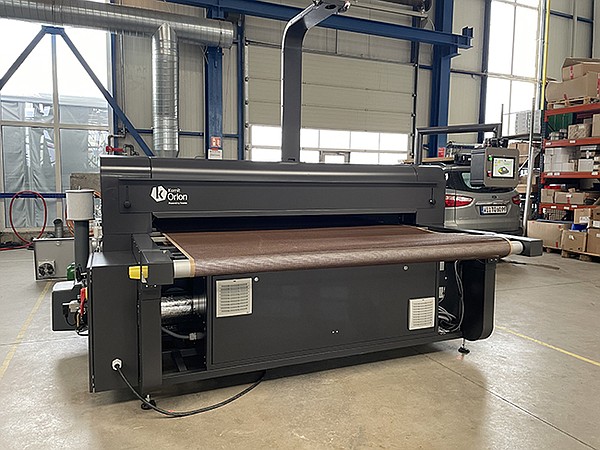
At the TecTStyles Visions demonstrate, Kornit debuted its Smart Curing and Fast SizeShifter solutions with state-of-the-art “smart manufacturing” abilities.
Christian Chensvold, Affiliate Editor |
Friday, April 14, 2023
In a earth of mutual dependencies, the only way to effectively navigate adjust is with much more modify. A quick-shifting marketplace demands new systems that can continue to keep up with it, and the sector time period for this is “solutions.”
Kornit Electronic is a world-wide chief in offering just all those and a short while ago demonstrated its innovation the moment once again on March 30 at the TecStyle Visions demonstrate held in Messe Stuttgart, Germany. There Kornit debuted its Smart Curing and Rapid SizeShifter remedies, which had been developed to support buyers accelerate textile-manufacturing procedures, streamline time-to-market and mature small business more rapidly with state-of-the-artwork “smart manufacturing” abilities.
The California Apparel News caught up with Chris Govier, president of EMEA at Kornit Digital, to find out in which he sees the attire marketplace likely and how tech methods can enable models keep on prime of a rapid-changing market
CAN: How are your most current products enhancements on past remedies?
CG: These are sizeable introductions for both Kornit and the vogue and textile business as a complete as they directly address accelerated demand for automation and good manufacturing. With Wise Curing, providers profit from a one, electricity-effective manufacturing and curing program to mitigate squander and decrease running charges when the Rapid SizeShifter even more developments ease-of-use and productivity by allowing for for print-sizing changeovers in seconds. They are the two an extension of a ongoing force towards aiding companies streamline their time-to-market and better foresee consumer need.
CAN: How do providers know when they require this kind of solutions?
CG: Style and textile production is at a sizeable crossroads. As just one of the world’s worst polluting industries, companies are struggling to lower waste and fees although addressing supply-chain constraints that make it extra difficult to fulfill client desire with both of those the pace and the accountable and transparent enterprise techniques that individuals assume. More and more, providers are realizing that on-need electronic generation is a strong different to legacy procedures and holds the critical to eventually enabling the change to a wise production model.
CAN: How do you rate the added benefits in purchase of value?
CG: At the top rated of the listing is the capability to streamline and automate generally intricate supply chains. Businesses wrestle to meet buyer demand from customers mostly because their generation processes are as well sluggish and absence the agility to solution a market significantly described by serious-time disruptions. On-desire digital output appreciably addresses these legacy troubles via integration and automation, empowering producers to capture and capitalize on inputs without the need of hold off. Concentrating on overproduction and squander are also essential benefits as the answers are especially intended to help prospects generate only what’s necessary and only when they will need it, considerably shrinking pricey production processes and lowering electricity waste.
CAN: How would you characterize the industry’s temper for “smart manufacturing”? How significantly is excitement and how substantially is problem?
CG: Demand for good production is at an all-time higher. Common generation processes just weren’t intended to meet the requirements of today’s web-connected buyer. They want immediacy and authentic-time achievement. On the other aspect, designers are hunting for unrestricted creative imagination and design and style freedom to fulfill these buyer demands minus the constraints on sampling, bare minimum quantities, production lag and startup costs that have acted as longtime limitations. Intelligent manufacturing is the bridge that provides these worlds collectively and is transforming the industry in strategies hardly ever assumed doable.
CAN: Why did you opt for TecStyle for this debut?
CG: TecStyle Visions is a excellent platform as it makes it possible for us to talk instantly to those in the textile-printing, decoration and promotion market. Thought leaders throughout Europe depend on this celebration to study how to best adapt to rapidly altering current market ailments and grow their business. And it all transpires as a guide-in to ITMA, by much Europe’s major platform for the textile market. Both of those are the fantastic phase to make these major bulletins.
CAN: Any final remarks on the vital developments driving the clothing field suitable now?
CG: The fashion and textile business has eventually arrived at a important inflection level. Demand for automation, integration, pace and limitless creativeness is promptly accelerating, and this will only expand as time goes on. Today’s buyers are no for a longer time keen to just take a hold out-and-see approach to trend and clothing manufacturing and do not have the patience to wait 6 or 9 months to see what is new. Fueled by Era Z, style is lastly embracing the immediacy of the second, enabling shoppers to satisfy requires on desire, generally with a new and thrilling reimagining of that encounter by way of improvements these kinds of as digital-reality, metaverse and Internet of Matters applications. Progressively the marketplace will want to move at the velocity of society, and on-demand, digital output will help both equally new and aged-university brands satisfy these calls for.
Textile Cleaning soap Market has a short while ago been included by MarketQuest.biz to its in depth database, the place you will uncover useful data on the market along with various marketplace things these kinds of as current market dimensions, up to date trends, field expense structure, and distribution channels. The report has been aggregated by statistical market place exploration and market place assessments on a world and regional scale. The report is made up of the complete most new indispensable data circling about the world. The study retains eye on the consumer necessities and supplies them with the professional and inside and out investigation of the international Textile Cleaning soap sector.
The report offers facts on the association profile, enterprise fundamentals, and programs, problems driving the perform of the marketplace, and inspiration obstructing the functionality. The world-wide Textile Cleaning soap current market is segmented on the foundation of merchandise sort, conclude-consumer, and regions. It also tracks the effect of a variety of factors and constraints on the advancement chances of the global Textile Cleaning soap sector above the forecast time period from 2023 to 2029. All components that support business people distinguish the market segment for advancement are introduced by belongings, for illustration, outlines, tables, and graphic photos.
The report has enlisted the key players in the regions and their respective market place share on the basis of world-wide income. Their strategic moves in the past number of a long time, investments in product innovation are also pointed out in this report. The report estimates profits forecast and then proceeds with product sales, revenue expansion fee, and revenue progress rate forecasts of the world Textile Soap current market. The forecasts are also presented using into thought solution, application, and regional segments of the world wide marketplace.
Some of the big throughout the world Textile Soap current market players are:
Ningbo Huake Textile Auxiliary Co., Ltd.
Kekai Good Chemicals (Shanghai) Co., Ltd.
Shanghai Wangjie Investing Co., Ltd.
Dongguan Hengye Auxiliary Co., Ltd.
Important product or service varieties covered are:
Anion
Cation
Zwitterion
Nonionic
Significant applications coated are:
Textile Market
Garment Field
Printing and Dyeing Market
Some of The Capabilities of Market Report: Trends, Forecast, and Possibility Evaluation Incorporate:
Market measurement estimates: World-wide Textile Soap industry dimensions estimation in conditions of value
Pattern and forecast evaluation: Market craze and forecast by conclude-use business.
Segmentationinvestigation: Current market dimension by numerous segments these kinds of as by solution sort, programs, end-use sector, key players, and location.
Regional investigation: Market place breakdown by different areas
Advancement options: Evaluation of expansion chances in different purposes and locations in the marketplace.
Geographically, the Textile Cleaning soap market place has been researched in several locations these as:
North The usa (United States, Canada and Mexico)
Europe (Germany, France, United Kingdom, Russia, Italy, and Rest of Europe)
Asia-Pacific (China, Japan, Korea, India, Southeast Asia, and Australia)
South America (Brazil, Argentina, Colombia, and Rest of South The us)
Center East & Africa (Saudi Arabia, UAE, Egypt, South Africa, and Relaxation of Center East & Africa)
In addition, a variety of trustworthy methods like journals, mergers, and once-a-year reviews of the corporations have been referred for obtaining the data and facts similar to the around the world Textile Soap field. The report provides the existing as nicely as the long term industry outlook of the field relating to latest developments, development possibilities, drivers, worries, and restraints of the two emerging also as made areas. It also comprises hugely categorized info about the geographical overview and state-oriented advancement milestones across the world to tutorial descriptive expense decisions. The report delivers a total forecast of the current market by solution, software, and region. It also provides world-wide sales and revenue forecasts for all decades of the forecast period.
Customization of the Report:
This report can be tailored to satisfy the client’s requirements. Remember to connect with our revenue team ([email protected]), who will assure that you get a report that suits your wants. You can also get in contact with our executives on +1-201-465-4211 to share your investigation needs.
Contact Us Mark Stone Head of Business Advancement Phone: +1-201-465-4211 Electronic mail:[email protected] Web:www.marketquest.biz
Wilmington, Delaware, United States, April 10, 2023 (Globe NEWSWIRE) — Transparency Market place Investigate Inc. – The global pure fiber sector was valued at US$ 4.8 Bn in 2022 and is probable to achieve US$ 9.2 Bn by 2031, increasing at a CAGR of 7.5{1668a97e7bfe6d80c144078b89af180f360665b4ea188e6054b2f93f7302966b} in the course of the forecast interval between 2023 and 2031.
Enlargement of end-use sectors, this sort of as health-related, electronics, textiles, agriculture, and packaging, is expected to improve demand from customers for natural fibers. Rise in demand for eco-helpful, sustainable, and natural merchandise and surge in utilization of lightweight products in the automotive business are predicted to push sector progress.
Request for a Sample PDF Report with Most recent Market Insights: https://www.transparencymarketresearch.com/sample/sample.php?flag=S&rep_id=31880
When compared to synthetic fibers, purely natural fibers have a lesser environmental impact and are renewable and biodegradable. Need for pure fibers these as jute, cotton, wool, silk, and hemp, is consistently expanding as moral and responsible consumption is on the increase. Technological developments and shifting shopper preferences are predicted to drive sector progress. Leading providers are concentrating on enhancing the sustainability and affordability of natural fiber producing to develop market share.
Natural fiber is a sustainable product that is usually used in textiles and a number of other industries. It is generally used in material and yarn types in the textile field. In addition, normal fiber is made use of in the production of single or composite constructions, boards, and cars and trucks. Given their affordability, ease of processing, low density, and robust bodily and mechanical features, pure fibers offer you far more sustainable choices. Organic fibers are non-carcinogenic and biodegradable. This, paired with their charge-success, is possible to boost the use of natural fibers. There are two major categories of natural fibers: animal-based and plant-primarily based.
Crucial Findings of Market Report
The plant-based fiber section is expected to increase drastically between 2023 and 2031. Increase in consumer need for sustainable and environmentally-pleasant products and solutions as perfectly as increasing expertise about the harmful effects of animal and synthetic fibers on the atmosphere are probable to fuel demand for all-natural fiber. What’s more, the desire for plant-based mostly fibers is predicted to grow as new approaches for processing and manufacturing them are designed.
Obtain this Premium Study Report: https://www.transparencymarketresearch.com/checkout.php?rep_id=31880<ype=S
Global Organic Fiber Market: Advancement Motorists
Need for normal fibers is predicted to maximize in between 2023 and 2031, as customers turn into extra environmentally acutely aware and look for sustainable products. Organic fibers are generated by purely natural means as a end result, these have minimum environmental consequences. Nevertheless, certain fertilizers, herbicides, and other dangerous substances are utilized in order to increase production of these fibers. This could be harmful to the surroundings. All-natural fibers this kind of as linen, silk, wool, and cotton are made use of to make garments and other materials in the textile organization. In the textile sector, cotton is the most extensively applied normal fiber. Use of organic and natural cotton, which is manufactured without the need of the use of synthetic fertilizers or pesticides, is escalating across the planet. Similarly, usage of silk and wool derived from sustainably managed animals is constantly expanding.
The automotive sector is one particular of the largest shoppers of all-natural fibers, in which these are utilized in both equally exterior and interior parts of cars, including seat coverings, dashboard trims, and door panels. Thanks to biodegradability and recyclable homes, all-natural fibers, such as hemp, kenaf, sisal, and flax, are often used in the manufacturing of car or truck elements.
World wide All-natural Fiber Sector: Regional Landscape
The market in Asia Pacific accounted for substantial share of the world industry in 2022, according to the hottest industry report. The region is anticipated to dominate the international pure fiber market in the in the vicinity of foreseeable future. The normal fiber industry in Asia Pacific is anticipated to be pushed by expansion of the health care and textile sector.
World Purely natural Fiber Market: Key Gamers
Some of the important gamers in the world wide natural fiber sector are as follows
China Bambro Textile (Group) Co., Ltd.
Jaydeep Cotton Fibers Pvt. Ltd.
The Flax Corporation SARL
Industrial Hemp Production, LLC
Castellins NV
Get Customization on this Report for Distinct Analysis Solutions: https://www.transparencymarketresearch.com/sample/sample.php?flag=CR&rep_id=31880
Global Pure Fiber Industry: Segmentation
Variety
Plant-based mostly Fiber
Animal-centered Fiber
Conclude-use
Packaging
Automotive
Agriculture
Electrical & Electronics
Textile
Clinical
Some others
Regions
North The united states
Europe
Asia Pacific
Middle East & Africa
Latin America
About Transparency Market Investigation
Transparency Current market Investigate, a world wide sector study company registered at Wilmington, Delaware, United States, provides tailor made research and consulting companies. Our exceptional mix of quantitative forecasting and traits investigation offers ahead-seeking insights for 1000’s of choice makers. Our professional group of Analysts, Scientists, and Consultants use proprietary facts sources and many instruments & methods to gather and analyses details.
Our facts repository is repeatedly current and revised by a group of investigate industry experts, so that it normally demonstrates the latest developments and facts. With a broad investigation and assessment capacity, Transparency Industry Exploration employs arduous primary and secondary exploration techniques in establishing exclusive info sets and research product for business enterprise reports.
Call:
Nikhil Sawlani Transparency Sector Study Inc. Corporate HEADQUARTER DOWNTOWN, 1000 N. West Avenue, Suite 1200, Wilmington, Delaware 19801 Usa Tel: +1-518-618-1030 United states of america – Canada Toll Free of charge: 866-552-3453 Web page: https://www.transparencymarketresearch.com Site: https://tmrblog.com E-mail: sales@transparencymarketresearch.com
Stephens Expense Administration Team has been in the information for its hottest acquisition of Kornit Digital Ltd. The organization grew its holdings by a whopping 10{1668a97e7bfe6d80c144078b89af180f360665b4ea188e6054b2f93f7302966b} in the fourth quarter, having its total shares to above 1 million. This acquisition, valued at $24.3 million, took place in the course of unsure financial situations when the planet was grappling with the COVID-19 pandemic.
Kornit Electronic is an industrial goods enterprise that is focused on revolutionizing the textile printing industry. Its merchandise enable consumers to print large-excellent visuals on to materials at a lower value, which can be done in just minutes. Such technological know-how has been effective not only for textile corporations but also for smaller company owners who are looking for cost-effective strategies to grow their branding.
Intriguingly, the company’s value has been growing because December 2020 regardless of a dip in Q4 earning which lifted alarm bells amongst some stakeholders. At current, Kornit Electronic shares are investing at $17.65 producing it an eye-catching buy for prolonged-term traders and hedge cash like Stephens IM Team.
Aside from KRNT’s technological improvements, it has revealed a potent commitment to sustainability endeavours, as the textile field proceeds to grapple with environmental issues prompted by harmful chemical compounds made use of in fabric output.
In conclusion, Stephens Financial commitment Management Group’s recent financial commitment in Kornit Digital underscores their optimistic check out of this hi-tech and environmentally friendly products firm as a ideal extended-time period progress inventory candidate. It stays to be noticed how KRNT will accomplish supplied existing market place problems but a single cannot dismiss that there may be extra optimistic surprises nevertheless to occur from this up-and-coming Israeli-primarily based electronic textile printing innovator Keep tuned!
Trader Assurance in Kornit Digital Ltd Irrespective of COVID-19 Setbacks
Kornit Digital Ltd. is a main industrial and commercial printing resolution provider for the textile, clothing, and garment industries. The corporation provides printing options for components, curtains, couches, paradigm shirt, sportswear, beachwear, textiles, and polyester. The company’s income has been affected in the past couple months owing to a drop in need from its important marketplaces amidst the COVID-19 pandemic.
Inspite of this setback, Kornit Electronic has captivated significant desire from institutional investors with a number of hedge money earning improvements to their positions in KRNT. Janney Montgomery Scott LLC not too long ago obtained a new stake in Kornit Electronic during Q3 2022 well worth $235k. Equally, Moody Countrywide Lender Belief Division lifted its holdings in KRNT by 56.5{1668a97e7bfe6d80c144078b89af180f360665b4ea188e6054b2f93f7302966b} in the course of the 3rd quarter with shares worth $818k after getting an additional 11,100 shares throughout that period of time.
Additionally, BNP Paribas Arbitrage SA noticed an increase of 4,219.4{1668a97e7bfe6d80c144078b89af180f360665b4ea188e6054b2f93f7302966b} in holdings of Kornit Digital during Q2 2022 with shares now valued at $1.05m following attaining an more 32,616 shares in the past quarter indicating hedging bets on this stock.
Various sector analysts have weighed-in on KRNT stocks from important brokerages these kinds of as Citigroup and Barclays who revised their price targets lessening them from $42 to $30 respectively even though Needham & Organization LLC gave a rating of ‘buy’ but decreased their selling price focus on from $40 to $35.
Irrespective of resurgent problems facing lots of businesses these days due to COVID-19 impacts on industries like retail suppliers where KRNT’s solutions are sold Kornit digital stays targeted on doing work through these challenges to arise more robust post-pandemic with progressive products types that will present long-time period profitability.
In summary, even while the existing fiscal performance of Kornit Digital Ltd is going through substantial tension due to COVID-19 uncertainty and the ensuing market place behaviours, there is clear investor assurance in KRNT. It is poised to temperature the storm in its market by offering modern solution layouts that will draw in consumers following the pandemic subsides.
The Portuguese textile industry is currently undergoing a transformation in order to recover from the pandemic and solidify its position as Europe’s leading partner for local textile production. While the industry’s high-volume production and competitive pricing have been critical to its success in recent years, Portugal aims to set itself apart from neighbouring regions such as Morocco or Turkey by focusing on producing high-quality products. To achieve this, Portugal is leveraging its well-established and highly skilled manufacturing industry to create products that adhere to the most stringent sustainability criteria.
ATP / The Green Way
“Nowadays, we are working with different types of brands than in the past. Our role has evolved. The brands and designers that now produce their products in Portugal are less fixated on price and are instead looking for sustainability,” said Ana Paula Dinis, executive director of the ATP (Associação Têxtil e Vestuário de Portugal). “We no longer offer solutions to brands that are only looking for low prices. This means that we have suffered in terms of volume of orders but have improved in terms of the quality of our products and clients,” she added.
According to the representative of the Portuguese textile association, customer diversification is crucial for the industry’s continued success. Factories have gone from working mainly with large companies or textile giants to working with emerging brands and designers who demand smaller quantities but that are in search of high-quality textiles and designs. This has led to higher purchase prices, meaning that total turnover has not been significantly affected. In addition, factories have become more independent as they are less subject to large orders.
A key industry for a relatively small market
Today, the Portuguese textile and clothing industry represents 9{1668a97e7bfe6d80c144078b89af180f360665b4ea188e6054b2f93f7302966b} of national exports (3{1668a97e7bfe6d80c144078b89af180f360665b4ea188e6054b2f93f7302966b} of EU textile and clothing exports) and accounts for 8{1668a97e7bfe6d80c144078b89af180f360665b4ea188e6054b2f93f7302966b} of turnover and 8{1668a97e7bfe6d80c144078b89af180f360665b4ea188e6054b2f93f7302966b} of production of the Portuguese manufacturing industry. Additionally, the sector employs up to 19{1668a97e7bfe6d80c144078b89af180f360665b4ea188e6054b2f93f7302966b} (128,600 people) of the manufacturing industry’s workforce.
In 2022, the sector’s overall export revenue reached 6.122 billion euros (914 million euros from home textiles, 1.660 billion euros from other textiles and 3.548 billion euros from clothing). This total figure represents a 13{1668a97e7bfe6d80c144078b89af180f360665b4ea188e6054b2f93f7302966b} increase from 2021, when the industry recorded 5.413 billion euros in export revenue, and a 17{1668a97e7bfe6d80c144078b89af180f360665b4ea188e6054b2f93f7302966b} increase from 2019, when the figure stood at 5.215 billion euros.
The Portuguese textile industry accounts for 19{1668a97e7bfe6d80c144078b89af180f360665b4ea188e6054b2f93f7302966b} of manufacturing jobs in the country – ATP
Imports, on the other hand, grew by 26{1668a97e7bfe6d80c144078b89af180f360665b4ea188e6054b2f93f7302966b} in 2022 to 5.426 billion euros. Spain is Portugal’s main textile importing country, accounting for 34{1668a97e7bfe6d80c144078b89af180f360665b4ea188e6054b2f93f7302966b} of imports, followed by Italy (11{1668a97e7bfe6d80c144078b89af180f360665b4ea188e6054b2f93f7302966b}), China (9{1668a97e7bfe6d80c144078b89af180f360665b4ea188e6054b2f93f7302966b}), Germany (7{1668a97e7bfe6d80c144078b89af180f360665b4ea188e6054b2f93f7302966b}), India (6{1668a97e7bfe6d80c144078b89af180f360665b4ea188e6054b2f93f7302966b}) and France (6{1668a97e7bfe6d80c144078b89af180f360665b4ea188e6054b2f93f7302966b}).
The Portuguese textile industry’s main customers: Spain, France, Germany and the US
Thing have also changed in Spain, a country that has long depended on Portuguese production. Although to this day the market remains Portugal’s main customer for textiles, representing 23{1668a97e7bfe6d80c144078b89af180f360665b4ea188e6054b2f93f7302966b} of exports and a turnover of 1.424 billion euros in 2022, its market share has declined over the last few years. In 2019, Spanish purchases amounted to 1.598 billion euros, which means that imports from Spain have contracted by 11{1668a97e7bfe6d80c144078b89af180f360665b4ea188e6054b2f93f7302966b} between then and the end of the 2022 financial year.
“In the past, Spain accounted for almost 40{1668a97e7bfe6d80c144078b89af180f360665b4ea188e6054b2f93f7302966b} of our foreign production, but now we are very far from these percentages. The big Spanish brands will continue to manufacture in Morocco and Turkey so we don’t foresee huge growth in this country. It’s a country that depends more on clothing than on home textiles,” said Dinis.
Due to its proximity and production needs, the Galician giant Inditex has traditionally been one of the Portuguese textile industry’s most important Spanish clients.
France is the second largest customer for Portuguese textiles, with a market share of 15{1668a97e7bfe6d80c144078b89af180f360665b4ea188e6054b2f93f7302966b}. According to ATP’s latest data, imports from the French region increased by 40{1668a97e7bfe6d80c144078b89af180f360665b4ea188e6054b2f93f7302966b} between 2019 and 2022, reaching 942 million euros. The German market accounts for 9{1668a97e7bfe6d80c144078b89af180f360665b4ea188e6054b2f93f7302966b} of Portuguese textile exports, with a turnover of 539 million euros in 2022. Along with France, the markets that have grown the most in the last two years have been the American market ( up 40{1668a97e7bfe6d80c144078b89af180f360665b4ea188e6054b2f93f7302966b} to 477 million euros in imports in 2022) and the Italian market ( up 39{1668a97e7bfe6d80c144078b89af180f360665b4ea188e6054b2f93f7302966b} to 452 million euros in turnover in 2022).
EU countries represent 73{1668a97e7bfe6d80c144078b89af180f360665b4ea188e6054b2f93f7302966b} of Portuguese textile exports, with 4.488 billion euros in revenue, while non-EU countries account for 27{1668a97e7bfe6d80c144078b89af180f360665b4ea188e6054b2f93f7302966b} of the total at 1.633 billion euros.
Price increases and future outlook
“Between 2009 and 2019, all economic indicators were growing and the textile industry was performing very well until the pandemic. We did not start to recover until 2021 and, in 2022, the first few months were very positive. The second half of the year was greatly affected by rising gas and energy prices,” recalled Dinis. “The worst months are over and we are going to do better,” she added optimistically.
Textile printing process – ATP / The Green Way
“The impact of inflation and the increasing value of the products we offer have resulted in a consequent increase in prices,” said the ATP representative, noting that although export turnover for 2022 grew by 13{1668a97e7bfe6d80c144078b89af180f360665b4ea188e6054b2f93f7302966b}, the volume of exports contracted by 1{1668a97e7bfe6d80c144078b89af180f360665b4ea188e6054b2f93f7302966b} to 524,000 tonnes of textiles. “As exports represent a large part of our production and we are a small market, we are always significantly affected by disturbances in Europe and the United States,” she explained about the current uncertain social, political and economic circumstances of the last few months.
Regarding other countries with strong textile manufacturing industries, such as Turkey, the manager assured that she does not anticipate direct competition: “In Portugal, we are preparing ourselves to offer a diverse range of production under different conditions. This is one of our most competitive advantages and it opens doors to many clients”.
According to Mario Jorge Machado, president of the ATP, sustainability is a top priority for the Portuguese textile industry.
“Portugal is one of the leaders in this transformation. As one of the main players in Europe, with an indisputable relevance in terms of industrial development and production, the Portuguese textile sector has adopted new processes, techniques and technologies, and has invested in new machinery so that the entire ‘made in Portugal’ manufacturing process can be more sustainable and serve as an example to the rest of the world”.
The ATP’s 500 or so members are involved in various projects focused mainly on saving water, using renewable energies, improving traceability, and enhancing dyeing, printing, finishing and recycling processes.
Last edition of Modtissimo – FNW
Modtissimo: the gateway to the Portuguese textile industry
The Modtissimo trade show, the oldest professional event on the Iberian Peninsula, took place on February 15 and 16 at the Exponor venue in Matosinhos (Porto) and broke attendance records, attracting 5163 visitors to its 60+1 edition. The event featured around 150 textile exhibitors, over 60 manufacturing and ready-to-wear specialists, and around 30 representatives from companies such as Lectra and Messe Frankfurt. While Portuguese companies such as Riopele Texteis, A. Sampaio, and Malhas Madalena Beça were among the standout exhibitors, the fair also had a notable number of Turkish exhibitors.
The event’s last edition attracted 504 international buyers, with a significant number coming from Germany, the Netherlands, Spain, and Austria, indicating the industry’s growing presence in foreign markets. Manuel Serrão, general director of Associação Selectiva Moda and the organizer of the fair, expressed satisfaction with the outcome of the post-pandemic edition. Serrão highlighted the quality of the contacts made and the positive feedback on the fair’s commitment to internationalisation, which he believes is crucial to the industry’s development.
The next edition of the event will take place again at the Exponor exhibition centre in Porto on September 13 and 14.