Cavco Industries Inc. (NASDAQ: CVCO) is a major firm with fantastic keep track of file of profits and earnings growth. The corporation has reached organic expansion as a result of improving current operational performance and pursued strategic investments and acquisitions to expand their producing and retail presence. CVCO gross gain margin has been steadily raising above the many years and has a very good income stability to assist the enterprise long run acquisition ideas and share repurchases.
The management has been investing in the electronic platform, which can increase customers’ shopping experience and educating likely homebuyers on the value of made residences.
A blend of elements driving the recognition of created households – financial, social, demographic things, the appealing factors of a produced house, and the potentials in the untapped market place, this field is in a favorable placement and has advancement potentials.
With a sturdy management group and the extensive-expression development prospect, the enterprise is worth monitoring and to enter at a favourable value for the very long-term keep.
Corporation Overview
CVCO is a North American business that styles and manufactures manufacturing facility-created housing products and solutions, which includes made households, modular residences and park product RVs. It retails underneath numerous model names, together with Cavco Residences, Fleetwood Residences, and Palm Harbor Properties The corporation operates across the U.S., and has a powerful presence in the southwestern location.
In the most up-to-date FY2023 Q3 earnings get in touch with (Cavco Industries, Inc. Q3 2023 Earnings Call Transcript), EPS is $6.66, surpassing estimates by $.99. The enterprise has shipped earning surprises for the earlier 11 quarters.
CVCO’s solid functionality in modern yrs is because of to the powerful need for new properties in the U.S., pushed by scarcity of existing homes for sale and the have to have for affordable housing. Moreover, an growing older populace, 1st-time homebuyers, and low-revenue homes have also contributed to the greater demand.
The corporation has attained natural and organic expansion by way of bettering operational performance to boost profitability and ability utilization at their present amenities, expanded product or service offerings and successful gross sales methods. Around the yrs, they have also pursued strategic money allocation for acquisitions to expand their manufacturing existence with wonderful achievements. Acquisition will go on to be a progress method for the firm.
CVCO competes with other providers in the made and modular residence industry, including Skyline Winner (SKY), Legacy Housing Company (LEGH) and Clayton Houses (a subsidiary of Berkshire Hathaway).
As the housing field continues to evolve and reasonably priced housing will become essential, CVCO is founded and properly-positioned to cater to the switching requirements. I will elaborate down below on how CVCO can benefit and improve in the upcoming.
1. Modular housing is attaining popularity due to the fact of financial, social, and demographic components.
Modular housing has getting to be more well-known in the latest a long time due to its possible positive aspects more than traditional construction approaches, these kinds of as the velocity of building, affordability, and the ability to customise design. It is also pushed by a mixture of economic, social, and demographic variables, like an growing earnings inequality, an growing old populace and rapid urbanization.
One particular of the greatest rewards is the price efficiency. The expense for each square foot of made and modular residences is all over 10 to 20 p.c decrease than that of traditional web site-crafted properties (How A lot Are Modular Dwelling Costs?), therefore a excellent option for people in the facial area of the housing affordability hole.
During the FY2023 Q3 presentation, the management team reviewed the beneficial outcomes of their digital advertising and marketing initiatives. They highlighted how potential homebuyers can entry and discover a vast array of floor strategies – consisting of 1,500 made, modular, and park product choices – as properly as 2,700 inventory models underneath their flagship makes. This extensive assortment provides an prospect to educate homebuyers on the added benefits and eye-catching capabilities of made households.
Given the present economic circumstances, the interesting elements of a produced property, and the potentials in the untapped market place, the manufactured home market is in a favorable position and has the capacity to extend its reach to a larger audience.
2. Higher home finance loan curiosity rate may well evoke more calls for on reasonably priced housing.
Home loan desire level is 1 of the biggest factors for the homebuyers. Due to the perceived dangers related with modular construction and the limited resale market, modular residences usually obtaining slightly higher curiosity costs than the traditional homes. In excess of the several years, the interest charge spread in between the two has generally been stable.
Among 2022 and early 2023, the property finance loan rate has climbed tremendously, largely attributed to Fed’s charge hike to enable battle inflation. With the rate hikes, inflation is starting off to cool and many economic indicators remaining sturdy. Though the Fed may well start to simplicity some of the stress, and that there is a chance that home loan premiums may well reasonable, it is not likely that they will return to the low amounts seen through the pandemic. The better mortgage rate, in standard, might invoke extra needs on these value-economical modular housing.
Reiterating from the over, the manufactured and modular households can price about 10 to 20 per cent decrease than that of standard site-built houses. The management has also shared that they are supplying homebuyers the capability to access a wide selection of flooring ideas to choose what suits them ideal. This initiative can probably ease some of the value pressures related with buying a house and help homebuyers accomplish a much more manageable payment prepare for their desired household.
3. Powerful margins and financials make CVCO much better positioned to invest in advancement chances and value creation.
CVCO’s gross earnings margin has been progressively rising more than time, and this has been attributed, in section, to the efficient operational administration of the corporation. The crops have been ready to retain a large degree of efficiency, contributing to the in general advancement in the company’s profitability. The production volumes have been down in markets exactly where needs softened or retailer inventory de-stocking, which is offset by the improve in the average selling price per U.S. dwelling.
CVCO’s cash harmony is at $376 million, with $2 million in equally limited- and prolonged-time period personal debt. Money is largely built from their functions, with the CFO (TTM) at $248 million.
Nevertheless the enterprise does not fork out any dividend, CVCO does have a good cash balance and dollars generation potentials to make value for shareholders by means of strategic investments and share repurchase program.
Valuation and feeling
My valuation for CVCO inventory is centered on CVCO’s money statement and earning forecast, and the facts is pushed by Searching for Alpha details. (Cavco Industries, Inc. Earnings Estimates)
Author’s monetary model
In today’s recent economic disorders and the will need for reasonably priced housing resolution, the made home market is in a favorable posture and has the prospective to reach to a larger sized audience. CVCO has been in the organization for just about 60 yrs and has expanded both organically and through strategic acquisition. Coupled with its spectacular financials standing and growth prospect, the firm is worth checking and to enter at a favourable rate for the extensive-time period hold.
Editor’s Note: This is the second report in a four-part series about Connecticut’s aging population and the challenges in finding ways to care for people.
This week: Nursing homes face a reckoning as they deal with fewer residents, a change in pay and plans to ‘right-size’ the industry.
Last week: The country’s aging population is expected to more than double. Connecticut’s network of supports is struggling.
Upcoming: As more people choose home and community options over institutional care, will access to services be equal for all?
Upcoming: More people are aging in place. But the state’s home care industry operates with little oversight.
For many Connecticut nursing homes, the next few years will be about survival.
Along with unprecedented staffing shortages and less-than-ideal occupancy rates, nursing home operators are also facing a state Department of Social Services that is intent on “right-sizing” the industry by directing money away from nursing homes and toward home care programs.
And state legislators, some of whom heard terrifying stories about substandard care in facilities, have proposed laws that would open nursing homes’ books to more scrutiny and increase the mandatory number of hours residents have with their caretakers.
When nursing home operators recently asked the state for $193 million more to meet their mission, they were rebuffed, and lawmakers instead raised questions about how several infusions of money during the pandemic were spent.
About 20,000 people live in Connecticut’s approximately 200 nursing homes. And as the state’s population of older adults continues to grow and show increased interest in home-based care, changes in the nursing home industry appear inevitable.
“This is a time of transition in the nursing home industry, not only because of the pandemic but also the changes in attitudes about nursing homes,” said Deidre Gifford, the state’s former social services commissioner, now head of the Office of Health Strategy. “Somebody who may have a decade or so ago, or even just before the pandemic, been admitted to a nursing home is now figuring out how to remain in place at home.”
“Every year, the state of Connecticut spends $1.12 billion on our state’s nursing homes when we look at the whole Medicaid program,” said Sen. Matthew Lesser, co-chairman of the Human Services Committee. “It is important with that funding, which pays for 70{1668a97e7bfe6d80c144078b89af180f360665b4ea188e6054b2f93f7302966b} of the nursing home residents who are receiving care in the state, that we have certain things. One is transparency, where we know where that money is going; two, that we have adequate staffing; and then three, that we are taking care of our most vulnerable.”
Lawmakers have rolled out a series of sweeping bills this year with the aim of improving care in nursing homes. The proposals would raise the mandatory minimum staffing hours in nursing homes, require more transparency in the way facility operators spend taxpayer money, mandate that owners provide air conditioning in resident rooms and prompt broader disclosures about private equity investment in long-term care, among other changes.
Industry leaders have cautioned against cutting funding from nursing homes as they emerge from the pandemic.
“We have been urging the DSS and state policymakers that they must take a very careful and cautious approach about prematurely and aggressively accelerating their rebalancing objectives,” said Matthew Barrett, the president and CEO of the Connecticut Association of Health Care Facilities.
“We think being too aggressive is dangerous, and it could lead to issues of impeding access to high-quality skilled nursing facility care. If too many homes close, beds come out of the system, and the consequences of that will be harmful to the very population that we want to be sure are cared for,” Barrett said.
He said the state needs to view the system as a whole and not fund one form of care over another.
“We need both, and that’s why we say Connecticut shouldn’t just throw one ball in the air to aggressively enhance and improve the infrastructure of home and community-based services,” Barrett said. “We also have to keep the other ball in the air too by still investing and ensuring that we have a strong supply of high quality skilled nursing facility care.”
Legislators’ focus on nursing homes also comes in the wake of revelations that Athena Health Care Systems, one of Connecticut’s largest long-term care providers, failed to pay temporary employment agencies and health insurance premiums for its staff and faces lawsuits, consent orders and a $1.75 million fine.
“I believe we are in crisis not just in my district, not just in Connecticut, but across the nation,” said Rep. Jane Garibay, co-chair of the legislature’s Aging Committee.
Problems with care in nursing homes have been going on for years, she said. “This is not new, and it’s not just because of COVID. COVID shined a light on what is happening, but it is our responsibility to change it.”
Inside the nursing homes: More empty beds, fewer workers
Bill White’s family owned the Beechwood Post-Acute & Transitional Care Center in New London for 32 years — until last summer, when White sold it.
“I have a five-star nursing home with an outstanding reputation that still hasn’t had a single COVID death. It’s family owned, and I still couldn’t hire anybody,” White said last summer. “[I] had to pay people $300 more a shift just to fill them.”
“If I can’t get people, I’m thinking, ‘Holy crap, what are others doing?’” he said.
White said the timing was right to get out of the industry, and he suspects others will be following suit.
“What I’m seeing since the pandemic is overall occupancy has dropped, it’s probably in the low 80 [percent range] now,” he said in an interview on his last day as a nursing home owner.
They’re lucky they get up for lunch.
John Bilsano, Apple Rehab Shelton Lakes resident
“But the spread in occupancy between the haves and have nots is much more dramatic. There are homes that are at 90{1668a97e7bfe6d80c144078b89af180f360665b4ea188e6054b2f93f7302966b} capacity and others under 60{1668a97e7bfe6d80c144078b89af180f360665b4ea188e6054b2f93f7302966b},” White said. “So I think maybe people are thinking more about where they go from here than they ever did before.”
In February 2023, the statewide occupancy for nursing homes was about 83{1668a97e7bfe6d80c144078b89af180f360665b4ea188e6054b2f93f7302966b}, below the 90{1668a97e7bfe6d80c144078b89af180f360665b4ea188e6054b2f93f7302966b} optimal occupancy rate some legislators are calling for and the industry reported just before the pandemic hit in 2020.
Even as the total number of beds in nursing homes decreased because some facilities closed during the pandemic, the number of available beds has increased. In February 2020, there were 3,112 open beds in the state’s then-210 nursing homes. Roughly two years later, in March 2022, that number reached 5,017 open beds in 205 nursing homes.
As of late February, there were about 3,800 open beds in about 200 nursing homes, according to state data.
The inside of the independent living facility Arbors of Hop Brook. “We are used to very high expectations,” said Shery Johnson, who has worked with the Liistro family for one and a half years as a resident service director. Yehyun Kim / ctmirror.org
Some nursing home residents say care has been inadequate in recent years. Many facilities saw a drop in staff when the pandemic began and haven’t recovered since.
John Bilsano, 57, said residents at Apple Rehab Shelton Lakes, where he’s lived for three years, are waiting longer for assistance because the building is short staffed.
“It hurts me to see them wait as long as they do for help,” he said. “When they put their call bell on, it takes almost a half hour, 45 minutes, for [workers] to answer.
“I feel bad. Let’s say they need to go to the bathroom or they’re on a bed pan and they need to be changed, they have to sit in their diaper … for that long until somebody comes to change them.”
Bilsano said some residents don’t make it out of bed for activities until the afternoon.
“They’re lucky they get up for lunch,” he said.
Representatives for Apple Rehab could not be reached for comment.
It is time we realize the nursing home of 20 or 30 years ago that cared for people who needed basic personal assistance has evolved into a complex clinical setting.
Lurlette Newell, certified nursing assistant
The problems reached the state Capitol this year. Several residents and their loved ones testified and wrote to lawmakers about the situation inside nursing homes.
“I have personally experienced the problems with short-handed staff and personnel … when both my mother and father were in the nursing home,” Joseph Swart wrote to legislators. “There was one time I went there only to find my mother lying on the bathroom floor. When they finally got her out of there and back in bed, I asked her why she was on the floor, and she told me she had rang for the nurse, but it took them so long to come in she decided to go to the bathroom on her own and she tripped and fell.
“I also witnessed that the meals … were often cold when they should have been hot.”
Cynthia Hadden, of South Windsor, described the conditions her father lived with during his two years in a nursing home.
“The lack of staffing did not allow for quality care as time with each resident is not sufficient,” she said. “His phone was often placed in a hurry where he could not reach it. Water was outside of his reach; meals were left on a table without assistance, becoming cold. His diaper hanging down between his knees, obviously soaked for hours.
“A person with dementia does not remember what the call bell is for, therefore someone needs to be checking on residents consistently and timely. When staffing levels are low, the residents suffer.”
Lurlette Newell, a certified nursing assistant at the Westside Care Center in Manchester, told lawmakers that every year, the ratio of caregivers to residents gets worse.
“On top of that,” she said, “the acuity of our residents and the amount of care they need grows. It is time we realize the nursing home of 20 or 30 years ago that cared for people who needed basic personal assistance has evolved into a complex clinical setting.”
Staffing and the move to home care
Finding staff is a major challenge — not only for nursing homes but also for anyone in the health care sector, including home health care agencies or home companion agencies, where turnover can be as high as 50{1668a97e7bfe6d80c144078b89af180f360665b4ea188e6054b2f93f7302966b} annually.
State officials believe many nursing home beds aren’t filled because family members who worked from home during the pandemic were able to keep their parents or relatives at home, while others turned to private caregivers or home companion agencies when possible.
The pandemic has sped up a process that was already underway, with more people transitioning from institutional care to home services. The number of people seeking home care now is about where the state projected the numbers to be in 2028, said Dawn Lambert, co-leader of the Department of Social Services’ Community Options Unit.
If we can just provide enough support to the family caregiver … it is preferable for the client and for the family to keep them at home.
Deidre Gifford, former social services commissioner
“We’ve made this quantum leap and landed in 2028 because there are thousands more people now already living in the community today who are no longer in nursing homes,” she said.
“There are definitely more people at a nursing home level of care [who] right now are living in the community with informal caregivers like their relatives, and that’s the No. 1 thing for me, that we be able to support them so they avoid getting burned out.”
Gifford said the increase in “informal caregiving,” while hard to quantify, is something the state must address.
“There is a lot of informal caregiving going on, and sometimes if we can just provide enough support to the family caregiver, whether it’s some respite or adult day care or some other kind of support, it is preferable for the client and for the family to keep them at home,” she said.
But the state’s narrative that people are afraid of nursing homes post-COVID doesn’t add up, Barrett said. National data from February shows nursing homes at about 74{1668a97e7bfe6d80c144078b89af180f360665b4ea188e6054b2f93f7302966b} occupancy, while in Connecticut the occupancy rate is about 83{1668a97e7bfe6d80c144078b89af180f360665b4ea188e6054b2f93f7302966b}.
“The notion that the skilled nursing facility model was completely undermined by the pandemic was a concern being expressed during the very worst and traumatic part of a pandemic in the spring and the summer of 2020,” he said. “I really challenge the idea that that would be an accurate portrayal of how the system is characterized today.”
Barrett said the staffing issues are having an outsized impact on the quality of care in nursing homes.
“Our quality was much higher pre-pandemic, when staffing was stronger, and there’s every reason to believe that quality improvement will flow as the staffing situation improves,” he said.
A new funding system focuses on health needs
In July, the state quietly started a new funding method for nursing home providers called “acuity-based reimbursement.” Under the new system, providers will get paid based on the level of care needed for their residents. It requires putting data into a federal system that determines per diem rates and is based more on the needs of the residents than total numbers of beds filled.
Over the next three years, the state will invest $90 million to phase in the new system and help facilities deal with more medically complex residents. Some providers, who consistently have four- or five-star rated homes and who treat patients with the most severe health needs or have specialized units such as a dedicated respiratory unit, will get more money.
Each provider will be required to assess every resident’s health needs and submit that information to a federal database so a “Case Mix Index,” or analysis of medical needs, can be established. Homes with patients who have a greater CMI Index will get an increase in Medicaid payments.
State officials are hoping the new system will improve the quality of care and get providers to open more specialty units to treat diseases such as dementia or provide services like dialysis.
Rosemary Fahey, left, a resident at Arbors of Hop Brook, talks to the previous owner, Paul Liistro. “I will miss Paul,” Fahey said. Yehyun Kim / ctmirror.org
Paul Liistro, whose family owned two nursing homes in Manchester and Vernon until last year, expected an increase of $4 million to $5 million in Medicaid payments based on the state’s formula. He believes that’s why it was so easy to sell his business over the summer.
Liistro was a frequent critic of state officials during the pandemic and was skeptical of the state’s plan to switch the funding model. Some homes won’t fare as well under the new system.
“They don’t want to see beds go down, the state wants to see nursing homes closed,” he said. “At the same time, they’re talking about putting the money into home health care because it is cheaper, but we don’t think the care is better for the patient.
“At the same time, they now have an acuity-based system … and that’s going to keep nursing homes alive, because people are going to figure out how to make the system work for them.”
State Long-Term Care Ombudsman Mairead Painter hopes DSS will push the new payment system and force providers to make improvements to their buildings that she said are long overdue.
“A lot of the buildings here in Connecticut are just outdated, and we haven’t seen owners put the money back into the structure, the physical structure of the nursing homes,” Painter said. “We just haven’t seen it. They take a lot of the money out but it doesn’t go back in. And because of that, these buildings are just old and in need of repair.”
The survey
Even as legislators debate bills, the state’s social services department has been working on a plan to shift funding away from certain nursing homes. Last April, DSS required every provider to submit a survey detailing occupancy rates and future plans in a post-pandemic setting for their facilities.
DSS made it clear the survey would be a vital part of what they are calling the “rebalancing” or “right-sizing” of the industry.
State officials warned providers the surveys would be used to determine which nursing homes receive funding under the new payment model.
Despite that, nearly 20{1668a97e7bfe6d80c144078b89af180f360665b4ea188e6054b2f93f7302966b} of the nursing home providers didn’t properly fill out the survey, state officials said, and the majority of them had no plans for changes other than to seek additional state funding.
Gifford said it is the state’s job to distribute funding to providers that adapt.
“Our job is to understand what’s going on and with our payment model do whatever we can to ensure it’s the highest quality facilities that remain in operation to the extent that any of them are going to close,” she said.
Brian Liistro, Paul Liistro’s brother and manager, looks at the property map to prepare for the renovation of the facility to meet the Americans with Disabilities Act standards. “Family businesses are being bought. Slowing going away,” Brian said. Yehyun Kim / ctmirror.org
The surveys due in April 2022 were supposed to be the providers’ chance to share with the state not only their occupancy levels but also any changes they planned to make to their buildings.
While 169 of 195 providers who were sent the survey initially responded, the majority said they had no plans for change, and only 22 replied that they were actively seeking building renovations. Another 11 nursing home owners said they were looking into adding specialty units. The Department of Public Health had already approved two ventilator specialty units before the surveys were submitted.
These were not the forward-looking responses DSS officials had expected.
“The industry will obviously have to respond to the need and the demand in the community and adapt to those needs,” Gifford said.
The survey showed 85 nursing homes are over 85{1668a97e7bfe6d80c144078b89af180f360665b4ea188e6054b2f93f7302966b} filled, and 83 are under that mark. Almost all complained about the difficulty in attracting and keeping staff, the biggest issue facing providers right now.
Barrett said the April surveys are a good view of where the industry is now, but they are not the final word on where it will end up.
“It’s an extremely important scan in terms of where the sector stands at this point coming out of the public health emergency. But by no means is it a final analysis or the final word on where the sector is going to land,” Barrett said. “Nationally, most observers believe the nursing home sector will recover. The question becomes, to what extent? … And will it recover its occupancy to pre-pandemic levels?”
A shift away from nursing homes?
The state is now putting more of its Medicaid funding into home health care.
In 2018, for the first time ever, Connecticut spent more Medicaid money on home and community-based services than on institutional care, 53{1668a97e7bfe6d80c144078b89af180f360665b4ea188e6054b2f93f7302966b} to 47{1668a97e7bfe6d80c144078b89af180f360665b4ea188e6054b2f93f7302966b}, state data show. By 2022, it had spent 58{1668a97e7bfe6d80c144078b89af180f360665b4ea188e6054b2f93f7302966b} of its Medicaid long-term care funds on home services, versus 42{1668a97e7bfe6d80c144078b89af180f360665b4ea188e6054b2f93f7302966b} for nursing homes and other facilities.
DSS eventually sees that gap increasing to as much as 75{1668a97e7bfe6d80c144078b89af180f360665b4ea188e6054b2f93f7302966b} for home care and 25{1668a97e7bfe6d80c144078b89af180f360665b4ea188e6054b2f93f7302966b} to nursing homes.
Barrett said it would be a mistake to substantially dilute funding for nursing homes.
“Let’s not make the mistake of overemphasis on reducing nursing home bed supply,” Barrett said. “We are really urging the[state] to not be prematurely basing any new aggressive approach to right-sizing and rebalancing … on where we are right now or on the April survey reports.”
I think it is a bunch of bunk that they aren’t making any money.
Mairead Painter, State Long-Term Care Ombudsman
In the survey, some providers said they expect to take over other nursing facilities that don’t make it financially.
“Eleven nursing homes believe neighboring nursing homes will close within the next 18 to 36 months, and they anticipated increased occupancy by absorbing residents and staff from those neighboring facilities that close,” according to a review of the DSS surveys.
At least six nursing homes have shut down since 2020, and several family-owned providers and large chains are selling their facilities to private equity companies, mostly based in New York and New Jersey.
Sergio Esteves, right, licensed practical nurse, sits in an office at Jewish Senior Services. The nursing home follows a household model, where each resident has their own room and bathroom and shares common areas, including kitchen. Yehyun Kim / ctmirror.org
The influx of private equity money into the nursing home field has caught the attention of legislators who are proposing a transparency bill, seeking to make providers reveal quarterly where state funds they receive are going.
Painter said she has grown tired of nursing home owners complaining they don’t have any money.
“I think it is a bunch of bunk that they aren’t making any money,” Painter said. “People wouldn’t continue buying them if that were true.”
Painter is calling for full disclosure by nursing home providers of how many ancillary companies — pharmacies, laundry and food operations — get state money that is supposed to go toward patient care.
One of the bills before the legislature would require providers to be more transparent about where the state’s money is going. Providers would have to reveal whether private equity firms or other silent partners were getting a share of funds that could go toward staffing.
“We’re not going to be able to improve the quality of care in nursing homes unless we first address the financial practices that some … owners use to divert money from patient care in order to make their facilities more profitable,” said Nora Duncan, AARP Connecticut state director.
“Many nursing homes operate under complicated ownership structures that limit financial transparency and make it difficult to understand how facilities are spending taxpayer dollars.”
Bridgeport model
Between them, Liistro and White have more than 70 years’ experience operating family-owned nursing homes. They left the field within a few months of each other, alarmed by the uncertainty of what long-term care will look like in a state with an expanding aging population.
For White, the struggle to find and keep employees has been almost as difficult as fighting COVID.
“I can’t tell you how much effort you have to put into this business, and you start to think, why are we doing this?” White said. “It was never to make money. We never made a ton of money, but you don’t even really get the satisfaction of helping people anymore. It just got frustrating.”
Painter would like to see the state pivot away from hospital-like facilities and approve “smaller homes.”
“I’m really promoting small, community-sized nursing homes. I would love to see maximum 30- to 40-bed nursing homes scattered throughout the state,” she said.
Painter points to the Jewish Home in Bridgeport as an example of what a future building should look like. The Jewish Home is the newest facility in the state, having opened six years ago, and while it has 294 beds, it is designed like a series of small neighborhoods.
The first floor of The Jewish Home in Bridgeport. The facility offers one room and bathroom for each resident. Yehyun Kim / ctmirror.org
“There’s a front door — you have to ring the doorbell. There’s a mailbox. They have a living room, a centralized living room with bedrooms off of it, and many have individual rooms,” Painter said.
The Jewish Home is currently full, according to its director, Andrew Banoff. When submitting their survey in April, officials at the facility asked the state for more skilled nursing beds because of a long wait list.
“For those that do need skilled nursing care, which I think there will forever be that need, the concept of smaller units, private rooms and more personalized care is obviously a good thing,” Banoff said. “I’d love there to be more organizations that rebuild, renovate and find ways to invest in better environments for those we take care of.”
At least a dozen organizations have reached out to The Jewish Home’s leaders to inquire about their model.
“Not shocking, the money and the capacity to invest in new buildings is a challenge for most,” Banoff said. “I think it’s really important to look at, what are the other models? What are the other tools that organizations have to help people live safely in the community, including the adult family living home model, which is for people who are at a nursing home level, but we provide a caregiver in their home, and it’s funded through Medicaid.”
Both Liistro and White say there is still a need for nursing homes, and the state should be wary of eliminating too many beds or letting too many facilities close.
“There is absolutely a future for nursing homes. … There isn’t a substitute for it,” White said. “There’s always going to be a large segment of people who either can’t afford or don’t have a home, or their clinical needs are such that they can’t be supported at home.”
CT Mirror staff writer Katy Golvala contributed to this story.
Yehyun Kim / ctmirror.org
“CT’s Elder Care Reckoning” is a four-part series about Connecticut’s aging population and the challenges in finding ways to care for people.
Want to share what you know? Send your tips to Jenna Carlesso at jcarlesso@ctmirror.org or Dave Altimari at daltimari@ctmirror.org.
PROJECT CREDITS
Reporting: Dave Altimari, Jenna Carlesso Photography: Yehyun Kim Data visualization: Katy Golvala Editing: Elizabeth Hamilton, Stephen Busemeyer, Keila Torres Ocasio Social media: Gabby DeBenedictis, Nicole McIsaac Web development: Kyle Constable
For anybody who has worked a Higher Stage Marketplace and wished it was lengthier so they could commit much more time chatting to friends, Art thinks it has the answer: the Artwork Meeting.
Scheduled roughly a month after industry, the yearly collecting of household décor marketplace executives promises a little something that marketplace cannot normally supply, explained the conference organizers: an prospect to meet and converse with other people in a collegial, unpressured and unhurried surroundings about the issues and issues that everyone shares.
“I depart Conference each 12 months with this listing of issues I want to employ,” stated Colleen Daly, co-chair, with Santhi Yarlagadda, of the once-a-year instructional event. “There’s constantly actionable items to take back to each day everyday living. Which is what we are striving for this calendar year.”
The co-chairs, who met at Conference lots of years back and have steered quite a few considering the fact that, explained this year’s party, which will consider place at the Town and Place Resort in San Diego May possibly 18-21, will be even far better than in decades previous because they have honed in on very last year’s responses survey to give individuals what they actually want – a lot more time to communicate with every single other, claimed Daly, vice president of Howard Elliott.
“You can modify your state of mind and your company coming off of what you understand at Conference,” extra Yarlagadda, who is vice president of Kas Rugs. “We’re all [facing] the exact troubles.”
In addition to a kickoff team discussion about breaking down conversation limitations, keynote speakers (which includes U.S. Olympian Johnny Quinn), and panel discussions, the party will be sprinkled with Artwork Talks about the daily issues and dilemmas that all people faces.
“It’s a protected space to speak freely,” explained Yarlagadda. “It is a room of peers, not competitors.”
Crack situations and foods will be interactive, and there will be exciting evening gatherings and things to do, included Daly. “We needed to maintain people today engaged and with the team,” she said.
A person of the highlights of the once-a-year meeting is the neighborhood support task. This yr the team will work with the Veterans Village of San Diego on a Welcome Dwelling Project which delivers homeless veteran family members with risk-free transitional housing and the education and assist needed to achieve aims foremost to independence.
Meeting volunteers will work on this intricate, which is made up of two condominium buildings with 4 two-bedroom units in just about every constructing, to boost the present flats and outside the house typical parts. It is also on the lookout for house furnishings corporations willing to donate furnishings for these flats.
“It’s not about the bucks or obtaining rid of excess stock,” said Yarlagadda. “It’s about producing people’s life far more attractive.”
For many Connecticut nursing homes, the next few years will be about survival.
Along with unprecedented staffing shortages and less-than-ideal occupancy rates, nursing home operators are also facing a state Department of Social Services that is intent on “right-sizing” the industry by directing money away from nursing homes and toward home care programs.
And state legislators, some of whom heard terrifying stories about substandard care in facilities, have proposed laws that would open nursing homes’ books to more scrutiny and increase the mandatory number of hours residents have with their caretakers.
When nursing home operators recently asked the state for $193 million more to meet their mission, they were rebuffed, and lawmakers instead raised questions about how several infusions of money during the pandemic were spent.
About 20,000 people live in Connecticut’s approximately 200 nursing homes. And as the state’s population of older adults continues to grow and show increased interest in home-based care, changes in the nursing home industry appear inevitable.
“This is a time of transition in the nursing home industry, not only because of the pandemic but also the changes in attitudes about nursing homes,” said Deidre Gifford, the state’s former social services commissioner, now head of the Office of Health Strategy. “Somebody who may have a decade or so ago, or even just before the pandemic, been admitted to a nursing home is now figuring out how to remain in place at home.”
“Every year, the state of Connecticut spends $1.12 billion on our state’s nursing homes when we look at the whole Medicaid program,” said Sen. Matthew Lesser, co-chairman of the Human Services Committee. “It is important with that funding, which pays for 70{1668a97e7bfe6d80c144078b89af180f360665b4ea188e6054b2f93f7302966b} of the nursing home residents who are receiving care in the state, that we have certain things. One is transparency, where we know where that money is going; two, that we have adequate staffing; and then three, that we are taking care of our most vulnerable.”
Lawmakers have rolled out a series of sweeping bills this year with the aim of improving care in nursing homes. The proposals would raise the mandatory minimum staffing hours in nursing homes, require more transparency in the way facility operators spend taxpayer money, mandate that owners provide air conditioning in resident rooms and prompt broader disclosures about private equity investment in long-term care, among other changes.
Industry leaders have cautioned against cutting funding from nursing homes as they emerge from the pandemic.
“We have been urging the DSS and state policymakers that they must take a very careful and cautious approach about prematurely and aggressively accelerating their rebalancing objectives,” said Matthew Barrett, the president and CEO of the Connecticut Association of Health Care Facilities.
“We think being too aggressive is dangerous, and it could lead to issues of impeding access to high-quality skilled nursing facility care. If too many homes close, beds come out of the system, and the consequences of that will be harmful to the very population that we want to be sure are cared for,” Barrett said.
He said the state needs to view the system as a whole and not fund one form of care over another.
“We need both, and that’s why we say Connecticut shouldn’t just throw one ball in the air to aggressively enhance and improve the infrastructure of home and community-based services,” Barrett said. “We also have to keep the other ball in the air too by still investing and ensuring that we have a strong supply of high quality skilled nursing facility care.”
Legislators’ focus on nursing homes also comes in the wake of revelations that Athena Health Care Systems, one of Connecticut’s largest long-term care providers, failed to pay temporary employment agencies and health insurance premiums for its staff and faces lawsuits, consent orders and a $1.75 million fine.
“I believe we are in crisis not just in my district, not just in Connecticut, but across the nation,” said Rep. Jane Garibay, co-chair of the legislature’s Aging Committee.
Problems with care in nursing homes have been going on for years, she said. “This is not new, and it’s not just because of COVID. COVID shined a light on what is happening, but it is our responsibility to change it.”
Inside the nursing homes: More empty beds, fewer workers
Bill White’s family owned the Beechwood Post-Acute & Transitional Care Center in New London for 32 years — until last summer, when White sold it.
“I have a five-star nursing home with an outstanding reputation that still hasn’t had a single COVID death. It’s family owned, and I still couldn’t hire anybody,” White said last summer. “[I] had to pay people $300 more a shift just to fill them.”
“If I can’t get people, I’m thinking, ‘Holy crap, what are others doing?’” he said.
White said the timing was right to get out of the industry, and he suspects others will be following suit.
“What I’m seeing since the pandemic is overall occupancy has dropped, it’s probably in the low 80 [percent range] now,” he said in an interview on his last day as a nursing home owner.
They’re lucky they get up for lunch.
JOHN BILSANO, APPLE REHAB SHELTON LAKES RESIDENT
“But the spread in occupancy between the haves and have nots is much more dramatic. There are homes that are at 90{1668a97e7bfe6d80c144078b89af180f360665b4ea188e6054b2f93f7302966b} capacity and others under 60{1668a97e7bfe6d80c144078b89af180f360665b4ea188e6054b2f93f7302966b},” White said. “So I think maybe people are thinking more about where they go from here than they ever did before.”
In February 2023, the statewide occupancy for nursing homes was about 83{1668a97e7bfe6d80c144078b89af180f360665b4ea188e6054b2f93f7302966b}, below the 90{1668a97e7bfe6d80c144078b89af180f360665b4ea188e6054b2f93f7302966b} optimal occupancy rate some legislators are calling for and the industry reported just before the pandemic hit in 2020.
Even as the total number of beds in nursing homes decreased because some facilities closed during the pandemic, the number of available beds has increased. In February 2020, there were 3,112 open beds in the state’s then-210 nursing homes. Roughly two years later, in March 2022, that number reached 5,017 open beds in 205 nursing homes.
As of late February, there were about 3,800 open beds in about 200 nursing homes, according to state data.
Some nursing home residents say care has been inadequate in recent years. Many facilities saw a drop in staff when the pandemic began and haven’t recovered since.
John Bilsano, 57, said residents at Apple Rehab Shelton Lakes, where he’s lived for three years, are waiting longer for assistance because the building is short staffed.
“It hurts me to see them wait as long as they do for help,” he said. “When they put their call bell on, it takes almost a half hour, 45 minutes, for [workers] to answer.
“I feel bad. Let’s say they need to go to the bathroom or they’re on a bed pan and they need to be changed, they have to sit in their diaper … for that long until somebody comes to change them.”
Bilsano said some residents don’t make it out of bed for activities until the afternoon.
“They’re lucky they get up for lunch,” he said.
Representatives for Apple Rehab could not be reached for comment.
It is time we realize the nursing home of 20 or 30 years ago that cared for people who needed basic personal assistance has evolved into a complex clinical setting.
LURLETTE NEWELL, CERTIFIED NURSING ASSISTANT
The problems reached the state Capitol this year. Several residents and their loved ones testified and wrote to lawmakers about the situation inside nursing homes.
“I have personally experienced the problems with short-handed staff and personnel … when both my mother and father were in the nursing home,” Joseph Swart wrote to legislators. “There was one time I went there only to find my mother lying on the bathroom floor. When they finally got her out of there and back in bed, I asked her why she was on the floor, and she told me she had rang for the nurse, but it took them so long to come in she decided to go to the bathroom on her own and she tripped and fell.
“I also witnessed that the meals … were often cold when they should have been hot.”
Cynthia Hadden, of South Windsor, described the conditions her father lived with during his two years in a nursing home.
“The lack of staffing did not allow for quality care as time with each resident is not sufficient,” she said. “His phone was often placed in a hurry where he could not reach it. Water was outside of his reach; meals were left on a table without assistance, becoming cold. His diaper hanging down between his knees, obviously soaked for hours.
“A person with dementia does not remember what the call bell is for, therefore someone needs to be checking on residents consistently and timely. When staffing levels are low, the residents suffer.”
Lurlette Newell, a certified nursing assistant at the Westside Care Center in Manchester, told lawmakers that every year, the ratio of caregivers to residents gets worse.
“On top of that,” she said, “the acuity of our residents and the amount of care they need grows. It is time we realize the nursing home of 20 or 30 years ago that cared for people who needed basic personal assistance has evolved into a complex clinical setting.”
Staffing and the move to home care
Finding staff is a major challenge — not only for nursing homes but also for anyone in the health care sector, including home health care agencies or home companion agencies, where turnover can be as high as 50{1668a97e7bfe6d80c144078b89af180f360665b4ea188e6054b2f93f7302966b} annually.
State officials believe many nursing home beds aren’t filled because family members who worked from home during the pandemic were able to keep their parents or relatives at home, while others turned to private caregivers or home companion agencies when possible.
The pandemic has sped up a process that was already underway, with more people transitioning from institutional care to home services. The number of people seeking home care now is about where the state projected the numbers to be in 2028, said Dawn Lambert, co-leader of the Department of Social Services’ Community Options Unit.
If we can just provide enough support to the family caregiver … it is preferable for the client and for the family to keep them at home.
DEIDRE GIFFORD, FORMER SOCIAL SERVICES COMMISSIONER
“We’ve made this quantum leap and landed in 2028 because there are thousands more people now already living in the community today who are no longer in nursing homes,” she said.
“There are definitely more people at a nursing home level of care [who] right now are living in the community with informal caregivers like their relatives, and that’s the No. 1 thing for me, that we be able to support them so they avoid getting burned out.”
Gifford said the increase in “informal caregiving,” while hard to quantify, is something the state must address.
“There is a lot of informal caregiving going on, and sometimes if we can just provide enough support to the family caregiver, whether it’s some respite or adult day care or some other kind of support, it is preferable for the client and for the family to keep them at home,” she said.
But the state’s narrative that people are afraid of nursing homes post-COVID doesn’t add up, Barrett said. National data from February shows nursing homes at about 74{1668a97e7bfe6d80c144078b89af180f360665b4ea188e6054b2f93f7302966b} occupancy, while in Connecticut the occupancy rate is about 83{1668a97e7bfe6d80c144078b89af180f360665b4ea188e6054b2f93f7302966b}.
“The notion that the skilled nursing facility model was completely undermined by the pandemic was a concern being expressed during the very worst and traumatic part of a pandemic in the spring and the summer of 2020,” he said. “I really challenge the idea that that would be an accurate portrayal of how the system is characterized today.”
Barrett said the staffing issues are having an outsized impact on the quality of care in nursing homes.
“Our quality was much higher pre-pandemic, when staffing was stronger, and there’s every reason to believe that quality improvement will flow as the staffing situation improves,” he said.
A new funding system focuses on health needs
In July, the state quietly started a new funding method for nursing home providers called “acuity-based reimbursement.” Under the new system, providers will get paid based on the level of care needed for their residents. It requires putting data into a federal system that determines per diem rates and is based more on the needs of the residents than total numbers of beds filled.
Over the next three years, the state will invest $90 million to phase in the new system and help facilities deal with more medically complex residents. Some providers, who consistently have four- or five-star rated homes and who treat patients with the most severe health needs or have specialized units such as a dedicated respiratory unit, will get more money.
Each provider will be required to assess every resident’s health needs and submit that information to a federal database so a “Case Mix Index,” or analysis of medical needs, can be established. Homes with patients who have a greater CMI Index will get an increase in Medicaid payments.
State officials are hoping the new system will improve the quality of care and get providers to open more specialty units to treat diseases such as dementia or provide services like dialysis.
Rosemary Fahey, left, a resident at Arbors of Hop Brook, talks to the previous owner, Paul Liistro. “I will miss Paul,” Fahey said.
Paul Liistro, whose family owned two nursing homes in Manchester and Vernon until last year, expected an increase of $4 million to $5 million in Medicaid payments based on the state’s formula. He believes that’s why it was so easy to sell his business over the summer.
Liistro was a frequent critic of state officials during the pandemic and was skeptical of the state’s plan to switch the funding model. Some homes won’t fare as well under the new system.
“They don’t want to see beds go down, the state wants to see nursing homes closed,” he said. “At the same time, they’re talking about putting the money into home health care because it is cheaper, but we don’t think the care is better for the patient.
“At the same time, they now have an acuity-based system … and that’s going to keep nursing homes alive, because people are going to figure out how to make the system work for them.”
State Long-Term Care Ombudsman Mairead Painter hopes DSS will push the new payment system and force providers to make improvements to their buildings that she said are long overdue.
“A lot of the buildings here in Connecticut are just outdated, and we haven’t seen owners put the money back into the structure, the physical structure of the nursing homes,” Painter said. “We just haven’t seen it. They take a lot of the money out but it doesn’t go back in. And because of that, these buildings are just old and in need of repair.”
The survey
Even as legislators debate bills, the state’s social services department has been working on a plan to shift funding away from certain nursing homes. Last April, DSS required every provider to submit a survey detailing occupancy rates and future plans in a post-pandemic setting for their facilities.
DSS made it clear the survey would be a vital part of what they are calling the “rebalancing” or “right-sizing” of the industry.
State officials warned providers the surveys would be used to determine which nursing homes receive funding under the new payment model.
Despite that, nearly 20{1668a97e7bfe6d80c144078b89af180f360665b4ea188e6054b2f93f7302966b} of the nursing home providers didn’t properly fill out the survey, state officials said, and the majority of them had no plans for changes other than to seek additional state funding.
Gifford said it is the state’s job to distribute funding to providers that adapt.
“Our job is to understand what’s going on and with our payment model do whatever we can to ensure it’s the highest quality facilities that remain in operation to the extent that any of them are going to close,” she said.
The surveys due in April 2022 were supposed to be the providers’ chance to share with the state not only their occupancy levels but also any changes they planned to make to their buildings.
While 169 of 195 providers who were sent the survey initially responded, the majority said they had no plans for change, and only 22 replied that they were actively seeking building renovations. Another 11 nursing home owners said they were looking into adding specialty units. The Department of Public Health had already approved two ventilator specialty units before the surveys were submitted.
These were not the forward-looking responses DSS officials had expected.
“The industry will obviously have to respond to the need and the demand in the community and adapt to those needs,” Gifford said.
The survey showed 85 nursing homes are over 85{1668a97e7bfe6d80c144078b89af180f360665b4ea188e6054b2f93f7302966b} filled, and 83 are under that mark. Almost all complained about the difficulty in attracting and keeping staff, the biggest issue facing providers right now.
Barrett said the April surveys are a good view of where the industry is now, but they are not the final word on where it will end up.
“It’s an extremely important scan in terms of where the sector stands at this point coming out of the public health emergency. But by no means is it a final analysis or the final word on where the sector is going to land,” Barrett said. “Nationally, most observers believe the nursing home sector will recover. The question becomes, to what extent? … And will it recover its occupancy to pre-pandemic levels?”
A shift away from nursing homes?
The state is now putting more of its Medicaid funding into home health care.
In 2018, for the first time ever, Connecticut spent more Medicaid money on home and community-based services than on institutional care, 53{1668a97e7bfe6d80c144078b89af180f360665b4ea188e6054b2f93f7302966b} to 47{1668a97e7bfe6d80c144078b89af180f360665b4ea188e6054b2f93f7302966b}, state data show. By 2022, it had spent 58{1668a97e7bfe6d80c144078b89af180f360665b4ea188e6054b2f93f7302966b} of its Medicaid long-term care funds on home services, versus 42{1668a97e7bfe6d80c144078b89af180f360665b4ea188e6054b2f93f7302966b} for nursing homes and other facilities.
DSS eventually sees that gap increasing to as much as 75{1668a97e7bfe6d80c144078b89af180f360665b4ea188e6054b2f93f7302966b} for home care and 25{1668a97e7bfe6d80c144078b89af180f360665b4ea188e6054b2f93f7302966b} to nursing homes.
Barrett said it would be a mistake to substantially dilute funding for nursing homes.
“Let’s not make the mistake of overemphasis on reducing nursing home bed supply,” Barrett said. “We are really urging the [state] to not be prematurely basing any new aggressive approach to right-sizing and rebalancing … on where we are right now or on the April survey reports.”
I think it is a bunch of bunk that they aren’t making any money.
MAIREAD PAINTER, STATE LONG-TERM CARE OMBUDSMAN
In the survey, some providers said they expect to take over other nursing facilities that don’t make it financially.
“Eleven nursing homes believe neighboring nursing homes will close within the next 18 to 36 months, and they anticipated increased occupancy by absorbing residents and staff from those neighboring facilities that close,” according to a review of the DSS surveys.
At least six nursing homes have shut down since 2020, and several family-owned providers and large chains are selling their facilities to private equity companies, mostly based in New York and New Jersey.
Sergio Esteves, right, licensed practical nurse, sits in an office at Jewish Senior Services. The nursing home follows a household model, where each resident has their own room and bathroom and shares common areas, including kitchen.
The influx of private equity money into the nursing home field has caught the attention of legislators who are proposing a transparency bill, seeking to make providers reveal quarterly where state funds they receive are going.
Painter said she has grown tired of nursing home owners complaining they don’t have any money.
“I think it is a bunch of bunk that they aren’t making any money,” Painter said. “People wouldn’t continue buying them if that were true.”
Painter is calling for full disclosure by nursing home providers of how many ancillary companies — pharmacies, laundry and food operations — get state money that is supposed to go toward patient care.
One of the bills before the legislature would require providers to be more transparent about where the state’s money is going. Providers would have to reveal whether private equity firms or other silent partners were getting a share of funds that could go toward staffing.
“We’re not going to be able to improve the quality of care in nursing homes unless we first address the financial practices that some … owners use to divert money from patient care in order to make their facilities more profitable,” said Nora Duncan, AARP Connecticut state director.
“Many nursing homes operate under complicated ownership structures that limit financial transparency and make it difficult to understand how facilities are spending taxpayer dollars.”
Bridgeport model
Between them, Liistro and White have more than 70 years’ experience operating family-owned nursing homes. They left the field within a few months of each other, alarmed by the uncertainty of what long-term care will look like in a state with an expanding aging population.
For White, the struggle to find and keep employees has been almost as difficult as fighting COVID.
“I can’t tell you how much effort you have to put into this business, and you start to think, why are we doing this?” White said. “It was never to make money. We never made a ton of money, but you don’t even really get the satisfaction of helping people anymore. It just got frustrating.”
Painter would like to see the state pivot away from hospital-like facilities and approve “smaller homes.”
“I’m really promoting small, community-sized nursing homes. I would love to see maximum 30- to 40-bed nursing homes scattered throughout the state,” she said.
Painter points to the Jewish Home in Bridgeport as an example of what a future building should look like. The Jewish Home is the newest facility in the state, having opened six years ago, and while it has 294 beds, it is designed like a series of small neighborhoods.
“There’s a front door — you have to ring the doorbell. There’s a mailbox. They have a living room, a centralized living room with bedrooms off of it, and many have individual rooms,” Painter said.
The Jewish Home is currently full, according to its director, Andrew Banoff. When submitting their survey in April, officials at the facility asked the state for more skilled nursing beds because of a long wait list.
“For those that do need skilled nursing care, which I think there will forever be that need, the concept of smaller units, private rooms and more personalized care is obviously a good thing,” Banoff said. “I’d love there to be more organizations that rebuild, renovate and find ways to invest in better environments for those we take care of.”
At least a dozen organizations have reached out to The Jewish Home’s leaders to inquire about their model.
“Not shocking, the money and the capacity to invest in new buildings is a challenge for most,” Banoff said. “I think it’s really important to look at, what are the other models? What are the other tools that organizations have to help people live safely in the community, including the adult family living home model, which is for people who are at a nursing home level, but we provide a caregiver in their home, and it’s funded through Medicaid.”
Both Liistro and White say there is still a need for nursing homes, and the state should be wary of eliminating too many beds or letting too many facilities close.
“There is absolutely a future for nursing homes. … There isn’t a substitute for it,” White said. “There’s always going to be a large segment of people who either can’t afford or don’t have a home, or their clinical needs are such that they can’t be supported at home.”
CT Mirror staff writer Katy Golvala contributed to this story.
Market would be sensible to pay out notice to ‘environmental patterns’
While ESG is the bugbear of the GOP’s eyesight of “woke capitalism,” it has observed a residence in the insurance field.
“ESG is in the coverage industry’s DNA,” states Michael Leonard, main economist and info scientist at the Insurance coverage Facts Institute, an assertion broadly shared within the industry.
“It would be quite challenging,” he additional, “for the insurance business to insure in an economically practical and sustainable way devoid of spending attention to environmental designs.”
Insurers establish and selling price risks, of which the most substantial are the outcomes of climate modify. “There is not an sector far more right influenced when you think of the expense of fires and floods and droughts than the coverage business,” writes Steven Rothstein of Ceres, a nonprofit advocacy team.
In 2021 Swiss Reinsurance Company, among the the world’s biggest reinsurers, described that “from 2010 to 2020, understood loses have exceeded expectations in just about every year. Incredibly possible, component of this gap can be attributed to development effects thanks to local climate modify.”
While controversy has arisen over ESG investing, Grant Foster, running director of Aon World Possibility Consulting, notes “Investmentis not the only motive to brush up on an organization’s ESG credentials the skill to obtain the insurance plan marketplaces is also increasingly reliant on ESG general performance.” And insurers are gatekeepers to broader capital marketplaces.
Insurance plan is about taking care of hazards, and insurers straddle a pair of them on the asset and legal responsibility sides of their equilibrium sheets. As traders insurers take care of large portfolios to defray the liabilities, they think by underwriting the challenges born by their policyholders.
Coined in 2005, ESG — environmental, social and governance — signifies factors which pose substance hazards to a company’s economical overall performance whilst reflecting its commitment to sustainable progress and civic obligation. In other terms, ESG rests on the presumption that the fortunes of public companies are not exclusively determined by quarterly earnings and stock costs but also by how they deal with troubles like weather adjust, social variety, labor relations and their relations with the communities exactly where they run.
Measuring ESG with reporting
A survey carried out by PricewaterhouseCoopers discovered that 85 {1668a97e7bfe6d80c144078b89af180f360665b4ea188e6054b2f93f7302966b} of worldwide insurers feel ESG will impact all elements of their business, with 91 p.c reporting it will bear on their expense portfolios, and 88 p.c reporting it will participate in into their underwriting policies.
Whilst ESG reporting is not necessary, companies are significantly disclosing their ESG profiles as measured by scoring devices made by firms like Sustainalytics, MSCI and RepRock.
These programs assign metrics to aspects like dealing with carbon emissions, addressing local climate improve, handling waste disposal, utilizing a diverse workforce, portray safe workplaces and compensating executives. The metrics are open to query and beset with anomalies, not the very least mainly because of the subjectivity of some of the variables, and continued to be formulated and refined.
A review by Howden Team Holdings, an international insurance coverage broker, and Fidelis Insurance coverage Team, a specialty insurance provider and reinsurer, located that higher ESG rankings enhance underwriting effectiveness. The study, the greatest nonetheless carried out, matched loss ratios throughout 30,000 policies with a top quality value of $9 billion in opposition to the ESG rankings of a 3rd party. Environmental scores confirmed the strongest correlation with reduction ratios and home insurance plan the strongest correlation concerning substantial ESG scores and small reduction ratios.
For insurers, ESG is a threat management instrument utilized to the two their underwriting guidelines and their expenditure approaches. For instance, in 2019 Chubb, the largest publicly traded property and casualty provider in the entire world, introduced it would no longer underwrite the design and operation of new coal-fired power crops or protect new pitfalls for firms drawing 30 per cent or a lot more of their revenue from mining coal or producing strength from it. Nor will Chubb make financial debt or fairness investments in such enterprises.
Two a long time afterwards, Chubb withdrew its coverage of the Trans Mountain pipeline challenge in Alberta and announced it would no extended underwrite tar sands assignments. And in January, the company announced the development of a “global local climate business unit” to deliver goods and services to businesses creating techniques and technologies to minimize dependence on carbon.
Also, Lloyd’s of London has stopped investing in thermal coalfired electrical power vegetation and thermal coal mining operations as very well as tar sands initiatives, although undertaking no new electrical power pursuits in the Arctic. The firm will stage out its current investments in corporations that derive 30 per cent or a lot more of their revenues from coal-fired energy vegetation, coal mines or tar sands by the conclusion of 2025.
“Insurance is the Achilles’ heel of the fossil fuel sector,” Peter Bosshard of the Dawn Project advised Fortune, “and without having coverage the marketplace cannot attract capital.”
Insure Our Potential, an alliance of advocacy teams, not long ago documented that 62 per cent of reinsurers hope to withdraw protection of coal mining functions and electricity vegetation although 38 per cent, including MunichRe, amid the world’s premier reinsurers, plan to get rid of protection of new oil and fuel fields.
Governing ESG
Until lately, controversy more than ESG was confined to ESG investing. In November 2020, the Biden Administration introduced it would reverse a rule adopted by the prior administration prohibiting fiduciaries from making use of nonpecuniary standards in controlling retirement accounts.
When the rule took effect in January, 25 states — 23 together with New Hampshire with Republican governors and two with Republican attorney generals — filed fit to enjoin it.
Not long ago the Dwelling and Senate, by slim margins, adopted resolutions to overturn the rule, which President Biden vowed to veto. Considering the fact that 2020, 18 states, all ruled by Republican majorities, have enacted extra than 40 legislation to prohibit or penalize economical firms that utilize ESG criteria to their investment decision decisions.
In the United States, the insurance policy field is regulated by condition — not federal — governing administration. This month Texas, which has been at the forefront of the marketing campaign against ESG investing, grew to become the initially point out to teach its fireplace on the insurance coverage market.
Not too long ago, a monthly bill was introduced to prohibit insurers from applying ESG metrics in underwriting policies and setting fees and withholding protection from “an entity included in usually legal activity for the intent of obtaining environmental, social or political targets.”
Even though the sanctions Texas imposed fiscal firms prohibited them from doing business enterprise with federal government entities with out avoiding them from serving corporate and retail clientele, those people aimed at insurers using ESG metrics would bar them from conducting any small business at all in the state.
“We do not want to destabilize the entirety of the insurance policy industry by injecting a bunch of nonactuarially sound concepts,” stated Texas Rep. Tom Oliverson.
The bill’s sponsor, Senator Bryan Hughes, refers to ESG as “Everyone Suffers Confirmed,” and said, “If they are going to mess with the income that belongs to Texas retirees and undermine the pretty Texas economy, we’re gonna train them some manners.”
Segmented By Item Style (Continence Treatment, Wound Treatment, Ostomy Treatment, Clinical Diet, Respiratory Treatment, Devices & Housekeeping Supplies, Other folks), By Services Form (Rehabilitation Companies, Being pregnant Residence Treatment Products and services, Nursing Services, Other folks), By Area, Competitors Forecast & Possibilities, 2028.
New York, March 24, 2023 (Globe NEWSWIRE) — Reportlinker.com announces the release of the report “Property Healthcare Market- World Field Sizing, Share, Traits, Opportunity, and Forecast, 2018-2028” – https://www.reportlinker.com/p06435444/?utm_supply=GNW
World Household Health care Sector is anticipated to witness impressive growth for the duration of the forecast period of time, 2024-2028.This can be ascribed to the growing prevalence of several continual ailments among the populations across the world.
The increasing desire for personalized treatment specially between the geriatric inhabitants is a major aspect driving the sector expansion appreciably. House Health care presents a vast selection of solutions available to users in their acquainted environment.Dwelling Health care is emerging as a considerable alternative for giving wellbeing and care for many situations specifically associated with disability, rehabilitation after surgical procedures or injuries, and supporting the aged suffering from different age-related troubles, amongst other individuals.
People with continual conditions along with those having problems in mobility, dependent children with critical wellness difficulties, and patients with mental ailments also require dwelling health care. All these factors are anticipated to enhance the demand for the house health care industry in the coming many years. Climbing Geriatric Inhabitants The soaring geriatric populace throughout the world supports current market enlargement.According to the Environment Wellness Firm (WHO) by 2030, a single in each individual 6 people in the globe will be aged 60 many years or over.
In 2022, the aged individuals populace improved to 1.4 billion which was 1 billion in 2020. By 2050, the world’s inhabitants of folks aged 60 yrs or over will double. i.e., it will attain 2.1 billion and out of which 80 {1668a97e7bfe6d80c144078b89af180f360665b4ea188e6054b2f93f7302966b} of them will be residing in acquiring countries. The common problem arising because of to increasing previous age consist of cataracts and eye issues, listening to decline, back again and neck pain, osteoarthritis chronic pulmonary conditions, diabetic issues, stroke, cancer dementia, and Alzheimer’s illness. By way of home health care, the elderly are offered with a selection of health care therapies, nursing treatment, and individual treatment by licensed healthcare specialists. Household health care incorporates solutions these kinds of as Supervision for the individual with dementia or Alzheimer’s condition, caregiving for ailments these kinds of as Spinal Cord Harm (SCI), Traumatic Brain Personal injury (TBI), Ventilator treatment, monitoring important signals, administering drugs, Ostomy/gastrostomy treatment, feeding tube treatment, Catheter treatment, and so forth. consequently, developing a massive sector coverage and consequently driving the International House health care industry through the forecast interval. Increase in World load of Non-Communicable Ailments According to the Earth Overall health Firm (WHO), around 41 million men and women (equal to 74{1668a97e7bfe6d80c144078b89af180f360665b4ea188e6054b2f93f7302966b} of all fatalities globally) die each and every 12 months struggling from Noncommunicable health conditions (NCDs). Amongst the Non- Communicable Conditions, Cardiovascular Conditions account for approximately 17.9 million fatalities per year, followed by 9.3 million fatalities prompted owing to Cancer. Persistent Respiratory Disease results in 4.1 million deaths and Diabetes will cause 2 million fatalities throughout the globe annually. Improved harmful eating behavior and lack of bodily pursuits are big driving forces supplying increase to non-communicable conditions. Investing in property health care configurations for the administration of NCDs plays a quite important function in the management of NCDs, as these disorders normally get a longer time period for having remedied. Thus, the growing prevalence of NCDs, among the populace all over the world makes sufferers additional dependent on property health care now and then and thus boosting the World wide Property healthcare market place expansion. Enhanced Concentrate on Person-Centered Expert services Dwelling healthcare is encountering a bigger protection as nursing and physiotherapy expert services for patients recovering from clinical health circumstances are getting manufactured out there to folks at their households.Along with the homecare health-related amenities skilled healthcare personnel, nurses, caregivers, and physiotherapists are out there to the people at their households.
With the growing urban-centric life, a lot more nuclear family members are being established rather than joint families thus the aged people usually are remaining with no one particular all around to consider care of them.Hence, in scenario of any harm or long-term disease, the aged population is left with the possibility of house health care provider companies playing a major part in supporting them.
Property health care is extra in need in the city populace ideally providing substantially assistance to the aged inhabitants amid the nuclear families thus producing a enormous need for the household health care sector and therefore driving the market place expansion in the potential. Availability of New Aid Technologies Remote patient monitoring technologies like telemedicine by means of which patient experiences and analysis can be finished are mainly currently being used in persistent ailment so that caregivers can remotely retain an eye on their sufferers.Various hospitals and corporations offer deliverable health care equipment for residence healthcare configurations.
Machines this sort of as Bilevel Positive airway stress (BiPAP), ECG Check, O2 and Air fuel cylinder, Oxygen concentrator, Affected person automatic beds, ventilator, wheelchair, and so forth. are made out there at the property to keep track of remotely a patient’s vital symptoms in the actual time thus ensuring the patient’s wellbeing protection and driving the house healthcare current market expansion. The developing need and adoption of mhealth i.e., Cell wellbeing is a significant issue supporting the telehealth phase and thereby supporting the World Property Healthcare sector. In telehealth, mhealth is a subsegment that aids the patient by using cell or the net, the telehealth is accessed through certain dwelling health care applications intended to control the patient’s disease checking and consequently lowering the uneasiness to take a look at hospitals all over again and again all through a serious ailment. Meanwhile applying the telehealth providers diseases such as hypertension, diabetic issues, etc. can be mapped and controlled at the patient’s household via the apps offered in the equipment, and the reports be assisted by a medical doctor or medical professional more than the cellphone or internet by way of the residence healthcare products and services. Industry Segmentation Household Health care Sector can be segmented dependent on the solution kind, kind of providers, and location.Based mostly on the product or service type the marketplace can be segmented into continence care, wound treatment, ostomy care, medical nourishment, respiratory treatment, devices & housekeeping supplies, and some others.
Relying on the services, the marketplace can be segmented into rehabilitation products and services, pregnancy dwelling care services, nursing solutions, and other people. Market place Gamers F. Hoffmann-La Roche Ltd., Siemens Healthineers AG,3M, Bayer AG, Abbott Laboratories, Cardinal Wellness, Inc., GE Healthcare, Johnson & Johnson Solutions, Inc., Gentiva Health and fitness Providers, Inc., Invacare Company, are some of the foremost companies operating in the sector.
Report Scope:
In this report, Global Dwelling Health care Market, the marketplace has been segmented into the subsequent types, in addition to the business tendencies which have also been in depth down below: • Dwelling Healthcare Market place, By Product or service Style: o Continence Treatment o Wound Treatment o Ostomy Treatment o Clinical Diet o Respiratory Treatment o Tools & Housekeeping Provides o Many others • Residence Health care Sector, By Services Style: o Rehabilitation Services o Being pregnant Residence Care Products and services o Nursing Providers o Many others • Home Healthcare Industry, By Region: o North The us United States Canada Mexico o Europe Germany France United Kingdom Italy Spain o Asia Pacific China Japan India South Korea Australia o South The usa Brazil Argentina Colombia o Center East & Africa UAE Saudi Arabia South Africa
Aggressive Landscape
Organization Profiles: In-depth examination of the main businesses existing in International Residence Health care Market.
Readily available Customizations:
With the presented market place knowledge, we offers customizations in accordance to a company’s certain needs. The next customization choices are available for the report:
About Reportlinker ReportLinker is an award-successful market place study option. Reportlinker finds and organizes the most recent business details so you get all the industry investigate you want – promptly, in just one place.
__________________________
Speak to: Clare: clare@reportlinker.com US: (339)-368-6001 Intl: +1 339-368-6001




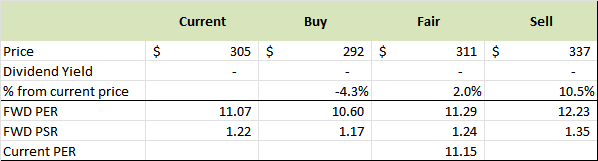


 “I depart Conference each 12 months with this listing of issues I want to employ,” stated Colleen Daly, co-chair, with Santhi Yarlagadda, of the once-a-year instructional event. “There’s constantly actionable items to take back to each day everyday living. Which is what we are striving for this calendar year.”