
the strategy behind the Portuguese textile industry’s transformation

the strategy behind the Portuguese textile industry’s transformation

Translated by

Roberta HERRERA

Published


Apr 3, 2023

The Portuguese textile industry is currently undergoing a transformation in order to recover from the pandemic and solidify its position as Europe’s leading partner for local textile production. While the industry’s high-volume production and competitive pricing have been critical to its success in recent years, Portugal aims to set itself apart from neighbouring regions such as Morocco or Turkey by focusing on producing high-quality products. To achieve this, Portugal is leveraging its well-established and highly skilled manufacturing industry to create products that adhere to the most stringent sustainability criteria. 

ATP / The Green Way

“Nowadays, we are working with different types of brands than in the past. Our role has evolved. The brands and designers that now produce their products in Portugal are less fixated on price and are instead looking for sustainability,” said Ana Paula Dinis, executive director of the ATP (Associação Têxtil e Vestuário de Portugal). “We no longer offer solutions to brands that are only looking for low prices. This means that we have suffered in terms of volume of orders but have improved in terms of the quality of our products and clients,” she added.

According to the representative of the Portuguese textile association, customer diversification is crucial for the industry’s continued success. Factories have gone from working mainly with large companies or textile giants to working with emerging brands and designers who demand smaller quantities but that are in search of high-quality textiles and designs. This has led to higher purchase prices, meaning that total turnover has not been significantly affected. In addition, factories have become more independent as they are less subject to large orders.

A key industry for a relatively small market

Today, the Portuguese textile and clothing industry represents 9{1668a97e7bfe6d80c144078b89af180f360665b4ea188e6054b2f93f7302966b} of national exports (3{1668a97e7bfe6d80c144078b89af180f360665b4ea188e6054b2f93f7302966b} of EU textile and clothing exports) and accounts for 8{1668a97e7bfe6d80c144078b89af180f360665b4ea188e6054b2f93f7302966b} of turnover and 8{1668a97e7bfe6d80c144078b89af180f360665b4ea188e6054b2f93f7302966b} of production of the Portuguese manufacturing industry. Additionally, the sector employs up to 19{1668a97e7bfe6d80c144078b89af180f360665b4ea188e6054b2f93f7302966b} (128,600 people) of the manufacturing industry’s workforce.

In 2022, the sector’s overall export revenue reached 6.122 billion euros (914 million euros from home textiles, 1.660 billion euros from other textiles and 3.548 billion euros from clothing). This total figure represents a 13{1668a97e7bfe6d80c144078b89af180f360665b4ea188e6054b2f93f7302966b} increase from 2021, when the industry recorded 5.413 billion euros in export revenue, and a 17{1668a97e7bfe6d80c144078b89af180f360665b4ea188e6054b2f93f7302966b} increase from 2019, when the figure stood at 5.215 billion euros.

The Portuguese textile industry accounts for 19{1668a97e7bfe6d80c144078b89af180f360665b4ea188e6054b2f93f7302966b} of manufacturing jobs in the country – ATP

Imports, on the other hand, grew by 26{1668a97e7bfe6d80c144078b89af180f360665b4ea188e6054b2f93f7302966b} in 2022 to 5.426 billion euros. Spain is Portugal’s main textile importing country, accounting for 34{1668a97e7bfe6d80c144078b89af180f360665b4ea188e6054b2f93f7302966b} of imports, followed by Italy (11{1668a97e7bfe6d80c144078b89af180f360665b4ea188e6054b2f93f7302966b}), China (9{1668a97e7bfe6d80c144078b89af180f360665b4ea188e6054b2f93f7302966b}), Germany (7{1668a97e7bfe6d80c144078b89af180f360665b4ea188e6054b2f93f7302966b}), India (6{1668a97e7bfe6d80c144078b89af180f360665b4ea188e6054b2f93f7302966b}) and France (6{1668a97e7bfe6d80c144078b89af180f360665b4ea188e6054b2f93f7302966b}).

The Portuguese textile industry’s main customers: Spain, France, Germany and the US

Thing have also changed in Spain, a country that has long depended on Portuguese production. Although to this day the market remains Portugal’s main customer for textiles, representing 23{1668a97e7bfe6d80c144078b89af180f360665b4ea188e6054b2f93f7302966b} of exports and a turnover of 1.424 billion euros in 2022, its market share has declined over the last few years. In 2019, Spanish purchases amounted to 1.598 billion euros, which means that imports from Spain have contracted by 11{1668a97e7bfe6d80c144078b89af180f360665b4ea188e6054b2f93f7302966b} between then and the end of the 2022 financial year.

“In the past, Spain accounted for almost 40{1668a97e7bfe6d80c144078b89af180f360665b4ea188e6054b2f93f7302966b} of our foreign production, but now we are very far from these percentages. The big Spanish brands will continue to manufacture in Morocco and Turkey so we don’t foresee huge growth in this country. It’s a country that depends more on clothing than on home textiles,” said Dinis.

Due to its proximity and production needs, the Galician giant Inditex has traditionally been one of the Portuguese textile industry’s most important Spanish clients.

France is the second largest customer for Portuguese textiles, with a market share of 15{1668a97e7bfe6d80c144078b89af180f360665b4ea188e6054b2f93f7302966b}. According to ATP’s latest data, imports from the French region increased by 40{1668a97e7bfe6d80c144078b89af180f360665b4ea188e6054b2f93f7302966b} between 2019 and 2022, reaching 942 million euros. The German market accounts for 9{1668a97e7bfe6d80c144078b89af180f360665b4ea188e6054b2f93f7302966b} of Portuguese textile exports, with a turnover of 539 million euros in 2022. Along with France, the markets that have grown the most in the last two years have been the American market ( up 40{1668a97e7bfe6d80c144078b89af180f360665b4ea188e6054b2f93f7302966b} to 477 million euros in imports in 2022) and the Italian market ( up 39{1668a97e7bfe6d80c144078b89af180f360665b4ea188e6054b2f93f7302966b} to 452 million euros in turnover in 2022).

EU countries represent 73{1668a97e7bfe6d80c144078b89af180f360665b4ea188e6054b2f93f7302966b} of Portuguese textile exports, with 4.488 billion euros in revenue, while non-EU countries account for 27{1668a97e7bfe6d80c144078b89af180f360665b4ea188e6054b2f93f7302966b} of the total at 1.633 billion euros. 

Price increases and future outlook

“Between 2009 and 2019, all economic indicators were growing and the textile industry was performing very well until the pandemic. We did not start to recover until 2021 and, in 2022, the first few months were very positive. The second half of the year was greatly affected by rising gas and energy prices,” recalled Dinis. “The worst months are over and we are going to do better,” she added optimistically. 

Textile printing process – ATP / The Green Way

“The impact of inflation and the increasing value of the products we offer have resulted in a consequent increase in prices,” said the ATP representative, noting that although export turnover for 2022 grew by 13{1668a97e7bfe6d80c144078b89af180f360665b4ea188e6054b2f93f7302966b}, the volume of exports contracted by 1{1668a97e7bfe6d80c144078b89af180f360665b4ea188e6054b2f93f7302966b} to 524,000 tonnes of textiles. “As exports represent a large part of our production and we are a small market, we are always significantly affected by disturbances in Europe and the United States,” she explained about the current uncertain social, political and economic circumstances of the last few months.

Regarding other countries with strong textile manufacturing industries, such as Turkey, the manager assured that she does not anticipate direct competition: “In Portugal, we are preparing ourselves to offer a diverse range of production under different conditions. This is one of our most competitive advantages and it opens doors to many clients”.

According to Mario Jorge Machado, president of the ATP, sustainability is a top priority for the Portuguese textile industry.

“Portugal is one of the leaders in this transformation. As one of the main players in Europe, with an indisputable relevance in terms of industrial development and production, the Portuguese textile sector has adopted new processes, techniques and technologies, and has invested in new machinery so that the entire ‘made in Portugal’ manufacturing process can be more sustainable and serve as an example to the rest of the world”.

The ATP’s 500 or so members are involved in various projects focused mainly on saving water, using renewable energies, improving traceability, and enhancing dyeing, printing, finishing and recycling processes.

Last edition of Modtissimo – FNW

Modtissimo: the gateway to the Portuguese textile industry

The Modtissimo trade show, the oldest professional event on the Iberian Peninsula, took place on February 15 and 16 at the Exponor venue in Matosinhos (Porto) and broke attendance records, attracting 5163 visitors to its 60+1 edition. The event featured around 150 textile exhibitors, over 60 manufacturing and ready-to-wear specialists, and around 30 representatives from companies such as Lectra and Messe Frankfurt. While Portuguese companies such as Riopele Texteis, A. Sampaio, and Malhas Madalena Beça were among the standout exhibitors, the fair also had a notable number of Turkish exhibitors.

The event’s last edition attracted 504 international buyers, with a significant number coming from Germany, the Netherlands, Spain, and Austria, indicating the industry’s growing presence in foreign markets. Manuel Serrão, general director of Associação Selectiva Moda and the organizer of the fair, expressed satisfaction with the outcome of the post-pandemic edition. Serrão highlighted the quality of the contacts made and the positive feedback on the fair’s commitment to internationalisation, which he believes is crucial to the industry’s development.

The next edition of the event will take place again at the Exponor exhibition centre in Porto on September 13 and 14.

Copyright © 2023 FashionNetwork.com All rights reserved.

Nissan ramping up its electric vehicles strategy

Nissan ramping up its electric vehicles strategy

As the car market moves toward a sustainable future, Nissan has manufactured the strategic choice to ramp up their attempts in the electrical vehicle industry. The final decision to speed up its strategy will come as demand from customers for zero-emission EVs carries on climbing at a report tempo.

Nissan is recognizing the change in buyer desire and is now doubling down on its EV strategy.

Right after establishing an early guide with the release of the LEAF in 2011, Nissan is now slipping guiding as most automakers have a thoroughly electric car or truck on the market.

Irrespective of Nissan’s LEAF climb to become 1 of the prime-selling electric powered autos globally, it’s taken above a 10 years for the Japanese automaker to release its second totally electric motor vehicle, the Ariya crossover SUV, which had to be delayed several moments.

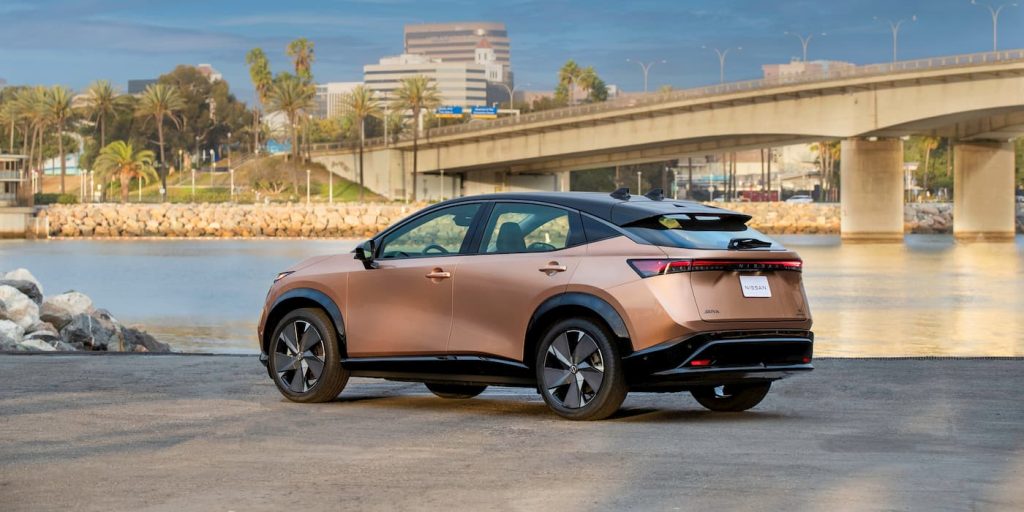
The 2023 Nissan Ariya is the Japanese automaker’s initially electric powered SUV, and it will come with up to 304 miles of variety and an MSRP of $43,190 (for the Interact FWD trim with 216 miles selection).

As section of Nissan’s Ambition 2030, released in November 2021, the corporation announced it would introduce 23 electrified models, such as 15 entirely electric powered cars, by the finish of the decade. The initial options provided 50{1668a97e7bfe6d80c144078b89af180f360665b4ea188e6054b2f93f7302966b} of total designs across Nissan and Infiniti’s lineup to be EV or hybrid.

Even so, in response to “changes in customer requires and the company environment” toward thoroughly electric powered autos, Nissan now options to accelerate its strategy.

Nissan-electric-vehicle-strategy-1
2023 Nissan Ariya electrical crossover SUV (Source: Nissan)

Nissan accelerates Ambition 2030 electrical car system

Nissan introduced Sunday in a press launch it would ramp up initiatives to convey fully electric powered motor vehicles to current market.

The Japanese automaker is now arranging to release 27 electrified styles, which include 19 new EVs, by 2030 with an electrification blend of 55{1668a97e7bfe6d80c144078b89af180f360665b4ea188e6054b2f93f7302966b}, up from 50{1668a97e7bfe6d80c144078b89af180f360665b4ea188e6054b2f93f7302966b} earlier. In addition, Nissan is forecasting larger electrical product sales volumes sold in important marketplaces by 2026, which includes:

  • Europe: 98{1668a97e7bfe6d80c144078b89af180f360665b4ea188e6054b2f93f7302966b}, up from 75{1668a97e7bfe6d80c144078b89af180f360665b4ea188e6054b2f93f7302966b} earlier
  • Japan: 58{1668a97e7bfe6d80c144078b89af180f360665b4ea188e6054b2f93f7302966b}, up from 55{1668a97e7bfe6d80c144078b89af180f360665b4ea188e6054b2f93f7302966b}
  • China: 35{1668a97e7bfe6d80c144078b89af180f360665b4ea188e6054b2f93f7302966b}, down from 40{1668a97e7bfe6d80c144078b89af180f360665b4ea188e6054b2f93f7302966b}
  • United States: 40{1668a97e7bfe6d80c144078b89af180f360665b4ea188e6054b2f93f7302966b} (EV only)

Nissan projects the US to continue being the exact same as beforehand forecast at 40{1668a97e7bfe6d80c144078b89af180f360665b4ea188e6054b2f93f7302966b} electric powered vehicle volume. To tackle the drop in China, Nissan says it will introduce an EV made explicitly for the Chinese sector.

In other news, Nissan is acquiring distinct ways to decrease emissions from its functions. The Japanese automaker is among the the first to run a demo with all-electric powered weighty-responsibility trucks carrying new 2023 Nissan Ariya EVs to dealerships.

Electrek’s Get

It is fantastic to see Nissan doubling down on its electrical car or truck technique as the market transitions to zero-emission EVs.

With a slate of new EVs and ambitious new targets, Nissan is getting techniques toward hitting its aim of achieving carbon neutrality by 2050. Nevertheless, the firm will require to shift speedily because just about just about every other automaker has also a short while ago greater its EV targets.

As Nissan is studying in China, demonstrating up late will make it more difficult to breach the market, even with heightening need.

FTC: We use earnings earning vehicle affiliate one-way links. Much more.

Deploying a multidisciplinary strategy with embedded responsible AI

Deploying a multidisciplinary strategy with embedded responsible AI

Accountability and oversight ought to be constant because AI products can alter about time certainly, the hype around deep understanding, in contrast to traditional info instruments, is predicated on its adaptability to regulate and modify in reaction to shifting details. But that can lead to troubles like design drift, in which a model’s performance in, for illustration, predictive accuracy, deteriorates around time, or starts to exhibit flaws and biases, the for a longer time it life in the wild. Explainability approaches and human-in-the-loop oversight programs can not only enable information researchers and item entrepreneurs make larger-top quality AI types from the beginning, but also be used by means of publish-deployment checking techniques to make sure products do not reduce in good quality more than time.

“We really don’t just target on model training or making absolutely sure our education products are not biased we also concentrate on all the dimensions involved in the device studying enhancement lifecycle,” says Cukor. “It is a obstacle, but this is the future of AI,” he says. “Everyone desires to see that amount of self-control.”

Prioritizing accountable AI

There is distinct organization consensus that RAI is essential and not just a great-to-have. In PwC’s 2022 AI Enterprise Study, 98{1668a97e7bfe6d80c144078b89af180f360665b4ea188e6054b2f93f7302966b} of respondents reported they have at least some programs to make AI dependable via actions such as improving AI governance, monitoring and reporting on AI product overall performance, and generating certain decisions are interpretable and effortlessly explainable.

Notwithstanding these aspirations, some corporations have struggled to put into practice RAI. The PwC poll discovered that fewer than half of respondents have prepared concrete RAI steps. A different survey by MIT Sloan Administration Assessment and Boston Consulting Group uncovered that though most firms look at RAI as instrumental to mitigating technology’s risks—including dangers connected to basic safety, bias, fairness, and privacy—they admit a failure to prioritize it, with 56{1668a97e7bfe6d80c144078b89af180f360665b4ea188e6054b2f93f7302966b} expressing it is a top rated precedence, and only 25{1668a97e7bfe6d80c144078b89af180f360665b4ea188e6054b2f93f7302966b} having a absolutely experienced application in area. Issues can appear from organizational complexity and society, absence of consensus on moral methods or resources, inadequate ability or worker training, regulatory uncertainty, and integration with present chance and knowledge practices.

For Cukor, RAI is not optional despite these major operational problems. “For several, investing in the guardrails and procedures that allow dependable innovation at pace feels like a trade-off. JPMorgan Chase has a duty to our customers to innovate responsibly, which suggests cautiously balancing the worries among challenges like resourcing, robustness, privacy, electric power, explainability, and organization effects.” Investing in the suitable controls and possibility management methods, early on, throughout all phases of the data-AI lifecycle, will enable the company to accelerate innovation and ultimately serve as a competitive edge for the business, he argues.

For RAI initiatives to be profitable, RAI wants to be embedded into the tradition of the firm, relatively than basically included on as a technical checkmark. Implementing these cultural adjustments demand the correct expertise and way of thinking. An MIT Sloan Management Critique and Boston Consulting Team poll found 54{1668a97e7bfe6d80c144078b89af180f360665b4ea188e6054b2f93f7302966b} of respondents struggled to come across RAI knowledge and expertise, with 53{1668a97e7bfe6d80c144078b89af180f360665b4ea188e6054b2f93f7302966b} indicating a lack of teaching or awareness amid current team customers.

Obtaining talent is a lot easier claimed than done. RAI is a nascent field and its practitioners have observed the very clear multidisciplinary mother nature of the operate, with contributions coming from sociologists, info scientists, philosophers, designers, policy experts, and attorneys, to title just a handful of locations.

“Given this special context and the newness of our field, it is exceptional to locate people today with a trifecta: complex expertise in AI/ML, knowledge in ethics, and area knowledge in finance,” claims Cukor. “This is why RAI in finance need to be a multidisciplinary practice with collaboration at its core. To get the ideal mix of skills and perspectives you have to have to retain the services of specialists throughout distinct domains so they can have the tough discussions and surface area concerns that other folks may possibly overlook.”

This article is for informational functions only and it is not meant as lawful, tax, fiscal, investment decision, accounting or regulatory guidance. Opinions expressed herein are the individual views of the specific(s) and do not symbolize the views of JPMorgan Chase & Co. The accuracy of any statements, joined resources, documented conclusions or quotations are not the obligation of JPMorgan Chase & Co.

This material was made by Insights, the custom made content arm of MIT Technology Overview. It was not written by MIT Technological innovation Review’s editorial workers.