Insulin’s high cost goes beyond drugmakers to industry’s price mediators

Insulin’s high cost goes beyond drugmakers to industry’s price mediators

Eli Lilly & Co.’s announcement that it is slashing prices for its major insulin products could make life easier for some diabetes patients while easing pressure on Big Pharma.

It also casts light on the profiteering methods of the drug industry’s price mediators – the pharmacy benefit managers, or PBMs – at a time when Congress has shifted its focus to them.

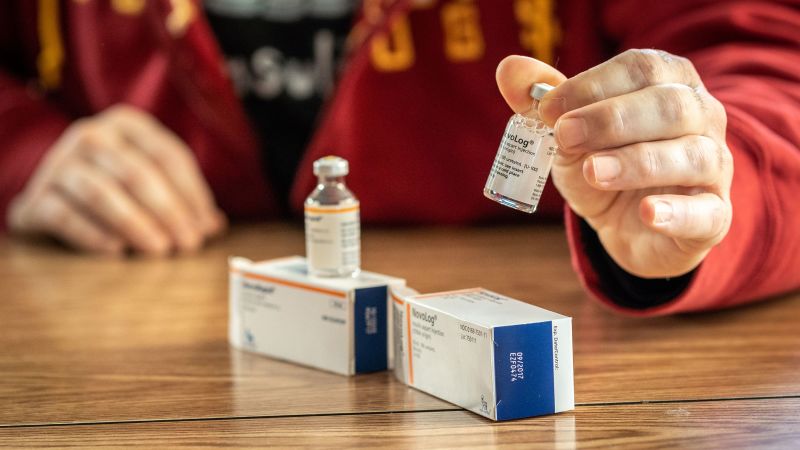
Insulin has come to embody the perversity of the U.S. health care system as list prices for the century-old drug, which 8.4 million Americans depend on for survival, quintupled over two decades to more than $300 for a single vial. Just because Lilly – which sells about a third of the insulin in the United States – lowers its price doesn’t mean all patients will pay less, even in the long run.

Lilly capped the out-of-pocket costs of its most popular insulins at $35 effective immediately, and said that later this year the list price of its “authorized generic” Lispro – which is identical to Humalog, its bestselling brand-name insulin – would fall to $25 a vial. This followed President Joe Biden’s State of the Union address, and speeches since, in which he has blamed “Big Pharma” and its “record profits” for the incredible expense of insulin.

David Ricks, Lilly CEO, in interviews March 1 called for other manufacturers to join his company in “taking away the affordability challenges” of diabetes.

Even as Lilly promotes its altruism, this move may actually save it money, said health care analyst Sean Dickson. A federal rule taking effect next year penalizes companies that charge Medicaid high prices, especially for older, branded drugs. Lowering the list price of Humalog would allow Lilly to pay significantly less in rebates to government Medicaid programs that buy the drug.

Drugmakers have long ceased to be the only, or even primary, villain of the insulin price scandal. The three companies that produce nearly all the insulin in this country – Lilly, Sanofi, and Novo Nordisk – posted stagnant or declining revenue from their versions of the drug in recent years despite the steadily climbing list prices they charged. They’ve even advised investors that they don’t see insulin sales as a high-profit area anymore.

But while Lilly is cutting the “wholesale acquisition price,” or list price, of its big-selling insulin drugs, “will other ‘parties at play’ cause this price to increase before it hits my pharmacy counter?” asked Rebecca Kelly of Richmond, Kentucky, who has Type 1 diabetes and is an activist for lower drug prices.

Those parties include gigantic pharmacy benefit managers – owned by CVS Health and insurance giants UnitedHealthcare and Cigna – that have aggressively played the insulin makers off one another in a way that mainly fattened their own accounts, as was revealed in a scathing 2021 Senate Finance Committee report.

In theory, when pharmacy benefit managers negotiate contracts with drug manufacturers on behalf of insurers, they pass along savings to patients. In practice, while the hard-nosed bargaining may benefit the well-insured, it can hurt patients on fixed incomes and others less able to afford their insulin.

To compete for access to insured patients, according to the report, the three insulin makers in the 2010s steadily increased rebates and fees paid to the powerful PBMs, which are owned by or allied with major insurers. This spurred drugmakers to keep raising their list prices, because the more they paid in rebates – calculated as a percentage of list price – the better their placement on insurance formularies, the complex lists of drugs insurers cover for patients.

In other words, the more the insulin makers compete, the more consumers – the unlucky ones, anyway – may pay.

“Insulin is a commodity, so formulary position is everything,” said David Kliff, who edits the website Diabetic Investor. “It’s like location in real estate.”

In 2018, Novo Nordisk, amid public rancor over rising insulin prices, considered a 50{1668a97e7bfe6d80c144078b89af180f360665b4ea188e6054b2f93f7302966b} cut, according to the report. But the company’s board decided against it, noting that “many in the supply chain will be negatively affected ($) and may retaliate.” The company also feared that irate insurers might retaliate against Novo’s blockbuster diabetes and weight-loss drugs like Ozempic, which compete against Lilly’s Mounjaro.

Sanofi and Novo Nordisk did not directly respond to Lilly’s price-dropping move but noted, in statements, that their discount programs already provide cheap insulin for those who need them. Millions of Americans have used these coupons, but patients like Kelly say they come with red tape and can be unreliable.

Lilly declined to respond to a question about how its cut in list price might affect negotiations with insurers, which have come to expect big rebates on drugs with competitively high list prices.

For example, Sanofi paid rebates worth 2{1668a97e7bfe6d80c144078b89af180f360665b4ea188e6054b2f93f7302966b} to 4{1668a97e7bfe6d80c144078b89af180f360665b4ea188e6054b2f93f7302966b} of its insulin list price in 2013, but 56{1668a97e7bfe6d80c144078b89af180f360665b4ea188e6054b2f93f7302966b} in 2018, according to the Senate report. Over that period, Sanofi tripled the price of its Lantus insulin to about $275 per vial. A 2018 study estimated it costs roughly $2 to $4 to produce a vial of analog insulin, the type used by most patients.

Most of the insulin list price increases have gone to PBMs, the go-between companies. For example, Lilly earned about $25 for each Humalog injection pen from 2013 to 2018, while the list price increased from $57 to $106. Net prices have remained stable the past few years and insulin revenues actually declined last year, according to recent Sanofi and Lilly financial reports.

Trade secrecy makes it hard to see which portions of the kickbacks end up as profit or savings for pharmacy benefit managers, insurers, pharmacies, or patients. But patients who are uninsured, are underinsured, or pay high deductibles can end up with whopping insulin bills, because their copayments are tied to the drug’s list price.

“The system transfers financial resources from sick patients to healthy, premium-paying beneficiaries, the opposite of what insurance is supposed to do,” Erin Trish, co-director of the University of Southern California Schaeffer Center for Health Policy & Economics, told a Senate Commerce Committee hearing Feb. 16.

Medicare beneficiaries, for example, paid a collective $1 billion out-of-pocket for their insulin in 2020, more than four times what they paid in 2007, according to a KFF study. So did many others.

Kelly, a 48-year-old personal trainer, got insulin through her husband’s insurance but had to pay out-of-pocket until she met a $5,000 deductible each year. So in 2019, the Kellys dropped the policy and decided to risk the open market. They ended up driving to Canada, where Kelly told KHN she spent $256 on eight vials of insulin that would have cost $2,616 at her local pharmacy. During the pandemic, she used Lilly coupons that enabled her to buy Humalog for $35 per vial, enough for about two weeks.

Despite coupon programs, surveys conducted since 2017 showed that up to a quarter of U.S. patients reported skimping on insulin because of its cost. Some patients have died while trying to ration the drug.

The contrast with other developed countries is stark. Germans with diabetes pay around $5 for a month’s worth of insulin. In Britain, patients pay nothing.

Federal legislation signed into law last year capped out-of-pocket insulin costs at $35 per month for Medicare recipients. At least 22 states and the District of Columbia have set caps on private plans as well.

The three big insulin makers have fought off competition that could lower prices across the board. They’ve done this, for example, by introducing their own, slightly less expensive “authorized generics,” which discourage other companies from entering the insulin market. It wasn’t until 2021 that a competitor brought a long-acting “biosimilar” insulin – essentially a generic version of Lantus – to the market, and it has barely made a dent. The company, Viatris, which since sold its product to Biocon Biologics, did win entry to one formulary by creating an essentially identical product, tripling its list price and offering PBMs a big rebate.

These kinds of behaviors have increasingly drawn congressional attention, and drug manufacturing attack ad campaigns.

“Imagine a world where a cheaper product, yet equally effective, has a harder time selling,” Sen. Chuck Grassley (R-Iowa) said at the Feb. 16 Commerce Committee hearing. “That’s the prescription drug industry.”

Still, Lilly’s announcement may be a harbinger of better news for the most economically vulnerable people with diabetes.

California has funded a plan to make and distribute its own insulin. Separately, Civica, a nonprofit drug manufacturer, hopes by the end of 2024 to sell insulin produced in India and Virginia. Civica will bypass benefit managers and provide the drug to any pharmacy that promises to sell it for no more than $30 per vial, said Allan Coukell, its senior vice president for public policy.

Civica plans to produce enough insulin for a third of all U.S. patients, he said.
Tesla price cuts: Flagging demand or tactic to boost sales?

Tesla price cuts: Flagging demand or tactic to boost sales?

DETROIT (AP) — In describing why Tesla Inc. retains cutting charges on its electric vehicles, the automobile marketplace is really substantially divided into two camps.

On one aspect are analysts who see an aggressive shift by the primary manufacturer of EVs to gobble up sales and market place share from its competitors just as they’re commencing to carry additional vehicles to marketplace.

On the other facet are critics who argue that with desire for Tesla’s older autos commencing to wane, the business feels forced to slash charges to bring in customers.

About the weekend, Tesla minimize the costs of its two costliest vehicles, from $5,000 to $10,000, or from 4.3{1668a97e7bfe6d80c144078b89af180f360665b4ea188e6054b2f93f7302966b} to just in excess of 9{1668a97e7bfe6d80c144078b89af180f360665b4ea188e6054b2f93f7302966b}. A Product S two-motor sedan now starts off at $89,990, with the Plaid “performance” model starting at $109,990. A Product X SUV dual motor starts at $99,990, the performance variation at $109,990.

It was the company’s second selling price lower of the year in the United States. In January, Tesla slashed costs on several variations of its EVs, earning some of them suitable for a new federal tax credit history. The corporation slice U.S. selling prices almost 20{1668a97e7bfe6d80c144078b89af180f360665b4ea188e6054b2f93f7302966b} on some versions of its major-selling Model Y SUV. It also reduced the base cost of the Product 3, its the very least highly-priced motor vehicle, by about 6{1668a97e7bfe6d80c144078b89af180f360665b4ea188e6054b2f93f7302966b}.

Seth Goldstein, an analyst at Morningstar, suggested that Tesla is making an attempt to strike a equilibrium among securing the very best rates feasible and sustaining buyer desire so that its factories operate speedy more than enough to minimize the value of creating each and every car.

The organization does have higher income margins than other automakers, Goldstein stated, in part because it has devised much more effective production strategies and mainly because EVs have much less shifting parts to assemble

“This could be a way for Tesla to hold off some of the new entrants” into the EV current market, Goldstein claimed. The enterprise is sending a information to rivals that “you have to offer the very best technological know-how at a compelling price even though retaining your fees down.”

Goldstein reported he does not foresee more Tesla value cuts this 12 months, unless of course the U.S. overall economy were being to slide into a economic downturn.

Income of the Versions S and X characterize only a fraction of Tesla’s total revenue, but they had been mounting around the past two yrs. Even now, from the third quarter of past calendar year to the fourth quarter, their profits fell just in excess of 8{1668a97e7bfe6d80c144078b89af180f360665b4ea188e6054b2f93f7302966b}.

Sam Abuelsamid, e-mobility analyst for Guidehouse Study, observed that each types are pricey, out of reach of mainstream customers. And they are getting older, an additional factor in their flagging revenue: The S debuted in 2012, the X in 2015.

Abuelsamid reported he suspects that Tesla resolved to minimize rates right after demand from customers for the two increased-priced automobiles fell in January and February. Mainly because Tesla experiences gross sales only quarterly, its income photo will not be obvious until early April.

The most up-to-date value cuts, he explained, should really cut down the values of utilised Teslas simply just mainly because the new types will charge fewer.

However Tesla up-to-date the interiors, electronics and performance of its Plaid editions, their exteriors however search mainly as they did when they have been initially introduced. As a outcome , Abuelsamid explained, the Teslas appear more mature than similar styles staying produced by startups and legacy automakers.

“Under the pores and skin there are a large amount of differences” in the Teslas, he explained. “Customers don’t definitely see those people distinctions.”

Throughout Tesla’s investor day function previous 7 days, CEO Elon Musk conceded that affordability remains a drag on gross sales.

“The need for individuals to own a Tesla is exceptionally substantial,” Musk asserted. “The limiting aspect is their skill to fork out for a Tesla.”

In January, when Tesla declared its before rate cuts, a lot more versions of its well-liked Product Y small SUV turned eligible for a $7,500 federal electric auto tax credit rating by bringing them underneath government price tag caps. That spherical of Tesla selling price cuts did not spark a cost war as some analysts expected, nevertheless Ford did decrease the price tag of its Mustang Mach-E, a Product Y competitor.

Abuelsamid pointed out that there’s still constrained availability for substantial-conclude luxurious SUVs built by BMW, Mercedes-Benz and other folks since automakers are not making several of them. More than time, he claimed, the other automakers could be compelled to lower selling prices on their luxurious models.

Pharmacy Benefit Managers Put in Crosshairs of Drug Price Fight

Pharmacy Benefit Managers Put in Crosshairs of Drug Price Fight

A Residence investigation into the entities that take care of prescription drug added benefits ought to be accompanied by other actions that can assist shed light on how US drug price ranges are fashioned, analysts say.

The House Committee on Oversight and Accountability on Wednesday introduced an investigation into pharmacy benefit administrators like CVS Caremark and Cigna’s Express Scripts and their affect on sufferers.

The probe was welcome news for the pharmaceutical sector and impartial pharmacies, who argue that PBM fees and consolidation with major health and fitness strategies and pharmacy chains has driven up drug expenditures and restricted consumer decisions. PBMs say they help deliver bargains to patients, and that drug manufacturer listing costs are the root of substantial drug prices.

Analysts say the investigation is just the hottest indication of growing momentum in Washington to scrutinize the purpose of PBMs in shaping high prescription drug prices. This, as well as the ongoing probe into PBMs by the Federal Trade Fee, could direct to guidelines to strengthen oversight and assistance decreased drug expenditures for individuals, policy observers say.

But analysts also warning that this interest to PBMs doesn’t negate the want to appear into drug company price tag environment and other methods that analysts say lead to the convoluted system that determines what Us residents fork out at the pharmacy counter.

“Many members of Congress are disappointed by the deficiency of transparency in the drug provide chain and PBMs are a very easy concentrate on,” reported Stacie Dusetzina, an associate professor in the Office of Health and fitness Plan at Vanderbilt College Clinical Center.

“It is significant to comprehend that drug makers set the record costs PBMs the conditions for protection. PBMs, ideas, and drug companies share the blame for the raise in checklist price ranges,” Dusetzina added.

Committee Chairman James Comer (R-Ky.) asked for information from the Office environment of Staff Management, the Centers for Medicare & Medicaid Companies, and the Protection Well being Company to figure out the impression of PBMs on authorities-administered wellbeing-care courses. He also despatched letters to the country’s 3 largest PBMs—CVS Caremark, Convey Scripts, and OptumRx—for files and communications linked to their business enterprise practices.

Transparency Drive

Congress and the FTC have examined PBMs in the previous, but the development of the sector and consolidation with wellness strategies and pharmacies has fueled a greater thrust to comprehend the entities that a lot of analysts say rely on secrecy to form drug coverage. Right now, the a few major PBMs regulate practically 80{1668a97e7bfe6d80c144078b89af180f360665b4ea188e6054b2f93f7302966b} of the industry.

The passage of President Joe Biden’s landmark Inflation Reduction Act (Community Law 117-169) has also prompted lawmakers to search at other areas to support decrease drug costs. With the IRA, Medicare now has the authority to negotiate the rates of some of the medicine it spends the most on, and also to demand from customers rebates from drugmakers who raise price ranges on their products and solutions more rapidly than the price of inflation.

“As pressure builds to handle pharmaceutical costs, PBMs significantly are in the cross-hairs,” stated Robin Feldman, a law professor and researcher at the College of California, San Francisco.

Quite a few best lawmakers have recognized PBM oversight as a top rated precedence this Congress. The Senate Judiciary Committee in February advanced a team of bills aimed at reducing drug prices, which include the Prescription Pricing for the Men and women Act (S. 113). This invoice would direct the FTC to analyze the consequences of consolidation in the PBM field on pricing, and also to supply suggestions to Congress on other techniques to increase level of competition and protect shoppers.

A 7 days afterwards, the Senate Commerce Committee held a hearing on a monthly bill (S.127) from Chairwoman Maria Cantwell (D-Clean.) and Sen. Chuck Grassley (R-Iowa) that would prohibit PBMs from charging overall health options far more for a drug than they reimburse pharmacies. The Pharmacy Reward Supervisor Transparency Act would also require PBMs to report yearly to the FTC certain details about payments they obtain from health and fitness options and fees billed to pharmacies.

The Dwelling probe is particularly concentrated on the rebates drug brands pay back to PBMs in exchange for superior placement on lists of covered medication acknowledged as formularies, as very well as service fees PBMs demand to unaffiliated pharmacies.

“PBMs are supposed to assistance buyers by lowering charges through the passing on of rebates they obtain from companies. But these rebates really do not appear to be to be making their way to consumers,” said Michael Carrier, an antitrust professor at Rutgers Legislation Faculty.

Brian Newell, a spokesperson for the main drug industry trade group, the Pharmaceutical Investigate and Suppliers of The us, explained of PBMs: “These entities perform hand in glove with insurers to determine what medicines persons have obtain to and what they finally spend at the pharmacy. Their business enterprise design is rife with conflicts of curiosity that impartial authorities and other congressional investigations have identified can direct to bigger charges for sufferers. People today are looking to Congress to rein in these abusive tactics, and we hope this is a single move in that direction.”

But JC Scott, president and CEO of the primary PBM trade team the Pharmaceutical Care Management Association, explained PBMs “have a established monitor report of decreasing prescription drug costs in federal programs, in the end for people and taxpayers.”

“While we appreciate—and share—the Committee’s concern around drug pricing and existing gaps in affordability, we strongly urge users of the committee and Congress to remain focused on actual solutions that are established to lessen prescription drug expenditures,” Scott additional.

Rate ‘Dysfunction’

The price of the Dwelling probe’s findings will count on how lawmakers use it to have an understanding of how PBMs work in a drug pricing method that analysts say feeds off misaligned incentives.

The probe “is a thing that’s an acknowledgment that drug pricing dysfunction much more broadly is not just the final result of just one singular layer of the source chain, but many layers of source chain functioning in live performance with 1 a different to yield the dysfunction,” mentioned Antonio Ciaccia, CEO of Ohio-based drug pricing information company 46brooklyn Exploration.

“I’m hoping that we can get more of that nuance right—not just blame it all on PBMs but demonstrate how what PBMs do to the industry exacerbates the challenges that we experienced with the other levels in the supply chain,” Ciaccia claimed.

The emphasis on drug pricing policy is sure to outcome in even a lot more demands for responses on how drug charges are formed, Dusetzina claimed.

“There is going to be additional force on PBMs, programs, and manufacturers about what style of pricing information is designed public heading forward,” she reported.