

Experts Discuss Advantages, Disadvantages of Switching to Industry From Oncology Pharmacy Practice

Experts Discuss Advantages, Disadvantages of Switching to Industry From Oncology Pharmacy Practice

Pharmacy Times® interviewed a panel of experts, including Scott Soefje, PharmD, MBA, BCOP, FCCP, FHOPA, director of pharmacy cancer care, Mayo Clinic and Pharmacy Times Oncology Edition™ editorial advisory board member; Judith Alberto, MHA, RPh, BCOP, director of clinical initiatives, Community Oncology Alliance (COA); Kevin Pang, PharmD, associate oncology scientist and medical writer at the National Comprehensive Cancer Network (NCCN) and regular contributor to Pharmacy Times Oncology Edition; and Kirollos Hanna, PharmD, BCPS, BCOP, director of pharmacy, Minnesota Oncology and assistant professor of pharmacy, Mayo Clinic College of Medicine, as well as Pharmacy Times Oncology Edition editorial advisory board member.

In part 1 of this discussion, the panel discussed how they define traditional versus nontraditional roles in oncology pharmacy today. In part 2, the panel discusses the benefits and drawbacks of pursuing a career within a nontraditional career path, and in particular a role in industry.

Alana Hippensteele: Hi, I’m Alana Hippensteele with Pharmacy Times. Joining me is a panel of experts to discuss unconventional roles in the oncology pharmacy field and how we define what that means.

How would we describe moving to an industry role? Would that be nontraditional in scope?

Scott Soefje, PharmD, MBA, BCOP, FCCP, FHOPA: So, I’ve done that. I left clinical practice, went into industry, and then I’m going to make a statement here for the industry folks: I left industry and came back into practice. So, it’s all doable, right? Is it a different job? Yes. I find it very interesting, because I don’t think people understand, a lot of times, going into industry, how specialized you really become. You’re not only a breast cancer expert, but you are also that-drug-in-breast-cancer expert. And so, it takes a different focus to know it’s about depth, not breadth, and depends on how you want to approach things. Part of the reason I left is I got bored learning about one drug. I wanted to know about all the drugs, and just, because of the work, didn’t have time to do it.

It is, I would say, a non-conventional role. It’s got a different prospect, a different aspect. And then when you start talking about industries, there are tons of industry jobs, right? There’s MSLs, there’s account managers, there’s medical writers, there’s scientists, laboratory, I mean, you can go anywhere in the industry, to do a lot of different things. And so, depends upon what your focus is and where you want to go, how you end up reacting to that industry-type job. Industry from, I think, health systems is this mixed relationship, right? We have this kind of love-hate relationship with industry. We want their information we want their good research, we want to talk to them about what’s going on. But we also don’t want the price of the drugs and all the other things that go along with it.

Experts Discuss Advantages, Disadvantages of Switching to Industry From Oncology Pharmacy Practice

Adobe Stock – Gorodenkoff

Experts Discuss Advantages, Disadvantages of Switching to Industry From Oncology Pharmacy Practice

The other reason I left industry was that it got harder and harder for me to separate myself from the sales of the drug. And again, one of the things that I think people don’t understand when they walk into the industry is, if you don’t sell drugs, your company’s not in existence. Yes, I may be on the medical side, and it may not be my job to go promote and sell the drug, it’s my job to provide the medical information. But I’m providing that medical information to someone that’s been targeted by the sales team that says they need that medical information, right? And so, it takes a different mindset sometimes to be able to do it. The good ones are really good at it. And you really like them, and you want them, and you want to interact with them. And so, I think a pharmacist who chooses to go in there, and be really, really good at industry can be really good at it, and walk away feeling good about themselves, feeling good about what they do, and feel like they’re helping people along the way.

Kirollos Hanna, PharmD, BCPS, BCOP: Alana, Scott couldn’t have said it more perfectly. And I think that’s always kind of been one of the areas. I mean, don’t get me wrong, I think probably all of us probably get approached through LinkedIn or through whatever platform of hey, we have an MSL opening or we have this opportunity opening. And I think a big reservation has been just, do I want to subspecialize or—I don’t even know if I consider it subspecialized—but only focus on one single branded entity for the rest of my career. And for me and kind of what I’m involved in, I feel that it would, I don’t know, it would get boring, potentially at times for me.

But I also think that this is an important opportunity to put out a message out there for leadership. We see this mass exodus or the significant transition to pharma, because sometimes within clinical practice, the work-life balance has become challenging for people. Some health systems have put a significant demand on that pharmacist because they lack an infrastructure that is able to define what a clinical pharmacist FTE should and should not be responsible for. And that’s where us as leaders really should be held responsible and accountable for that. And don’t get me wrong, I also think from a monetary perspective, everybody knows that could be a little bit better on that side of the coin, on the pharma side. But shouldn’t we be incentivizing those clinical pharmacists who are within practice, directly in patient care, coming into work when there are ice storms or when there’s a pandemic, and still putting out their best foot forward for that patient? And this is something that I always try to do within clinical practice or within my current role is to justify that FTE, to really give a fair market value for the pharmacist that’s really investing that time, energy and work. So, we don’t see—and it’s unfortunate that we’re seeing some of it is due to a monetary aspect, and that work life balance, right. And I just think those are important things that leaders should also be looking into and considerate of.

I know there have been some pretty good workforces also in collaboration with HOPA, and various other organizations that are really looking at this. They’ve put out surveys, trying to really understand—one thing that I find hard to believe, I don’t find that a mass exodus from clinical practice to pharma has to do because of the debilitating state of oncology. I think many people who go into oncology are very passionate about it and may have had personal experiences with it. And oncology practice today is incredible. We can cure and manage so many patients and they don’t succumb to their disease, because of the novel things that we’ve done. So, it’s really interesting to see that and just kind of—I’m hoping that we can move into a world where we’re supporting our pharmacists in clinical practice through a much better approach.

Judith Alberto, MHA, RPh, BCOP: I completely agree. I think very well said on all fronts. Industry offers a very unique opportunity, and it is not for everybody. On the flip side, they do offer a life-work balance. They offer something that in hospital administration, it’s hard to compete with that. What I most loved about when I was a director is having that vision, and then really working with the staff to identify, what are your career aspirations? And how can we make that work? And how can we think outside the box? And while you can’t work in your pajamas every day from home, what can we do? And so obviously, if you’re rounding—and I think the pandemic showed us a lot, they showed us what we are capable of doing clinically from home—and so we did round from home. I had to get 50{1668a97e7bfe6d80c144078b89af180f360665b4ea188e6054b2f93f7302966b} of my staff, as you all did, at home overnight, because we weren’t allowed to work side by side. So, all of a sudden, we thought outside the box, and we did make this work.

And so now, on a post pandemic world, I think we need to consider what are we willing to do here for our staff and still offer excellent patient care, clinical service. And you think, there’s a lot of opportunity to really find out what does your staff love to do? And how can you educate them and put them in the ambulatory clinics? How can you put them in a more managed care position? And how can you get that flexibility? You’re working on a project, you can work from home. There are certain areas and scenarios that you can 100{1668a97e7bfe6d80c144078b89af180f360665b4ea188e6054b2f93f7302966b} work at home and have that flexibility. And so I think, as leaders in that arena, we have to be willing to do that and not just so narrow that we’re not able to think outside the box. And I think pharmacists love oncology. They love doing that. So, if you offer that flexibility, if you offer that, work to the maximum of your license, work to what you love to do, let’s work individually with you and see how we can advance your career, I think that turnover would lessen, and we’d see much less.

Soefje: I think it’s going to be interesting, though, because a lot of the recent people who entered industry, entered it during a time of COVID when there’s virtual visits, no travel involved, etc. But when I was in industry, we talked about work-life balance, I was missing little league games, because I had to be in Louisiana to do a presentation on a research clinical trial. There are these kinds of things that industry requires. When you start—if this all comes back, and you start looking at that you’ve got 100 days, 150 days, 200 days a year, that you’re on the road, that’s a whole lot different work-life balance than what we go through in clinical practice. So, I think that, while it’s still a good job for some people, you got to really look at how the job is going—and it’s like everything—you got to look at what the job requires, how it’s going to fit into your personal situation, and whether it’s truly a work-life balance situation or not.

Alberto: Yeah, interesting point, Scott. And I wonder that if people realize that before they go into it, because I lost a lot of moms at the time that said I want to work at home full time. And I wonder if, after getting into that, there was some disillusionment there.

Soefje: Well, it all depends, because, does industry go back to on-site visits? Are they continuing to keep everything as virtual, right? And I think that’s what’s going to make a big change. I do think you brought up a good point though. There’s a lot of things. Like, in Minnesota, we can’t verify orders remotely. We’re not allowed to by law. That kind of stuff has got to go away. We got to remove those kinds of barriers to allow us to do some of those unique aspects in health care that allow us to keep people happy.

Alberto: 100{1668a97e7bfe6d80c144078b89af180f360665b4ea188e6054b2f93f7302966b} agreed.

Kevin Pang, PharmD: Everyone brought up excellent points, I agree with all of them. And also want to bring to light that sometimes it might not necessarily be the fact that a clinical role is too demanding. It might just be because a life event comes up, and then it’s, you’re having a family, you need to move to a new location, and it just happens to be this job opened up in this area. So, that might attribute a lot to it. But I also want to bring to the fact that what people are saying about expectation we’re coming into industry is that there’s a lot of different roles, and each one of them is quite stressed and demanding in some sort of way. So, it’s a role that I think a lot of people come into, and then they work a lot. And you may or may not necessarily be getting that best work-life balance in the first couple of years that you work in industry. So, I think a lot of it comes down to your ultimate career path goal that you want to work in, maybe not what you need immediately, because you might not necessarily get it.

Soefje: I think there’s a misconception of work-life balance. Your work and your life are never balanced. If you think you’re going to work 8 hours and be at home 8 hours, that’s never going to happen. You got to take it in a big picture, right? There are going to be times when you work more. There’s going to be times when you play more. There’s going to be times when you do things with your family. Many times you do things at work. The problem we have in today’s society isn’t work-life balance. It’s when you go home, you still work, and you don’t disconnect, and you don’t turn off your phone, and you’re not there in the moment. And so, those are the kinds of things I think we have to start teaching. And then you teach your family, I got 5 presentations over the next 3 months, I’m not around. But then 3 months after that, I’m going to focus on us, we’re going to go on a vacation, etc. That’s work-life balance.

Pang: Yeah, that is an excellent point. I’ll just note that I work hybrid, but there are times that I just work longer hours because of the fact that it’s so accessible to log into my computer. So, I guess a big pro when it comes to clinical practice is you have more strict hours, supposedly. You can’t really do work at home if you need to verify orders there in person. So, I guess it’s one side of having strict hours could be nice.

Alberto: Very good points, yes. And just to add, I see that. Now that I do have a nontraditional work-at-home, I tend to work longer hours during the day because I’m home. I don’t have a commute, so working till 6 o’clock is nothing, logging back on at 8 is nothing because I’m here. And so definitely being able to shut that off and turn around and be with your family when your office is at home is a completely different scenario. So, Scott, you bring up great, great points and when I do have to travel or work on a presentation, that has to get done. And so, it’s being in the present moment and learning how to juggle everything. Great point.

Hippensteele: So, kind of elaborating on some of what’s being discussed: would you all say that the great migration—as it’s been termed—of hematology/oncology pharmacists from clinical practice into roles like industry and otherwise, are they potentially going to come back?

Soefje: I wish I knew the answer to that. I’ve said this in several meetings in the past, and it’s kind of controversial, but I’m going to say it again here, because I think it needs to get out. I’m kind of curious what’s changed over the last 5 years. Because this idea of working 10-hour days, I’ve been working 10-hour days since I started in 1992. I’ve been logging in since I’ve been able to log in. I’ve been doing extra work, because that’s the way it was. And the question I’m asking myself was, was I burnt out 20 years ago and just didn’t know it? Or has something fundamentally changed over the last 5 or 6 or 10 years, that’s changed the way employees and pharmacists want to do their work? And, and I think it’s probably something that’s fundamentally changed, and we as health systems, we as organizations didn’t keep up with that change.

So, the question is now can we make that change, to make whatever it is that caused those people to leave to become more attractive so that they come back? And if we can do that, then I think we’ve got a chance of the cycle coming back down, and we actually see the people coming back into practice. If we don’t do that, then I think we’re in trouble. And so, I don’t know yet. I think part of the problem is trying to figure out what it was that caused people to leave. What changed? And it wasn’t just COVID. It was starting before COVID. And so, what was it that changed? And how do we fix it? And it’s not just working at home. It’s all the administrative tasks that pharmacists get pulled in, because that’s a drug, you should own it. Now, it’s back to my statement, you should own it, it’s a drug. Well, that doesn’t always mean everything, right? And so how do we make that balance? How do we make it work? And if we figure that out, then I think we’ll be in good shape.

Hanna: Alana, it’s also not just facing pharmacy. This is also an issue with mid-level providers, your NPs and PAs. Physician recruitment is also extremely challenging. I couldn’t agree with Scott more. But I do think that people through the pandemic, and even before the pandemic, as mentioned, slowly and slowly started to get pulled into responsibilities that they didn’t sign up for, or they may not be an expert at. And it’s never a black-and-white question, which then segues into so many different issues and process developments and such. And if you didn’t sign up to be in that administrative bucket, and that’s kind of the hat that you wear, you then find yourself just stretched and pulled in so many different directions, that you don’t have the capacity to be successful.

And then when you think about pharmacists, who love to be involved, right? Like Scott said, I mean, I don’t work 40 hours a week. We’re putting in well over that. We’re logging in, trying to still balance our home and everything else that we’re doing. But then you look at pharmacists, yes, who are traveling to conferences, who are maintaining their clinics and their clinical practice, who are publishing articles who are precepting students and residents, who are doing these different and unique and great unconventional things. But then again, getting pulled into things that may not be related to their specific role. And then that is what I think is a key driver to potentially that burnout or the exodus.

One thing I, at least, have seen some trends here in Minnesota, some physicians would get offered potentially an incredible salary with this type of work schedule where you’re working these clinic hours. But then all of a sudden, the health system would recognize, we don’t have someone to cover our inpatient unit, we don’t have someone to cover the weekend, we don’t have someone to cover on-call evenings. And then these physicians who signed up for an 8 to 4, or whatever you want to call it, are then getting pulled outside of that family balance that they potentially had in mind signing up for the role. A lot of different things that I’ve kind of seen there.

Alberto: I think what I’ve seen is when people come in to oncology, they know right away if they love it or they don’t, they leave. If they love it, I do find they stay. They may move around in different fields, but I find, once you fall in love with it, you’re staying. I feel like as far as the burnout goes, as leaders, we need to be in touch with our, again, the staff, and as an organization—wherever you are, whatever role you’re in, whether it’s industry or community or large academic—I think valuing, supporting, giving each other the resources that we need to do our job well, I find that people don’t mind as much working over and above and beyond and taking on additional work. Sometimes it’s temporary. During the pandemic, we all took on so much work outside of our traditional roles wherever we were.

But if we did that as a team, and we said, okay, here’s the light at the end of the tunnel, this is what we need to do to get through. Let’s collaborate, let’s work together as a team, let’s get through this. I think people don’t mind that then. They don’t feel taken advantage of. They don’t feel like they’re being used and not valued, and they’ll go that extra step. And then again, as a team, you can work towards pulling out of that, whatever you’re in—whether you’re a hospital now, everybody’s in the red, in a post-pandemic world, and we’re cutting, and everybody’s getting burnt out, and people maybe are leaving. But if you can get your group together to say, look, let’s all work together. This hopefully is temporary. Here’s our steps, and here’s how we can get out of this. I think people, then, they’re incentivized to go that extra step, and then maybe don’t feel so burnt out, because now they see something. They see a goal, they see a mission, they see a light at the end of the tunnel. They want to support their fellow, the partner, each other.

Hippensteele: Absolutely. That’s beautifully said. So, how do some of these nontraditional roles as we’re discussing throughout this panel, how might those nontraditional roles available in oncology pharmacy impact some of the great migration that’s occurring? Is there perhaps a lack of broad knowledge and awareness of what some of these nontraditional roles might be and how they might potentially fit in for to somebody’s career who might be feeling like they need to change? Or maybe it’s a work-life balance issue? What might the interaction there be and how might greater awareness potentially impact things in the long term?

Hanna: It’s a very good point, Alana. And I think school and residency training oftentimes don’t prepare you for the potential opportunities that a pharmacist can tap into. I mean, that’s inevitable. But I also think so too, this is really just a call out for various organizations that focus on pharmacy They need to work on ways to really send out the message of how pharmacists can get involved.

I’d love to hear if you guys have an idea of what the best way to do that is, but sometimes pharmacists may not feel maybe the confidence or feel equipped to be involved in a BCOP committee, for example, that focuses on BCOP educational deliverables. They may say, oh, I don’t have the years of experience or I don’t have this. But also from an organization perspective, as we’re picking different pharmacists to be involved in committees and such, it’s very important for us to have a mindset that’s all inclusive. A lot of times in various deliverables that you see through LinkedIn, through Facebook, through Twitter, through all these different things, you may see key thought leaders that you’re seeing in a lot of deliverables, right. And I think that’s an area where it may steer someone away from feeling the confidence to be involved. So, how do we gage those people to really leverage their expertise, I think is also one of the unique ways of how we can improve this whole exodus kind of thing that we’re talking about. I’d love to hear what the others have to say as well.

Soefje: I think that the remote work that we were doing with COVID showed people that working at home is not so bad. And I think what’s happened now is those days of you get up, you get dressed, you go to the hospital, you go to your office, are gone. And it’s like, I’m at home today. And so, it’s one of those things where, how do we learn to balance that in an oncology pharmacy practice, such that if my pharmacists are doing administrative days, they’re at home, and they get less interruptions, and they’re getting more administrative work done? How do we balance it, where you’re sitting in a pharmacist in one part of the state, but you have an affiliation with a hospital in the other part, that hospital’s getting slammed. So, our pharmacists who are not working as hard pick up the work and get it all done, so we’re sharing across the system. Those are the things that technology and what COVID has shown us we can do. How do we integrate that?

I think the next thing that’s coming, and it’s going to be fun to watch, is how do we integrate AI into automation that relieves us from those rote tasks. And, I keep telling the pharmacists and pharmacy students, if you think your job is order verification for the next 20 years, you’re out of a job, because I firmly believe computers are going to be doing order verification. All of it, not just some of it, all of it. And then they will flag us for those things that they say, pharmacist human, you need to look at this one, but otherwise, this looks good, go for it. Right? And I even think it’s going to happen in oncology. People are freaking out in my institution because I’m talking about do we really need the second verification in oncology. And I’m beginning to believe we don’t. And I’m even thinking about if the doctor enters the order into the treatment plan, doesn’t change anything, why does it even need to have a pharmacist review it? Now I get the responses, well, the labs might be wrong, the weight might have been entered wrong. Well, the computer can flag me for that kind of stuff.

And so, as we put all of this together, then what do the roles become? And I think that’s where we as administrators, we as thought leaders have to start thinking about. Where is the value of the pharmacists, and what do we , what are we doing? And that’s what we’re trying to do here. That’s why we’re pushing pharmacists out in the clinic, letting them sign chemo orders, doing all of those kinds of things. Because that’s a role people want to do. And I think then that’ll bring people back.

Alberto: I think they’re great points, Scott. And I think looking at how to get pharmacists in these more nontraditional roles by freeing up some of the traditional roles I think is a great point. And, looking for an avenue then to explain, I mean, I would have even never known this was a possibility. And so how do we get that message out earlier on? Maybe we open up more areas for students to shadow. Maybe we develop programs that will really allow, while they’re in school, all of these nontraditional, and we offer a shadow a semester, that they can have the opportunity to spend a day in the life of all of these nontraditional roles. Maybe we create an organization that can bring that together and say, here’s your opportunities, and that organization would be willing to allow some students to see inside of what could be in their future.

Pang: Yeah, I agree with everything that’s been said. I particularly like the idea of, reaching out to students that are currently being educated about the roles that pharmacists can do. And I think the trickiest thing about it is that, because of the fact that a lot of these nontraditional roles are not in academia, you don’t really have that connection back.

Like, for instance, I would not be equipped to teach a class in diabetes management. And a lot of the professor roles, I imagine, require you to be specialized in that field and practice for many years, and then you reach back to come back and teach. So, I think a lot of the awareness can be increased if it was incorporated into pharmacy curriculums, but not really sure how that will progress. I would say that people that are looking to get just greater awareness of the things that can be done outside of traditional pharmacy could always reach out to people that are working in those roles. I’m sure more than the majority of people in these types of roles would be happy to explain and perhaps let people shadow.
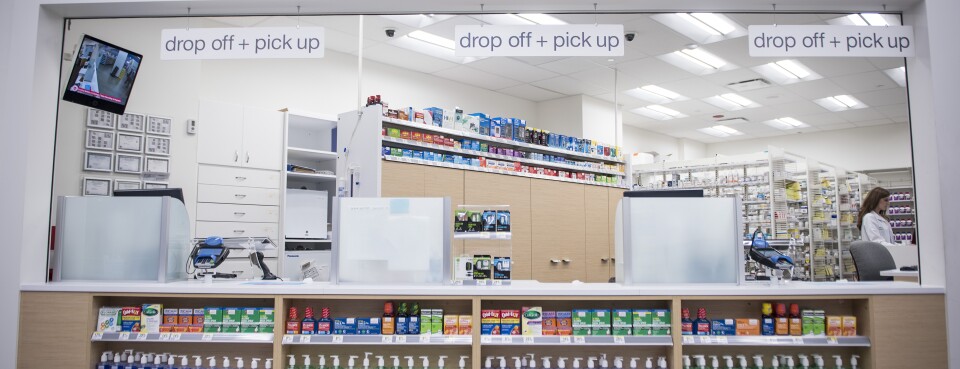

How CVS evolved from a retail pharmacy into a health care behemoth

How CVS evolved from a retail pharmacy into a health care behemoth

CVS Health Corporation (CVS) has emerged as a pioneer in the pharmaceutical industry in the 21st century.

With roughly 85{1668a97e7bfe6d80c144078b89af180f360665b4ea188e6054b2f93f7302966b} of Americans living within five miles of a CVS pharmacy, the company is the most profitable retail pharmacy in the U.S. While Rite Aid has a net worth of roughly $200 million and Walgreens is worth $30.52 billion, CVS’s net worth is a whopping $104.57 billion as of March 3, 2023.

CVS came to dominate the retail pharmacy industry and beyond through ever-expanding operations fueled by acquisitions, mergers, and partnerships:

The first wave of acquisitions

The Consumer Value Store first began in 1963 as a health and beauty retailer in Lowell, Massachusetts, before changing its name to CVS in 1964.

Pharmacies within CVS stores were introduced later in 1967, and two years later the company was sold to Melville Corporation.

By 1988, the chain grew to 750 stores with sales reaching roughly $1.2 billion. But it wasn’t until 1994 that CVS’s health care and pharmaceuticals became the primary sources of revenue.

That’s when CVS introduced PharmaCare, a pharmacy benefit management company (PBM), which serves as the middleman between insurance companies and pharmaceutical manufacturers.

Subsequently, as the internet boom swept across the country, CVS capitalized on the opportunity by acquiring Soma.com for $30 million. Soma was one of the first big digital drugstore startups, and the acquisition helped put CVS on the map digitally, giving the company leverage to launch its own website.

“The Internet is a logical extension of our business strategy of making life easier for our customers,” CEO Tom Ryan said at the time.

PBM domination

Fast forward to 2006, CVS acquired Caremark, a PBM, and merged the company’s operations with PharmaCare. This eventually became CVS Caremark, which is now one of the three biggest PBMs in the prescription drug market that dominate market share. As of 2022, CVS Caremark led the way with 34{1668a97e7bfe6d80c144078b89af180f360665b4ea188e6054b2f93f7302966b} market share while Express Scripts accounted for 24{1668a97e7bfe6d80c144078b89af180f360665b4ea188e6054b2f93f7302966b} and Optum Rx accounted for 21{1668a97e7bfe6d80c144078b89af180f360665b4ea188e6054b2f93f7302966b}.

The Caremark deal was unique in that health insurers, rather than pharmaceutical retailers, are typically the ones who buy PBMs through a strategy known as vertical integration — that is, when a company acquires another company in the supply chain or industry and uses it to its advantage.

Also in 2006, CVS acquired MinuteClinic for $170 million. The company’s annual revenue that year stood at $44 billion, with 70{1668a97e7bfe6d80c144078b89af180f360665b4ea188e6054b2f93f7302966b} coming from pharmacy sales alone. The business buoyed CVS during the Great Financial Crisis, and the company’s stock continued to outperform the broader S&P 500 for years to come.

At the same time, CVS’s dominance in the PBM space correlated with the demise of smaller, independent pharmacies through buyouts and bankruptcies.

As “middlemen,” PBMs have the ability to influence or negotiate drug prices by working with pharmacies, health insurers, patients, manufacturers, and in some cases, the government.

This led to controversy due to the lack of price transparency and fee practices. The lack of price transparency raised alarms at the Federal Trade Commission (FTC), which intervened to investigate CVS Caremark and five other PBMs in June 2022.

The ongoing investigation, according to an FTC report, is intended to look into how PBMs steer insurance networks to their own pharmacies, move drug price tiers, manage rebate contracts with manufacturers, and overall how they make the pharmaceutical supply chain more favorable to them.

“Although many people have never heard of pharmacy benefit managers, these powerful middlemen have enormous influence over the U.S. prescription drug system,” FTC Chair Lina Khan said in a statement at the time. “This study will shine a light on these companies’ practices and their impact on pharmacies, payers, doctors, and patients.”

The PBM issue is also a driving force behind billionaire Mark Cuban’s Cost Plus Drugs Company.

‘Health care destination’

As CVS became one of the main leaders in both the retail pharmacy and PBM space, the company elected to venture even further into the health care industry.

In August 2018, the CVS MinuteClinic launched online services that could be accessed 24 hours a day, which increased market access and revenue for CVS. Virtual visits began at $59, along with an option of insurance coverage. A few months later, CVS officially acquired health insurance company Aetna.

“CVS Pharmacy is evolving from not just a store that happens to have a pharmacy and products into more of a health care destination,” then-CVS CEO Larry Merlo said about the deal.

“The possibilities are incredible,” SCAN Health Plan CEO Sachin Jain told Yahoo Finance Live recently (video above) when asked about CVS being more of than a pharmacy. “You have a company that owns an insurance arm. You also have a company that now owns a clinical care delivery arm as well as a retail pharmacy. And so, if you can make the pieces work together, it’ll be great.”

A woman walks past a CVS Pharmacy in Washington, DC, on November 2, 2022. (Photo by BRENDAN SMIALOWSKI/AFP via Getty Images)

A woman walks past a CVS Pharmacy in Washington, DC, on November 2, 2022. (Photo by BRENDAN SMIALOWSKI/AFP via Getty Images)

Despite antitrust concerns over reduced competition in the market, the CVS-Aetna merger ultimately received the green light from the Department of Justice in September 2019.

The American Medical Association (AMA) opposed the arrangement, which entailed Aetna sending their patients directly to CVS, arguing that the “benefits were speculative, [and] it will likely have anti-competitive impacts in the PDP, health insurance, retail pharmacy, specialty pharmacy, and pharmacy benefit management markets.” AMA also argued that it would raise health insurance premiums.

And with Amazon’s recent $3.9 billion acquisition of One Medical, a primary care organization, retail’s push into health care continues apace.

“These are potentially industry-transforming deals,” Jain said. “I think people have longe hoped that retail plus health care could equal a better experience for patients. The cautionary tale is really about the very different cultures of retail and clinical service entities. And I think these deals could end up being highly transformative for health care, or they could go down as potentially the worst deals in the history of the health care industry.”

‘Publicly-traded entities don’t necessarily understand clinical culture’

When the coronavirus pandemic swept through the U.S. in 2020, all of CVS’s assets were put to the test.

In November 2021, CVS announced its plans to close 900 stores over a span of three years as the prospect of “a CVS next door” was replaced by Amazon (AMZN) goods at the doorstep.

Nevertheless, revenue remained steady for the company, enabling more acquisitions and partnerships.

CVS acquired Signify Health (SGFY) for $8 billion in 2022 and is in agreement to acquire Oak Street Health (OSH) for $10 billion at some point in 2023. Oak Street Health is a health care provider for older adults and promote their economics on “value-based care.”

“These moves demonstrate the continued push by many high-profile pharmacies into fast-growing health care markets such as senior care, primary care, and home health,” Scott Dunn, lead health care analyst at CB Insights, told Yahoo Finance.

At the same time, some experts wonder whether retail’s reach into health care could go too far.

“I’ve just been around the block enough to know that oftentimes publicly-traded entities don’t necessarily understand clinical culture,” Jain said about the recent moves by Amazon and CVS. “They’re making decisions for the short term. And when you’re making decisions to hit a quarterly earnings target, you aren’t necessarily doing the things that you need to do to improve people’s health over the long term.”

Anjalee Khemlani contributed to this report.

—

Tanya is a data reporter for Yahoo Finance. Follow her on Twitter. @tanyakaushal00.

Click here for the latest trending stock tickers of the Yahoo Finance platform

Click here for the latest stock market news and in-depth analysis, including events that move stocks

Read the latest financial and business news from Yahoo Finance

Download the Yahoo Finance app for Apple or Android

Follow Yahoo Finance on Twitter, Facebook, Instagram, Flipboard, LinkedIn, and YouTube

Pharmacy Benefit Managers Put in Crosshairs of Drug Price Fight

Pharmacy Benefit Managers Put in Crosshairs of Drug Price Fight

A Residence investigation into the entities that take care of prescription drug added benefits ought to be accompanied by other actions that can assist shed light on how US drug price ranges are fashioned, analysts say.

The House Committee on Oversight and Accountability on Wednesday introduced an investigation into pharmacy benefit administrators like CVS Caremark and Cigna’s Express Scripts and their affect on sufferers.

The probe was welcome news for the pharmaceutical sector and impartial pharmacies, who argue that PBM fees and consolidation with major health and fitness strategies and pharmacy chains has driven up drug expenditures and restricted consumer decisions. PBMs say they help deliver bargains to patients, and that drug manufacturer listing costs are the root of substantial drug prices.

Analysts say the investigation is just the hottest indication of growing momentum in Washington to scrutinize the purpose of PBMs in shaping high prescription drug prices. This, as well as the ongoing probe into PBMs by the Federal Trade Fee, could direct to guidelines to strengthen oversight and assistance decreased drug expenditures for individuals, policy observers say.

But analysts also warning that this interest to PBMs doesn’t negate the want to appear into drug company price tag environment and other methods that analysts say lead to the convoluted system that determines what Us residents fork out at the pharmacy counter.

“Many members of Congress are disappointed by the deficiency of transparency in the drug provide chain and PBMs are a very easy concentrate on,” reported Stacie Dusetzina, an associate professor in the Office of Health and fitness Plan at Vanderbilt College Clinical Center.

“It is significant to comprehend that drug makers set the record costs PBMs the conditions for protection. PBMs, ideas, and drug companies share the blame for the raise in checklist price ranges,” Dusetzina added.

Committee Chairman James Comer (R-Ky.) asked for information from the Office environment of Staff Management, the Centers for Medicare & Medicaid Companies, and the Protection Well being Company to figure out the impression of PBMs on authorities-administered wellbeing-care courses. He also despatched letters to the country’s 3 largest PBMs—CVS Caremark, Convey Scripts, and OptumRx—for files and communications linked to their business enterprise practices.

Transparency Drive

Congress and the FTC have examined PBMs in the previous, but the development of the sector and consolidation with wellness strategies and pharmacies has fueled a greater thrust to comprehend the entities that a lot of analysts say rely on secrecy to form drug coverage. Right now, the a few major PBMs regulate practically 80{1668a97e7bfe6d80c144078b89af180f360665b4ea188e6054b2f93f7302966b} of the industry.

The passage of President Joe Biden’s landmark Inflation Reduction Act (Community Law 117-169) has also prompted lawmakers to search at other areas to support decrease drug costs. With the IRA, Medicare now has the authority to negotiate the rates of some of the medicine it spends the most on, and also to demand from customers rebates from drugmakers who raise price ranges on their products and solutions more rapidly than the price of inflation.

“As pressure builds to handle pharmaceutical costs, PBMs significantly are in the cross-hairs,” stated Robin Feldman, a law professor and researcher at the College of California, San Francisco.

Quite a few best lawmakers have recognized PBM oversight as a top rated precedence this Congress. The Senate Judiciary Committee in February advanced a team of bills aimed at reducing drug prices, which include the Prescription Pricing for the Men and women Act (S. 113). This invoice would direct the FTC to analyze the consequences of consolidation in the PBM field on pricing, and also to supply suggestions to Congress on other techniques to increase level of competition and protect shoppers.

A 7 days afterwards, the Senate Commerce Committee held a hearing on a monthly bill (S.127) from Chairwoman Maria Cantwell (D-Clean.) and Sen. Chuck Grassley (R-Iowa) that would prohibit PBMs from charging overall health options far more for a drug than they reimburse pharmacies. The Pharmacy Reward Supervisor Transparency Act would also require PBMs to report yearly to the FTC certain details about payments they obtain from health and fitness options and fees billed to pharmacies.

The Dwelling probe is particularly concentrated on the rebates drug brands pay back to PBMs in exchange for superior placement on lists of covered medication acknowledged as formularies, as very well as service fees PBMs demand to unaffiliated pharmacies.

“PBMs are supposed to assistance buyers by lowering charges through the passing on of rebates they obtain from companies. But these rebates really do not appear to be to be making their way to consumers,” said Michael Carrier, an antitrust professor at Rutgers Legislation Faculty.

Brian Newell, a spokesperson for the main drug industry trade group, the Pharmaceutical Investigate and Suppliers of The us, explained of PBMs: “These entities perform hand in glove with insurers to determine what medicines persons have obtain to and what they finally spend at the pharmacy. Their business enterprise design is rife with conflicts of curiosity that impartial authorities and other congressional investigations have identified can direct to bigger charges for sufferers. People today are looking to Congress to rein in these abusive tactics, and we hope this is a single move in that direction.”

But JC Scott, president and CEO of the primary PBM trade team the Pharmaceutical Care Management Association, explained PBMs “have a established monitor report of decreasing prescription drug costs in federal programs, in the end for people and taxpayers.”

“While we appreciate—and share—the Committee’s concern around drug pricing and existing gaps in affordability, we strongly urge users of the committee and Congress to remain focused on actual solutions that are established to lessen prescription drug expenditures,” Scott additional.

Rate ‘Dysfunction’

The price of the Dwelling probe’s findings will count on how lawmakers use it to have an understanding of how PBMs work in a drug pricing method that analysts say feeds off misaligned incentives.

The probe “is a thing that’s an acknowledgment that drug pricing dysfunction much more broadly is not just the final result of just one singular layer of the source chain, but many layers of source chain functioning in live performance with 1 a different to yield the dysfunction,” mentioned Antonio Ciaccia, CEO of Ohio-based drug pricing information company 46brooklyn Exploration.

“I’m hoping that we can get more of that nuance right—not just blame it all on PBMs but demonstrate how what PBMs do to the industry exacerbates the challenges that we experienced with the other levels in the supply chain,” Ciaccia claimed.

The emphasis on drug pricing policy is sure to outcome in even a lot more demands for responses on how drug charges are formed, Dusetzina claimed.

“There is going to be additional force on PBMs, programs, and manufacturers about what style of pricing information is designed public heading forward,” she reported.

The Role of Consulting in Specialty Pharmacy

The Role of Consulting in Specialty Pharmacy

Expert companies are a worthwhile portion of the specialty pharmacy room. To convey a new drug to market, purchasers are confronted by various substantial obstacles, these types of as contracting with payers, planning pricing and reimbursement products, assortment of specialty pharmacy/hubs, and planning the client journey. Each phase can pose precise challenges to a customer, and know-how gaps may well exist at any phase that could negatively influence a drug start.

Consultants fill in understanding gaps and can establish and put into practice effective strategies that strengthen a drug’s prospects of accomplishment. A good romantic relationship amongst the proper consulting agency and the right shopper can sleek the system of bringing a remedy to marketplace and support consumers in getting their solutions into the arms of people in need of therapy speedily and efficiently.

Guide providers are various with particular companies specializing in a variety of segments of the current market comprehensive beneath.

Payer/market place contracting

At the coronary heart of a client’s problems is the query of how they are going to get insurance coverage designs to protect their new therapy. Payers have the greatest impact on the money success of any new drug launch.

Knowing the challenging world-wide-web of insurers, bargains from federal government and professional options, and payer obtain is exceptionally difficult. Specialist companies possess awareness and relationships in just the 3rd-occasion payer landscape that support ease consumer issues and make certain correct contracts are secured with health insurance coverage providers that favorably position therapies on drug formularies and limit the sum of red tape needed to obtain strategy acceptance.

In addition, as well being insurance coverage premiums increase and wellbeing care fees rise, consultants can work with businesses intently to carry out new billing styles, these as virtual health and fitness products and services and HMOs, that help save dollars for insurers and individuals.

Policy, pricing, and reimbursement

Plan and pricing are an at any time-shifting landscape. There have been numerous drug pricing policy reforms enacted previously and even further reforms are predicted to release this 10 years.

Suppliers have to keep up to date information to recognize what has took place and what is on the horizon that may possibly affect pricing. Consultants with awareness across regulatory bodies can aid makers in understanding the current regulatory framework that impacts pricing so that they can enhance selections in this arena.

Market and aggressive intelligence

Consultants can provide aggressive positive aspects to purchasers by leveraging their encounter inside of the field to give in depth insights into the marketplace. Companies have several years of practical experience behind them in just the market place that they use to increase customer outcomes nevertheless expert services, these types of as giving marketplace trends and forecasts.

Channel system

When a new drug is coming to sector, decisions have to be created on which type of a specialty pharmacy community will be used and which specialty pharmacies will participate in that network. Hubs and third-social gathering logistics sellers can also be component of that discussion, as very well as the earlier reviewed insurance payers.

Each entity operates uniquely and sometimes can conflict with how other entities work. Consultants can support clientele in producing channel conclusions that can ensure the client’s individualized prepare will be implemented, optimizing the client journey.

Individual services, accessibility, and affordability

Consultants can support improve a client’s model practical experience by helping in the improvement of individual expert services. There is a huge require for such services, as prescription abandonment and adherence degrees are concerningly high even for specialty drug populations.

A consultant can also guide in the advancement of individual guidance courses that get medicines in the hands of people most in want of therapy. The medically underserved, underinsured, or those people ready on clearance of in some cases prolonged prior authorization protocols can acquire complete obtain to free of charge medicine, full with a suite of client products and services by these applications.

Marketing and advertising

Client promoting teams should recognize how all the parts of the specialty pharmacy landscape—from vendors to payers, people, and pharmacies—interact to make certain a product or service launch is prosperous. Consumers can function cross-functionally to deliver a drug from a idea to a launch productively.

They can support with products strategy and start, leveraging understanding of drug therapeutic options, patient bases, pricing, and reimbursement scenarios, to give the client’s advertising and marketing a detailed graphic of the market place. By being familiar with the affect of just about every stakeholder, a client can far better style and design their advertising approaches.

Spouse performance evaluation

Info are incredibly beneficial in today’s specialty pharmacy business. Details can be used to boost every single one component of a client’s approach, such as advertising, pricing, affected individual services, and logistics.

Information can also be extremely complex to get, mixture, and have an understanding of. Consultants can carry relationships and understanding of third-get together knowledge providers and aggregators to clientele and clearly show them how data could be utilized to make improvements to the affected person journey. Consultants can also help customers leverage knowledge to better management the physical and economic transactions that help the affected person.

Consultant companies deliver revenue by charging hourly service fees, related to how an impartial contractor or a lawyer may bill for their expert services. Based on the stage of service essential for a specified task, consultants can be brought “in house” to have a full-time, in-man or woman place of work presence, or they can provide expert services from a distance as a result of their own offices. In addition to hourly service fees, consultants can obtain revenue by gathering finder’s charges when connecting shoppers with other services vendors/personnel that greatly enhance their results.

At this time there are several consulting companies of differing measurements inside the market place. To spotlight a couple, TwoLabs Pharma Services is a single of the major at more than 120 employees.

They expanded substantially in 2018 when they obtained MKO World wide Partners and in 2020 when they included CEEK Enterprises.1 Archbow is a medium-sized (<25 employees) consulting firm that was recently acquired by the Omnicom Health Group in April 2021.2

Protean is a smaller consulting firm that specialized in market access, patient services, and payer contracting that was recently acquired by Eversana in October 2021.3 A few consulting firms that are of smaller size include Route3, Perspective3, Katz, and many others.

There are plenty of other players within this market, consisting of various sizes and offering a variety of expertise. Vynamic is a multinational firm that has specialized knowledge in health plants, health care technology, providers, public health regulation, and life sciences.

CSI Group is a firm that exclusively operates as a B2B marketing and creative agency that develops initiatives to improve brand and product recognition. The Dedham Group is a market access firm focused on oncology and specialty therapeutics.

Zensights specializes in vendor/supplier engagement issues. There are many other specialized firms that provide focused expertise in any area of concern a manufacturing client may seek assistance in.

As demonstrated above, the specialty pharmacy consulting space is constantly evolving. New players are being added through startups and others are being acquired or merging.

These activities can have an implication on the overall marketplace. One of the implications is that mergers and acquisitions of firms can lead to an overall reduction in the impartiality of consultant groups in directing business toward certain channels or entities.

The recent acquisition of Protean by Eversana—a leading provider of global consulting services to the life sciences industry—will improve Eversana’s reach and presence, no doubt. It also can potentially impact impartiality and independence of consulting services through conflicts of interest.

Although it is true conflicts of interest are often a part of business, with mergers and acquisitions becoming a regular part of this marketplace, a commonly used and trusted consultant can be acquired by a firm that may pose a conflict of interest. Perhaps the purchaser consults for your primary competitor. Such scenarios can complicate relationships between consulting firms and manufacturers.

Impartiality is a concern within the overall market. Clients not only have to navigate the uncertain waters for which they are hiring consultants, but they also must navigate consultant recommendations in channel decisions knowing that the space has a reputation for partiality.

Often, firms will collect finder’s fees from various channel entities for directing business toward them. This reputation of partiality is acknowledged by the consulting firms themselves.

For example, Blue Fin Group states on their website, “we are very proud to be the only neutral consulting organization in the industry meaning that we do not take any incentives from channels to direct business toward them – which is a common practice in this industry.”4

This quote is telling in that it alleges finder’s fees for channel decisions are widely practiced within the industry to such an extent that a firm believes it can market itself as impartial to gain an advantage over its competition. As the specialty pharmacy market continues to expand over the next several decades, so too will the accompanying consultant services landscape expand.

Consultants can offer valued knowledge and expertise to specialty drug manufacturing clients and help ensure a smooth process when taking a new therapy to market. They often can be THE reason for a specialty drug gaining first mover advantage or achieving dominant market share over competitors.

However, the overall specialty consulting market has a reputation for partiality when directing business toward channels that provide kickbacks to the consulting firms. As the consulting market continues to develop, it will be interesting to witness if this reputation persists.

About the Author

Daniel Paul earned his Bachelor of Science in Biology from Allegheny College and his Doctor of Pharmacy degree from Duquesne University in Pittsburgh. He is currently earning a Master of Pharmacy Business Administration (MPBA) at the University of Pittsburgh, a 12-month, executive-style graduate education program designed for working professionals striving to be tomorrow’s leaders in the business of medicines. Dan has spent the last 2.5 years working in Specialty Pharmacy, initially as a clinical pharmacist and most recently as the Manager of Pharmacy Operations.

References

  1. Two Labs Acquires MKO Global Partners. https://twolabs.com/two-labs-acquires-mko-global-partners-2/. Accessed January 23, 2022.
  2. Omnicom Health Group Acquires Archbow Consulting. https://www.omnicomgroup.com/newsroom/omnicom-health-group-acquires-archbow-consulting/. Published April 14, 2021. Accessed January 24, 2022.
  3. Eversana Acquires Protean Strengthens Operational Strategy and Excellence in Market Access, Channel and Patient Services. https://www.prnewswire.com/news-releases/eversana-acquires-protean-strengthens-operational-strategy-and-excellence-in-market-access-channel-and-patient-services-301401393.html. Published October 15, 2021. Accessed January 24, 2022.
  4. Blue Fin Group, An IntegriChain Company website. https://consultbfg.com/. Accessed January 24, 2022.

Clinical Research Trials At Your Local Pharmacy

Clinical Research Trials At Your Local Pharmacy

Buoyed by the fast growth of COVID-19 vaccines, the daily life sciences business is on observe for a succession of upheavals by now reworking affected person care, enterprise models, and sector dynamics. In point, it is impossible to individual the transformational threads in between individualized drugs, groundbreaking therapeutic innovations, and a churning ecosystem of players, some conventional and other folks to be named later. Here’s a sampling of the newest lifetime sciences traits with the best import for small business and sufferers.

Smart digital platforms emerge

Like every industry, lifetime sciences depends on the safe exchange of facts concerning many groups across a price chain that stretches from raw component sourcing to investigation and enhancement, commercial launch, and solution distribution. Related, quality details on clever electronic platforms is envisioned to guidance cost-efficient, sustainable drugs and therapies.

IDC analysts predicted that by the close of 2024, transparency advancements pushed by drug serialization and traceability mandates will translate into 20{1668a97e7bfe6d80c144078b89af180f360665b4ea188e6054b2f93f7302966b} reduction in income leakage at existence science companies around the world. They mentioned by the next year, 50{1668a97e7bfe6d80c144078b89af180f360665b4ea188e6054b2f93f7302966b} of lifetime science corporations will adopt smart tech platforms to embrace sustainability-by-layout techniques and track benefit chain emissions across sites, procedures, and products and solutions. By 2025, IDC specialists predicted 60{1668a97e7bfe6d80c144078b89af180f360665b4ea188e6054b2f93f7302966b} of lifetime science corporations will use health and fitness information platforms for medical doctor engagement and client journey processes, 65{1668a97e7bfe6d80c144078b89af180f360665b4ea188e6054b2f93f7302966b} to support regulatory submissions, and 35{1668a97e7bfe6d80c144078b89af180f360665b4ea188e6054b2f93f7302966b} to aid value-primarily based pricing.

As every person discovered all through the pandemic, speed to sector is vital. No question that is why Gartner scientists predicted the advancement of RNA products will guide fifty percent of the leading 25 pharmaceutical providers to double medical source chain investments by 2025. By the subsequent year, IDC analysts predicted investments in integrated supply chain administration will enable 50{1668a97e7bfe6d80c144078b89af180f360665b4ea188e6054b2f93f7302966b} of world wide lifestyle science brands raise revenue by avoiding stockouts of active components and provides.

“Digitalization delivers companies with the agility to fulfill submit-pandemic norms such as specialty treatment options for qualified populations and individuals, as very well as distant treatment,” reported Mandar Paralkar, head of life sciences market at SAP. “For case in point, businesses need to have knowledge alignment among manufacturing and rules to ramp up supply chains immediately so they can safely satisfy market place needs. SAP S/4HANA Cloud captures in depth info by product attribute, allowing businesses to map correct documentation to nation-certain regulations for more rapidly approvals.”

Extra FROM FORBESSAP BrandVoice: Health care Traits: Life Sciences Providers Are Turning out to be Provide Chain Leaders

Disruptive partnerships reshape existence sciences ecosystem

With the advent of customized drugs, industry watchers see companies interacting in new ways, perhaps with unanticipated partners – all for the ideal of individual care. Gartner analysts expected a “push toward electronic trials with decentralized and virtual capabilities…laying the groundwork for improved accessibility of demo providers, possibly at a patient’s residence or other localities.” Translation, scientific study drug trials are coming to your regional pharmacy. Even far better, this shift could fuel variety and inclusion. By 2026, Gartner scientists predicted around 60{1668a97e7bfe6d80c144078b89af180f360665b4ea188e6054b2f93f7302966b} of retail pharmacies will carry out medical investigation, supporting to aid lifetime science trial variety demands.

As for individuals new partners, Gartner scientists explained startups that “may or may well not be defined as traditional healthcare players” will disrupt everyday living sciences ecosystems. They predicted by 2026, a “blockbuster” therapy will bypass incumbent pharmaceutical producers — and power them to companion on a digital disruptor’s terms.

This is possibly why Forrester analysts warned towards vendors viewing their ecosystem interactions as purely transactional. They suggested ecosystem stakeholders including prescription drugs, healthcare vendors, regulators, and insurers, to proactively have interaction in complex and organizational collaboration and know-how sharing.

“There’s a convergence amongst developments in drug growth and supply, gadgets, and client care which is altering how biopharma providers collaborate with the full ecosystem,” Paralkar. “Initially, worth chains have ensured traceability for item high-quality. We see this growing to a larger enterprise community of lifetime sciences business companions doing work alongside one another for value-successful operational excellence and innovations main to enhanced individual results and finally, more powerful revenue.”

Highly developed systems for affected individual-centric drug advancement

Info-pushed, AI-centered drug progress is at the rear of numerous of the newest existence sciences improvements. Circumstance in level are “in silico” methodologies that use personal computer-based simulation to aid pharmaceutical firms pace up likely drug discovery. In one particular Gartner survey, 51{1668a97e7bfe6d80c144078b89af180f360665b4ea188e6054b2f93f7302966b} of purchasers claimed they have been raising investments in “AI/machine learning”, which are foundational to silico simulation. IDC analysts predicted that by 2026, drug discovery will get to an inflection issue the place in silico strategies overtake traditional bench-based mostly analysis at major pharmaceutical companies. In that similar calendar year, IDC scientists anticipated the adoption of AI-dependent drug design and style by the life science market to develop by 65{1668a97e7bfe6d80c144078b89af180f360665b4ea188e6054b2f93f7302966b}, fueled by a aim on precision medicine and a quickly-increasing ecosystem of innovative tech start-ups.

Which brings us comprehensive circle to the deeply entwined romance among personalised drugs, know-how innovations, and evolving partnerships. Indeed, the pandemic crashed into the environment with a substantial wave of change, but if these predictions are any type of guidebook, there’s considerably additional everyday living sciences innovation to occur.

Learn value-powerful innovations for far better patient outcomes with life sciences answers from SAP.

Connecticut pharmacy industry plagued by labor shortage

Connecticut pharmacy industry plagued by labor shortage

The Connecticut Pharmacists Affiliation suggests the point out requirements to loosen the regulatory ecosystem and make structural alterations to tap into this health care source

HADDAM, Conn. — A invoice has been proposed in Connecticut that would permit pharmacists to prescribe start management. The query results in being are there sufficient pharmacists to actually offer you that service? In Connecticut, huge chains like CVS and Walgreens have closed or diminished hrs at various destinations.

FOX61 discovered about 400 rapid task openings for pharmacists in Connecticut. There are presently about 6,000 pharmacists in Connecticut and about 600 pharmacies.

Indication up for the FOX61 newsletters: Morning Forecast, Morning Headlines, Night Headlines

Irrespective of whether there basically is a shortage depends on who you chat to. At domestically owned and operated Nutmeg Pharmacy, their situation hasn’t been a absence of candidates but instead a absence of income to get them in the doorway. 

“The expense of choosing individuals has gotten to be significantly additional highly-priced,” said Gregory McKenna, the owner of Nutmeg Pharmacies.

McKenna suggests smaller pharmacies are getting taken benefit of and losing funds at the palms of insurance coverage providers who frequently reimburse them for significantly less than what it fees to offer a treatment. “This yr now is escalating to practically 35{1668a97e7bfe6d80c144078b89af180f360665b4ea188e6054b2f93f7302966b} of the prescriptions that I fill. I’m not even getting compensated value for. They are authorized to do this and that places a downward pressure on anyone,” described McKenna.

McKenna indicates that a absence of pharmacists may well be a fake narrative market giants produced to enhance gains. “Are they doing it for yet another explanation? Are they accomplishing it to try to maximize their profitability by having much more scripts accomplished in fewer time period of time and not preserving the customer in head?” questioned McKenna.

But the CEO of the Connecticut Pharmacists Affiliation explained to FOX61 the sector is getting absent from the 24 hour model. “Stores may well not have the exact several hours they utilized to. A large amount utilised to be open up right until 9 or 10, now they shut at 7,” stated Nahan Tinker.

In the meantime, the Dean of UConn’s College of Pharmacy advised FOX61 enrollment is down because of to many factors like COVID health care burnout, fewer large faculty graduates, extra competition for the identical expertise pool, an high priced 6 calendar year training and too a great deal purple tape in Connecticut. A lot of graduates are taking work in other states. “Pharmacists are just one of the most underutilized methods out there,” reported Dr. Philip Hritcko, the Dean of the UConn University of Pharmacy. “We want to update our polices to make it possible for pharmacists to have extra of a substantial function in the healthcare presented in our point out.”

For case in point, pharmacists are qualified in giving products and services like examining your vital indicators, giving beginning control, smoking cessation, childhood vaccinations and COVID testing and remedy. But Connecticut does not make it possible for some of that and what it does allow is only on a momentary foundation. “Pharmacists are educated to do significantly much more than they are in fact typically regulatory clever and statutorily authorized to do,” stated Tinker.

Connecticut also generally only permits two pharmacy specialists to operate underneath each individual a person pharmacist. The professionals say this wants to be expanded to permit pharmacists to have far more help. It would totally free them up to be better used to serve the wants of the local community.

Have a story concept or some thing on your thoughts you want to share? We want to hear from you! Electronic mail us at newstips@fox61.com

https://www.youtube.com/enjoy?v=mYz5RfnCB1Y

Here ARE Far more Strategies TO GET FOX61 Information

Down load the FOX61 Information App

iTunes: Click on right here to obtain

Google Play: Click right here to download

Stream Stay on ROKU: Add the channel from the ROKU shop or by looking FOX61.

Steam Stay on Fireplace Television: Look for ‘FOX61’ and click ‘Get’ to download.