What is the future of CT nursing homes? Industry is under pressure

What is the future of CT nursing homes? Industry is under pressure

Editor’s Note: This is the second report in a four-part series about Connecticut’s aging population and the challenges in finding ways to care for people.

This week: Nursing homes face a reckoning as they deal with fewer residents, a change in pay and plans to ‘right-size’ the industry.

Last week: The country’s aging population is expected to more than double. Connecticut’s network of supports is struggling.

Upcoming: As more people choose home and community options over institutional care, will access to services be equal for all?

Upcoming: More people are aging in place. But the state’s home care industry operates with little oversight.

For many Connecticut nursing homes, the next few years will be about survival.

Along with unprecedented staffing shortages and less-than-ideal occupancy rates, nursing home operators are also facing a state Department of Social Services that is intent on “right-sizing” the industry by directing money away from nursing homes and toward home care programs.

What is the future of Connecticut nursing homes? Industry is under pressure

What is the future of Connecticut nursing homes? Industry is under pressure

For many Connecticut nursing homes, the next few years will be about survival.

Along with unprecedented staffing shortages and less-than-ideal occupancy rates, nursing home operators are also facing a state Department of Social Services that is intent on “right-sizing” the industry by directing money away from nursing homes and toward home care programs.

And state legislators, some of whom heard terrifying stories about substandard care in facilities, have proposed laws that would open nursing homes’ books to more scrutiny and increase the mandatory number of hours residents have with their caretakers.

When nursing home operators recently asked the state for $193 million more to meet their mission, they were rebuffed, and lawmakers instead raised questions about how several infusions of money during the pandemic were spent.

About 20,000 people live in Connecticut’s approximately 200 nursing homes. And as the state’s population of older adults continues to grow and show increased interest in home-based care, changes in the nursing home industry appear inevitable.

“This is a time of transition in the nursing home industry, not only because of the pandemic but also the changes in attitudes about nursing homes,” said Deidre Gifford, the state’s former social services commissioner, now head of the Office of Health Strategy. “Somebody who may have a decade or so ago, or even just before the pandemic, been admitted to a nursing home is now figuring out how to remain in place at home.”

“Every year, the state of Connecticut spends $1.12 billion on our state’s nursing homes when we look at the whole Medicaid program,” said Sen. Matthew Lesser, co-chairman of the Human Services Committee. “It is important with that funding, which pays for 70{1668a97e7bfe6d80c144078b89af180f360665b4ea188e6054b2f93f7302966b} of the nursing home residents who are receiving care in the state, that we have certain things. One is transparency, where we know where that money is going; two, that we have adequate staffing; and then three, that we are taking care of our most vulnerable.”

Lawmakers have rolled out a series of sweeping bills this year with the aim of improving care in nursing homes. The proposals would raise the mandatory minimum staffing hours in nursing homes, require more transparency in the way facility operators spend taxpayer money, mandate that owners provide air conditioning in resident rooms and prompt broader disclosures about private equity investment in long-term care, among other changes.

Industry leaders have cautioned against cutting funding from nursing homes as they emerge from the pandemic.

“We have been urging the DSS and state policymakers that they must take a very careful and cautious approach about prematurely and aggressively accelerating their rebalancing objectives,” said Matthew Barrett, the president and CEO of the Connecticut Association of Health Care Facilities.

“We think being too aggressive is dangerous, and it could lead to issues of impeding access to high-quality skilled nursing facility care. If too many homes close, beds come out of the system, and the consequences of that will be harmful to the very population that we want to be sure are cared for,” Barrett said.

He said the state needs to view the system as a whole and not fund one form of care over another.

“We need both, and that’s why we say Connecticut shouldn’t just throw one ball in the air to aggressively enhance and improve the infrastructure of home and community-based services,” Barrett said. “We also have to keep the other ball in the air too by still investing and ensuring that we have a strong supply of high quality skilled nursing facility care.”

Legislators’ focus on nursing homes also comes in the wake of revelations that Athena Health Care Systems, one of Connecticut’s largest long-term care providers, failed to pay temporary employment agencies and health insurance premiums for its staff and faces lawsuits, consent orders and a $1.75 million fine.

“I believe we are in crisis not just in my district, not just in Connecticut, but across the nation,” said Rep. Jane Garibay, co-chair of the legislature’s Aging Committee.

Problems with care in nursing homes have been going on for years, she said. “This is not new, and it’s not just because of COVID. COVID shined a light on what is happening, but it is our responsibility to change it.”

Inside the nursing homes: More empty beds, fewer workers

Bill White’s family owned the Beechwood Post-Acute & Transitional Care Center in New London for 32 years — until last summer, when White sold it.

“I have a five-star nursing home with an outstanding reputation that still hasn’t had a single COVID death. It’s family owned, and I still couldn’t hire anybody,” White said last summer. “[I] had to pay people $300 more a shift just to fill them.”

“If I can’t get people, I’m thinking, ‘Holy crap, what are others doing?’” he said.

White said the timing was right to get out of the industry, and he suspects others will be following suit.

“What I’m seeing since the pandemic is overall occupancy has dropped, it’s probably in the low 80 [percent range] now,” he said in an interview on his last day as a nursing home owner.

They’re lucky they get up for lunch.

JOHN BILSANO, APPLE REHAB SHELTON LAKES RESIDENT

“But the spread in occupancy between the haves and have nots is much more dramatic. There are homes that are at 90{1668a97e7bfe6d80c144078b89af180f360665b4ea188e6054b2f93f7302966b} capacity and others under 60{1668a97e7bfe6d80c144078b89af180f360665b4ea188e6054b2f93f7302966b},” White said. “So I think maybe people are thinking more about where they go from here than they ever did before.”

In February 2023, the statewide occupancy for nursing homes was about 83{1668a97e7bfe6d80c144078b89af180f360665b4ea188e6054b2f93f7302966b}, below the 90{1668a97e7bfe6d80c144078b89af180f360665b4ea188e6054b2f93f7302966b} optimal occupancy rate some legislators are calling for and the industry reported just before the pandemic hit in 2020.

Even as the total number of beds in nursing homes decreased because some facilities closed during the pandemic, the number of available beds has increased. In February 2020, there were 3,112 open beds in the state’s then-210 nursing homes. Roughly two years later, in March 2022, that number reached 5,017 open beds in 205 nursing homes.

As of late February, there were about 3,800 open beds in about 200 nursing homes, according to state data.

Some nursing home residents say care has been inadequate in recent years. Many facilities saw a drop in staff when the pandemic began and haven’t recovered since.

John Bilsano, 57, said residents at Apple Rehab Shelton Lakes, where he’s lived for three years, are waiting longer for assistance because the building is short staffed.

“It hurts me to see them wait as long as they do for help,” he said. “When they put their call bell on, it takes almost a half hour, 45 minutes, for [workers] to answer.

“I feel bad. Let’s say they need to go to the bathroom or they’re on a bed pan and they need to be changed, they have to sit in their diaper … for that long until somebody comes to change them.”

Bilsano said some residents don’t make it out of bed for activities until the afternoon.

“They’re lucky they get up for lunch,” he said.

Representatives for Apple Rehab could not be reached for comment.

It is time we realize the nursing home of 20 or 30 years ago that cared for people who needed basic personal assistance has evolved into a complex clinical setting.

LURLETTE NEWELL, CERTIFIED NURSING ASSISTANT

The problems reached the state Capitol this year. Several residents and their loved ones testified and wrote to lawmakers about the situation inside nursing homes.

“I have personally experienced the problems with short-handed staff and personnel … when both my mother and father were in the nursing home,” Joseph Swart wrote to legislators. “There was one time I went there only to find my mother lying on the bathroom floor. When they finally got her out of there and back in bed, I asked her why she was on the floor, and she told me she had rang for the nurse, but it took them so long to come in she decided to go to the bathroom on her own and she tripped and fell.

“I also witnessed that the meals … were often cold when they should have been hot.”

Cynthia Hadden, of South Windsor, described the conditions her father lived with during his two years in a nursing home.

“The lack of staffing did not allow for quality care as time with each resident is not sufficient,” she said. “His phone was often placed in a hurry where he could not reach it. Water was outside of his reach; meals were left on a table without assistance, becoming cold. His diaper hanging down between his knees, obviously soaked for hours.

“A person with dementia does not remember what the call bell is for, therefore someone needs to be checking on residents consistently and timely. When staffing levels are low, the residents suffer.”

Lurlette Newell, a certified nursing assistant at the Westside Care Center in Manchester, told lawmakers that every year, the ratio of caregivers to residents gets worse.

“On top of that,” she said, “the acuity of our residents and the amount of care they need grows. It is time we realize the nursing home of 20 or 30 years ago that cared for people who needed basic personal assistance has evolved into a complex clinical setting.”

Staffing and the move to home care

Finding staff is a major challenge — not only for nursing homes but also for anyone in the health care sector, including home health care agencies or home companion agencies, where turnover can be as high as 50{1668a97e7bfe6d80c144078b89af180f360665b4ea188e6054b2f93f7302966b} annually.

State officials believe many nursing home beds aren’t filled because family members who worked from home during the pandemic were able to keep their parents or relatives at home, while others turned to private caregivers or home companion agencies when possible.

The pandemic has sped up a process that was already underway, with more people transitioning from institutional care to home services. The number of people seeking home care now is about where the state projected the numbers to be in 2028, said Dawn Lambert, co-leader of the Department of Social Services’ Community Options Unit.

If we can just provide enough support to the family caregiver … it is preferable for the client and for the family to keep them at home.

DEIDRE GIFFORD, FORMER SOCIAL SERVICES COMMISSIONER

“We’ve made this quantum leap and landed in 2028 because there are thousands more people now already living in the community today who are no longer in nursing homes,” she said.

“There are definitely more people at a nursing home level of care [who] right now are living in the community with informal caregivers like their relatives, and that’s the No. 1 thing for me, that we be able to support them so they avoid getting burned out.”

Gifford said the increase in “informal caregiving,” while hard to quantify, is something the state must address.

“There is a lot of informal caregiving going on, and sometimes if we can just provide enough support to the family caregiver, whether it’s some respite or adult day care or some other kind of support, it is preferable for the client and for the family to keep them at home,” she said.

But the state’s narrative that people are afraid of nursing homes post-COVID doesn’t add up, Barrett said. National data from February shows nursing homes at about 74{1668a97e7bfe6d80c144078b89af180f360665b4ea188e6054b2f93f7302966b} occupancy, while in Connecticut the occupancy rate is about 83{1668a97e7bfe6d80c144078b89af180f360665b4ea188e6054b2f93f7302966b}.

“The notion that the skilled nursing facility model was completely undermined by the pandemic was a concern being expressed during the very worst and traumatic part of a pandemic in the spring and the summer of 2020,” he said. “I really challenge the idea that that would be an accurate portrayal of how the system is characterized today.”

Barrett said the staffing issues are having an outsized impact on the quality of care in nursing homes.

“Our quality was much higher pre-pandemic, when staffing was stronger, and there’s every reason to believe that quality improvement will flow as the staffing situation improves,” he said.

A new funding system focuses on health needs

In July, the state quietly started a new funding method for nursing home providers called “acuity-based reimbursement.” Under the new system, providers will get paid based on the level of care needed for their residents. It requires putting data into a federal system that determines per diem rates and is based more on the needs of the residents than total numbers of beds filled.

Over the next three years, the state will invest $90 million to phase in the new system and help facilities deal with more medically complex residents. Some providers, who consistently have four- or five-star rated homes and who treat patients with the most severe health needs or have specialized units such as a dedicated respiratory unit, will get more money.

Each provider will be required to assess every resident’s health needs and submit that information to a federal database so a “Case Mix Index,” or analysis of medical needs, can be established. Homes with patients who have a greater CMI Index will get an increase in Medicaid payments.

State officials are hoping the new system will improve the quality of care and get providers to open more specialty units to treat diseases such as dementia or provide services like dialysis.

CT nursing homes.PNG

Rosemary Fahey, left, a resident at Arbors of Hop Brook, talks to the previous owner, Paul Liistro. “I will miss Paul,” Fahey said.

Paul Liistro, whose family owned two nursing homes in Manchester and Vernon until last year, expected an increase of $4 million to $5 million in Medicaid payments based on the state’s formula. He believes that’s why it was so easy to sell his business over the summer.

Liistro was a frequent critic of state officials during the pandemic and was skeptical of the state’s plan to switch the funding model. Some homes won’t fare as well under the new system.

“They don’t want to see beds go down, the state wants to see nursing homes closed,” he said. “At the same time, they’re talking about putting the money into home health care because it is cheaper, but we don’t think the care is better for the patient.

“At the same time, they now have an acuity-based system … and that’s going to keep nursing homes alive, because people are going to figure out how to make the system work for them.”

State Long-Term Care Ombudsman Mairead Painter hopes DSS will push the new payment system and force providers to make improvements to their buildings that she said are long overdue.

“A lot of the buildings here in Connecticut are just outdated, and we haven’t seen owners put the money back into the structure, the physical structure of the nursing homes,” Painter said. “We just haven’t seen it. They take a lot of the money out but it doesn’t go back in. And because of that, these buildings are just old and in need of repair.”

The survey

Even as legislators debate bills, the state’s social services department has been working on a plan to shift funding away from certain nursing homes. Last April, DSS required every provider to submit a survey detailing occupancy rates and future plans in a post-pandemic setting for their facilities.

DSS made it clear the survey would be a vital part of what they are calling the “rebalancing” or “right-sizing” of the industry.

State officials warned providers the surveys would be used to determine which nursing homes receive funding under the new payment model.

Despite that, nearly 20{1668a97e7bfe6d80c144078b89af180f360665b4ea188e6054b2f93f7302966b} of the nursing home providers didn’t properly fill out the survey, state officials said, and the majority of them had no plans for changes other than to seek additional state funding.

Gifford said it is the state’s job to distribute funding to providers that adapt.

“Our job is to understand what’s going on and with our payment model do whatever we can to ensure it’s the highest quality facilities that remain in operation to the extent that any of them are going to close,” she said.

The surveys due in April 2022 were supposed to be the providers’ chance to share with the state not only their occupancy levels but also any changes they planned to make to their buildings.

While 169 of 195 providers who were sent the survey initially responded, the majority said they had no plans for change, and only 22 replied that they were actively seeking building renovations. Another 11 nursing home owners said they were looking into adding specialty units. The Department of Public Health had already approved two ventilator specialty units before the surveys were submitted.

These were not the forward-looking responses DSS officials had expected.

“The industry will obviously have to respond to the need and the demand in the community and adapt to those needs,” Gifford said.

The survey showed 85 nursing homes are over 85{1668a97e7bfe6d80c144078b89af180f360665b4ea188e6054b2f93f7302966b} filled, and 83 are under that mark. Almost all complained about the difficulty in attracting and keeping staff, the biggest issue facing providers right now.

Barrett said the April surveys are a good view of where the industry is now, but they are not the final word on where it will end up.

“It’s an extremely important scan in terms of where the sector stands at this point coming out of the public health emergency. But by no means is it a final analysis or the final word on where the sector is going to land,” Barrett said. “Nationally, most observers believe the nursing home sector will recover. The question becomes, to what extent? … And will it recover its occupancy to pre-pandemic levels?”

A shift away from nursing homes?

The state is now putting more of its Medicaid funding into home health care.

In 2018, for the first time ever, Connecticut spent more Medicaid money on home and community-based services than on institutional care, 53{1668a97e7bfe6d80c144078b89af180f360665b4ea188e6054b2f93f7302966b} to 47{1668a97e7bfe6d80c144078b89af180f360665b4ea188e6054b2f93f7302966b}, state data show. By 2022, it had spent 58{1668a97e7bfe6d80c144078b89af180f360665b4ea188e6054b2f93f7302966b} of its Medicaid long-term care funds on home services, versus 42{1668a97e7bfe6d80c144078b89af180f360665b4ea188e6054b2f93f7302966b} for nursing homes and other facilities.

DSS eventually sees that gap increasing to as much as 75{1668a97e7bfe6d80c144078b89af180f360665b4ea188e6054b2f93f7302966b} for home care and 25{1668a97e7bfe6d80c144078b89af180f360665b4ea188e6054b2f93f7302966b} to nursing homes.

Barrett said it would be a mistake to substantially dilute funding for nursing homes.

“Let’s not make the mistake of overemphasis on reducing nursing home bed supply,” Barrett said. “We are really urging the [state] to not be prematurely basing any new aggressive approach to right-sizing and rebalancing … on where we are right now or on the April survey reports.”

I think it is a bunch of bunk that they aren’t making any money.

MAIREAD PAINTER, STATE LONG-TERM CARE OMBUDSMAN

In the survey, some providers said they expect to take over other nursing facilities that don’t make it financially.

“Eleven nursing homes believe neighboring nursing homes will close within the next 18 to 36 months, and they anticipated increased occupancy by absorbing residents and staff from those neighboring facilities that close,” according to a review of the DSS surveys.

At least six nursing homes have shut down since 2020, and several family-owned providers and large chains are selling their facilities to private equity companies, mostly based in New York and New Jersey.

CT nursing homes 2.PNG

Sergio Esteves, right, licensed practical nurse, sits in an office at Jewish Senior Services. The nursing home follows a household model, where each resident has their own room and bathroom and shares common areas, including kitchen.

The influx of private equity money into the nursing home field has caught the attention of legislators who are proposing a transparency bill, seeking to make providers reveal quarterly where state funds they receive are going.

Painter said she has grown tired of nursing home owners complaining they don’t have any money.

“I think it is a bunch of bunk that they aren’t making any money,” Painter said. “People wouldn’t continue buying them if that were true.”

Painter is calling for full disclosure by nursing home providers of how many ancillary companies — pharmacies, laundry and food operations — get state money that is supposed to go toward patient care.

One of the bills before the legislature would require providers to be more transparent about where the state’s money is going. Providers would have to reveal whether private equity firms or other silent partners were getting a share of funds that could go toward staffing.

“We’re not going to be able to improve the quality of care in nursing homes unless we first address the financial practices that some … owners use to divert money from patient care in order to make their facilities more profitable,” said Nora Duncan, AARP Connecticut state director.

“Many nursing homes operate under complicated ownership structures that limit financial transparency and make it difficult to understand how facilities are spending taxpayer dollars.”

Bridgeport model

Between them, Liistro and White have more than 70 years’ experience operating family-owned nursing homes. They left the field within a few months of each other, alarmed by the uncertainty of what long-term care will look like in a state with an expanding aging population.

For White, the struggle to find and keep employees has been almost as difficult as fighting COVID.

“I can’t tell you how much effort you have to put into this business, and you start to think, why are we doing this?” White said. “It was never to make money. We never made a ton of money, but you don’t even really get the satisfaction of helping people anymore. It just got frustrating.”

Painter would like to see the state pivot away from hospital-like facilities and approve “smaller homes.”

“I’m really promoting small, community-sized nursing homes. I would love to see maximum 30- to 40-bed nursing homes scattered throughout the state,” she said.

Painter points to the Jewish Home in Bridgeport as an example of what a future building should look like. The Jewish Home is the newest facility in the state, having opened six years ago, and while it has 294 beds, it is designed like a series of small neighborhoods.

“There’s a front door — you have to ring the doorbell. There’s a mailbox. They have a living room, a centralized living room with bedrooms off of it, and many have individual rooms,” Painter said.

The Jewish Home is currently full, according to its director, Andrew Banoff. When submitting their survey in April, officials at the facility asked the state for more skilled nursing beds because of a long wait list.

“For those that do need skilled nursing care, which I think there will forever be that need, the concept of smaller units, private rooms and more personalized care is obviously a good thing,” Banoff said. “I’d love there to be more organizations that rebuild, renovate and find ways to invest in better environments for those we take care of.”

At least a dozen organizations have reached out to The Jewish Home’s leaders to inquire about their model.

“Not shocking, the money and the capacity to invest in new buildings is a challenge for most,” Banoff said. “I think it’s really important to look at, what are the other models? What are the other tools that organizations have to help people live safely in the community, including the adult family living home model, which is for people who are at a nursing home level, but we provide a caregiver in their home, and it’s funded through Medicaid.”

Both Liistro and White say there is still a need for nursing homes, and the state should be wary of eliminating too many beds or letting too many facilities close.

“There is absolutely a future for nursing homes. … There isn’t a substitute for it,” White said. “There’s always going to be a large segment of people who either can’t afford or don’t have a home, or their clinical needs are such that they can’t be supported at home.”

CT Mirror staff writer Katy Golvala contributed to this story.

More Americans Own Their Homes, but Black-White Homeownership Rate Gap is Biggest in a Decade, NAR Report Finds

More Americans Own Their Homes, but Black-White Homeownership Rate Gap is Biggest in a Decade, NAR Report Finds

WASHINGTON (March 2, 2023) – Even though the U.S. homeownership fee has frequently increased all through the past 10 years – to 65.5{1668a97e7bfe6d80c144078b89af180f360665b4ea188e6054b2f93f7302966b} in 2021 (from 64.7{1668a97e7bfe6d80c144078b89af180f360665b4ea188e6054b2f93f7302966b} in 2011) – the Black homeownership price has not retained speed with improves of other racial groups. Also, people of colour endure significant purchasing troubles all over and even immediately after their home buy, according to a report released these days by the National Association of Realtors®.

The 2023 Snapshot of Race and Household Buying in The us examines homeownership traits and challenges by race and location to clarify the existing racial disparities in the housing marketplace. Leveraging NAR’s hottest Profile of Household Buyers and Sellers data, the report explores the traits of who buys residences, why they obtain, what they acquire and the monetary background of prospective buyers by race.

Homeownership Traits

The report observed there have been about 9.2 million far more householders in 2021 than a 10 years prior, but homeownership premiums assorted significantly by race. The Black American homeownership amount – 44{1668a97e7bfe6d80c144078b89af180f360665b4ea188e6054b2f93f7302966b} – enhanced less than half of 1 share issue (43.6{1668a97e7bfe6d80c144078b89af180f360665b4ea188e6054b2f93f7302966b} in 2011) and continues to lag well at the rear of Hispanic Us residents (50.6{1668a97e7bfe6d80c144078b89af180f360665b4ea188e6054b2f93f7302966b}), Asian Us citizens (62.8{1668a97e7bfe6d80c144078b89af180f360665b4ea188e6054b2f93f7302966b}) and White People in america (72.7{1668a97e7bfe6d80c144078b89af180f360665b4ea188e6054b2f93f7302966b}). Therefore, the homeownership gap amongst Black Individuals and any other racial group has grown, in particular when in comparison to White homes (29{1668a97e7bfe6d80c144078b89af180f360665b4ea188e6054b2f93f7302966b}), symbolizing the largest homeownership hole in 10 yrs (26{1668a97e7bfe6d80c144078b89af180f360665b4ea188e6054b2f93f7302966b} in 2011).

Conversely, Asian People (5 percentage points) and Hispanic Americans (4 share points) expert the major homeownership level gains around the very last decade. The Asian American homeownership fee of 62.8{1668a97e7bfe6d80c144078b89af180f360665b4ea188e6054b2f93f7302966b} is an all-time superior. White American homeownership grew by just about 3 share factors and has been constantly about 70{1668a97e7bfe6d80c144078b89af180f360665b4ea188e6054b2f93f7302966b} due to the fact 2017.

“Unfortunately, the incredible affordability worries of the past calendar year have strike minority property buyers additional than White purchasers,” said Jessica Lautz, NAR deputy chief economist and vice president of exploration. “Black consumers are additional possible to be to start with-time buyers, who are more delicate to changes in home finance loan desire fees, when White buyers are extra most likely to have housing fairness to depend on as they make a housing trade.”

Racial Inequalities in Housing Affordability

Black property owners devote additional of their earnings to possess their houses than all racial groups, with 30{1668a97e7bfe6d80c144078b89af180f360665b4ea188e6054b2f93f7302966b} being price tag-burdened – described as expending additional than 30{1668a97e7bfe6d80c144078b89af180f360665b4ea188e6054b2f93f7302966b} of their profits on housing. Which is adopted by Hispanic Us citizens (28{1668a97e7bfe6d80c144078b89af180f360665b4ea188e6054b2f93f7302966b}), Asian Individuals (26{1668a97e7bfe6d80c144078b89af180f360665b4ea188e6054b2f93f7302966b}) and White People (21{1668a97e7bfe6d80c144078b89af180f360665b4ea188e6054b2f93f7302966b}).

Additional than 50 percent of Black renter homes (54{1668a97e7bfe6d80c144078b89af180f360665b4ea188e6054b2f93f7302966b}) devote more than 30{1668a97e7bfe6d80c144078b89af180f360665b4ea188e6054b2f93f7302966b} of their revenue on hire, the most of any racial group. About 30{1668a97e7bfe6d80c144078b89af180f360665b4ea188e6054b2f93f7302966b} of Black renters are severely price-burdened – defined as paying out far more than 50{1668a97e7bfe6d80c144078b89af180f360665b4ea188e6054b2f93f7302966b} of their profits on hire – representing approximately 2.5 million homes. By distinction, 22{1668a97e7bfe6d80c144078b89af180f360665b4ea188e6054b2f93f7302966b} of White renters are severely charge-burdened, representing 5.1 million homes.

Following comparing the qualifying cash flow to obtain the regular property with the median revenue of renter homes, NAR estimates that though 17{1668a97e7bfe6d80c144078b89af180f360665b4ea188e6054b2f93f7302966b} of White renters can find the money for to obtain the median-priced residence, only 9{1668a97e7bfe6d80c144078b89af180f360665b4ea188e6054b2f93f7302966b} of Black renters can nationwide.

“Even amid productive residence prospective buyers, Black People in america have reduced residence incomes, which narrows the offered pool of stock they may possibly be capable to manage and can make their journey into homeownership even more hard in this restricted housing stock surroundings,” Lautz included.

Racial Disparities in the Mortgage loan Marketplace

Outside of affordability, Black and Hispanic property customers also confront excess problems in acquiring a home finance loan. Black Americans have the highest denial costs for buy and refinance loans. According to House House loan Disclosure Act info, 20{1668a97e7bfe6d80c144078b89af180f360665b4ea188e6054b2f93f7302966b} of Black and 15{1668a97e7bfe6d80c144078b89af180f360665b4ea188e6054b2f93f7302966b} of Hispanic personal loan candidates have been denied mortgages, when compared with about 11{1668a97e7bfe6d80c144078b89af180f360665b4ea188e6054b2f93f7302966b} of White and 10{1668a97e7bfe6d80c144078b89af180f360665b4ea188e6054b2f93f7302966b} of Asian candidates. Further more, denial costs for Black Americans are even greater for property improvement financial loans. Black Us citizens had been denied programs for virtually 17{1668a97e7bfe6d80c144078b89af180f360665b4ea188e6054b2f93f7302966b} of financial loans for a dwelling invest in, 17{1668a97e7bfe6d80c144078b89af180f360665b4ea188e6054b2f93f7302966b} of financial loans for refinancing and 51{1668a97e7bfe6d80c144078b89af180f360665b4ea188e6054b2f93f7302966b} of loans for property advancement.

Homebuyer Demographics by Race/Ethnicity

Utilizing information from its most recent Profile of Property Buyers and Sellers report, NAR analyzed the attributes of latest property consumers, their causes for purchasing, the ways they took in the homebuying approach, and the strategies potential buyers financed their property order based on race. Amongst all house customers, White Americans created up the largest share (88{1668a97e7bfe6d80c144078b89af180f360665b4ea188e6054b2f93f7302966b}), adopted by Hispanic Americans (8{1668a97e7bfe6d80c144078b89af180f360665b4ea188e6054b2f93f7302966b}), Black Individuals (3{1668a97e7bfe6d80c144078b89af180f360665b4ea188e6054b2f93f7302966b}), Asian Americans (2{1668a97e7bfe6d80c144078b89af180f360665b4ea188e6054b2f93f7302966b}) and other (3{1668a97e7bfe6d80c144078b89af180f360665b4ea188e6054b2f93f7302966b}).

For down payments, Black People drew down 401(k)/pension money a lot more than any other group (16{1668a97e7bfe6d80c144078b89af180f360665b4ea188e6054b2f93f7302966b}), which elevated 2 share factors from past yr (14{1668a97e7bfe6d80c144078b89af180f360665b4ea188e6054b2f93f7302966b}). Asian Americans gained presents (22{1668a97e7bfe6d80c144078b89af180f360665b4ea188e6054b2f93f7302966b}) and loans (7{1668a97e7bfe6d80c144078b89af180f360665b4ea188e6054b2f93f7302966b}) from a relative or close friend more than all other racial groups.

Hispanic Americans had the largest share of university student bank loan credit card debt (46{1668a97e7bfe6d80c144078b89af180f360665b4ea188e6054b2f93f7302966b}), followed by Black People in america (33{1668a97e7bfe6d80c144078b89af180f360665b4ea188e6054b2f93f7302966b}), White Us citizens (17{1668a97e7bfe6d80c144078b89af180f360665b4ea188e6054b2f93f7302966b}) and Asian Us citizens (13{1668a97e7bfe6d80c144078b89af180f360665b4ea188e6054b2f93f7302966b}).

Discrimination in Transactions

In addition to staying asked about their recent homebuying working experience, property potential buyers were questioned if they had experienced or witnessed discrimination through their real estate transaction. 50 {1668a97e7bfe6d80c144078b89af180f360665b4ea188e6054b2f93f7302966b} of Hispanic American home purchasers reported they knowledgeable steering towards or absent from particular neighborhoods, followed by 29{1668a97e7bfe6d80c144078b89af180f360665b4ea188e6054b2f93f7302966b} of White, 12{1668a97e7bfe6d80c144078b89af180f360665b4ea188e6054b2f93f7302966b} of Black and fewer than 1{1668a97e7bfe6d80c144078b89af180f360665b4ea188e6054b2f93f7302966b} of Asian American house buyers. Forty-6 p.c of Hispanic American property potential buyers experienced discrimination by the refusal of a home-owner or agent to exhibit assets, followed by 24{1668a97e7bfe6d80c144078b89af180f360665b4ea188e6054b2f93f7302966b} of Black, 15{1668a97e7bfe6d80c144078b89af180f360665b4ea188e6054b2f93f7302966b} of White and significantly less than 1{1668a97e7bfe6d80c144078b89af180f360665b4ea188e6054b2f93f7302966b} of Asian People in america. 30-nine {1668a97e7bfe6d80c144078b89af180f360665b4ea188e6054b2f93f7302966b} of Black American residence customers noted discrimination via property appraisal, adopted by 17{1668a97e7bfe6d80c144078b89af180f360665b4ea188e6054b2f93f7302966b} of Asian, 9{1668a97e7bfe6d80c144078b89af180f360665b4ea188e6054b2f93f7302966b} of White and less than 1{1668a97e7bfe6d80c144078b89af180f360665b4ea188e6054b2f93f7302966b} of Hispanic People in america.

NAR Advocacy

NAR operates to be certain Realtors® are active leaders in the battle to close racial homeownership gaps. NAR co-chairs the steering committee for the Black Homeownership Collaborative, which has outlined a 7-position prepare to create 3 million web new black homeowners by 2030. NAR has also enhanced the authentic estate industry’s efforts to end housing bias. Its “ACT!” truthful housing strategy, released in 2019, emphasizes “Accountability, Lifestyle Adjust and Training” to progress fair housing in the business. NAR’s interactive education system, Fairhaven, places serious estate gurus in simulated circumstances wherever discrimination in a serious estate transaction can occur. Also, the association’s implicit bias video and classroom trainings offer methods to enable Realtors® provide equal qualified services to just about every purchaser or shopper.

To increase the nation’s housing stock, NAR advocates that all degrees of federal government: support the design of housing that is cost-effective to the regular client maintain, grow and develop tax incentives to renovate distressed houses and convert unused commercial place to household models and inspire and incentivize zoning reform. Expanding new-property construction by an further 550,000 models a yr for 10 several years would produce 2.8 million new careers and create extra than $400 billion in economic action. NAR and the Rosen Consulting Group’s Housing is Essential Infrastructure: Social and Economic Rewards of Making More Housing report examines the will cause of America’s housing lack and presents a assortment of steps that can effectively tackle this long-time challenge.

View NAR’s 2023 Snapshot of Race and Property Getting in The us at nar.realtor/investigation-and-statistics/exploration-experiences/a-snapshot-of-race-and-property-acquiring-in-the united states.

The National Association of Realtors® is America’s major trade affiliation, symbolizing far more than 1.5 million associates concerned in all areas of the household and industrial serious estate industries. The phrase Realtor® is a registered collective membership mark that identifies a genuine estate experienced who is a member of the Nationwide Affiliation of Realtors® and subscribes to its strict Code of Ethics.

# # #

Montana Seeks to Insulate Nursing Homes From Future Financial Crises

Montana Seeks to Insulate Nursing Homes From Future Financial Crises

Wes Thompson, administrator of Valley View Residence in the northeastern Montana city of Glasgow, believes the only causes his proficient nursing facility has avoided the destiny of the 11 nursing households that shut in the state past year are community tax levies and luck.

Valley County, with a populace of just about 7,500, handed levies to assist the nursing household amounting to an approximated $300,000 a year for a few many years, commencing this calendar year. And when the Hi-Line Retirement Middle in neighboring Phillips County shut down past year as the covid-19 pandemic introduced extra stressors to the nursing house business, Valley Perspective Residence took in some of its individuals.

Thompson stated he foresees extra nursing property closures on the horizon as their money struggles go on. But lawmakers are trying to decrease that risk as a result of measures that would raise and established expectations for the Medicaid reimbursement fees that nursing homes depend on for their operations.

A research commissioned by the last legislative session identified that Medicaid suppliers in Montana were staying reimbursed at premiums much decreased than the price tag of care. In his two-calendar year state price range proposal prior to lawmakers, Republican Gov. Greg Gianforte has proposed increases to the provider rates that drop limited of the study’s suggestions.

Legislators drafting the state health division price range bundled costs better than the governor’s proposal, but continue to not more than enough for nursing houses to include the price of supplying care. All those premiums are matter to change as the condition spending budget bill goes by means of the months-long legislative approach, although the vast majority-Republican lawmakers so much have turned down Democratic lawmakers’ makes an attempt for total funding.

In a different hard work to tackle the extensive-time period care industry’s extensive-expression viability, a bipartisan monthly bill going by way of Montana’s legislature, Senate Monthly bill 296, aims to revise how nursing properties and assisted living facilities are funded. The monthly bill would direct health officers to take into account inflation, price-of-living adjustments, and the precise fees of companies in placing Medicaid reimbursement premiums.

SB 296, which obtained an preliminary listening to on Feb. 17, has created conflicting viewpoints from authorities in the extensive-phrase care area on whether it does ample to stay away from nursing dwelling closures.

Republican Sen. Becky Beard, the bill’s sponsor, mentioned that despite the fact that the monthly bill comes far too late for the nursing properties that have currently closed, she sees it as shining a light on a trouble that’s not going absent.

“We require to quit the attrition,” Beard mentioned.

Sebastian Martinez Hickey, a investigation assistant at the Financial Plan Institute, a nonprofit imagine tank, stated wages for nursing household workforce had been really lower even ahead of the pandemic. He reported the aim requires to be on elevating Medicaid reimbursement rates beyond inflationary components.

“Increasing Medicaid prices for inflation is likely to have constructive effects, but there’s no way that it is likely to compensate for what we have skilled in the very last many many years,” Martinez Hickey claimed.

Colorado, Illinois, Massachusetts, and North Carolina are between the states that have adopted legislation or laws to maximize nursing house employees wages considering the fact that the pandemic commenced. Michigan, North Carolina, and Ohio adopted will increase or a person-time bonuses.

In Maine, a 2020 review of prolonged-phrase treatment workforce challenges prompt that Medicaid charges should really be large ample to support immediate-care employee wages that total to at the very least 125{1668a97e7bfe6d80c144078b89af180f360665b4ea188e6054b2f93f7302966b} of the least wage, which is $13.80 in that point out. In mix with other goals outlined in the examine, just after a calendar year there had been modest boosts in residential treatment properties and beds, enhanced occupancy premiums, and nods towards stabilization of the immediate-care workforce.

Rose Hughes, executive director of the Montana Health and fitness Care Association, which lobbies on behalf of nursing residences and senior concerns, stated several of the troubles plaguing senior care come down to reimbursement fees. There’s not more than enough revenue to hire workers, and, if there were, wages would even now be as well reduced to bring in employees in a aggressive marketplace, Hughes claimed.

“It’s hoping to deal with systemic troubles that exist in the process so that extended phrase the reimbursement system can be much more stable,” Hughes explained.

The governor’s business mentioned Gianforte has been apparent that Montana requirements to elevate its supplier prices. For senior and lengthy-term treatment, Gianforte’s proposed point out spending budget would raise provider charges to 88{1668a97e7bfe6d80c144078b89af180f360665b4ea188e6054b2f93f7302966b} of the benchmark encouraged by the state-commissioned analyze. Gianforte’s spending budget proposal is a beginning stage for lawmakers, and legislative price range writers have penciled in funding at about 90{1668a97e7bfe6d80c144078b89af180f360665b4ea188e6054b2f93f7302966b} of the benchmark level.

“The governor continues to work with legislators and welcomes their enter on his historic service provider price financial investment,” Gianforte spokesperson Kaitlin Cost stated.

Democratic Rep. Mary Caferro is sponsoring a invoice to fully fund the Medicaid company prices in accordance with the study.

“What we genuinely, truly require is our invoice to pass so that it delivers suppliers present-day with ongoing funding for predictability and balance so they can do the superior operate of caring for people,” Caferro stated at a Feb. 21 press briefing.

But Thompson claimed that even the reimbursement level proposed by the review — $279 for every client, for each day, in comparison with the existing $208 amount — isn’t significant ample to protect Valley Check out Home’s costs. He stated he’s going to have to have a “heart to heart” with the facility’s board to see what can be finished to hold it open up if the area tax levies in combination with the new charge aren’t ample to go over the charge of functions.

David Trost, CEO of St. John’s United, an assisted-residing facility for seniors in Billings, stated the recent reimbursement price is so very low that St. John’s works by using price savings, grants, fundraising income, and other investments to make up the big difference. He reported that though SB 296 seems at elements to go over operating prices, it doesn’t account for other prices, this sort of as repairs and renovations.

“In addition to paying out for current working charges as wished-for by SB 296, we also have to have to glance at funding of capital enhancements via some bank loan system to support nursing services make improvements to existing environments,” Trost said.

Another element of SB 296 seeks to increase assisted-dwelling companies by creating extra federal funding.

Extra dollars could aid decrease or do away with the ready list for assisted-living houses, which now stands at about 175 people today, Hughes explained. That waiting around record not only alerts that some seniors aren’t finding service, but it also benefits in far more men and women becoming despatched to nursing homes when they could not require that level of treatment.

SB 296 would also ensure that income appropriated to nursing homes can be utilised only for nursing houses, and not be readily available for other programs in just the Office of Community Wellbeing and Human Solutions, like dentists, hospitals, or Medicaid enlargement. In accordance to Hughes, in 2021 the nursing residence finances experienced a remainder of $29 million, which was transferred to distinctive packages in the Senior and Long Time period Care division.

If the funding safeguard in SB 296 had been in place at that time, Hughes claimed, there may have been much more revenue to sustain the nursing properties that shut final calendar year.

Keely Larson is the KHN fellow for the UM Legislative News Support, a partnership of the College of Montana College of Journalism, the Montana Newspaper Association, and Kaiser Health and fitness Information. Larson is a graduate scholar in environmental and natural methods journalism at the University of Montana.

Connected Topics

Speak to Us

Submit a Story Tip

Erie funeral homes adapt to long-term changes in death care industry

Erie funeral homes adapt to long-term changes in death care industry

How Wall Street bought single-family homes and put them up for rent

How Wall Street bought single-family homes and put them up for rent

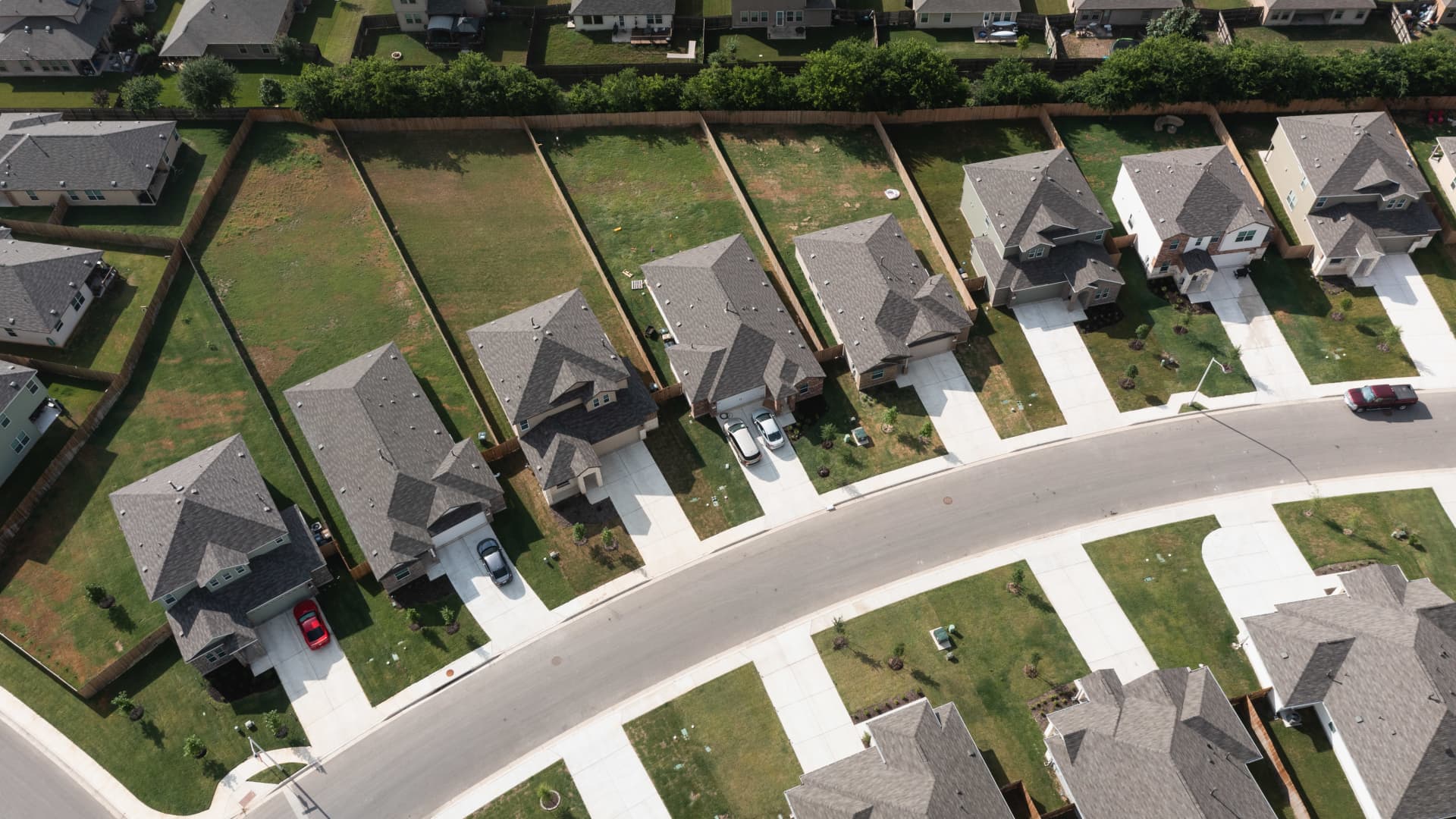
Institutional investors might handle 40{1668a97e7bfe6d80c144078b89af180f360665b4ea188e6054b2f93f7302966b} of U.S. solitary-relatives rental houses by 2030, according to MetLife Financial investment Management. And a team of Washington, D.C., lawmakers believe that Wall Street needs to back again absent from the market place.

“What we’re stating is really don’t have non-public equity shopping for up one -loved ones properties,” explained Rep. Ro Khanna, a Democrat symbolizing California’s 17th Congressional District. Khanna is the guide author of the Stop Wall Street Landlords Act of 2022. “What is actually outrageous is your tax dollars are helping Wall Avenue invest in up one-household properties,” he said in an job interview with CNBC.

The single-loved ones rental field bought its start off with authorities backing in the fallout right after the 2008 fiscal disaster. “It was that rare chance that attracted the institutions to build a portfolio out of these foreclosed attributes” reported Steven Xiao, an assistant professor of finance and managerial economics at the College of Texas at Dallas.

Since the early 2010s, Tricon Residential, Progress Residential, American Properties 4 Lease, Invitation Properties have each bought hundreds of households. They’ve also added to the housing supply in some situations with crafted-for-hire communities.

Some of these corporations are financed by non-public equity corporations like Blackstone and financial commitment managers like Pretium Companions.

“It really is just about a captive market” stated Jordan Ash, director of Labor-Positions and Housing at the Private Fairness Stakeholder Undertaking. “They’ve been quite specific about how individuals are shut out of the homebuying industry and are likely to be perpetual renters.”

These phone calls arrive just after fierce housing inflation hit quite a few Sun Belt states, together with Texas, Florida and Ga, according to the National Affiliation of Realtors. 

The prices in their Sunshine Belt markets have outpaced countrywide figures for rent inflation, in accordance to investigation compiled by Zumper for CNBC. In between January 2020 and January 2023, rents for a two-bed detached house enhanced about 44{1668a97e7bfe6d80c144078b89af180f360665b4ea188e6054b2f93f7302966b} in Tampa, Florida, 43{1668a97e7bfe6d80c144078b89af180f360665b4ea188e6054b2f93f7302966b} in Phoenix, and 35{1668a97e7bfe6d80c144078b89af180f360665b4ea188e6054b2f93f7302966b} near Atlanta. Which is when compared to a 24{1668a97e7bfe6d80c144078b89af180f360665b4ea188e6054b2f93f7302966b} improve nationwide.

Industry advocates argue that they do not manage adequate market place share to dictate price ranges in any industry. Significant institutions owned around 5{1668a97e7bfe6d80c144078b89af180f360665b4ea188e6054b2f93f7302966b} of the 14 million single-loved ones rentals nationally in early 2022, in accordance to analysts.

By 2030, the establishments may well hold some 7.6 million properties, or a lot more than 40{1668a97e7bfe6d80c144078b89af180f360665b4ea188e6054b2f93f7302966b} of all solitary-loved ones rentals on the market, according to the 2022 forecast by MetLife Investment decision Management.

In the shorter time period, nonetheless, some organizations may well retreat from the true estate sector as correction fears mount. “You will see some marketing by us,” claimed Jon Grey, Blackstone’s main running officer, in a December 2022 job interview with CNBC.

View the video higher than to master about the increase and potential of corporate landlords in the United States.