

The Inflation Reduction Act is one of the Biden administration’s signature pieces of legislation, and its drug pricing provisions should really deliver significant improvements to America’s pharmaceutical marketplace. New policies will possible influence the base lines of drugmakers, trim margins for pharmacy advantage supervisors, and reduced out-of-pocket expenditures for Medicare beneficiaries. But switching the intricacies of the Medicare prescription drug pricing procedure won’t come without unintended consequences.
Inflation Reduction Act (IRA) and Medicare
To realize what the implications of the IRA are for drugmakers, it is crucial to to start with review Medicare itself.
Medicare was instituted in 1965 and gives pharmacy and health care rewards to Us residents over the age of 65, as perfectly as disabled men and women. The government has expanded Medicare benefits in excess of the years. Medicare Portion B, which addresses medical professional-administered medicine, was included a 12 months following Medicare was signed into regulation. Medicare Aspect D, which handles outpatient medicines, was enacted in 2006. Beneficiaries who want Component D coverage opt for an proper plan from a personal entity that contracts with Medicare. Pharmacy profit administrators (PBMs) tend to run this kind of strategies.
It’s critical to observe that Medicare is not a solitary payer. It operates as an administrative oversight body that contracts with personal entities to take care of the pharmacy and healthcare benefits.
Medicare does work as a reinsurer of beneficiaries with the greatest drug fees, which allows to mitigate the danger private entities choose on when they take part in the Medicare plan as contractors.
Also, Medicare functions as an oversight overall body for the hundreds of payers and PBMs that contract with it. On an once-a-year basis, Medicare examines their formularies, for case in point, and approves them or endorses adjustments. This technique of oversight will continue to be less than the IRA, but we’re observing selected provisions instituted that will alter the means in which drugs are priced.
Drug Pricing Provisions in the Inflation Reduction Act
The drug pricing provisions in the IRA include three most important pillars.
The to start with is inflationary rebates. The IRA now compels drugmakers to provide a rebate to Medicare when they raise a drug’s rate more rapidly than the fee of inflation. This applies to most Portion D medicines (which includes generics) and branded Part B medication. The rule is related to how Medicaid operates. The governing administration executed it in Oct 2022 for Portion D. The plan went into result for Component B medication in January 2023.
The following pillar is Medicare drug price negotiations. The new regulation lets Medicare to negotiate drug costs on a constrained subset of drugs. Medicare will pick out 10 Component D medicines to get started with by the end of 2023, start off a negotiation approach for these medication, and put into practice so-identified as fair selling prices in 2026. The selection of medications in the subset will boost to 15 Aspect D drugs in 2027, 20 Element D and Section B drugs (in whole) in 2028, 20 in 2029, and so on. To be chosen for negotiation, a drug ought to not have generic or biosimilar opposition, must be 9 yrs article-launch if a modest molecule and 13 yrs publish-start if a substantial molecule (biologic), and be in the leading 50 in conditions of Medicare expend in possibly Part D or Component B. My estimate of the so-identified as fair rates negotiated by Medicare and drugmakers implies they will be close to 15{1668a97e7bfe6d80c144078b89af180f360665b4ea188e6054b2f93f7302966b} to 20{1668a97e7bfe6d80c144078b89af180f360665b4ea188e6054b2f93f7302966b} reduced than they would have been devoid of the IRA. At the similar time, there will be some quantity offset owing to lessen out-of-pocket charges for medications, perhaps as a great deal as 5{1668a97e7bfe6d80c144078b89af180f360665b4ea188e6054b2f93f7302966b} to 10{1668a97e7bfe6d80c144078b89af180f360665b4ea188e6054b2f93f7302966b}. This does imply that general there will be some downward pressure on revenues of medication picked for price tag negotiation.
The 3rd pillar restructures the overall Medicare Element D gains like the initial pillar (inflationary rebates), and the Portion D overhaul is thorough. That is, not like the 2nd pillar, it doesn’t choose a constrained established of specific medication for restructuring. All Part D medicine will undertake improvements in their payment framework throughout the coverage phases of the benefit. First, the Element D restructuring establishes a $2,000 out-of-pocket investing cap on an once-a-year basis for Medicare beneficiaries. This is a big adjust, which will assistance cut down beneficiaries’ out-of-pocket charges, primarily people who are on large-cost specialty prescribed drugs (cancer people, for instance). The overhaul of Element D also substantially reallocates the legal responsibility for catastrophic price management from the government to Aspect D options. In the present-day situation, Medicare addresses 80{1668a97e7bfe6d80c144078b89af180f360665b4ea188e6054b2f93f7302966b} of the cost in the catastrophic period, though programs include 15{1668a97e7bfe6d80c144078b89af180f360665b4ea188e6054b2f93f7302966b}. Following implementation of the Component D overhaul, the governing administration will deal with only 20{1668a97e7bfe6d80c144078b89af180f360665b4ea188e6054b2f93f7302966b}, whilst programs ought to control 60{1668a97e7bfe6d80c144078b89af180f360665b4ea188e6054b2f93f7302966b} of fees. In addition, for those people medication that enter the catastrophic section — higher-charge specialty prescription drugs — the drug industry ought to pay out 20{1668a97e7bfe6d80c144078b89af180f360665b4ea188e6054b2f93f7302966b} of the expenses. At the moment, drug corporations are not dependable for any of the price tag in the catastrophic section, however for branded items they do have to spend a 70{1668a97e7bfe6d80c144078b89af180f360665b4ea188e6054b2f93f7302966b} price cut in element of the protection gap section.
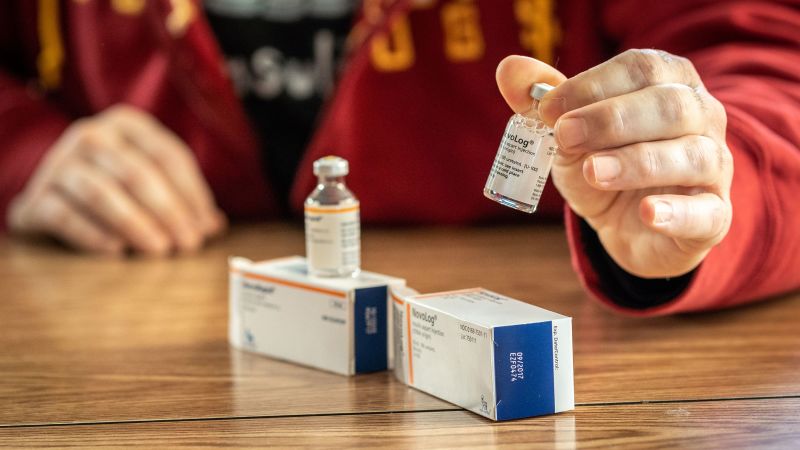
The IRA also introduces a $35 regular cap on out-of-pocket fees for insulin products and solutions and enacts an incorporate-on payment (ordinary revenue price + 8{1668a97e7bfe6d80c144078b89af180f360665b4ea188e6054b2f93f7302966b} instead of ordinary income selling price + 6{1668a97e7bfe6d80c144078b89af180f360665b4ea188e6054b2f93f7302966b}) for biosimilars in the acquire-and-invoice place (doctor-administered Aspect B drugs).
Evolution of the Inflation Reduction Act
Some of the provisions in the IRA appear to develop on function carried out in the Trump administration, as nicely as new proposals in Congress. This consists of a $35 regular cap on insulin out-of-pocket fees and also the restructuring of Medicare Aspect D. In addition, the Trump administration proposed a sequence of drug value negotiation measures — which includes worldwide value referencing — that for Component B medicines would have gone considerably further more than the IRA had they been implemented. The Trump administration govt order on Medicare price negotiations based mostly on global price tag referencing was issued but not applied. The Trump administration also proposed reducing rebates in Medicare, forcing a 100{1668a97e7bfe6d80c144078b89af180f360665b4ea188e6054b2f93f7302966b} go-as a result of to Medicare beneficiaries at the stage of sale (pharmacy). This proposal also unsuccessful to go by. Nonetheless, the Federal Trade Fee is scrutinizing the rebate procedure (as very well as its transparency). In addition, Congress is wanting to pass laws that would ban selected anti-aggressive procedures by PBMs, which include spread pricing and exclusionary contracting.
The Trump administration did get rid of PBM gag clauses that — in selected situations — prevented pharmacies from telling consumers that their copay exceeded the retail rate of the drug. It also changed reimbursement in the 340B plan to encourage biosimilar prescribing, producing a differential involving reimbursement of originator biologics and biosimilars that favored biosimilars. The Trump administration also altered the Medicaid very best-cost rule to allow for many very best costs to incentivize price-centered contracting, in addition to doing work with state Medicaid applications to experiment with a amount of price-primarily based pricing initiatives as properly as the possible for closed formularies place forward by a range of states. It seems that several of these variations to Medicaid will be upheld by the Biden administration, such as numerous most effective price ranges.
Market place Entry Hurdles
As recently as 20 years ago, drug brands didn’t have to be concerned too a great deal about marketplace obtain when the Fda authorized their items due to the fact Fda acceptance virtually assured obtain and pricing was mainly set in a free of charge marketplace. But now companies ought to begin to strategize their marketing solution — which includes positioning their merchandise relative to competitors in terms of pricing and reimbursement — previously in the drug growth course of action. Section of this is for the reason that as charges of freshly launched medications have soared in the past 20 a long time, payer hurdles with respect to pricing and reimbursement have turn into larger and more challenging to overcome. And this is now partly owing to the IRA improving, if you will, the various industry entry hurdles.
The IRA could have some unintended implications. For example, mainly because pricing provisions influence only current prescription drugs, drugmakers will launch freshly authorised drugs at greater selling prices. Also, Aspect D insurance plan premiums will probable raise, as will rates in the industrial sector, as payers attempt to control a better share of the prices in Medicare alongside with mounting charges of new prescription drugs in Medicare and industrial marketplaces.
The IRA may well direct to a bit less analysis and improvement in selected areas like specialty medication and as a result fewer numbers of new approvals.
About Joshua P. Cohen
Dr. Joshua P. Cohen is an independent health care consultant with additional than 24 decades of knowledge examining pharmaceutical and health care policy. Formerly, he was an Associate Research Professor at Tufts University’s Middle for the Examine of Drug Improvement.
This pharmaceutical sector post is adapted from the GLG Webcast “Inflation Reduction Act: Implications for Pharmaceutical Marketplace, PBMs, and Payers.” If you would like entry to this event or would like to discuss with pharma industry professionals like Dr. Joshua P. Cohen or any of our approximately 1 million business experts, speak to us.