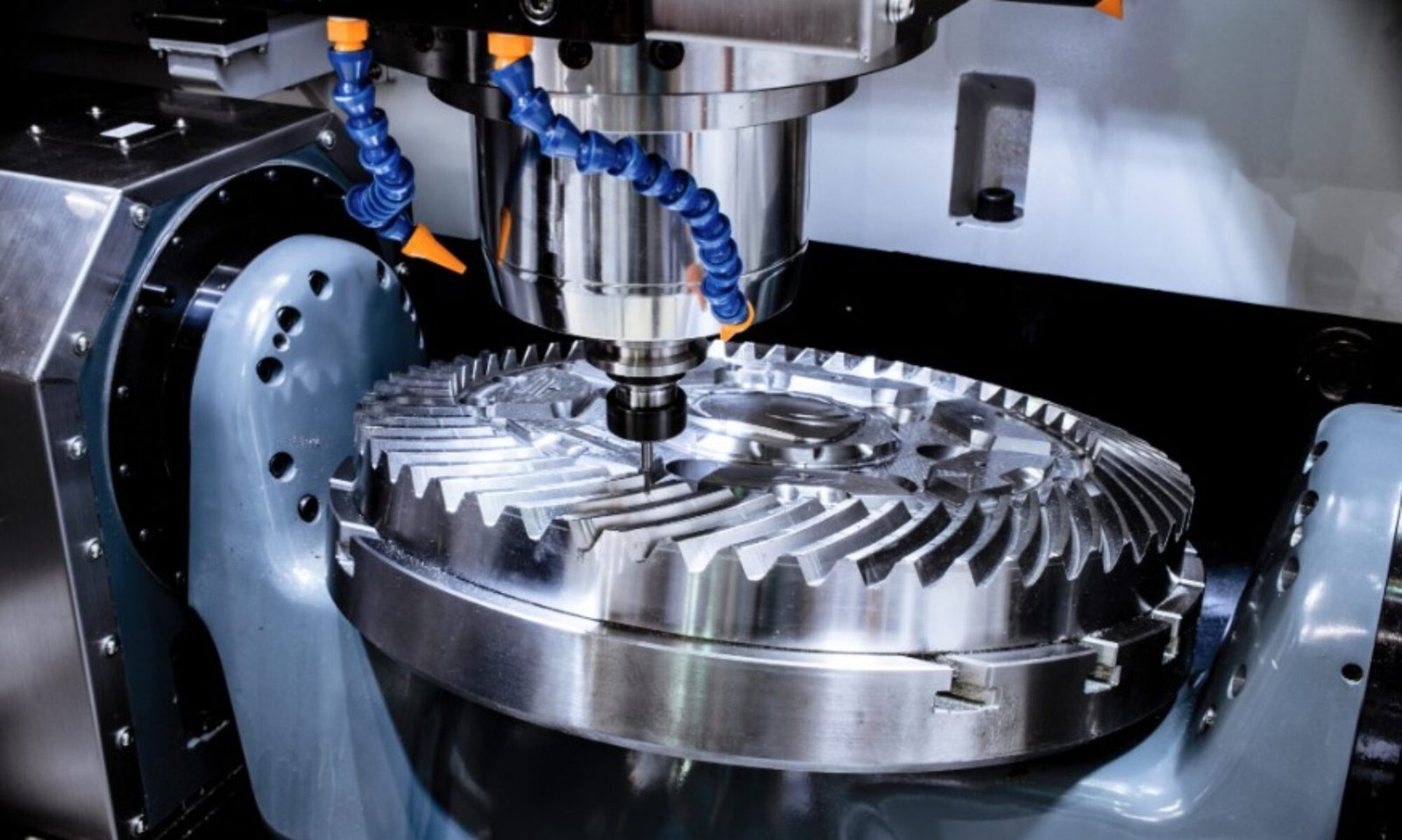
Hexagon Digital Wave’s Ultrasonic Examination Machine to be used to verify Type 1 cylinder production at CP Industries

Hexagon Digital Wave’s Ultrasonic Examination Machine to be used to verify Type 1 cylinder production at CP Industries

2 January 2023: Hexagon Digital Wave will supply a UE7 Ultrasonic Assessment (UE) equipment to CP Industries. UE machines have usually been employed to perform periodic requalification of metallic stress vessels, as prescribed by the US Office of Transportation, Transportation Canada, and the Intercontinental Firm for Standardization (ISO). CP Industries will make use of its UE7 to validate the integrity of their production procedure for Form 1 steel cylinders, commonly applied in metal tube trailers. The UE7 is the major equipment in Hexagon Digital Wave’s UE portfolio, capable of screening cylinders up to 40 ft in size. This signifies a new current market phase for Hexagon Electronic Wave’s UE technologies.


Driving Energy Transformation
“We are fired up to assistance CP Industries in their ongoing commitment to provide best of the line Type 1 metal cylinders to the market,” claims Melissa Holler, President of Hexagon Digital Wave. “This equipment represents a further avenue for Hexagon Digital Wave to support supply protection to the compressed gasoline marketplace.”

“The financial commitment we designed in the UE7 machine will be a game changer for us.  The new established up will let us to be much a lot more productive in vital elements of our inspection and screening procedures.  CP Industries is generally wanting to boost efficiencies and the workforce at Hexagon Electronic Wave brought us a alternative that will make us a superior supplier promptly,” suggests Tom Kairys, VP of Revenue and Promoting from CP Industries.


About the sector
Ultrasonic Evaluation (UE) employs highly developed electronics and sensors that evaluate the structural integrity of substantial-strain metallic cylinders for all round protection. Hexagon Electronic Wave has been the marketplace leader for almost two a long time in UE methods for the periodic testing of superior-force seamless metallic cylinders. UE will allow buyers to take a look at their cylinders without having venting the gaseous contents. This has a quantity of favourable impacts to equally the surroundings and the buyer.

As of December 2022, 165 Hexagon Digital Wave UE machines were being in use through the world for inspection of significant-stress metallic vessels.  This is in accordance with DOT Special Permits 14206 and 14149 and Equivalency Certification SU-10112.


Timing
The UE7 device, concluded at 12 months- stop 2022, will be delivered to CP Industries in January 2023.

Call:
Karen Romer, SVP Communications, Hexagon Composites
Telephone: +47 950 74 950 |+1 402-450-6537| karen.romer@hexagongroup.com

About Hexagon Electronic Wave
Hexagon Electronic Wave, a subsidiary of Hexagon Composites ASA, is a main electronic remedies supplier of Non-damaging tests strategies, which incorporates Ultrasonic Assessment (UE) and Modal Acoustic Emission (MAE) inspection goods and solutions. With apps in the industrial gas, hearth assistance products, medical oxygen, automotive, option fuels, and aerospace industries, Hexagon Electronic Wave’s goal is to eliminate technological innovation boundaries and simplify workflows with digital and automated platforms that enrich productiveness and minimize full value of ownership. By its platforms, Hexagon Digital Wave is on the major edge of lessening cylinder landfill squander and growing asset availability and up-time.


About CP Industries
CP Industries prides alone in having virtually 120 many years of engineering and producing knowledge. We are identified by our prospects as the leader in providing the greatest stage of buyer support and top quality products that are secure, trustworthy, and price productive. Unsurpassed by the competition, these abilities established us aside as the environment chief in the market right now. A division of CP Industries Holdings, Inc., CP Industries serves domestic and worldwide marketplaces which include aerospace, chemical processing, construction, food creation, industrial controls, medication, nuclear power propulsion programs, oil and gasoline exploration and creation, rescue gear, transportation, undersea exploration, and all-natural gasoline motor vehicles.


About Hexagon Composites ASA
Hexagon delivers safe and sound and innovative alternatives for a cleaner energy potential. Our alternatives help storage, transportation, and conversion to clear electricity in a broad range of mobility, industrial and client purposes. Understand extra at www.hexagongroup.com and follow @HexagonASA on Twitter and LinkedIn.

Three Trends That Will Drive Trade Finance In 2023

Three Trends That Will Drive Trade Finance In 2023

Carl Wegner, CEO of Contour.

From the pandemic’s affect on offer chains to geopolitics, the earlier couple yrs have been characterised by uncertainty. As we head into a new year, this uncertainty remains and is anticipated to just take a toll on world-wide trade growth.

The Earth Trade Firm expects trade expansion to slow sharply but continue being good in 2023. Past the numbers, I imagine trade is the lifeline of economies around the globe, with the potential to reduce poverty and inequality.

This is wherever trade finance comes in—to make worldwide trade accessible by making certain that importers obtain their goods and exporters obtain their payments. But the core ecosystem—exporters, importers and banks—is complicated with a number of parties concerned in a solitary transaction.

As a CEO of a world trade finance network, there are 3 components at perform that I consider will reshape the foreseeable future of trade finance. Mixed, these have the likely to contribute to the resiliency of the sector by bringing assurance and sizeable advancement to trade finance globally.

1. There are however large possibilities to digitize trade finance.

The trade finance industry is closely reliant on paper and handbook procedures to make sure that liquidity flows by the ecosystem and pitfalls are managed. Even with the momentum we’ve viewed in the earlier handful of decades from financial institutions and corporates embracing blockchain know-how in their trade finance procedures, there is however space for further development.

One particular area is digitizing documentation and the bill of lading (BL). In accordance to McKinsey, an digital invoice of lading (eBL) would help save $6.5 billion in immediate fees and allow $40 billion in international trade.

A very small percentage of BLs are now electronic, which signifies a huge upside chance, however, the current closure of TradeLens, an eBL system formed by Maersk and IBM, highlights the issues of collaboration in between huge organizations and the field. We remain hopeful for extra prevalent adoption of the eBL in the long term, as electronic innovation should be embraced in order to go the industry forward.

As with all electronic transformation, there is some hesitation to soar on board until finally requirements come in. But, in my feeling, playing the waiting around sport will just keep the field again. Criteria will arrive in, and anyone ought to be ready to adapt and be open to them as they become more codified.

The last several decades have been about the electronic transformation of industries, and I feel this will continue to be matter selection just one for a long time to arrive.

2. Integration between money establishments and fintechs will be important to long run advancement.

As the trade finance industry moves forward with its digitization endeavours, collaboration concerning financial institutions and fintechs will be essential to reworking the potential.

Many banking associates have reported that they are just at the commencing of their digital journey when it arrives to trade finance. The the greater part also do not have the resources–whether which is time or money–to experiment with technologies that could drive even more efficiencies in the marketplace. This is in particular correct when concentration on core business enterprise all through hard financial occasions indicates all palms are concentrated on their conventional enterprises.

This is in which fintechs can assist comprehensive the photo, as they are significant in a bank’s digitization journey and can connect the common architecture to external knowledge flows. Inside monetary institutions, lots of have developed architectures that enable them to be integrated with unique fintechs across diverse regions, with the target of streamlining workflows and driving efficiencies that will in the long run include value for their clientele.

3. The up coming wave of innovation in trade finance is in digital property.

Ultimately, the increasing desire in digital property is now also apparent in trade finance. Even though cryptocurrencies and Central Financial institution Electronic Currencies are usually associated with electronic assets, there is a diverse option situation with electronic trade belongings as opposed to digitalization of payments.

Anything at all with value turns into a digital asset when tokenized and the chance in tokenization is a trillion-greenback one. According to a BCG and ADDX report, tokenization could attain 10{1668a97e7bfe6d80c144078b89af180f360665b4ea188e6054b2f93f7302966b} of international GDP or $16 trillion by 2030.

Electronic asset transactions are recorded in safe digital ledgers. Blockchain is an illustration of a form of dispersed ledger engineering (DLT), where transactions are grouped in blocks of information which are linked with each other cryptographically.

Devoid of a use case, like the transformation of trade finance, blockchain or DLT would just be an impressive or fascinating know-how. This is exactly where I see the prospective for digital property to make world-wide trade far more efficient.

Trade and trade finance is complex, with numerous get-togethers and processes associated to facilitate the motion of merchandise and solutions from one port to an additional. Take the letter of credit score (LC) for case in point. It is a mostly manual procedure that has been about for much more than a century—and nonetheless mainly managed on a frequent information transfer system recognised as mailing paper files.

A electronic LC is an example of tokenization (disclaimer: this is a remedy my corporation gives). And by leveraging distributed ledger technological know-how (DLT), there is prospective to digitize much more trade finance procedures by working with wise contracts to generate electronic trade assets.

There is also an chance to produce tokenized digital assets to depict lender danger. I imagine this will produce a extra inclusive potential for trade finance and amount the actively playing industry for SMEs and regional banking companies who tend to make smaller sized transactions. When it arrives to how trade is financed, banking companies normally target on originating new trade finance financial loans, but the substantial friction and processing fees signifies they are typically incentivized to goal larger sized transactions. Digitizing the system will indicate decreasing the expense to support transactions and enabling smaller sized transactions, the kinds that the SMEs depend on to be far more rewarding.

These 3 drivers—the option to even more digitise trade finance, the increased collaboration among financial institutions and fintechs, as nicely as the probable to make tokenised digital assets in trade finance—are switching the character of how trade finance is performed in the encounter of the difficulties we’re observing. With all three things at enjoy, it will bring assurance, effectiveness and substantial growth to trade finance globally commencing in 2023.


Forbes Business Council is the foremost expansion and networking firm for company homeowners and leaders. Do I qualify?


Britain’s Auto Industry Is Down but Not Out

Britain’s Auto Industry Is Down but Not Out

From the January 2023 issue of Car and Driver.

Curse globalization all you like, but it’s a safe bet that what remains of England’s automobile industry wouldn’t be here today without investments from around the world. Over the course of a week driving around Britain, we visited several enterprises that are not so much surviving as thriving, all thanks to foreign connections willing to open their wallets.

Our journey begins with a trip to West Sussex, where Rolls-Royce launched the Spectre, the 116-year-old company’s first electric production car, a plus-size coupe of undeniable presence. Erected with parent BMW’s money, its showpiece Goodwood factory is now configured to build internal-combustion and electric cars on the same line. The airy, low-lying corporate home on lush country grounds is a most British of settings and can only help as the company attempts to upsell returning customers and visiting prospects bespoke hides, paint schemes, and more from its steamship-size list of pricey custom options. That body shells, engines (for now), and many other critical parts come from Germany for assembly in England isn’t something they talk much about here, where Britishness is an essential part of the appeal.

united kingdom automobile industryView Photos

Mini’s modern assembly line.

Charlie Magee|Car and Driver

The following morning, we head to the Mini plant in Oxford, built out with the unstinting assistance of the same German benefactor. Tours commence in a small museum that occupies part of the factory that turned out the first Morris Oxford, which in the 1920s made William Morris’s firm Britain’s biggest car producer. It merged with Austin in the 1950s to form BMC, then combined with other ailing firms in the 1960s to form British Leyland, and in ensuing decades found itself involved with a host of similarly troubled successor entities that had different names. One of the few things to survive it all was the Mini brand, the only marque BMW kept when it discarded the rest of what had become the Rover Group.

Two decades after its relaunch for 2002 as a stand-alone brand, Mini is here building zippy electric models on the same line as gas and diesel cars, thanks to extensive use of modern robotics. The plant is notably quiet in operation, and the mood appears upbeat.

This is in spite of Mini’s announced plans to shift production of EVs to China, a potentially ominous development for a brand that plans to be all electric. At present, 40,000 electric Minis leave Plant Oxford each year. “Mini Plant Oxford is the heart of the brand,” says Stefanie Wurst, global head of Mini. “Our commitment to production in the United Kingdom has not lost any strength whatsoever.” A new Chinese plant is being built to grow share there, where, she explains, imported Minis currently cost as much as locally produced BMW 3-series. While a second production site in Leipzig will build one Mini model, the U.K. plant will supply three models. “In other words,” Wurst says, “no other plant will be building as many models as Oxford.”

morgan assembly plant

Charlie Magee|Car and Driver

We again witness foreign inroads into the British market when we arrive at Malvern Link in Worcestershire to visit the 113-year-old Morgan Motor Company. The charmingly dinky factory buildings date to the early 20th century, with little to give away all that is new within, thanks once again to investment from abroad.

Yet change has come to the cars and the processes used to build them. Expanding the list of Anglophile saviors from afar, Italian businessman Andrea Bonomi and his family’s private equity firm, Investindustrial, bought a controlling interest in the business in 2019 from the Morgan family (who retain a minority holding and role as “brand stewards”), giving the hidebound company a new lease on life.

Its heavily revised “volume” Plus Four roadster, powered by a turbocharged 2.0-liter four from—guess who—BMW, is again slated to be offered for sale in America in 2023, bolstered by a new world of contemporary features [read our first drive of the Morgan Plus Four]. The car’s charismatic good looks still trace to the 1930s, but its platform and suspension at last are now modern, ridding the Morgan of its infernal and near-eternal nod to antiquity.

Just as impressive to drive and also headed to the States once again is a new Morgan three-wheeler. Not the stillborn electric concept scuttled in 2018, the new Super 3 replaces its predecessor’s spindly ladder frame and wood-frame body with a full aluminum chassis. Meanwhile, a turbocharged Ford 118-hp 1.5-liter inline-three steps in for the Harley-inspired V-twin that had become one of Morgan’s worst-ever warranty nightmares. The pint-size three-pot makes the slightly less adorable-looking Super 3 faster and, more important, far more bearable on the noise, vibration, and harshness front.

Still, there’s nothing cushy about the experience of driving the new car. Windscreens are minimalist afterthoughts. With a nonexistent top, the wind, rain, and bugs are yours to enjoy. But who cares? A wider front track improves handling, and the Mazda Miata–sourced five-speed gearbox remains impressive. They help make the Super 3—all 1500 pounds of it—an exhilarating small-bore blaster that we found completely nuts and didn’t want to return.

united kingdom automobile industry

Charlie Magee|Car and Driver

Next stop is Jaguar Land Rover’s Classic Works in Coventry, once a bustling car-building city—England’s Detroit, if you will. Things have tapered off if not petered out entirely in Coventry, but heritage is one of Britain’s chief exports these days. In fact, the country increasingly resembles a theme park whose theme is the past. The monarchy is one example, but nothing in the world of consumer goods has more heritage appeal than classic cars.

Given the rising values of older Jaguar and Land Rover models, it only made sense for JLR to cater to the buoyant classic-car market. So, with a little help from Indian parent Tata, it opened the Classic Works enterprise in 2017. Today, in a ginormous workshop adjacent to a large showroom filled with sparkling machines from its past, skilled technicians and craftsmen restore old cars and service others, even recreating classic models such as Jaguar’s D-type, XKSS, and Lightweight E-type in continuation series. It started with the Land Rover Reborn program, which has cranked out more than 50 refurbished original-formula Landies from the late ’40s and ’50s. More profitable still are the 150 70th Anniversary Edition Defender Works V8s it has sold, along with 25 Works V8 Trophy tributes and another 25 Works V8 Trophy Twos, all with six-figure price tags. The newest program has started delivering reborn Range Rovers, the early ones purists are falling for in a big way.

Mike Bishop oversees the Range Rover Reborn program. “The vehicles sell themselves, effectively,” he says. “You’re just here to help enjoy the journey. You’re not really selling them an everyday car, are you? You’re selling them that dream.”

Down by the Cotswolds, in tiny Hinton-on-the-Green, Morris Commercial’s controlling shareholder, Qu Li, has a dream of her own. A Chinese mechanical engineer who’s spent 30 years in the U.K., for 2023 she hopes to put into limited production an electric van inspired by the beloved postwar Morris J-type van, once a ubiquitous postal and delivery vehicle highly regarded for its excellent space-to-footprint ratio and jolly visage. Looking possibly better than ever, the updated van Morris Commercial hopes to build will feature a body made of recycled carbon fiber.

Though it has but two prototypes to show for itself so far, the story of Morris Commercial already sounds like fodder for a gripping tome. Li and her China Ventures consultancy worked closely with the “Phoenix Four,” the briefly celebrated quartet of British businessmen who rescued MG Rover from extinction in 2000 after BMW pulled the plug, only to put the enterprise into the ditch in 2009 (while still managing to walk away with large piles of cash).

united kingdom automobile industry

Charlie Magee|Car and Driver

From the wreckage of MG Rover, Li bought out of bankruptcy van maker LDV, which was formed in 1993 by the merger of two ailing firms, Britain’s Leyland and Holland’s DAF. Li quickly sold the rights to LDV’s vehicles, using the proceeds of the sale to develop Morris Commercial. Shrewdly, she identified the old J-type—which was introduced alongside the Morris Minor in 1948—as her ticket to ride.

We drove a running blue and white prototype of the electric Morris van. Bodied in aluminum, it is more of a proof of concept, where a pink and white model with the recycled-carbon-fiber body is closer to the hoped-for final product and spec. Though neither really represents what the finished van might actually be like, the blue truck was perfectly pleasant and, with its skateboard chassis, usefully large inside. We can confirm that passersby go mad for its retro good looks. It’s that cute.

From hopeful startup to ambitious old hands: Our last stop is at Hethel, Norfolk, where the fruits of Chinese juggernaut Geely’s multibillion-dollar investment in Lotus Cars are everywhere to see. From the 1973-hp Evija EV to the company’s excellent new volume machine, the Emira, and the newly outfitted factory that will build it, Lotus’s current situation underscores what a lot of good money can do.

lotus plant in hethelView Photos

Lotus plant in Hethel.

Charlie Magee|Car and Driver

As Lotus approaches its 75th anniversary, the roller-coaster ride it has been on for its entire existence has entered a new phase. With its new foreign owners, Lotus plans to increase volume exponentially—not just here at its ancestral and spiritual home base, but in China, where its first SUV, the Eletre, is already in production.

But while the Eletre, a two-motor electric SUV claimed to be the fastest of its species in the world, is expected to help Lotus achieve an unheard-of annual sales volume of 100,000 before decade’s end, the 5000 Emiras it hopes to build here annually mark a different roll of the dice. The last purely internal-combustion car the company says it will ever build, the Emira caps a long line of lightweight sports cars that prioritize roadholding and an intimate connection between driver and machine. Even though it is heavier than all Lotuses that have preceded it, the Emira is still meant to follow that path.

It also lays the groundwork for a new generation of Lotus sports cars, whose content and construction will be effected here in the Norfolk countryside. They will all be electrified, with the weight penalty that implies, as truly lightweight electric cars are a ways off, awaiting as yet undiscovered battery technologies.

lotus plant

Charlie Magee|Car and Driver

Lotus’s prospects have improved immeasurably thanks to the largesse of Geely, an operation that has demonstrated a surprisingly delicate touch with its foreign holdings, as exemplified by its purchase of Volvo. (In October 2022, Geely acquired a minority stake in Aston Martin.) The Chinese firm seems less vulnerable than Western companies to the impatience of jittery shareholders and the short-sighted broader market. It is therefore seemingly able to operate with a longer timeframe in mind.

Which is a good thing. For as any Briton could tell you, the creation of a heritage worth remembering takes time. And money. Wherever it comes from.

This content is imported from OpenWeb. You may be able to find the same content in another format, or you may be able to find more information, at their web site.

Global Electric Kebab Machine Market is to grow at 6.7{1668a97e7bfe6d80c144078b89af180f360665b4ea188e6054b2f93f7302966b}

Global Electric Kebab Machine Market is to grow at 6.7{1668a97e7bfe6d80c144078b89af180f360665b4ea188e6054b2f93f7302966b}

NEWARK, Del: , Dec. 31, 2022 (GLOBE NEWSWIRE) — NEWARK, Del: The kebab machine market is likely to occupy a CAGR of 9.3{1668a97e7bfe6d80c144078b89af180f360665b4ea188e6054b2f93f7302966b} during the forecast period. The market is projected to be valued at US$ 254.9 Mn in 2022 and likely to be valued at US$ 676.7 Mn by 2032

The key manufacturers are growing the adoption of kebab machine in the food & beverage industry during the forecast period. Several restaurants and food industries are likely to upsurge the demand for kebab machine in recent years. However, it takes less time, and effort to make fresh and delicious kebabs which is likely to increase the kebab machine market size during the forecast period.

The automatic kebab machine developed by the key manufacturers are easy to operate, better designed and available in different sizes as per consumer demand is flourishing the kebab machine market share. However, these machines are of high quality, have the best material and provide unlimited services are likely to raise the demand for kebab machine.

Request a Sample Copy of the Report @
https://www.futuremarketinsights.com/reports/sample/rep-gb-16074

The kebab machine manufacturers are making a customer-oriented strategy, providing fast solutions, building expectations with their team and focusing on consumers’ requirements during the forecast period. Some of the latest kebab machines are pro-manual kebab machines and automatic kebab machine UE3 which can meet consumer needs and are anticipated to boost the kebab machine market growth. The kebab machine keeps the meal fresh and hygienic without hazardous chemical interactions.

Moreover, the machine includes several advanced technology features from temperature control to an emergency button which is flourishing the kebab machine market size during the forecast period. Europe is likely to dominate the kebab machine market by securing a higher share globally during the forecast period. The manufacturers in the region are developing kebab machine for home and commercial kebab machines, which will increase the European kebab machine market size during the forecast period.

 Key Takeaways from the Kebab Machine Market

  • TheUS kebab machine market is likely to capture a share of nearly 3{1668a97e7bfe6d80c144078b89af180f360665b4ea188e6054b2f93f7302966b} during the forecast period.
  • The kebab machine market’s historic CAGR stood at 3{1668a97e7bfe6d80c144078b89af180f360665b4ea188e6054b2f93f7302966b}from 2018 to 2021.
  • The global kebab machine marketis likely to capture a CAGR of 3{1668a97e7bfe6d80c144078b89af180f360665b4ea188e6054b2f93f7302966b} during the forecast period. The market is securing a valuation of US$ 676.7 Million by 2032.

Get More Information on this Report @
https://www.futuremarketinsights.com/reports/electric-kebab-machine-market

Competition Landscape in the Kebab Machine Market 

The market is fragmented by the presence of key market players during the forecast period. The key players are focusing on developing products as per consumers’ requirements during the forecast period. However, these players are contributing a significant share by using several innovative technologies in the kebab machine during the foreseen time.

These market players are using several marketing tactics to increase the sales of kebab machine. Some of these marketing tactics are partnerships, mergers, acquisitions, agreements, and collaborations among others. Although, some of the recent developments are as follows:

Recent Developments in Kebab Machine Market are:

The new innovative kebab machine includes several processes such as cutting and washing seafood and meat. Moreover, from making kebabs to packaging processors, these technologies are likely to attract food industries to sort out their huge work. These innovative advanced kebab machines are drives the customer’s expectations. Some of the latest technology kebab machines are Stainless Steel Electric Shawarma Machines & Rotary Gas Doner Kebab Making Machines during the forecast period.

Request for Customization @
https://www.futuremarketinsights.com/customization-available/rep-gb-16074

Key Segments

By Voltage:

  • 6 Volts
  • 110 Volts
  • 220Volts
  • 380 Volts
  • Others

By Buyer Type:

  • Commercial Buyers
  • Household Buyers
  • Others

By Sales Channel:

  • Food Equipment Specialty Retailers
  • Brand Franchised Stores
  • Modern Trade
  • E-Commerce Platforms
  • Others

By Region:

  • North America
  • Latin America
  • Europe
  • East Asia
  • South Asia and ASEAN
  • Oceania
  • Middle East and Africa (MEA)

Request a Report Methodology @
https://www.futuremarketinsights.com/request-report-methodology/rep-gb-16074

Table of Content

1. Executive Summary

    1.1. Global Market Outlook

    1.2. Demand-side Trends

    1.3. Supply-side Trends

    1.4. Technology Roadmap Analysis

    1.5. Analysis and Recommendations

2. Market Overview

    2.1. Market Coverage / Taxonomy

    2.2. Market Definition / Scope / Limitations

3. Market Background

    3.1. Market Dynamics

    3.2. Scenario Forecast

    3.3. Opportunity Map Analysis

    3.4. Product Life Cycle Analysis

4. Global Market Analysis 2018-2022 and Forecast, 2023-2033

    4.1. Historical Market Size Value (US$ Mn) & Volume (Units) Analysis, 2018-2022

    4.2. Current and Future Market Size Value (US$ Mn) & Volume (Units) Projections, 2023-2033

        4.2.1. Y-o-Y Growth Trend Analysis

        4.2.2. Absolute $ Opportunity Analysis

5. Global Market Analysis 2018-2022 and Forecast 2023-2033, By Voltage

    5.1. Introduction / Key Findings

    5.2. Historical Market Size Value (US$ Mn) & Volume (Units) Analysis By Voltage, 2018-2022

TOC continued..!

Top Reports Related To Process Automation Market Insights

Microbrewery Supplies Market Size – According to Future Market Insights’ study, the market for microbrewery supplies is expected to grow at a CAGR of 5.2{1668a97e7bfe6d80c144078b89af180f360665b4ea188e6054b2f93f7302966b} over the estimated period. The industry value is expected to grow from US$ 1,332.1 Mn in 2023 to US$ 2,211.5 Mn in 2033. The microbrewery supplies market was worth US$ 1,266.3 Mn by the end of 2022.

Brewery Heat Exchanger Market Share – According to Future Market Insights, the brewery heat exchanger market size is anticipated to grow at a CAGR of 6.1{1668a97e7bfe6d80c144078b89af180f360665b4ea188e6054b2f93f7302966b} during the forecasted period. According to Analysts, the market is likely to be worth US$ 3,305.4 Mn by 2033.

Commercial Winery Equipment Market Trends – According to Future Market Insights’ study, the market for commercial winery equipment is expected to grow at a CAGR of 4.4{1668a97e7bfe6d80c144078b89af180f360665b4ea188e6054b2f93f7302966b} over the estimated period. The industry value is expected to grow from US$ 1,792.2 Mn in 2023 to US$ 2,756.7 Mn in 2033.

Micro Winery Equipment Market Growth – According to research by Future Market Insights, The micro winery equipment market is anticipated to expand at a CAGR of 5.0{1668a97e7bfe6d80c144078b89af180f360665b4ea188e6054b2f93f7302966b} during the forecasted period. According to Forecasts, the market would be worth US$ 1,829.7 Mn by 2033.

Maize Milling Machine Market Outlook – According to Future Market Insights research, during the projected forecast period, the maize milling machine market is anticipated to grow at a CAGR of 4.4{1668a97e7bfe6d80c144078b89af180f360665b4ea188e6054b2f93f7302966b}. The market value is expected to increase from US$ 1,232.2 Mn in 2023 to US$ 1,895.3 Mn by 2033.

About Future Market Insights, Inc.

Future Market Insights, Inc. is an ESOMAR-certified business consulting & market research firm, a member of the Greater New York Chamber of Commerce and is headquartered in Delaware, USA. A recipient of Clutch Leaders Award 2022 on account of high client score (4.9/5), we have been collaborating with global enterprises in their business transformation journey and helping them deliver on their business ambitions. 80{1668a97e7bfe6d80c144078b89af180f360665b4ea188e6054b2f93f7302966b} of the largest Forbes 1000 enterprises are our clients. We serve global clients across all leading & niche market segments across all major industries.

Contact Us:

Future Market Insights Inc.
Christiana Corporate, 200 Continental Drive,
Suite 401, Newark, Delaware – 19713, USA
T: +1-845-579-5705
LinkedIn| Twitter| Blogs | YouTube
For Sales Enquiries: sales@futuremarketinsights.com

An inside look at the latest trends in housing regulation and policy, featuring the 2022 Vanguard Honoree, Armando Falcon

An inside look at the latest trends in housing regulation and policy, featuring the 2022 Vanguard Honoree, Armando Falcon

In this series of interviews, we focus on the men and women who are shaping the point out of housing at the major — the policy and regulation specialists. The FHFA and the GSEs are critical to painting the picture of today’s housing marketplace and marketplace tendencies. To help get rid of some gentle in this location, many of the 2022 HousingWire Vanguard honorees shared their insights on what’s happening at the federal amount that’s heading to have an affect on housing this 12 months and into 2023.

Armando Falcon, CEO at Falcon Capitol Advisors

Falcon_Armando-Regulation
Armando Falcon, CEO at Falcon Capitol Advisors

HousingWire: Which traits in housing regulation are you and your group most centered on as we move into 2023?

Armando Falcon: Hunting ahead to 2023, there are a couple of wide trends that we are focusing on. The to start with is the total enterprise transformation that is taking spot in the home finance loan field. This is the outcome of several forces: the Fed’s anti-inflation coverage the immediate deceleration in lending that’s resulted in a 40{1668a97e7bfe6d80c144078b89af180f360665b4ea188e6054b2f93f7302966b} fall in apps the growing cost of house loan generation, which has now damaged the $10,000 for every loan threshold and the continued push in direction of digitization in mortgage loan lending.

These are prime of intellect for my workforce, our purchasers and the sector. The second wide development is accessibility to homeownership and affordability. Dwelling rates have in no way been increased, pent-up desire stronger and housing stock tighter. These ailments are hard for even the average homebuyer, permit on your own minimal-earnings and minority consumers.

There is a increasing sentiment in the two the community and private sectors that more requirements to be completed to help people, specially underserved buyers, get ready for homeownership and to shut the affordability gap. We’re observing new power and new initiatives in this area at numerous house loan and housing businesses.

Similarly, massive lenders are expanding their ESG and social responsibility applications. The dedication is genuine, and we see it only acquiring much better.

HW: As a 2022 Vanguard honoree, what has been your proudest accomplishment?

AF: Is it alright to say that I am proud of building a consulting firm designed of some incredibly talented folks who are supporting the mortgage loan market adapt to a current market in changeover? That I’m proud of the part that they are playing in supporting modernize property finance loan generation and the secondary marketplace? Mainly because I am.

About the earlier 15 yrs, our team has developed to more than 50-moreover associates, several of whom have held management positions at leading loan companies, tech and details companies and mortgage loan companies.

It’s really hard to decide just a person project because we’ve had many interesting engagements recently: for instance, our do the job with Ginnie Mae on its Digital Collateral Method or the asset income program that we handle for HUD that has moved a lot more than 50{1668a97e7bfe6d80c144078b89af180f360665b4ea188e6054b2f93f7302966b} of these vacant homes to nonprofit companies for reasonably priced housing or the analytic get the job done we offer to the business individuals to enable them evaluate development on their ESG investments.

These engagements are assisting to make the property finance loan business far more productive and far more resilient, two objectives that I pursued as a regulator and carry on to emphasis on as a guide to the business.

HW: What major adjustments in federal regulation and legislative guidelines need to people be paying out extra interest to?

AF: As I talked about, there is a large amount of desire and momentum about the regulation of issues of affordability and inclusion in homeownership. It is a priority at FHFA, FHA, HUD and Ginnie Mae. These organizations are making an attempt to occur up with creative options to make housing more inexpensive and homeownership additional achievable.

There is practically a New Offer spirit at perform. We’re also seeing new marketplace-primarily based initiatives coming from the personal sector. 1 of the nation’s largest loan companies, for instance, has just announced that it is tests a new plan that will give zero-down payment mortgages with no closing expenditures to very first-time homebuyers in Black and Hispanic neighborhoods in five big towns.

HW: How has your knowledge as the director of OFHEO (now FHFA) affected your initiatives and management at Falcon Capital?

AF: The GSEs and Ginnie Mae have been evangelical in their aid of digital lending. Nowadays approximately 5{1668a97e7bfe6d80c144078b89af180f360665b4ea188e6054b2f93f7302966b} of all conforming home loans are eNotes, and all of the companies are on record encouraging loan providers to originate extra property digitally. Ginnie Mae has been accepting eNotes on a pilot foundation given that the beginning of the calendar year. In June, they expanded their Digital Collateral System, and they are now in the system of accepting new applications from eIssuers, eCustodians, and subservicers. This was an vital milestone in digitizing govt lending, which was roughly a $757 billion sector.

HW: Falcon Money often works with govt agencies in system management and regulation method. Is there one particular task or partnership that you are very pleased of in specific?

AF: Creditors see the value in offering their shoppers the similar variety of easy digital expertise that they come upon in other features of their life (e.g., banking, purchasing, transportation). They are also concerned that if they really don’t offer this experience, more substantial countrywide retail lenders will. This is why I think these initiatives will proceed even in the smaller, much more aggressive environment that the market is now facing.

Making electronic, somewhat than paper, assets offers increased cash industry efficiencies and lessens prices and mistakes. Latest ROI reports have revealed that eClosings and eNotes can help save originators roughly $400 per loan. That’s a major variety when you take into consideration that the ordinary originator misplaced $82 for every loan in the 2nd quarter, in accordance to the Mortgage Bankers Association.

This interview was at first posted in the Oct/November difficulty of HousingWire Journal. To perspective the whole concern, click here.

A Real Close Look at the Fake Cars of 2022

A Real Close Look at the Fake Cars of 2022

The meteoric rise of Tesla in the 2010s—as well as the relative simplicity of electric powertrains—has inspired countless entrepreneurs to try their hand at starting trendy, forward-thinking car companies. Many of these have already come and gone, their renderings and outlandish claims collecting dust in a forgotten corner of the internet, while many more cling on as they navigate the myriad challenges that come with mass-producing a car. Meanwhile, the EV market has grown incredibly crowded, so we decided to break down what happened—and didn’t happen—in the world of automotive startups in 2022.

Tesla Cybertruck

automotive design, vehicle, car, supercar, concept car, sports car, automotive exterior, mid size car, performance car, sedan,

Tesla

Tesla has finally brought its electric Semi to market, delivering the first units to PepsiCo in December, but the Cybertruck remains missing in action. The radical pickup’s original launch date of late 2021 was rescheduled to 2022 before Elon Musk admitted last January that the Cybertruck—along with the revived Roadster—will yet again be pushed back.

But last spring, a leaked video showing a Cybertruck prototype whipped the Tesla faithful into a frenzy, and Musk promised in April at the opening of the new Giga Texas factory that the Cybertruck would enter production in 2023. Even if that happens, it is unclear how closely the roadgoing model will match the original concept, since Musk has publicly questioned “the average cost of a Cybertruck and to what degree is that affordable.”

2022 also saw Musk controversially purchase Twitter, subsequently sending Tesla’s stock spiraling. Given Musk’s track record of overpromising and underdelivering, we wouldn’t be shocked to learn of another delay for the the wedge-shaped EV truck in 2023. Still, we got an exclusive sneak peek at the Cybertruck when we drove one in June . . . just kidding.

Deus Vayanne

2025 deus vayanne

Deus

The world of hypercars has always celebrated obscure companies making unbelievable claims, but the democratization of power heralded by EVs has exponentially increased the number of automakers seeking to enter the realm of high-performance land missiles. The 2022 New York auto show saw the introduction of the Vayanne, the first proposed vehicle from Austria-based startup Deus Automobiles.

Not slated to arrive until 2025, the Vayanne allegedly makes 2200 horsepower and 1475 pound-feet of torque, which Deus claims will shoot the car to 62 mph in under 1.99 seconds before maxing out at 248 mph. But the company mysteriously omitted any details on the powertrain, and the static model we sat in on the show floor felt cheap and unfinished.

Deus will have help from established players—Italdesign penned the Vayanne’s slinky lines, while Williams Advanced Engineering has been recruited to hone the technical bits—but we’re still skeptical that we’ll ever see the Vayanne move under its own power.

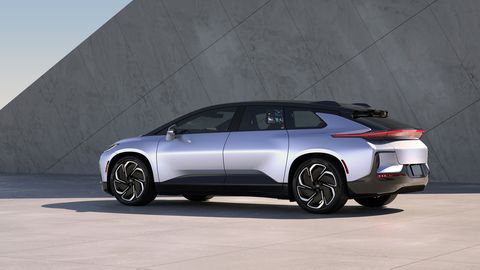
Faraday Future FF 91
faraday future ff 91

Faraday Future

Nearly six years had passed since we had heard about Faraday Future, a California-based startup that revealed its electric FF 91 crossover at the 2017 CES tech show that was formerly known as the Consumer Electronics Show. But the company reared its head again this year when it proclaimed in February that the FF 91 would enter production in the third quarter of 2022.

Faraday Future, which has faced a litany of financial troubles since its inception, missed that goal, revealing in July that it would need significant investment not only to launch the FF 91 but also to continue operations through the end of the year.

The startup pressed on, however, earning a 381-mile range estimate from the EPA in September for the flagship FF 91 Futurist model, which uses a 142.0-kWh battery. In December, Faraday Future announced that March 2023 is the new targeted start date for production of its 1050-hp crossover, but that is dependent on the arrival of more funding. Given the company’s rocky past, we remain wary.

Drako Dragon

2026 drako dragon

Drako

The Dragon super-SUV is the second product from San Jose–based Drako Motors, packing four electric motors that combine for a colossal 2000 horsepower. With all-wheel drive and despite a nearly 5000-pound curb weight, Drako claims, the muscular SUV can reach 60 mph in 1.9 seconds and a top speed over 200 mph, and can sprint a quarter-mile in just 9.0 seconds.

However, there’s not much evidence that the company ever delivered on its first model, the Fisker Karma–based GTE, which produced 1200 horsepower and cost $1.3 million. When Drako first teased the Dragon, the company vaguely told us it is currently “in full swing building and delivering [the] GTE to customers and investment partners.”

Yet only one GTE has ever been photographed: the red example revealed at the Pebble Beach Concours d’Elegance in 2019. And while Drako still has a few years until the Dragon’s scheduled launch in 2026, the company’s unverified production history and the Dragon’s fantasy-land specs don’t boost our confidence that it will ever see reality.

Munro EV

munro mk 1

Munro

The Munro Mk1 EV, revealed in early December, takes up the mantle for squared-off, back-to-basics off-roading EVs from Bollinger Motors, after the American startup canceled plans to produce the rugged B1 SUV and B2 pickup to focus on vans instead. The Munro, which hails from Scotland, is actually designed by the same man who used a ruler to draw Bollinger’s boxes, although the Mk1 somehow looks even more like a kit car cobbled together in someone’s shed.

Focused on commercial sales, the Munro will be classified as a Class 3 medium-duty truck in the United States, with the ability to tow up to 7700 pounds and carry up to 2200 pounds of cargo. The Mk1’s 375-hp maximum output is surprisingly reasonable by startup standards, but with only up to 81.0 kWh worth of battery and at least 5500 pounds to move, less than 200 miles of range is expected.

Although Munro is still working on finding investors, the company claims limited production will start in 2023. But with a paltry range, unproven capability, and a price ranging from $61,000 to $115,000 for the amateur-looking design, we’d be surprised to see the Munro EV catch on.

Foxconn

foxconn model b

Foxconn

An EV from tech juggernaut Apple has been rumored for nearly a decade, but it might be beaten to the punch by Foxconn, a Taiwanese firm that assembles the iPhone, among other products. In October Foxconn unveiled its first model, the Foxtron Model B, as it launches a joint venture with Yulon Motor, Taiwan’s largest car manufacturer.

The Model B—a hatchback styled by Italian design expert Pininfarina—is supposed to enter production in China in 2023, with the goal of eventually selling the EV in the United States. Little is known about the Model B’s specifications, but Foxconn has a head start on other startups after it purchased a plant in Lordstown, Ohio, in 2022.

Foxconn will build the Lordstown Endurance and the Fisker Pear under contract at the Ohio factory, previously owned by Lordstown Motors, and the Model B could eventually join that production line. While things look hopeful for Foxconn, the Taiwanese company’s long-term automotive prospects, especially for the U.S. market, remain cloudy.

Canoo

canoo light tactical vehicle

Canoo

American startup Canoo first showed its podlike Lifestyle Vehicle in 2019, following it up with the boxy MPDV van in 2020 and a unique pickup truck in 2021. Production of the Lifestyle Vehicle was initially slated for 2021 before being delayed. Despite financial woes in May, the company insisted that production was still planned to start at its Arkansas plant this year.

Clearly, Canoo failed to reach that goal, with 2023 almost upon us and the company now shifting its attention to beginning production by the end of next year. Still, Canoo managed to make headlines in 2022 with several new partnerships, showing that interest in its distinctive EVs remains high.

In April, NASA chose the Lifestyle Vehicle to transport crew at the launch site for its Artemis expedition, which aims to land humans on the moon in 2025 for the first time since 1972. In July, Canoo announced that Walmart will buy 4500 delivery-spec Lifestyle Vehicles, with the retail giant already testing vehicles, and December saw the U.S. Army receive a pickup for evaluation. Canoo still needs to figure out how to start production, but the increased interest in its products bodes well for 2023.

Indi One EV

indi one ev

Caleb Miller|Car and Driver

Along with the bedroom-poster-worthy Deus Vayanne, the New York auto show gave us a chance to check out the Indi One EV, an electric crossover from an obscure California-based startup founded in 2017. At the show, Indi EV proclaimed that it would start production in mid-2023, and in October Indi EV signed an agreement with—you guessed it—Foxconn to build prototypes at the plant in Lordstown, Ohio.

The One is not meant to be a sports car. The standard version will hit 60 mph in a claimed 6.7 seconds with a 230-mile range, while the top trim will add 70 miles and shave 2.5 seconds off the 60-mph sprint. Instead, the main focus of the One is its immense computing power, which Indi says will allow for high-quality video streaming and gaming from inside the vehicle.

The prototype seen in New York did not look production-ready, and the company’s pricing—between $45,000 and $69,000—is ambitious. At the show, the company’s head of product deisgn, Andre Hudson, presented the One, but since then he has already abandoned ship for a different startup, Mullen Automotive. We’re not confident Indi EV will make it, but we’re always happy to be surprised.

Honorable Mentions

nikola tre bev

The Nikola Tre BEV.

Nikola

Nikola, whose infamous founder, Trevor Milton, was found guilty of fraud charges in October, pivoted away from the planned Badger pickup in late 2021 and spent 2022 building the electric Tre semi truck and developing a hydrogen-fuel-cell version.

Bollinger also shifted its focus away from its consumer pickup to a cab-forward electric Class 4 truck called the B4, aiming for production in late 2023. Mullen Automotive—another startup peddling its own electric SUV called the Five and a sports car called the Dragonfly (a rebadged version of the Qiantu K50 sold in China)—purchased a majority stake in Bollinger and bought the assets for the EV vans developed by the bankrupt Electric Last Mile Solutions.

Swedish company Volta also expanded its lineup of Zero delivery trucks as it prepares to start production in 2023, while U.K.-based Arrival struggled to meet production targets in 2022 before building its first prototype in September.

Success Stories?

lordstown endurance

John Voelcker|Car and Driver

While we wouldn’t yet classify these companies as successes, several startups built their first road-worthy cars in 2022. After years of uncertainty, the first customer-bound Lordstown Endurance trucks began rolling off the line in Ohio in November, and we drove an early-production example in October.

Fisker also kicked off production of its electric Ocean SUV in November, with Magna Steyr assembling the vehicles in Austria ahead of deliveries early next year. Fisker also teased two upcoming models, a smaller crossover called the Pear that is supposed to cost less than $30,000 and a sultry sports car called the Ronin that’s due in 2024.

While VinFast has been selling cars in Vietnam since 2019, the company’s expansion to the U.S. with its VF8 and VF9 crossovers was due to start in late 2022. Last week VinFast announced that the ship carrying the first U.S.-spec vehicles had reached California and promised to begin deliveries before the year’s end.

This content is imported from OpenWeb. You may be able to find the same content in another format, or you may be able to find more information, at their web site.