How Warehouse Rack Damage Affects Safety and Operations in Growing Distribution Facilities
As distribution facilities expand to meet higher inventory demands and faster shipping expectations, warehouse infrastructure is often pushed harder than originally intended. Increased forklift traffic, denser storage layouts, and continuous loading cycles can all place additional stress on pallet racking systems.
In growing facilities across Ontario, rack damage is becoming a more common operational concern. While some damage appears minor at first, unresolved structural issues can affect workflow efficiency, employee safety, and long-term operational continuity.
Warehouse Expansion Increases Exposure to Rack Damage
Facility growth typically changes how warehouse space is used. A building that once supported moderate inventory turnover may suddenly operate around the clock with heavier pallet loads and tighter movement corridors.
As storage density increases, forklift operators have less room to maneuver safely. High-traffic forklift impact zones often emerge near staging areas, loading docks, and narrow aisle intersections. Even low-speed contact with rack uprights can gradually weaken structural components.
In many cases, warehouse supervisors do not immediately recognize how operational growth contributes to rising damage frequency. Small dents, beam deflection, or shifted frames may appear manageable during busy production periods, but these conditions can worsen quickly under continued load pressure.
Distribution center operations become more vulnerable when damaged racks remain in active use without proper evaluation.
Delayed Damage Reporting Can Affect Operational Continuity
Many warehouses rely on informal reporting practices when structural damage is discovered. Employees may notify supervisors verbally, but without consistent documentation, smaller issues can remain unresolved for long periods.
This creates challenges during warehouse inspections, especially when facilities operate at high capacity. Damage that goes unrecorded may eventually require larger repairs, temporary shutdowns, or restricted access to key storage areas.
Operational downtime is often more disruptive than the repair itself. If an affected aisle must be emptied unexpectedly, inventory movement slows and fulfillment schedules can be impacted across multiple departments.
Structured reporting procedures help operations teams identify recurring problem areas and prioritize repairs before they interfere with daily productivity.
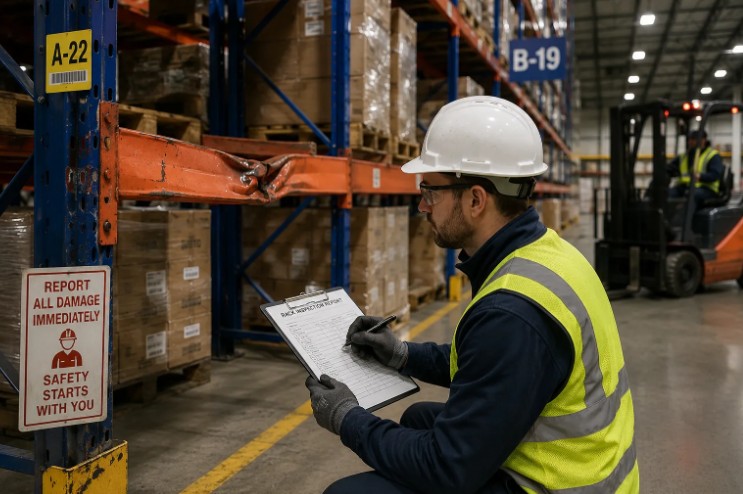
Why Documented Rack Assessments Matter After Impact Events
Not all warehouse rack damage requires full replacement, but every visible impact should be evaluated carefully. Forklift collisions, leaning uprights, cracked welds, or beam displacement can indicate underlying structural stress that is not immediately visible.
This is where documented rack damage assessment processes become important. Formal evaluations help determine whether damaged systems remain safe for continued use or require immediate corrective action.
Facilities experiencing rapid warehouse expansion often benefit from standardized rack inspection protocols because operational conditions change quickly. Inventory weights, aisle layouts, and equipment usage patterns may evolve faster than original rack specifications anticipated.
Companies such as LogiSERV provide documented assessment workflows and certified evaluations that help warehouse operators understand the severity of structural damage and identify appropriate next steps.
Clear assessment records can also support industrial safety compliance efforts by demonstrating that identified risks were reviewed and addressed properly.
Structural Damage Can Create Broader Safety Risks
Warehouse safety compliance depends heavily on maintaining stable and properly functioning storage systems. When damaged racking remains in service, the risk extends beyond the immediate impact location.
Bent uprights can reduce overall load stability across connected rack sections. Damaged beams may shift weight unevenly, increasing stress on surrounding components. Over time, unresolved structural issues can create larger hazards for employees working nearby.
Safety coordinators are increasingly focused on proactive impact damage inspections because many serious incidents begin with smaller, previously overlooked defects.
Common warning signs include:
- Twisted or leaning frames
- Missing safety clips
- Cracked weld points
- Beam separation
- Anchor bolt movement
- Visible corrosion near rack bases
Addressing these conditions early helps facilities maintain safer working environments while reducing the likelihood of emergency shutdowns or inventory loss.
Repair Planning Helps Reduce Long-Term Disruption
Once inspections identify compromised components, facilities must decide whether repair or replacement is the most practical solution. This decision often depends on the age of the system, the severity of the damage, and whether structural integrity can be restored safely.
In many cases, targeted pallet rack repair work allows warehouses to correct localized damage without replacing entire storage systems. Repair planning is especially important in growing facilities where shutting down large operational zones may not be feasible.
Certified repair workflows help ensure that damaged sections are restored according to engineering requirements rather than temporary field modifications. This reduces the likelihood of recurring structural problems and supports more predictable warehouse operations over time.
As Ontario distribution facilities continue expanding, rack maintenance is becoming an increasingly important part of operational planning. Facilities that treat rack damage as an infrastructure issue rather than a minor maintenance concern are generally better positioned to maintain safety, efficiency, and long-term operational stability.