
EV carmakers work to fit auto dealers into their future plans

EV carmakers work to fit auto dealers into their future plans

Shoppers carrying protective masks appears at the inside of a car or truck for sale at a Ford Motor Co. dealership in Colma, California, Feb. 1, 2021.

David Paul Morris | Bloomberg | Getty Photographs

DETROIT — As automakers chase Tesla-like gains on new electric powered vehicles, they experience an existential issue: how finest to convey franchised auto sellers alongside with them as they changeover to EVs.

Some, such as General Motors, are asking luxurious sellers to go all-in on EVs or get out of the business. Many others like Ford Motor are offering dealers unique “EV-certification” ranges, when most other carmakers, or OEMs, know they will need to improve the sales approach to in good shape the evolving industry, but are nevertheless seeking to figure out how to do it.

“I believe we’re all developing this plane as we fly,” Michael Alford, president of the Nationwide Car Dealers Affiliation, a trade association that signifies much more than 16,000 U.S. new franchised dealers, told CNBC. “Relying on the OEM, the stage of engagement or the depth of the engagement varies.”

Automakers and franchised sellers have a advanced connection that is backed, in quite a few states, by laws that make it tough, if not illegal, to bypass franchised sellers and sell new motor vehicles straight to shoppers. (Tesla and other newer EV startups have labored about these kinds of laws to minimize costs.)

Each automakers and franchised sellers want to increase gains, but they are individual businesses that greatly count on a person another to triumph. Dealers rely on automakers for item to fill and transfer off heaps, and the carmakers in turn depend on sellers to promote and provider autos as nicely as serve as concierges for customers. 

How that historical partnership suits into an all-electric potential is predicted to be at the forefront of conversations concerning automakers and dealers at the Countrywide Automobile Sellers Affiliation Demonstrate occurring through Sunday in Dallas. The party draws in 1000’s of franchise dealers yearly to hear from their respective automotive models.

For dealers — from mom-and-pop shops to huge publicly traded chains — EVs will suggest new personnel coaching, infrastructure and substantial investments in their retailers to be able to company, offer and demand the motor vehicles. Depending on the sizing of the vendor, those people updates could conveniently price tag hundreds of 1000’s, or hundreds of thousands, of pounds. Of program, they want to make absolutely sure their investments will fork out off.

“The tone and tenor of this subject matter subject has advanced, and I think it’s incredibly, very apparent this year that our legacy OEMs completely notice that we are necessary likely forward,” explained Alford, who runs Chevrolet and Cadillac dealerships in North Carolina.

Competing with Tesla

As far more automakers introduce EVs, they are rethinking the gross sales process, such as marketing new vehicles mostly, if not thoroughly, on the web. Tesla was between the initially automakers to embrace online profits for a significant portion of its business, however it nevertheless has actual physical dealerships, details web sites and provider shops.

A larger change on the net may possibly limit the purpose of dealers to strictly processing, maintenance and as delivery centers heading ahead and do away with the have to have for big tons of automobiles that they then market to shoppers.

“By and big, the franchise program continues to be in place even for EVs by standard automakers, although they all look to be wanting at approaches to tweak it to be a lot more aggressive, so they say, with the Teslas of the planet,” explained Michelle Krebs, Cox Automotive government analyst.

Automakers feel doing so will provide customers a more streamlined and cohesive revenue procedure, but they also take into account the sellers to be their partners and to offer “strategic advantages” when it comes to other product sales and routine maintenance difficulties.

A Tesla dealership in Colma, California, on Wednesday, Jan. 26, 2022.

David Paul Morris | Bloomberg | Getty Illustrations or photos

Honda Motor has claimed it plans to transfer a lot more sales on the net, like 100{1668a97e7bfe6d80c144078b89af180f360665b4ea188e6054b2f93f7302966b} online income for its luxurious Acura manufacturer for EVs. Mamadou Diallo, American Honda vice president of gross sales, reported the strategy is to facilitate the ordering procedure on line, but with the car staying picked up or delivered by dealers. These methods are however becoming worked out, however, he stated.

“We want to commence with making sure that we present usefulness with what buyers are seeking for, with no intention of bypassing our vendor body,” Mamadou explained Tuesday in the course of a media call.

Jay Vijayan, who assisted in setting up out Tesla’s digital and IT methods, doesn’t consider promoting EVs solely on the net will pan out. He reported a combine of product sales factors is very best, which is why Tesla and newer EV startups are providing on the internet as nicely as opening new showrooms and provider centers.

“Apple nevertheless opens new stores, correct? And every single business you consider is likely to go immediate is also opening new outlets in the automotive room,” said Vijayan, founder and CEO of Tekion, a cloud-dependent dealer company provider.

Wall Avenue analysts have mainly seen immediate-to-consumer profits as a usually means to optimize earnings. Nonetheless, there have been escalating pains for Tesla when it comes to servicing its vehicles.

Ford CEO Jim Farley has mentioned he desires the automaker’s dealers to slash marketing and distribution prices by $2,000 for each automobile to be aggressive with Tesla’s direct-to-customer product.

Automaker strategies

Ford is amongst the automakers acquiring the most pushback from dealers for its EV push, which includes EV-certification tiers that could expense much more than $1 million for every retail store, dependent on the measurement of the dealership.

The Detroit automaker is dealing with lawful problems to the certification system from sellers who argue that the prepare violates franchise regulations. A group of 27 dealerships in Illinois filed a protest with the state’s motor car critique board, and 4 sellers in New York filed go well with versus the automaker past thirty day period, in accordance to Automotive Information.

Ford dealer Marc McEver explained he signed on for the maximum EV-certification tier at his dealership near Kansas City, Kansas, but he worries about the cost and timing of the method.

“I think we’re all concerned that what they’re having us place in now, by the time we truly get some cars, will be outdated and need to have to be upgraded or changed,” McEver, who also owns a Lincoln dealership, said.

Aside from the investments, sellers who decide into marketing Ford EVs will need to abide by 5 standards to keep inside excellent standing: very clear and nonnegotiable pricing charging expenditure employee schooling and improved automobile purchasing and possession encounter for client, both equally digitally and in human being.

Ford on Saturday strategies to outline some adjustments to its EV-certification tiers, according to two people today common with the designs. The improvements, as initially described by Automotive News, would slender the dissimilarities concerning the program’s two tiers. The base tier comes with reduced capital expense but also a smaller allocation of EVs from Ford.

Ford, however, contrary to archrival Normal Motors, is allowing dealers to decide out of selling EVs and proceed to promote the company’s gas-driven cars and trucks.

GM has supplied buyouts to its Buick and Cadillac sellers that do not want to shell out to provide EVs. About 320 of Cadillac’s 880 shops took buyouts. Buick’s buyouts are ongoing, in accordance to a spokesman.

Toyota Motor, for its element, has no designs to overhaul its franchised dealership community as it invests in electrified autos, CEO Akio Toyoda advised sellers to resounding applause in September.

“I know you are anxious about the future. I know you are worried about how this business will transform. While I can not predict the potential, I can promise you this: You, me, us, this organization, this franchised model is not likely anywhere. It can be being just as it is,” mentioned Toyoda, who will action down as CEO to turn out to be chairman in April.

Mapping the history of New England’s once-booming textile industry

Mapping the history of New England’s once-booming textile industry

“Spinning cotton yarn in the great textile mills, Lawrence, Mass.” is one of the images from the exhibit “Industry, Wealth, and Labor: Mapping New England’s Textile Industry” at the Osher Map Library at the University of Southern Maine. Osher Map Library and Smith Center for Cartographic Education, University of Southern Maine

A bird’s-eye view of Lawrence, Mass., in 1910 shows a dozen mills along the Merrimack River surrounded by immigrant neighborhoods.

Jews and Portuguese, Syrians, Italians, Germans and Poles were crowded into a few blocks within a half-mile radius of City Hall. Franco-Belgians occupied a block just outside that circle.

The aerial drawing of this “City of Immigrants” is among the detailed maps, lithographs, slides and photos in an exhibit titled “Industry, Wealth, and Labor: Mapping New England’s Textile Industry.” The exhibit is on display at the Osher Map Library and Smith Center for Cartographic Education on the University of Southern Maine campus in Portland.

Textiles were “integral to the region’s urbanization, industrialization, population growth and diversification, and labor unionization,” according to exhibit curators.

Cotton mills brought the industrial revolution to the United States via New England when the first mill city was built in Lowell, Mass., between 1822 and 1846. The city is split by the Merrimack River, which supplied the water power for the early mills. Maps in the exhibit show the sprawling “city” of brick behemoths. The first mill complex in Lowell was built by the Merrimack Manufacturing Co. in 1824, according to the exhibit.

A map of Lowell, Massachusetts, and its mills along the Merrimack River is on display at the Osher Map Library exhibit at the University of Southern Maine.

“The complex consisted of at least three dozen interconnected buildings accentuated by two smokestacks marking the addition of steam to the original waterpower,” according to the exhibit.

Such an immense enterprise required a massive workforce. These jobs brought immigrants from Eastern Europe as more textile mills opened in Massachusetts and New Hampshire.

Maine’s first mill was established in the 1840s in Biddeford along the Saco River. Waterpower was essential at the time — which made Lewiston, with its roaring falls on the Androscoggin River, another prime location for a factory.

Bates Manufacturing Co. was founded in 1850 and became the largest employer — with 6,000 workers — in the state by the 1860s.

Historian James Myall

“The textile industry was probably the foundational manufacturing industry in Maine during the 19th and early 20th centuries,” along with paper and shoe manufacturing, according to historian James Myall of Topsham.

Myall served as coordinator of the Franco-American Collection at USM’s Lewiston-Auburn College and is co-author of “The Franco-Americans of Lewiston-Auburn,” a general history from 1850 to the present.

“Industrialization had a huge impact on society,” he said in an email interview. “It led to the growth of several places from sleepy towns to cities.”

Lewiston’s population grew from 1,500 in 1830 to 35,000 by 1930, he said, “with a huge rate of growth that included a lot of immigrants.”

First, Irish people fleeing the potato famine in the late 1840s and 1850s, then French Canadians, pouring in on the Grand Trunk Railroad from rural Quebec beginning around 1870.

Italians and Eastern Europeans joined the migration in the second half of the 19th century, Myall said.

The men worked digging canals and foundations and railroad lines. The women and children worked in the mills.

Before the mills expanded and needed more workers, they relied on local labor, employing mostly farm girls and young women.

A map of the interior of the Androscoggin Division of the Bates Manufacturing Company from 1949 hangs on a wall at the Osher Map Library and Smith Center for Cartographic Education at University of Southern Maine in Portland. Russ Dillingham/Sun Journal

“There were a couple of reasons for this,” Myall said. “Weaving was traditionally seen as women’s work, anyway, and the use of machines meant that in many cases the work didn’t require a lot of physical strength.”

Perhaps a more compelling reason, from the industrialists’ point of view, was that women and girls (ages 15 to 18) could be paid half as much as men, according to a history of the Lowell Mills.

The mills “constituted some of the first paid labor outside domestic servitude available to women,” according to “Lowell Mills: The Factory Town in Massachusetts.”

Mary W. Mitchell

The first woman to graduate from Lewiston’s Bates College, Mary W. Mitchell, Class of 1869, paid for her education by working in the mill, according to Rachel Ferrante, executive director of Museum L-A, which is housed in the Bates Mill Complex in Lewiston.

Mills in Maine remained a booming business for well over 100 years, Ferrante said.

“Looms turned out material for everything from blue jeans and airplane wings to hammocks, uniforms, parachutes, flannel and bedding,” she said.

In the second half of the 19th century, Bates textiles were highly desired by middle- and upper-middle-class consumers, she said.

“Without a Bates bedspread, a bride’s trousseau was considered incomplete — a testament to the product’s established place in American domestic culture.

“By 1950, Bates products were utilized in almost every aspect of daily life, including domestic and institutional bedspreads, draperies, table linens, bags, shoe linings, clothing, home sewing, and more.”

Bates “went global” with its cotton fabric during this time, said Roberta Ransley-Matteau, co-curator of the map exhibit.

She noted that a “Queen Elizabeth” bedspread hanging in the gallery was designed in 1950 for the young queen’s coronation in 1952.

“The medallion design and the puffy, trapunto-type Marseilles weave was applied to white quilted cotton fabrics,” according to the exhibit. “The name ‘Marseilles’ was chosen for the weave because the French city had a long association with expensive, hand-quilted, and early quilted-look machine-made fabrics and bed covers.”

Bates Manufacturing wove its first basic bedspread in 1858. In 1915, the company expanded and upgraded its looms to make Jacquards, crochets, satins, brocades and damasks, according to the New England Historical Society.

The first “heirloom” bedspreads were made on a specially designed loom in 1939 and went on sale in 1940 under the motto “Loomed to be Heirloomed.”

“Weavers worked seven days a week making Bates bedspreads, but they couldn’t keep up with demand,” according to the New England Historical Society. “In its heyday, 200,000 Bates Bedspreads were sold each year.”

A Queen Elizabeth bedspread from around 1952 made by Bates Manufacturing in Lewiston hangs on the wall at Osher Map Library and Smith Center for Cartographic Education at University of Southern Maine in Portland. Russ Dillingham/Sun Journal

‘HARSH CONDITIONS’

The textile industry got its start in 1769 when a British inventor devised a mechanized system for spinning cotton into yarn, using multiple spindles.

This was the system used in New England mills.

“Raw cotton would arrive in bales at the mill,” Ferrante said. “Workers were responsible for all aspects of cotton preparation to the material end-product.”

Workers operated machines that aided in carding the cotton — cleaning and untangling it —and spinning it into thread, she said. Thread would then be wound onto large spools, called beams, and loaded onto a loom. A weaver would operate the loom to create the desired cloth.

The process created “harsh conditions” for the workers, Ferrante said.

“A typical workday would be 12 hours long with a break for lunch,” she said. “Temperatures often topped 100 degrees and the air was kept at 100{1668a97e7bfe6d80c144078b89af180f360665b4ea188e6054b2f93f7302966b} humidity to tamp down the lint in the air, reducing the risk of flash fire.

The noise on the weave floor would have been deafening and workers would have to stand nose to nose and scream to be heard.”

Wages were between $2 and $4 per week. That would be about $67-$114 today.

Workers lost fingers, hands and legs in the high-speed machinery. Children got caught in the machinery while working on the running looms.

The 1870 U.S. census reported that one out of every eight children was employed, and by 1900 the rate increased to more than one in five across the United States, Ferrante said.

“The children were able to move around in the small spaces of a mill where adults couldn’t fit, often resulting in their working in tight, dangerous places,” she said.

Children were easier to manage, asked for little in terms of safety measures, and accepted significantly less pay than adult laborers. In many cases, children weren’t paid at all, their wages either going directly to their parents or to cover their room and board. When they did earn wages, children often earned 10{1668a97e7bfe6d80c144078b89af180f360665b4ea188e6054b2f93f7302966b} to 20{1668a97e7bfe6d80c144078b89af180f360665b4ea188e6054b2f93f7302966b} of what an adult would earn for the same job.

These children sometimes suffered horrible, even fatal, injuries.

An account published in Lewiston Today (now the Sun Journal) in 1906 recounts an injury to a 12-year-old boy whose head was caught in the machinery when he slipped while working in the Androscoggin Mill.

“With his skull so terribly fractured that he cannot possibly live,” the boy lay unconscious when a reporter visited his tenement on River Street.

“His hoarse rattling breathing could be heard through the door … The whole top of his head was swathed in bandages.”

He died three days later.

An 1856 colored lithograph of the countryside from Prospect Hill in Auburn shows the Androscoggin River and mills in the background. The lithograph hangs on a wall at the Osher Map Library and Smith Center for Cartographic Education at University of Southern Maine in Portland. It was dedicated to the citizens of Lewiston by the artist, John Badger Bachelder. Russ Dillingham/Sun Journal

MILL WORKERS GO ON STRIKE

Photographs at the Osher Map Library depict the so-called “Bread and Roses” labor strike of 1912 in Lawrence, Mass. One photo shows strikers face to face with armed militiamen, bayonets at the ready.

The strike was initiated by Polish women who walked out after learning of a pay cut, according to the exhibit. The strike quickly spread to Lawrence’s other mills and had wide support among the city’s newest immigrant groups.

“This strike spurred the rise of labor unions as well as future strikes, eventually resulting in the demise of the New England textile industry and its move to the South,” according to the photo text.

“The strike, which brought together recent immigrants speaking at least 25 different languages, was led by the Industrial Workers of the World (IWW). It was prompted by a two-hour pay cut resulting from a Massachusetts law enacted January 1, 1912. This legislation shortened the workweek for women from 56 to 54 hours.

“Ten days later, the female Polish workers at the Everett Mills discovered that their pay had been reduced, along with the cut in hours. The strike spread rapidly through nearly every mill in Lawrence, growing to more than 20,000 workers.

“Carried on throughout a brutally cold winter, the strike lasted more than two months, from January to March. The success of this strike defied the assumptions of conservative trade unions within the American Federation of Labor (AFL) namely, that an immigrant, largely female and ethnically divided workforce could not be organized.”

However, labor unionization was slow to come to the textile industry in Maine, historian Myall said.

“With a large number of immigrant workers, and a lot of people moving between companies, it was hard to organize workers into a union,” he said.

A map of the interior of the Hill Division of the Bates Manufacturing Company from 1949 hangs on a wall at the Osher Map Library and Smith Center for Cartographic Education at University of Southern Maine in Portland. Russ Dillingham/Sun Journal

Also, the Catholic clergy was suspicious of unionization efforts, associating union organizers with socialism and anti-church sentiments, he said.

“You do see plenty of instances of organized action in the textile mills, however, with workers going on strike for higher pay and better working conditions,” he said.

When the textile industry was at its height, workers could demand higher wages at their own factory to match what was being offered elsewhere or even in other states. And management knew some workers were mobile enough to pack up and go elsewhere if they could get better pay.

Even without union representation, safety conditions became increasingly important in the later part of the 19th century, Myall said.

“With only the barest minimum of a social safety net, a workplace injury could mean a life of poverty for a worker and their family,” he said. Workers sometimes created insurance funds for themselves in case something happened, he said.

Eventually, the demand for cotton textiles declined and the expenses of higher pay and better conditions led many companies to move South in the 1950s, map library curator Ransley-Matteau said.

Museum L-A’s Ferrante noted that even as late as 1948, Maine mills employed 28,000 people.

“However, beginning around this time, the future of mills saw a change,” she said. “Overseas manufacturers were able to apply economic advantages, which left American mills unable to operate profitably.”

American mills lost contracts, cut jobs, and even the original Bates Mill closed in 2001.

Today, the rehabilitated Bates Mill Complex houses many other businesses, including the Baxter Brewing Co., TD Bank, Androscoggin Savings Bank offices and The Symquest Group, Fish Bones Restaurant, Davinci’s Eatery, Grand Rounds, Northeast Bank, Bates Mill Dermatology, Community Health Options, Cross Insurance, the Lofts at Bates Mill mixed-income apartments, and Museum L-A.

Almost 2,000 people live and work in the complex, according to Wikipedia.

The Osher Map Library exhibit will be on display through June 30. Admission is free.

Reactions to the exhibit have been “very positive,” Ransley-Matteau said.

TEXTILE MILLS

6,000: Number of employees at Bates Manufacturing in the 1860s.

28,000: Number of employees at Maine mills in 1948.

12 hours: Typical length of workday at textile mills.

$2-$4: Weekly wages of millworkers in 1850 ($76-$152 in today’s dollars for a 60-hour work week).

100 degrees: Temperature inside many mills in the summer.

25: Number of languages spoken by millworkers during 1912 strike in Lawrence, Mass.

1852: Year that Mill No. 1 was completed by Bates Manufacturing.

11: Number of buildings eventually built at Bates Mill.

200,000: Number of Bates bedspreads sold each year during the mill’s heyday.

2001: Year original Bates Mill closed.

Sources: Various

THE OSHER MAP LIBRARY

About the Osher Map Library and Smith Center of Cartographic Education:

½ million: Number of maps, books, atlases, globes.

1475: Date of oldest material.

75,000: Number of items available to view freely online.

Visit: The map library is open 10 a.m. to 4 p.m. Tuesday-Friday and by appointment from 11 a.m. to 3 p.m. Saturday. Free.

Make a Reservation: https://omlscce.rezgo.com/details/273927/gallery-visit

FMI: oshermaps.org/news

Sources: Executive Director Libby Bischof; Osher Map Library (oshermaps.org)


Use the form below to reset your password. When you’ve submitted your account email, we will send an email with a reset code.

« Previous

Next »

Engineering alumna uses beauty pageants, philanthropy to inspire STEM interest in young girls – USC News & Events

Engineering alumna uses beauty pageants, philanthropy to inspire STEM interest in young girls – USC News & Events

Morgan Romano understands the studies — only 28{1668a97e7bfe6d80c144078b89af180f360665b4ea188e6054b2f93f7302966b} of the STEM workforce is designed up of
ladies, and vastly additional males significant in the science, engineering, engineering and math
fields in higher education.

Romano, a USC chemical engineering alumna and recently named Miss out on United states, also realizes
the difficult job of producing a pipeline for additional younger women to go after professions in
the STEM fields. She’s doing the job to tackle the challenges, with her newfound status
as Skip United states presenting a platform for furthering her endeavours. 

That’s why Romano, who now is an application engineer at R.E. Mason in Charlotte,
spends her free of charge time encouraging young ladies to assist build their desire in STEM
options. Romano works with the Finest Buddies Intercontinental plan to endorse STEM and offer opportunities to youthful girls and disadvantaged
little ones in North and South Carolina. She also is a classroom assistant for Venture Scientist’s after-university STEM method. And her personalized initiative, Outside the Box, sends
a science box to hospitals, classrooms and libraries – hundreds of packing containers had been offered
in 2022 – with the intention of sparking a STEM curiosity in youthful women.

“Some of the science boxes are sent to kid’s hospitals. Tiny ladies are pulled
from college and they have to do on the net classes and they at times get rid of desire in
mastering simply because it’s extra of a chore,” Romano claims. “These STEM containers make finding out
enjoyable. They forget they are mastering, they ignore they are undertaking science. It truly is just a
enjoyable exercise that is subconsciously making that passion within them.”

“We require more women (in STEM) and that commences at a younger age for the reason that your curiosity
and the matters you’re passionate about get started to form when you’re younger.”

Last November, Romano served with Charlotte’s STEM Girls Modify the World function. The occasion provides STEM leaders collectively from across the nation so main ladies
can share stories about their journeys, road blocks and techniques they’ve applied to come to be
profitable in the subject. 

“We will need far more women (in STEM) and that commences at a youthful age mainly because your curiosity
and the factors you are passionate about commence to form when you are young,” Romano says.
“If young children aren’t remaining explained to about STEM, how would they know to ever go after it? I went
as a result of elementary, middle and high school and no one at any time talked to me about STEM
chances. I just stumbled upon it and checked the box for chemical engineering
and had no plan what to be expecting.”

What she identified when she arrived at USC from her household in New York was professors who
wanted to see her succeed and gave her self confidence to access her opportunity. All those activities
in the Faculty of Engineering and Computing molded her enthusiasm and paved the way for
her upcoming in STEM. 

“I usually propose USC, especially the engineering school, mainly because our professors
are so invested in you,” she states. “The professors, specifically in the chemical
engineering department, are there for you even if it is not about faculty, if you just
will need another person to communicate to. They definitely treatment about their pupils. You might be far more than just
a quality on a website page to them. And that makes all the variance. I was successful because
I was by no means scared to go discuss to my professors.”

Romano’s concentrate was all on her studies and, due to the fact the the vast majority of her classmates
ended up male, her mom recommended she uncover a pastime that would aid her make some feminine
good friends. Romano experienced competed in a natural beauty pageant at age 14 and was Skip New York’s
Outstanding Teen runner-up. She missed currently being on phase and accomplishing, so she decided
to get again into it while she was a student at USC. The lifelong dancer received Miss Midlands
in Columbia her 1st yr and competed in Pass up South Carolina 3 periods, but never
obtained the crown. 

Romano displays a science box outside of a children's hospital.
Romano’s Outdoors the Box initiative gives science containers for classrooms and libraries,
as well as for youthful ladies who are sufferers in hospitals. 

She moved to Charlotte soon after graduation to commence her job at R.E. Mason, but her desire
to give the crown a further shot was some thing she could not ignore. Functioning whole-time
and training in the evenings, Romano went on to win Overlook North Carolina in 2021 and
was first runner-up at Pass up United states of america 2022. Since the Skip Usa winner was just crowned Pass up Universe, Romano took around and now retains the title of
Pass up United states of america. It is, as she states, “almost a Hannah Montana double existence,” working in the
male-dominated engineering market all through the working day and having in condition for the swimsuit
levels of competition and practising for interviews at night time. Romano claims the tricky get the job done was
far more than worth it simply because the pageant planet has a great deal of reward. 

“You in no way know who you happen to be going to fulfill and the connections you are going to make for the reason that pageants
have these kinds of a assorted group of folks involved,” she says. “You can get so numerous matters
that you by no means predicted from competing in Miss out on United states of america or even condition competitions. Even
if you hardly ever acquire, so several women have gone on to use those connections for their professions.”

The pageant planning also played a significant role in her local community operate, receiving her
involved with the Very best Buddies Worldwide software and Job Scientist. 

Romano’s information for ladies seeking to go after a vocation in STEM: “An Olympic swimmer
won’t glance in the lanes future to them. Emphasis on your route no subject what other people today
say. Why could not I be an engineer and be in pageants? You can be completely anything
you want. You can be outdoors the box. That’s wherever the identify for my initiative came
from. Don’t be what people assume you to be adhere to your passions and you are going to experience
the advantages.” 

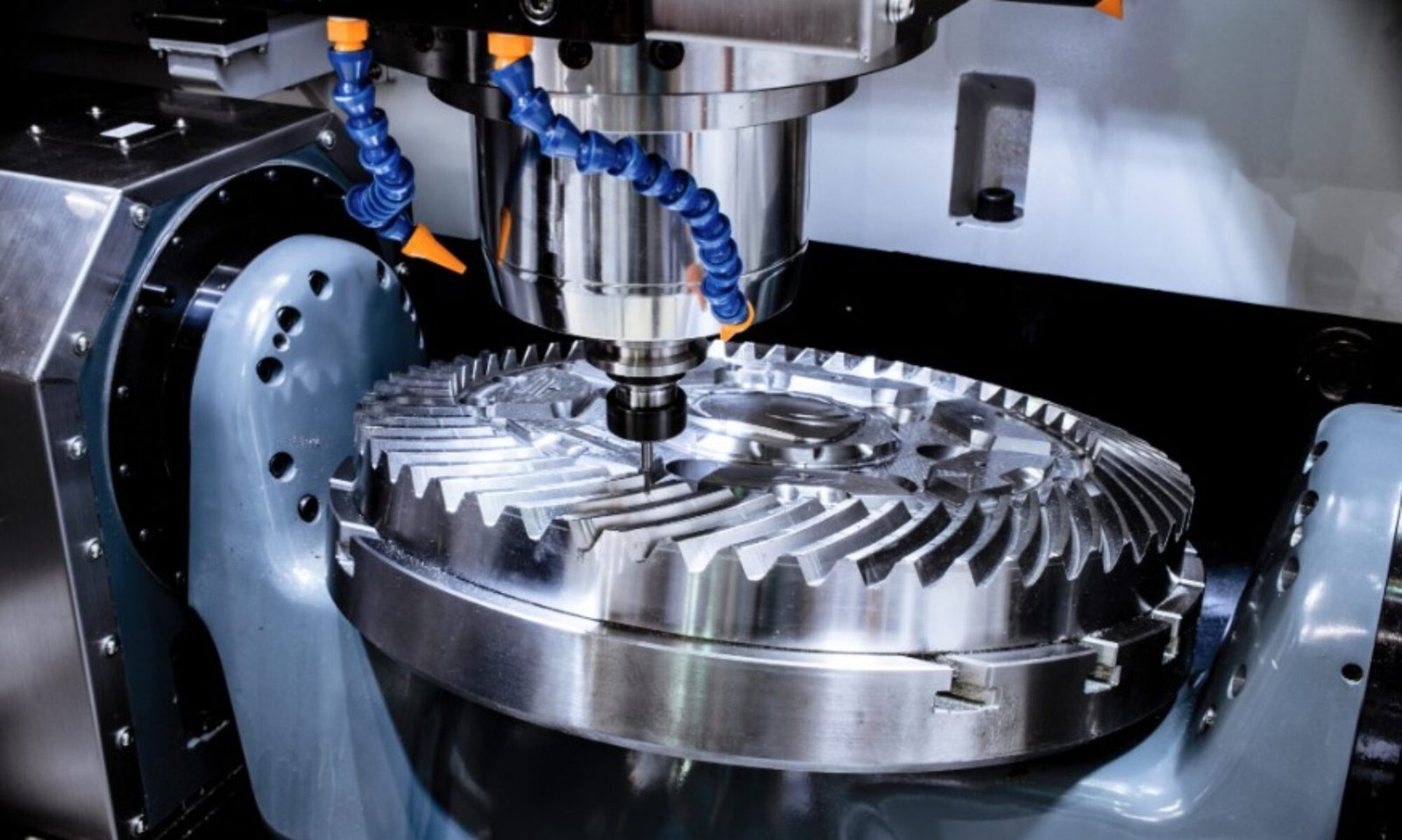
Metal-Cutting Machine Market to witness growth worth USD

Metal-Cutting Machine Market to witness growth worth USD


Pune, Jan. 27, 2023 (GLOBE NEWSWIRE) — Maximize Market Research is a leading engineering equipment market research firm has published report on “Metal-Cutting Machine Market”. The report includes key business insights, demand analysis, pricing analysis, and competitive landscape along with market drivers and challenges for the growth of the market. Metal-Cutting Machine Market size was valued at USD 6.95 Billion in 2021 and is expected to grow by 5.03 percent from 2022 to 2029, reaching nearly USD 10.29 Billion.

Metal-Cutting Machine Market Scope and Research Methodology

The market intelligence report on Metal-Cutting Machine Market covers key drivers, challenges, lucrative opportunities and recent development in the market. Key offerings include market size, growth rate, demand and pricing analysis of the Metal-Cutting Machine Market. Thus the report acts as a toolkit for clients to grasp the growth prospects and formulate business strategies.

For regional analysis, manufacturers are presented with insights such as regional market size, market penetration and regional dominance. Segment-wise analysis of the market by Application, Product Type is conducted to understand the market structure and provides valuable information on the fastest growing segments with probable reasons for growth. A competitive landscape of the Metal-Cutting Machine Market is drawn by listing key manufacturers along with new entrants in the industry. This is carried out based on indicators that include the revenue generated by the manufacturers, financial status, marketing tactics, advertising, adoption of technical advancements, mergers and acquisitions and joint alliances.

A mix of qualitative and quantitative analysis to gain a clear understanding of the market dynamics was conducted. The market size was estimated using a bottom-up approach in the report. Primary and secondary data collection methods were used to collect data for the analysis of the Metal-Cutting Machine Market. To estimate the Metal-Cutting Machine Market size, a bottom-up approach was used, the inferences of which were validated using primary research. The tool employed for analysing the market includes SWOT, PESTLE and Porter’s Five Force analysis. The analysis helps manufacturers understand the pattern of demand for the product, market gaps and new opportunities for the growth of the market.

Get a Sample PDF Brochure:

https://www.maximizemarketresearch.com/request-sample/164148

Metal-Cutting Machine Market Overview

Metal cutting machines are used to cut metals to achieve the desired shape from chips or blocks of metal. These machines include lathes, drilling machines, milling machines, grinding machines and machining centres. Common metal-cutting processes include drilling, turning, boring and milling. Factors that are considered during the metal-cutting process include the type of metal, temperature, force, power and finish to name a few. Over the forecast period, digitization and growing use by developing countries due to the rapid growth of various end-use industries is expected to fuel the growth of the Metal-Cutting Machine industry. However, the high cost of advanced machines is expected to retrain the market growth.

Metal-Cutting Machine Market Dynamics

The incorporation of digitization in the industry is expected to be the primary driver of the Metal-Cutting Machine Market over the forecast period. Digitization in the industry would not only reduce work time but also improve accuracy, increase productivity and significantly increase cash flows in the Metal-Cutting Machine Market. Examples of the same would be digital tool organisation, machine-readable tool setup data and many more. Digitization in the industry is also expected to result in a smoother implementation of automation and tackle the problem of an ageing labour base by easing new engineers in the Metal-Cutting Machine Market.

Developmental activities in countries like India, China, Brazil and Mexico are also driving the Metal-Cutting Machine Market growth. Increasing urbanisation and industrialisation in these economies have opened up new opportunities for the growth of the Metal-Cutting Machine industry. This is especially true for the construction industry where metal needs to be cut precisely in terms of measurement, thickness and form. End-use industries such as manufacturing, aerospace and defence and automotive are expected to fuel the industry growth. Governments across the world are increasing their expenditure on defence which is expected to increase demand for Metal-Cutting Machine Market. However, the high cost of advanced metal-cutting machines is expected to restrain the Metal-Cutting Machine Market growth over the forecast period.

Get a Sample PDF Brochure:

https://www.maximizemarketresearch.com/request-sample/164148

Metal-Cutting Machine Market Regional Insights

The Asia-Pacific region held the largest share in 2021, accounting for 45 percent of the global Metal-Cutting Machine Market. The region is populated by developing countries like India, China and South Korea which are witnessing improvements in economic conditions and rapid industrialization is expected to drive the growth of the Metal-Cutting Machine Market. End-use industries hic include aerospace, defence, automotive and electrics industries are expected to fuel demand for the metal-cutting machine with the region becoming a high-tech manufacturing hub. Increasing competition in the market is resulting in research and development that is further boosting the regional Metal-Cutting Machine Market growth. In the region, India and China are expected to hold the largest share of the Metal-Cutting Machine Market over the forecast period.

Market Size in 2021 USD 6.95 Bn.
Market Size in 2029 USD 10.29 Bn.
CAGR 5.03 {1668a97e7bfe6d80c144078b89af180f360665b4ea188e6054b2f93f7302966b} (2022-2029)
Forecast Period 2022-2029
Base Year 2021
Number of Pages 201
No. of Tables 103
No. of Charts and Figures 105
Segment Covered Application, Product Type
Regional Scope North America, Europe, Asia Pacific, Middle East and Africa, South America
Report Coverage Market Share, Size & Forecast by Revenue | 2022−2029, Market Dynamics, Growth Drivers, Restraints, Investment Opportunities, and Key Trends, Competitive Landscape, Key Players Benchmarking, Competitive Analysis, MMR Competition Matrix, Competitive Leadership Mapping, Global Key Players’ Market Ranking Analysis.

Metal-Cutting Machine Market Segmentation

By Product Type:

  • Laser Cutting Machine
  • Waterjet Cutting Machine
  • Plasma Cutting Machine
  • Flame Cutting Machine

By Application:

  • Automobile
  • Aerospace & Defense
  • Construction
  • Marine
  • Electronics & Electrical
  • Others

Metal-Cutting Machine Market Key Players include:

  • Sandvik
  • Kennametal
  • Iscar
  • OSG
  • Mitsubishi
  • Kyocera
  • Sumitomo
  • Mapal
  • Nachi-Fujikoshi
  • LMT
  • ZCCCT
  • YG-1
  • Shanghai Tool
  • Korloy
  • Union Tool
  • Tiangong
  • Guhring
  • Harbin No.1 Tool
  • Tivoly
  • Ceratizit
  • Hitachi
  • Feidadrills
  • Chengdu Chengliang
  • BIG Kaiser
  • Addison
  • Hanjiang
  • EST Tools
  • Xiamen Golden Erge
  • AHNO
  • Sandhog

Download Free Sample Report at:

https://www.maximizemarketresearch.com/request-sample/164148

Key questions answered in the Metal-Cutting Machine Market are:

  • What is Metal-Cutting Machine?
  • What is the current growth rate of the Metal-Cutting Machine Market?
  • Who are the key players in the Metal-Cutting Machine Market?
  • What are the factors affecting growth in the Metal-Cutting Machine Market?
  • Who held the largest market share in Metal-Cutting Machine Market?
  • What is the demand pattern for the Metal-Cutting Machine Market?
  • What are the opportunities for the Metal-Cutting Machine Market?
  • What are the strategies used by competitors in the Metal-Cutting Machine Market?
  • What are the growth prospects in developing countries for the Metal-Cutting Machine Market?
  • Which segment is expected to witness the fastest growth and why in the Metal-Cutting Machine Market?

Purchase Report:

https://www.maximizemarketresearch.com/checkout/?method=PayPal&reportId=164148&type=Single{1668a97e7bfe6d80c144078b89af180f360665b4ea188e6054b2f93f7302966b}20User

Key Offerings:

  • Market Share, Size & Forecast by Revenue | 2022−2029
  • Market Dynamics – Growth Drivers, Restraints, Investment Opportunities, and Key Trends
  • Market Segmentation – A detailed analysis by Application, Product Type and Region
  • Competitive Landscape – Top Key Vendors and Other Prominent Vendors

Maximize Market Research is leading engineering equipment research firm, has also published the following reports:

Machine Tool Market –The market size is expected to reach USD 155.44 billion by 2029 at a CAGR of 6 percent during the forecast period. It is expected to be driven by a shift of manufacturers towards efficient modes of production and increasing end-use industries.

Gas Cutting Machine Market–The market size is expected to reach USD 883.47 million by 2029 at a CAGR of 2.8 percent during the forecast period. It is expected to be driven by digitization, technological advancements and rapid industrialisation.

Metal Cutting Tools Market–The market size is expected to reach USD 107.7 billion by 2029 at a CAGR of 4.9 percent during the forecast period. It is expected to be driven by technological advancement giving enhanced precision and increasing investments.

Electric Power Tools Market–The market size is expected to reach USD 56.43 billion by 2029 at a CAGR of 8.5 percent during the forecast period. It is expected to be driven by growth in the construction industry and adoption of brushless motors.

Additive Manufacturing Market–The market size is expected to reach USD 84.87 billion by 2029 at a CAGR of 21.1 percent during the forecast period. It is expected to be driven by advancements in machines, adoption of cutting edge technology and increasing end-use industries such as healthcare, automotive, aerospace and military.

About Maximize Market Research:

Maximize Market Research is a multifaceted market research and consulting company with professionals from several industries. Some of the industries we cover include medical devices, pharmaceutical manufacturers, science and engineering, electronic components, industrial equipment, technology and communication, cars and automobiles, chemical products and substances, general merchandise, beverages, personal care, and automated systems. To mention a few, we provide market-verified industry estimations, technical trend analysis, crucial market research, strategic advice, competition analysis, production and demand analysis, and client impact studies.

Contact us for a more detailed view at: sales@maximizemarketresearch.com   


Big Tech layoffs are a problem of their own doing

Big Tech layoffs are a problem of their own doing

This article initial appeared in the Morning Brief. Get the Morning Brief sent straight to your inbox by signing up here.

The tech field is reeling from a seemingly nonstop parade of layoffs across Silicon Valley and outside of.

And we’re not speaking modest figures possibly.

Meta (META) commenced the mass layoff educate, reducing 11,000 positions in November. Then, on Jan. 4, Amazon (AMZN) piled on by laying off 18,000 staff. Two weeks afterwards, Microsoft (MSFT) enable go of 10,000 workers, and two days after that, on Jan. 20, Alphabet (GOOG, GOOGL) laid off 12,000 personnel.

And all those are just the main announcements.

In accordance to Layoffs.fyi, tech corporations have slash 240,000 careers considering the fact that the start out of 2021. Because the begin of 2023? 68,149 work opportunities have been shed in the sector.

And there’s no indication that the bleeding will quit whenever soon. Just this week, IBM laid off 3,900 staff, though SAP mentioned it will slash 3,000 positions.

But the figures of careers lost are not the entire tale.

The tech layoffs that have roiled the market in excess of the very last two a long time are a catastrophe of the tech companies’ personal building. From more than-hiring, to a belief that the planet would stay perpetually on line soon after the pandemic, the sector is contending with its very own miscalculations.

And now the employees who pinned their futures on these strategic misfires are remaining to deal with the fallout.

So how did we get in this article? The easy respond to is that the financial state soured as the globe started out pulling out of the pandemic. Inflation rose, the Federal Reserve lifted interest fees, and that was that. At the very least that’s how tech executives explain to it.

NEW YORK, NEW YORK - JANUARY 25: A man walks near Google offices on January 25, 2023 in New York City. The U.S. Justice Department and a group of eight states sued Google accusing it of illegally abusing a monopoly over the technology that powers online advertising. (Photo by Leonardo Munoz/VIEWpress)

NEW YORK, NEW YORK – JANUARY 25: A person walks close to Google offices on January 25, 2023 in New York Metropolis. The U.S. Justice Section and a team of eight states sued Google accusing it of illegally abusing a monopoly in excess of the technologies that powers on the web promoting. (Photo by Leonardo Munoz/VIEWpress)

Microsoft’s Satya Nadella advised workforce that the consumers are hunting to do much more with much less now following spending so much for the duration of the pandemic. Google’s Sundar Pichai explained to employees that the business staffed up through the pandemic, but the financial condition has modified. And Amazon’s Andy Jassy explained the uncertain overall economy and its selection to retain the services of so lots of people for the duration of the pandemic is why the company is shifting ahead with layoffs.

The reality is, companies hired for a planet in which they considered the expansion seasoned all through the pandemic was permanent. We would all stay within, buy items on-line, and stream information.

Or to use the parlance of analysts and investors, the pandemic appeared to dramatically enhance the TAM — or Total Addressable Industry — these firms ended up likely following. Applying this logic, rising at all costs into a greater-than-predicted current market was not only sensible, but required, to remain competitive.

From Q4 2019 to Q3 2022, Microsoft grew its headcount 53.5{1668a97e7bfe6d80c144078b89af180f360665b4ea188e6054b2f93f7302966b}, whilst Google included 57{1668a97e7bfe6d80c144078b89af180f360665b4ea188e6054b2f93f7302966b} more workers. Amazon and Meta brought on 93.5{1668a97e7bfe6d80c144078b89af180f360665b4ea188e6054b2f93f7302966b} and 94.3{1668a97e7bfe6d80c144078b89af180f360665b4ea188e6054b2f93f7302966b} far more staff members, respectively.

With profits escalating by leaps and bounds, and inventory price ranges soaring, Big Tech was hunting for a suggests to hold the bash heading, and introducing far more staff was seemingly the most effective way to do that.

And now that a person — study: Jay Powell — flipped on the lights and turned off the music, individuals same tech corporations have to reckon with their shoddy choices. And reckon with a sea modify in how the sector will evaluate achievements likely forward.

As Coinbase CEO Brian Armstrong wrote when disclosing his have firm’s conclusion to reduce 20{1668a97e7bfe6d80c144078b89af180f360665b4ea188e6054b2f93f7302966b} of its team earlier this thirty day period: “More than the previous 10 yrs, we, together with most tech companies, turned as well focused on rising headcount as a metric for success. Specifically in this financial ecosystem, it is really significant to shift our concentrate to operational efficiency.”

Even just before the pandemic, we can remember Meta Platforms — then recognized as Facebook — conversing up the expenditure it would will need to make employing to seize an at any time-developing prospect that appeared in front of them.

Those people days, plainly, are long gone for now.

But it truly is not just workers that Massive Tech is cutting, possibly.

Companies like Amazon, Microsoft, and Google are reevaluating their products portfolios to see what can stay and what can go. Amazon, which significantly expanded its warehouse footprint through the pandemic, is seeking for strategies to sublet some of its warehouse area to third-get-togethers.

Google just shut its Stadia recreation streaming provider, though which is been in the is effective for some time. Meta, for its section, slash portions of its experimental product or service division, according to Platformer.

Despite these layoffs and moves, good friend of Yahoo Finance Sam Ro details out the tech business makes up just 2.8{1668a97e7bfe6d80c144078b89af180f360665b4ea188e6054b2f93f7302966b} of complete U.S. work. In addition, the U.S. financial state included 223,000 employment in December and 4.5 million work previous calendar year.

And even though the big title tech firms could be slicing positions, other industries are incorporating.

Chipotle introduced plans this 7 days to employ 15,000 staff amid ongoing growth options. And Boeing said it would retain the services of 10,000 personnel in 2023 as output ramps up.

So although tech giants seemingly got out around their skis extrapolating brief-expression traits into the upcoming, other industries see the recent economic a person as a single calling out for growth.

Which aspect of this divide is proven suitable lengthy-term could have huge implications for the overall economy in the a long time in advance. Or, probably, both positions will get to be appropriate.

Bought a idea? E mail Daniel Howley at dhowley@yahoofinance.com. Follow him on Twitter at @DanielHowley.

Simply click in this article for the most current technologies enterprise news, evaluations, and valuable content articles on tech and gadgets

Examine the hottest money and business news from Yahoo Finance

Obtain the Yahoo Finance app for Apple or Android

Stick to Yahoo Finance on Twitter, Facebook, Instagram, Flipboard, LinkedIn, and YouTube

Industry Experts Forecast What May Come in 2023

Industry Experts Forecast What May Come in 2023

It is a very little little bit tough to truly feel joyous heading into this new year. Economic predictions array from shaky to dire, with stagnant advancement, ongoing inflation, a tighter-than-ever labor current market and soaring deficits bringing poor news. On leading of that, a continuing general public wellbeing crisis and shifting command of Congress all make it harder than ever to predict what is to arrive in the environment of homecare. And nonetheless, our marketplace specialists weigh in here about their most important predictions and priorities for the future—and most say they are optimistic about the potential.

1. A See From Washington
By Tom Ryan, President, American Association for Homecare

Of system, reimbursement fees will continue being a top rated problem for the home clinical machines (HME) community and for the American Association for Homecare (AAHomecare), but I’ll get this possibility to spotlight a notably pressing situation for 2023. We hope and assume that the Biden administration will be able to raise the COVID-19 general public health and fitness crisis (PHE) sometime this 12 months, and when that eventually transpires, there will be a major impression on many flexibilities and waivers granted to well being treatment companies through the PHE.

For HME vendors, the waivers for oxygen and constant glucose displays that ended up put in put for the duration of the PHE are specially important. We will will need to lobby Capitol Hill and the Centers for Medicare & Medicaid Companies (CMS) to grandfather in all of these clients established up during the pandemic. We also want to see telehealth flexibilities manufactured lasting, and policymakers need a discover a way to keep entry to care for the thousands and thousands of men and women who could likely drop eligibility for Medicaid and who are now employing HME.

We have to have to guarantee a steady Medicare reimbursement methodology that demonstrates the complete scope of charges related with delivering higher-top quality, house-primarily based care. We simply cannot transfer forward once more with a competitive bidding assemble that makes it possible for CMS to reject bidding final results due to the fact they did not see the expense cost savings they wanted. Why must suppliers go by way of that physical exercise all over again only to possibly have CMS reject the results?

In the nearer expression, we’ll carry on to press for a 90/10 blended price for suppliers in previous aggressive bid
parts (CBAs) and to have the 75/25 blended rate in non-CBAs and 50/50 blended prices in rural parts manufactured long lasting.

I’m optimistic about the potential potential clients for homecare, and, if inflation premiums and provide chain problems continue to relieve, I see the marketplace being in a better location at the conclusion of 2023.

Two of our country’s major issues in decades ahead are climbing wellness treatment expenses and conference the wants of an getting older inhabitants. HME must be a important part of addressing equally of all those. We have manufactured some strides in speaking a lot more efficiently about the worth of HME and significant-high-quality property-dependent care to policymakers and the community, but I assume we’ve just scratched the floor of what this industry can reach in highlighting these messages.

2. Concern: What just one problem should homecare companies request on their own as they enter 2023? 
“The a single issue suppliers should question themselves as they get ready for 2023 is: How can they maximize their return on financial investment on the providers they offer? We all sense the ache of elevated charges considering that the pandemic—fuel, products, assistance service fees, labor, and so forth. It is far more important than ever to decide how to come to be efficient in your operations.

You could not be equipped to influence the expenditures of merchandise, but you can glimpse at how you are processing orders, promises, deliveries, and so on and make improvements that will lessen the charge attributed to people tasks. Check with by yourself:

  • Can you outsource any features?
  • Are there merchandise or expert services you want to cut to be more financially rewarding?
  • Can you retain the services of a expert to support recognize the waste and duplication of attempts that cut down your gain margin?
  • How can you superior leverage technological innovation to lessen charges?

These questions appear to be logical, and suppliers have requested these for many years, but the challenge is that they are questioned and it’s possible even some action is taken, but extensive-term execution of all those initiatives rarely appear to fruition. Make it your 2023 resolution to act and execute on these financial gain-creating ideas.”
—Sarah Hanna, VP of Consulting Companies, ACU-Serve Corp. 

3. Question: Do you see providers ending 2023 guiding or in advance of exactly where they are now and why?
“I attempt to be the everlasting optimist, so which is why I would say I suspect that companies should really be additional ahead in 2023. If worker lack troubles dissipate and technology continues to make improvements to, vendors should really be assisted in shoring up their operational efficiency—and, of system, their base line.

I also consider that as payers continue to deliver integrated expert services these types of as HME and they agreement with HME organizations, companies will need to be extra savvy and selective about the enterprises they husband or wife with. Even when they want to negotiate for a contract, they’ll have to make positive that pricing is these that they can still get paid a financial gain.

With regard to pricing alone, the buyer price tag increase—which will be a rather balanced this year—will help boost the condition. Even as the community health and fitness crisis waivers and loosening of the pricing regulations goes absent, we’ll nonetheless see even now some reduction. And simply because we have payer diversification and really do not depend so closely on Medicare, I think we’ll be in a position to negotiate much better pricing with some contracted events or third-social gathering payers, so I appear forward to a lot more diversified possibilities for HME corporations.

With regard to the remember and offer chain shortages, I imagine this will carry on to increase in 2023, and will enable HME companies to get back to accomplishing business the way they know how and dispense merchandise in a far more well timed style, which will in switch support with operational performance.”
—Miriam Lieber, President, Lieber Consulting

4. Problem: What do you feel will be the most important issue to face the sector in 2023?
The biggest problem in the advanced rehab and mobility sector will be educating state legislatures on serious remedies to handle the delays consumers are going through in finding timely access to wheelchair assistance and repairs. Sad to say, it is a multifaceted challenge that will demand numerous steps to resolve, but both equally the Nationwide Coalition for Assistive and Rehab Technology  and AAHomecare are doing work in collaboration with members to proactively deal with it.

The largest prospect for this phase of the industry is on the Medicare protection facet. CMS is scheduled to launch a proposed conclusion memo for Medicare protection of ability seat elevation systems in February, and the electrical power standing units national coverage examination (NCA) really should be released for comment in 2023 to commence that protection system. Above 3,500 supportive reviews had been submitted to CMS as a section of the preliminary comment time period on the ability seat elevation NCA, and protection of this technology is a acquire-acquire for all stakeholders, like Medicare.
—Seth Johnson, Senior Vice President, Govt Affairs, Delight Mobility Goods Corp. 

5. Problem: Is there a one thing—a regulation, legislation, or financial factor—that would make the greatest impact on the industry?
“Sure: Any regulation or legislation outlining value-based mostly excellent and outcomes metrics that can be specifically impacted by residence-primarily based care. The idea is to incentivize care that is less fragmented and siloed in favor of coordinated, longitudinal treatment. We’ve found a ton of motion to price-centered care in excess of the past decade, and even though that will continue, we want to be very clear on aligning incentives unique to dwelling-primarily based treatment so that we get the sought after outcomes—including much better client outcomes, reduce expense, and increased individual pleasure. These are consistent with CMS’s objectives in its benefit-based treatment courses.”
—Vijay Kedar, CEO and Co-founder, Tomorrow Well being

“The major concern for 2023 will be the unwinding of all the functions connected to the finish of the community health and fitness crisis. HME vendors will have to deal with a myriad of troubles, several of which we never know because Medicare and other payers have yet to articulate the vital transition problems with regards to protection and documentation for the provision of respiratory and other objects to people who have continued health-related want.”
—Cara Bachenheimer, Head of Governing administration Affairs Observe, Brown & Fortunato


“One significant external component that will considerably have an affect on the full industry is the continued rise in desire costs. The Federal Reserve Financial institution will continue to raise fascination charges at an intense amount through the foreseeable upcoming in an hard work to control inflation. In unique this will tremendously have an impact on the mergers and acquisition current market, resulting in additional scrutiny in because of diligence, more time transaction cycles, considerably less leverage and private fairness staying additional mindful with their acquisitions.”
—Bradley M. Smith, Taking care of Director/Lover, VERTESS

6. A Long run Aim for PACE 
By Carlos Perez, Govt Vice President, CareVention Health care at Tabula Rasa Health care
For people today with complicated treatment wants, acquiring extremely coordinated residence-primarily based professional medical and social services is vital to safely aging in spot. Benefit-based care systems, this sort of as the System of All-Inclusive Care for the Elderly (Pace), which believe total economic possibility for participants’ health-related and social expert services requirements, are becoming an ever more interesting alternative for those wishing to stay in their communities. Pace-lined providers involve the core gains furnished to all Medicare recipients this kind of as most important treatment, actual physical and occupational therapies, dwelling care, clinic care, social providers, and prescription medications—but Pace also gives so much much more in the way of adaptability and creativity to produce personalized treatment to enrolled participants.

Since a lot of Tempo contributors have complicated treatment requirements, typically driven by a number of long-term health conditions, it is widespread for members to get quite a few prescription drugs. Ensuring that all remedies and their doses do the job together securely and optimally is critical for unique properly-becoming. For case in point, certain drugs for urinary incontinence are related with delirium, dementia and falls. Getting larger doses of these medications could maximize risk for the participant. And due to the fact price-based mostly courses like Tempo use a capitated payment model of treatment, exactly where the corporation is paid a established fee to provide the person’s treatment, this rapidly gets a value hazard to the business.

Optimizing drug therapy is critical for Pace packages to boost overall health and perfectly-staying even though steering clear of unneeded downstream wellbeing treatment expenses. Even though classic treatment therapy management targets individuals based on the selection of continual disorders and how several different medicines they get, modern day, far more complex technologies can concurrently examine how all the medication getting taken interact with every single other. This approach improved establishes the danger of harm from a person’s each day medication regimen, which can be especially elaborate.

With chances to launch new courses and grow enrollment in current programs on the horizon, Pace is properly-positioned for expansion in 2023. Built-in solutions that involve fashionable, advanced medicine therapy management can enable packages generate achievement by optimizing drug routines and advertising and marketing the overall health and wellbeing of their individuals, all when preventing pointless well being treatment bills and increasing operational efficiency.

Over and above optimizing medication use, Speed systems have prospects to reduce prices and boost efficiencies in other places of their procedure these kinds of as 3rd-bash administration, service provider instruction, and danger adjustment with partners specialist in supporting worth-dependent treatment companies. When all of these functions are section of an integrated suite of remedies, customized precisely to worth-dependent care, packages can provide optimized care to participants, streamline operations, lighten administrative workload for personnel, and make knowledge much more obtainable and useable.

7. A Path to Residence Accessibility
By Jim Greatorex, Vice President, VGM Live at Dwelling

The residence accessibility marketplace has viewed a turning issue get there in the past 18 months. There has been a fantastic deal of financial investment into the marketplace, community consciousness has grown, legislation has been introduced and, most of all, the improved demand from customers for our companies has resulted in our estimation an 18{1668a97e7bfe6d80c144078b89af180f360665b4ea188e6054b2f93f7302966b} to 20{1668a97e7bfe6d80c144078b89af180f360665b4ea188e6054b2f93f7302966b} sector growth price for 2022.

We consider that double-digit progress will keep on by the future four to 6 several years fueled by the retail sector for getting older in position.

The marketplace is starting up to choose methods to outline what we do and professionalize ourselves. To assure sustainability, we are starting off to create an apprenticeship program for area professionals. This will be a very long-term undertaking that will convey much more price by furnishing abilities and know-how to the latest workforce and incubate a entire new technology of technicians who are captivated to the construction industry and the meaningful shopper contact that property access provides.

Listed here at VGM, we are operating to develop a white paper that will depth the very best techniques for collaboration concerning scientific experts and dwelling entry experts. By defining roles and conforming the evaluation procedure, we hope to establish an field that can come to be an included and precious piece to the homecare spectrum—and a lot more broadly to the continuum of treatment.

The a single concern house obtain corporations need to talk to themselves as they get ready for 2023 is: “What infrastructure and units should really I employ into my organization functions to let for scalable advancement shifting forward?” As a modest but rising specialized niche industry, we presently do not have project management or working computer software specifically built for our distinctive demands. In quite a few conditions, we also do not have polished sales applications that empower us to properly present ourselves and our methods to retail prospective customers. We foresee potential options on the horizon and the household obtain market requires to embrace this kind of technological know-how and progress.

I see the future two years as the time the place the house accessibility marketplace exhibits terrific development in its maturity and becomes a regarded entity in the United States sector. There are quite a few worries forward, but market place growth is not a person of them.